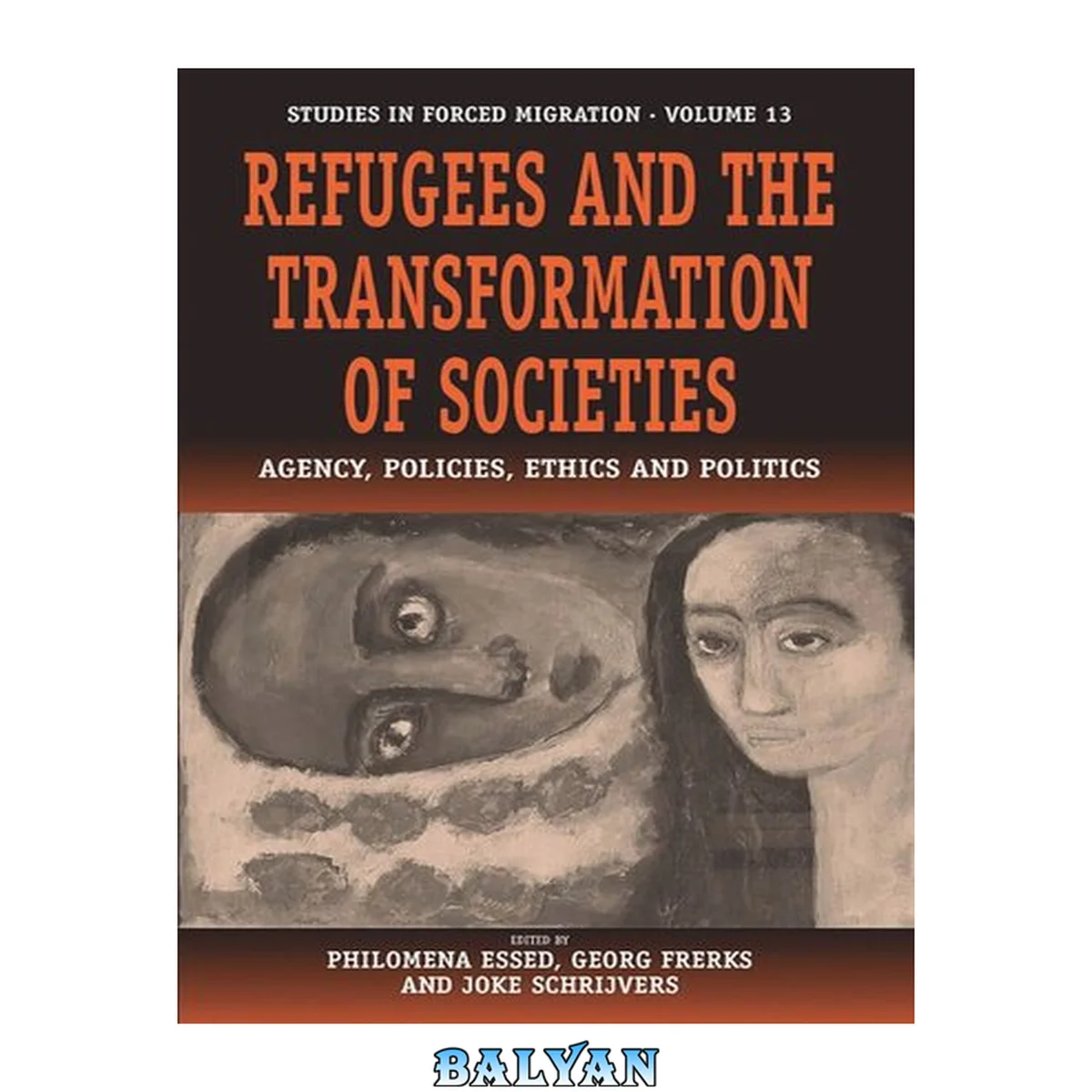
Refugees and the Transformation of Societies: Agency, Policies, Ethics and Politics (Forced Migration Book 13)
معرفی کتاب «پناهندگان و تحول جوامع: عامل، سیاستها، اخلاق و سیاست (کتاب مهاجرت اجباری ۱۳)» (با عنوان لاتین Refugees and the Transformation of Societies: Agency, Policies, Ethics and Politics (Forced Migration Book 13)) نوشتهٔ Philomena Essed (editor); Georg Frerks (editor); Joke Schrijvers (editor)، منتشرشده توسط نشر Berghahn Books در سال 2004. این کتاب در فرمت pdf، زبان انگلیسی ارائه شده است.
The refusal or reception of refugees has had serious implications for the social policies and social realities of numerous countries in east and west. Exploring experiences, interpretations and practices of 'refugees,' 'the internally displaced' and 'returnees' in or emerging from societies in violent conflict, this volume challenges prevailing orthodoxies and encourages new developments in refugee studies. It also addresses the ethics and politics of interventions by professionals and policy makers, using case studies of refugees from or in South Asia, the Middle East, North Africa, Europe and the Americas. These illustrate the dynamic nature of situations where refugees, policy- makers and practitioners interact in trying to construct new livelihoods in transforming societies. Without a proper understanding of this dynamic nature, so the volume argues overall, it is not possible to develop successful strategies for the accommodation and integration of refugees. Contents Acknowledgements List of Abbreviations Introduction: Refugees, Agency and Social Transformation Part I ‘Refugeehood’: Claiming Spaces and Responsibilities 1 Refugeehood, Loss and Social Change: Eritrean Refugees and Returnees 2 Repatriation: Angolan Refugees or Migrating Villagers? 3 Space and Movement in the Sri Lankan Conflict 4 Contested Refugee Status: Human Rights, Ethics and Social Responsibilities Part II Redefining Identities and Social Relationships 5 A Life Project out of Turmoil: Displacement and Gender in Colombia 6 Permanent Refugees: Female Camp Inhabitants in Bihar 7 New Opportunities: Angry Young Men in a Tanzanian Refugee Camp 8 Identities and the Sense of Belonging: Iranian Women Activists in Exile Part III Discouraging Policies; Empowering Agency 9 A Community Empowered? The Bosnia Project in the U.K 10 Refugee-generated Return: The Case of Guatemala 11 Between Victim and Agent: Women’s Ambivalent Empowerment in Displacement Part IV Challenging Dichotomies: Relief versus Development 12 Refugees between Relief and Development 13 Rethinking the Relation between Relief and Development: ‘Villagisation’ in Rwanda 14 Dilemmas of Humanitarian Aid: Supporting Internal Refugees in Sri Lanka Bibliography Notes on Contributors Index
The refusal or reception of refugees has had serious implications for the social policies and social realities of numerous countries in east and west. Exploring experiences, interpretations and practices of 'refugees,' 'the internally displaced' and 'returnees' in or emerging from societies in violent conflict, this volume challenges prevailing orthodoxies and encourages new developments in refugee studies. It also addresses the ethics and politics of interventions by professionals and policy makers, using case studies of refugees from or in South Asia, the Middle East, North Africa, Europe and the Americas. These illustrate the dynamic nature of situations where refugees, policy- makers and practitioners interact in trying to construct new livelihoods in transforming societies.
Without a proper understanding of this dynamic nature, so the volume argues overall, it is not possible to develop successful strategies for the accommodation and integration of refugees.
This series reflects the multidisciplinary nature of the field and includes within its scope international law, anthropology, medicine, geopolitics, social psychology and economics.