Press, Platform, Pulpit : Black Feminist Publics in the Era of Reform
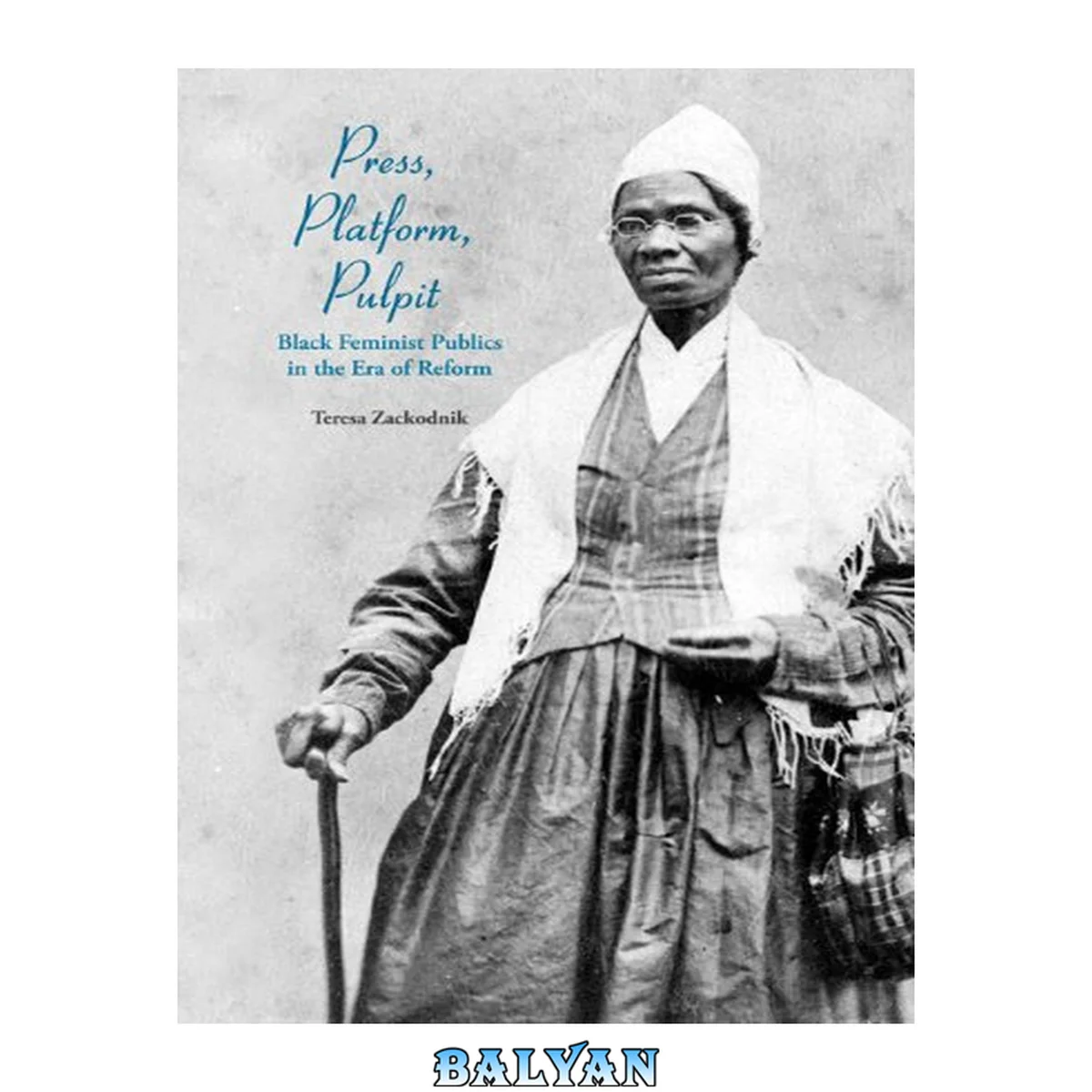
معرفی کتاب «Press, Platform, Pulpit : Black Feminist Publics in the Era of Reform» نوشتهٔ Teresa C. Zackodnik، منتشرشده توسط نشر University of Tennessee Press; Univ Tennessee Press در سال 2011. این کتاب در فرمت pdf، زبان انگلیسی ارائه شده است.
Press, Platform, Pulpit examines how early black feminism goes public by sheding new light on some of the major figures of early black feminism as well as bringing forward some lesser-known individuals who helped shape various reform movements. With a perspective unlike many other studies of black feminism, Teresa Zackodnik considers these activists as central, rather than marginal, to the politics of their day, and argues that black feminism reached critical mass well before the club movement’s national federation at the turn into the twentieth century . Throughout, she shifts the way in which major figures of early black feminism have been understood. The first three chapters trace the varied speaking styles and appeals of black women in the church, abolition, and women’s rights, highlighting audience and location as mediating factors in the public address and politics of figures such as Jarena Lee, Zilpha Elaw, Amanda Berry Smith, Ellen Craft, Sarah Parker Remond and Sojourner Truth. The next chapter focuses on Ida B. Wells’s anti-lynching tours as working within “New Abolition” and influenced by black feminists before her. The final chapter examines feminist black nationalism as it developed in the periodical press by considering Maria Stewart’s social and feminist gospel; Mary Shadd Cary’s linking of abolition, emigration, and woman suffrage; and late-nineteenth-century black feminist journalism addressing black women’s migration and labor. Early black feminists working in reforms such as abolition and women’s rights opened new public arenas, such as the press, to the voices of black women. The book concludes by focusing on the 1891 National Council of Women, Frances Harper, and Anna Julia Cooper, which together mark a generational shift in black feminism, and by exploring the possibilities of taking black feminism public through forging coalitions among women of color. Press, Platform, Pulpit goes far in deepening our understanding of early black feminism, its position in reform, and the varied publics it created for its politics. It not only moves historically from black feminist work in the church early in the nineteenth century to black feminism in the press at its close, but also explores the connections between black feminist politics across the century and specific reforms. __Press, Platform, Pulpit__ examines how early black feminism goes public by sheding new light on some of the major figures of early black feminism as well as bringing forward some lesser-known individuals who helped shape various reform movements. With a perspective unlike many other studies of black feminism, Teresa Zackodnik considers these activists as central, rather than marginal, to the politics of their day, and argues that black feminism reached critical mass well before the club movement’s national federation at the turn into the twentieth century . Throughout, she shifts the way in which major figures of early black feminism have been understood. The first three chapters trace the varied speaking styles and appeals of black women in the church, abolition, and women’s rights, highlighting audience and location as mediating factors in the public address and politics of figures such as Jarena Lee, Zilpha Elaw, Amanda Berry Smith, Ellen Craft, Sarah Parker Remond and Sojourner Truth. The next chapter focuses on Ida B. Wells’s anti-lynching tours as working within “New Abolition” and influenced by black feminists before her. The final chapter examines feminist black nationalism as it developed in the periodical press by considering Maria Stewart’s social and feminist gospel; Mary Shadd Cary’s linking of abolition, emigration, and woman suffrage; and late-nineteenth-century black feminist journalism addressing black women’s migration and labor. Early black feminists working in reforms such as abolition and women’s rights opened new public arenas, such as the press, to the voices of black women. The book concludes by focusing on the 1891 National Council of Women, Frances Harper, and Anna Julia Cooper, which together mark a generational shift in black feminism, and by exploring the possibilities of taking black feminism public through forging coalitions among women of color. __Press, Platform, Pulpit__ goes far in deepening our understanding of early black feminism, its position in reform, and the varied publics it created for its politics. It not only moves historically from black feminist work in the church early in the nineteenth century to black feminism in the press at its close, but also explores the connections between black feminist politics across the century and specific reforms. Contents 8 Acknowledgments 10 Introduction: Going Public: African American Feminismin the Era of Reform 14 Chapter 1: Soul Winners and Sanctified Sisters: Nineteenth-Century African American Preaching Women 38 Chapter 2: Internationalizing Black Feminisms: Ellen Craft, Sarah Parker Remond, and American Slavery in the British Isles and Ireland 86 Chapter 3: “I don’t know how you will feel when I get through”: Racial Difference, Symbolic Value, and Sojourner Truth 130 Chapter 4: The Platform, the Pamphlet, and the Press: Ida B. Wells’s Pedagogy of American Lynching 168 Chapter 5: “We must be up and doing” : Feminist Black Nationalism in the Press 204 Conclusion: Feminist Affiliations in a Divisive Climate: Anna Julia Cooper’s “Woman versus the Indian” 262 Notes 286 Works Cited 332 Index 356 Going Public : African American Feminism In The Era Of Reform -- Soul Winners And Sanctified Sisters : Nineteenth-century African American Preaching Women -- Internationalizing Black Feminisms : Ellen Craft, Sarah Parker Remond, And American Slavery In The British Isles And Ireland -- I Don't Know How You Will Feel When I Get Through : Racial Difference, Symbolic Value, And Sojourner Truth -- The Platform, The Pamphlet, And The Press : Ida B. Wells's Pedagogy Of American Lynching -- We Must Be Up And Doing: Feminist Black Nationalism In The Press -- Conclusion : Feminist Affiliations In A Divisive Climate : Anna Julia Cooper's Woman Versus The Indian. Teresa Zackodnik. Includes Bibliographical References (p. [295-318) And Index. In her third book on early African-American feminism, Zackodnik (English and film studies, U. of Alberta) explores mechanisms by which some of the seminal figures in the movement found audiences among the public. Chapters examine the political context of early black feminism, consider the different speaking styles of early black feminists, and explore locations of black feminism from the church to the press. Among her topics are 19th-century African American preaching women; racial difference, symbolic value, and Sojourner Truth; Ida B. Wells' pedagogy of American lynching; and feminist black nationalism in the press. A selection of archival photographs is included. Annotation ©2012 Book News, Inc., Portland, OR (booknews.com)
دانلود کتاب Press, Platform, Pulpit : Black Feminist Publics in the Era of Reform