Pragmatism as Anti-Authoritarianism
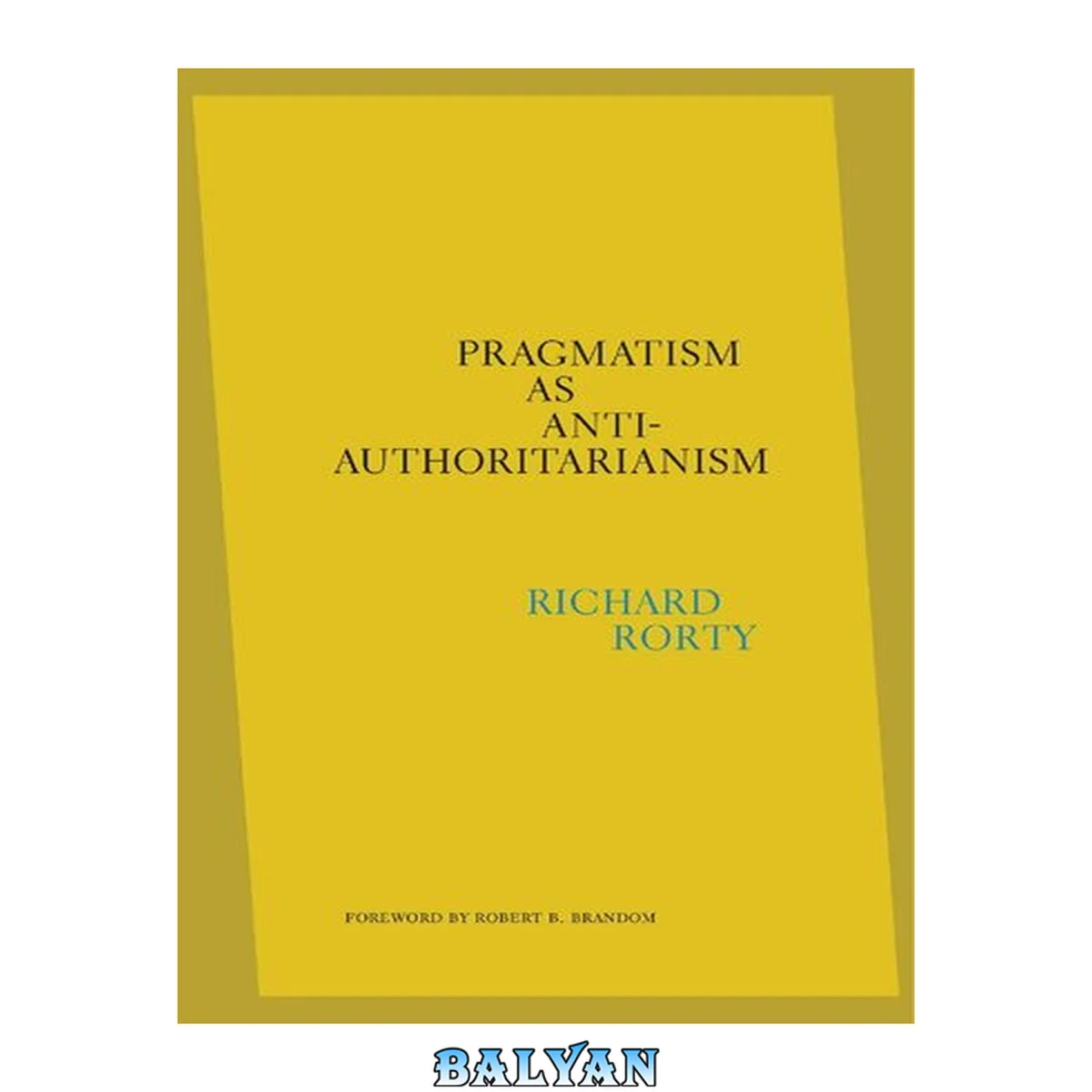
معرفی کتاب «Pragmatism as Anti-Authoritarianism» نوشتهٔ Richard Rorty، Eduardo Mendieta و Robert B. Brandom، منتشرشده توسط نشر Belknap Press: An Imprint of Harvard University Press در سال 2021. این کتاب در 256 صفحه، فرمت epub، زبان انگلیسی ارائه شده است.
Review “Today, there are few philosophers left whose thoughts are inspired by a unifying vision; there are even fewer who can articulate such a view in terms of a ravishing flow of provocative, but sharp and differentiated, arguments. But rarely anyone can compete with Richard Rorty in summarizing the whole of it in a series of brilliant literary lectures like these.”―Jürgen Habermas “Richard Rorty was the most iconoclastic and dramatic philosopher of the last half-century. In this final book, his unique literary style, singular intellectual zest, and demythologizing defiance of official philosophy are on full display.”―Cornel West “A sharp and comprehensive statement of Richard Rorty’s distinctive version of pragmatism, presented with all the wit and vitality typical of his writings. Carefully edited by Eduardo Mendieta, with an illuminating foreword by Robert B. Brandom, this book is invaluable reading for anyone interested in Rorty’s philosophical vision.”―Richard J. Bernstein, Vera List Professor of Philosophy, The New School for Social Research “We have perhaps the clearest account of how he understood pragmatist thinking as a political undertaking...Provocative and engaging...The array of urgent questions and crises facing our democracy makes one miss Richard Rorty’s voice: insistent, relentlessly questioning, and dedicated to the proposition that we can’t afford to let our democracy fail.”―Chris Lehmann, New Republic About the Author Richard Rorty (1931–2007) authored several landmark books and essay collections, including Philosophy and the Mirror of Nature; Consequences of Pragmatism; Contingency, Irony, and Solidarity; and Achieving Our Country: Leftist Thought in Twentieth-Century America. He taught at Wellesley College, Princeton University, the University of Virginia, and Stanford University. Eduardo Mendieta is Professor of Philosophy at Pennsylvania State University and editor of Take Care of Freedom and Truth Will Take Care of Itself, a collection of interviews with Richard Rorty. Robert B. Brandom is Distinguished Professor of Philosophy at the University of Pittsburgh and a Fellow of both the American Academy of Arts and Sciences and the British Academy. He delivered the John Locke Lectures at the University of Oxford and the Woodbridge Lectures at Columbia University. Brandom is the author of many books, including Making It Explicit, Reason in Philosophy, and From Empiricism to Expressivism (all from Harvard). "Provocative and engaging...The array of urgent questions and crises facing our democracy makes one miss Richard Rorty's voice: insistent, relentlessly questioning, and dedicated to the proposition that we can't afford to let our democracy fail." —Chris Lehmann, New Republic "Richard Rorty was the most iconoclastic and dramatic philosopher of the last half-century. In this final book, his unique literary style, singular intellectual zest, and demythologizing defiance of official philosophy are on full display." —Cornel West "Coherent, often brilliant, and it presents a clear and timely case for political pragmatism." —Jonathan Rée, Prospect "Today, there are few philosophers left whose thoughts are inspired by a unifying vision; there are even fewer who can articulate such a view in terms of such a ravishing flow of provocative, but sharp and differentiated, arguments." —Jürgen Habermas Richard Rorty's final masterwork offers his culminating thoughts on the influential version of pragmatism he began to articulate decades ago in his groundbreaking Philosophy and the Mirror of Nature . He identifies anti-authoritarianism as the principal impulse and virtue of pragmatism. Anti-authoritarianism, in this view, means acknowledging that our cultural inheritance is always open to revision because no authority exists to ascertain the truth, once and for all. If we cannot rely on the unshakable certainties of God or nature, then all we have left to go on—and argue with—are the opinions and ideas of our fellow humans. The test of these ideas, Rorty suggests, is relatively simple: Do they work? Do they produce the peace, freedom, and happiness we desire? To achieve this enlightened pragmatism is not easy, though. Pragmatism demands trust. It demands that we think and care about what others think and care about, and that we account for their doubts of and objections to our own beliefs. No book offers a more accessible account of pragmatism, just as no philosopher has more eloquently challenged the hidebound traditions arrayed against the goals of social justice. The last book by the eminent American philosopher and public intellectual Richard Rorty, providing the definitive statement of his mature philosophical and political views. Richard Rorty's Pragmatism as Anti-Authoritarianism is a last statement by one of America's foremost philosophers. Here Rorty offers his culminating thoughts on the influential version of pragmatism he began to articulate decades ago in his groundbreaking Philosophy and the Mirror of Nature. Marking a new stage in the evolution of his thought, Rorty's final masterwork identifies anti-authoritarianism as the principal impulse and virtue of pragmatism. Anti-authoritarianism, on this view, means acknowledging that our cultural inheritance is always open to revision because no authority exists to ascertain the truth, once and for all. If we cannot rely on the unshakable certainties of God or nature, then all we have left to go on--and argue with--are the opinions and ideas of our fellow humans. The test of these ideas, Rorty suggests, is relatively simple: Do they work? Do they produce the peace, freedom, and happiness we desire? To achieve this enlightened pragmatism is not easy, though. Pragmatism demands trust. Pragmatism demands that we think and care about what others think and care about, which further requires that we account for others' doubts of and objections to our own beliefs. After all, our own beliefs are as contestable as anyone else's. A supple mind who draws on theorists from John Stuart Mill to Annette Baier, Rorty nonetheless is always an apostle of the concrete. No book offers a more accessible account of Rorty's utopia of pragmatism, just as no philosopher has more eloquently challenged the hidebound traditions arrayed against the goals of social justice. The last book by the eminent American philosopher and public intellectual Richard Rorty, providing the definitive statement of his mature philosophical and political views.0Richard Rorty's Pragmatism as Anti-Authoritarianism is a last statement by one of America's foremost philosophers. Here Rorty offers his culminating thoughts on the influential version of pragmatism he began to articulate decades ago in his groundbreaking Philosophy and the Mirror of Nature.0Marking a new stage in the evolution of his thought, Rorty's final masterwork identifies anti-authoritarianism as the principal impulse and virtue of pragmatism. Anti-authoritarianism, on this view, means acknowledging that our cultural inheritance is always open to revision because no authority exists to ascertain the truth, once and for all. If we cannot rely on the unshakable certainties of God or nature, then all we have left to go on-and argue with-are the opinions and ideas of our fellow humans. The test of these ideas, Rorty suggests, is relatively simple: Do they work? Do they produce the peace, freedom, and happiness we desire? To achieve this enlightened pragmatism is not easy, though. Pragmatism demands trust. Pragmatism demands that we think and care about what others think and care about, which further requires that we account for others' doubts of and objections to our own beliefs. After all, our own beliefs are as contestable as anyone else's.0A supple mind who draws on theorists from John Stuart Mill to Annette Baier, Rorty nonetheless is always an apostle of the concrete. No book offers a more accessible account of Rorty's utopia of pragmatism, just as no philosopher has more eloquently challenged the hidebound traditions arrayed against the goals of social justice Résumé éditeur : "Richard Rorty's Pragmatism as Anti-Authoritarianism is a last statement by one of America's foremost philosophers. Here Rorty offers his culminating thoughts on the influential version of pragmatism he began to articulate decades ago in his groundbreaking Philosophy and the Mirror of Nature. Marking a new stage in the evolution of his thought, Rorty's final masterwork identifies anti-authoritarianism as the principal impulse and virtue of pragmatism. Anti-authoritarianism, on this view, means acknowledging that our cultural inheritance is always open to revision because no authority exists to ascertain the truth, once and for all. If we cannot rely on the unshakable certainties of God or nature, then all we have left to go on--and argue with--are the opinions and ideas of our fellow humans. The test of these ideas, Rorty suggests, is relatively simple: Do they work? Do they produce the peace, freedom, and happiness we desire? To achieve this enlightened pragmatism is not easy, though. Pragmatism demands trust. Pragmatism demands that we think and care about what others think and care about, which further requires that we account for others' doubts of and objections to our own beliefs. After all, our own beliefs are as contestable as anyone else's. A supple mind who draws on theorists from John Stuart Mill to Annette Baier, Rorty nonetheless is always an apostle of the concrete. No book offers a more accessible account of Rorty's utopia of pragmatism, just as no philosopher has more eloquently challenged the hidebound traditions arrayed against the goals of social justice." "Richard Rorty's Pragmatism as Anti-Authoritarianism is a last statement by one of America's foremost philosophers. Here Rorty offers his culminating thoughts on the influential version of pragmatism he began to articulate decades ago in his groundbreaking Philosophy and the Mirror of Nature. Marking a new stage in the evolution of his thought, Rorty's final masterwork identifies anti-authoritarianism as the principal impulse and virtue of pragmatism. Anti-authoritarianism, on this view, means acknowledging that our cultural inheritance is always open to revision because no authority exists to ascertain the truth, once and for all. If we cannot rely on the unshakable certainties of God or nature, then all we have left to go on{u2014}and argue with{u2014}are the opinions and ideas of our fellow humans. The test of these ideas, Rorty suggests, is relatively simple: Do they work? Do they produce the peace, freedom, and happiness we desire? To achieve this enlightened pragmatism is not easy, though. Pragmatism demands trust. Pragmatism demands that we think and care about what others think and care about, which further requires that we account for others' doubts of and objections to our own beliefs. After all, our own beliefs are as contestable as anyone else's. A supple mind who draws on theorists from John Stuart Mill to Annette Baier, Rorty nonetheless is always an apostle of the concrete. No book offers a more accessible account of Rorty's utopia of pragmatism, just as no philosopher has more eloquently challenged the hidebound traditions arrayed against the goals of social justice" -- Editor In his final work, Richard Rorty provides the definitive statement of his political thought. Rorty equates pragmatism with anti-authoritarianism, arguing that because there is no authority we can rely on to ascertain truth, we can only do so intersubjectively. It follows that we must learn to think and care about what others think and care about.
دانلود کتاب Pragmatism as Anti-Authoritarianism