Pocket Guide to Addiction Assessment and Treatment
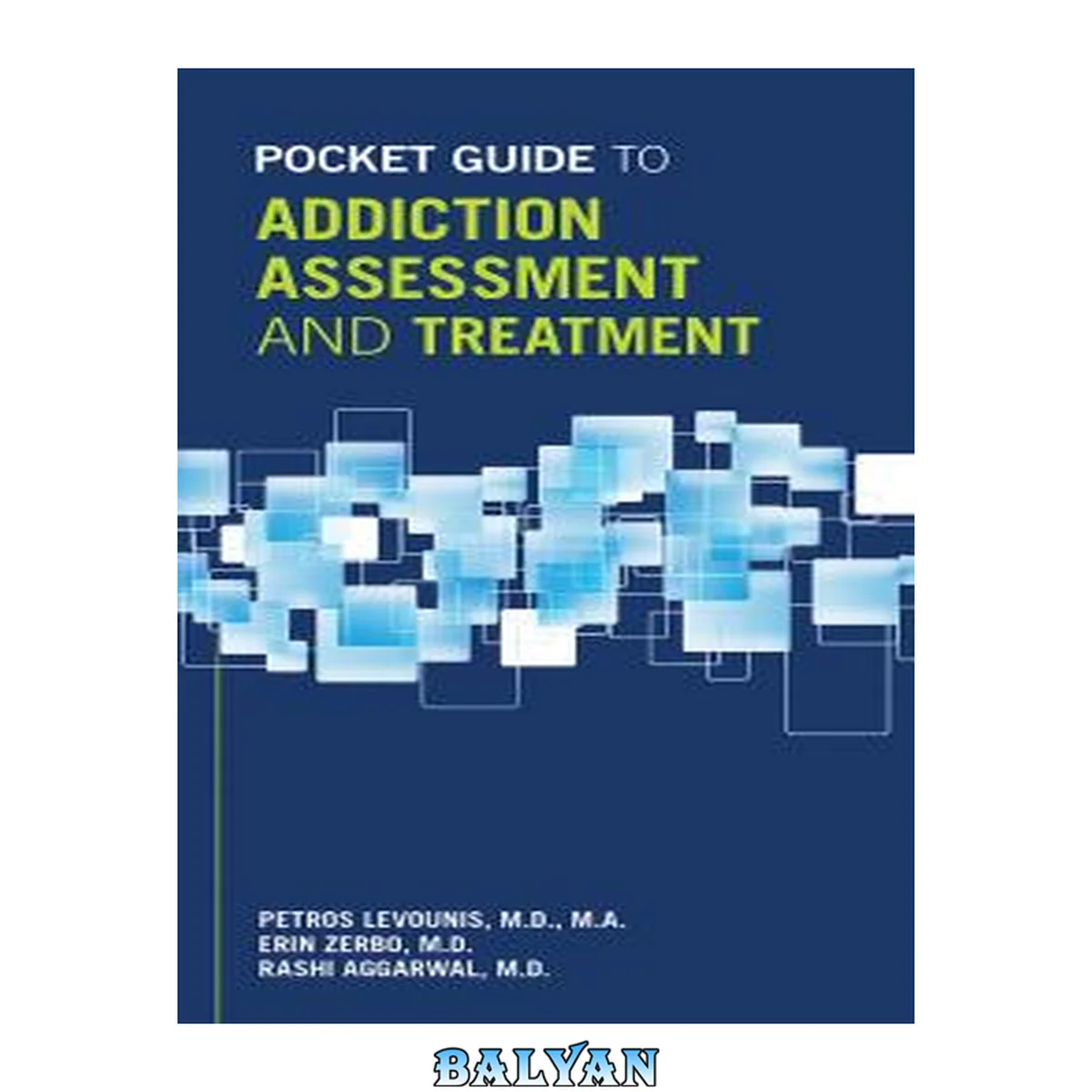
معرفی کتاب «Pocket Guide to Addiction Assessment and Treatment» نوشتهٔ Clement Jean و Petros Levounis; Erin Zerbo; Rashi Aggarwal; American Psychiatric Association، منتشرشده توسط نشر American Psychiatric Association Publishing در سال 2016. این کتاب در فرمت epub، زبان انگلیسی ارائه شده است.
Ambivalence, poor adherence to treatment, serious psychiatric and medical comorbidities -- the difficulties posed by patients of substance use disorders are among the most challenging for practitioners to face. Given that only 10% of patients with these disorders actually receive specialized addiction treatment, it's clear that physicians in all medical and surgical specialties need to become comfortable assessing and treating substance use disorders.
The Pocket Guide to Addiction Assessment and Treatment is designed specifically to aid a wide range of clinicians, regardless of their training in addiction, to more confidently assess and treat this patient population.
The book's practical, actionable content is divided into three sections -- Fundamentals of Addiction, Substances and Behaviors, and Treatment -- that address topics including: The neurobiology of addiction How to recognize and treat intoxication, withdrawal from, and addiction to substances such as alcohol, anabolic-androgenic steroids, benzodiazepines, cannabis, opioids, stimulants, and tobacco, as well as hallucinogens, inhalants, and caffeine Special issues with psychiatric and medical comorbidities, as well as with specific populations Behavioral addictions, with a special focus on gambling disorder Cognitive-behavioral therapy; 12-step programs; nutrition and exercise; spirituality, mindfulness, and meditation; and other treatment options, with examples of how each can be used with patients facing addictions
With an accessible, easily referenced format, the Pocket Guide to Addiction Assessment and Treatment serves as a go-to resource for general psychiatrists, internists, family practitioners, pediatricians, emergency medicine physicians, psychiatric nurses, residents, medical students, and other practitioners involved in the addiction treatment field. And because all of the diagnostic discussions are DSM-5®--based, readers can be confident that they're getting the most relevant and up-to-date guidance on the topic.
Ambivalence, poor adherence to treatment, serious psychiatric and medical comorbidities -- the difficulties posed by patients of substance use disorders are among the most challenging for practitioners to face. Given that only 10% of patients with these disorders actually receive specialized addiction treatment, it's clear that physicians in all medical and surgical specialties need to become comfortable assessing and treating substance use disorders. The Pocket Guide to Addiction Assessment and Treatment is designed specifically to aid a wide range of clinicians, regardless of their training in addiction, to more confidently assess and treat this patient population. The book's practical, actionable content is divided into three sections -- Fundamentals of Addiction, Substances and Behaviors, and Treatment -- that address topics - The neurobiology of addiction- How to recognize and treat intoxication, withdrawal from, and addiction to substances such as alcohol, anabolic-androgenic steroids, benzodiazepines, cannabis, opioids, stimulants, and tobacco, as well as hallucinogens, inhalants, and caffeine- Special issues with psychiatric and medical comorbidities, as well as with specific populations- Behavioral addictions, with a special focus on gambling disorder- Cognitive-behavioral therapy; 12-step programs; nutrition and exercise; spirituality, mindfulness, and meditation; and other treatment options, with examples of how each can be used with patients facing addictions With an accessible, easily referenced format, the Pocket Guide to Addiction Assessment and Treatment serves as a go-to resource for general psychiatrists, internists, family practitioners, pediatricians, emergency medicine physicians, psychiatric nurses, residents, medical students, and other practitioners involved in the addiction treatment field. And because all of the diagnostic discussions are DSM-5(R)--based, readers can be confident that they're getting the most relevant and up-to-date guidance on the topic. Twenty concise chapters accessibly address a broad spectrum of topics, including the fundamentals of addiction; specific substances and addictive behaviors, including gambling disorder; and treatment approaches, including special issues with psychiatric and medical comorbidities.