Pleistocene Mammals of Europe
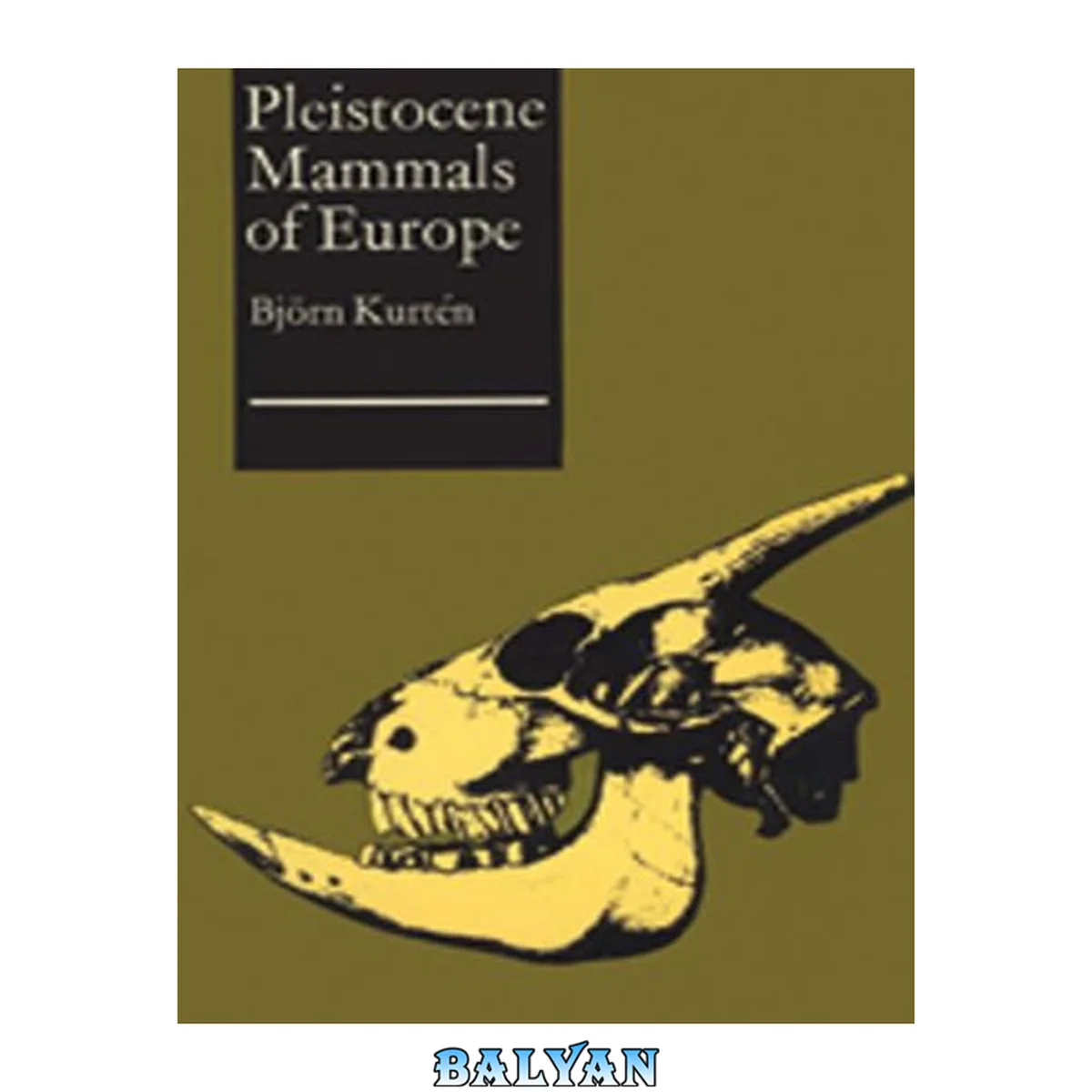
معرفی کتاب «Pleistocene Mammals of Europe» نوشتهٔ Björn Kurtén، منتشرشده توسط نشر Aldine Transaction در سال 2007. این کتاب در فرمت pdf، زبان انگلیسی ارائه شده است.
An important contribution to our understanding of the distribution of retail activities, particularly within cities, this book provides a critical review of the literature on the subject. It points out the major general propositions concerning retailing from the geographical point of view, and identifies key research problems, which need to be examined in order to push forward the frontiers of this sub field of economic geography. It presents a major critique of the central-place model, which has came to hold an important place in the methodology of economic geography, and clearly and decisively shows the model to be static, deterministic, retrospective and of little value for predictive purposes.
Scott also shows with regard to the question of the hierarchy of shopping centers (a major facet of central-place thought) that the methodology employed to identify these hierarchies rests on restricted theory, imperfect data, incomplete measures, and arbitrary decisions. Although he recognizes the value of some of the work associated with the central-place syndrome, the author presents the first effective antithesis to its beguiling and simplistic appeal. He argues that the geography of retailing cannot be understood without reference to the organization of retailing as an economic and social activity and complex patterns of consumer and entrepreneurial behavior, none of which are dealt with in central-place studies.
Distinguished by clarity of presentation objectivity of analysis and breadth of inter-disciplinary interest, this is the only book that covers the geography of retailing substantively and methodologically. This book is jargon and mathematics free, and contains the most complete bibliography on the geography of retailing available in a single volume the book. It will be of value to all social scientists concerned with retailing as a major activity, particularly in modern societies. It may be used as a basic or supplementary text for courses in economic geography, marketing and retailing.
Peter Scott is a recognized expert in the geography of retailing and the economic geography of cities. He is engaged in continuing research in these areas and has worked in South Africa, Australia, and the United Kingdom.
This book provides a comprehensive treatment of all the Pleistocene species in Europe, classified according to modern taxonomic principles. For each species there is a description of its descent and migration history, its range, and its mode of life.
The first version of this book was a semi popular paperback in the Swedish Aldus series. The present edition is completely rewritten and greatly expanded, but retains the non-technical approach to make the story accessible to readers with varying backgrounds. The first part of the book is an outline of the Pleistocene history of Europe, with its climatic changes and succession of mammalian faunas. In the second part are listed all the species of Mammalia known from the Pleistocene and Postglacial of Europe, with the evolution, range in time and space, and mode of life set down for each species, as far as known. The final part is an evaluation of the story in terms of evolution and palaeogeography.
The author begins with a description of the floral and faunal succession in Europe, from the Villafranchian period, when climatic changes were moderate, to the increasing temperature oscillations of the later Pleistocene, with its recurrent faunal revolutions. Against this background Kurten then deals with the whole range of the mammalian species, and his account is fully illustrated by reconstructions and text figures showing skeletal and odontological characters. The book concludes with an analysis of the material available for this study, which throws fresh light on several aspects of zoogeography, evolution, and ecology.
This is the most complete account of the mammalian species of Europe yet to appear, and will be of great value to all paleontologists.
Bj÷rn KurtÚn (1924-1988) was lecturer in palaeontology at the University of Helsinki. He is well known for his studies of the Pleistocene carnivores and of human evolution. He was a recipient of Unesco's Kalinga Award. Some of his most famous publications include On the Variation and Population Dynamics of Fossil and Recent Mammal Populations and Pleistocene Mammals of North America.
Contents......Page 7 Foreword......Page 9 I. Faunal Sequence in Europe......Page 11 1. Setting the Stage......Page 13 2. The Villafranchian, Prelude to the Ice Age......Page 18 3. Chronology of the Ice Age......Page 28 4. The Age of Interglacials......Page 32 5. The Age of Glaciations......Page 38 II. Pleistocene Mammal Species......Page 47 6. Introducing the Pleistocene Mammals......Page 49 7. Order Insectivora......Page 52 8. Order Chiroptera......Page 61 9. Order Primates......Page 68 10. Order Carnivora......Page 72 11. Order Proboscidea......Page 140 12. Order Perissodactyla......Page 149 13. Order Artiodactyla......Page 163 14. Order Rodentia......Page 201 15. Order Lagomorpha......Page 236 III. The Changing Fauna......Page 243 16. The Species Problem in the Quaternary......Page 247 17. Size and Numbers......Page 254 18. Origination of Species......Page 263 19. Faunal Turnover......Page 270 20. Animal Geography......Page 275 21. Man and the Fauna......Page 280 Appendix: Stratigraphic Range of Species......Page 285 References......Page 296 Index......Page 315 An important contribution to our understanding of the distribution of retail activities, particularly within cities, this book provides a critical review of the literature on the subject. It points out the major general propositions concerning retailing from the geographical point of view, and identifies key research problems, which need to be examined in order to push forward the frontiers of this sub field of economic geography. It presents a major critique of the central-place model, which has come to hold an important place in the methodology of economic geography, and clearly and decisively shows the model to be static, deterministic, retrospective and of little value for predictive purposes. Providing an understanding of the distribution of retail activities, particularly within cities, this book provides a critical review of the literature on the subject. It points out the major general propositions concerning retailing from the geographical point of view, and identifies key research problems.