Plant Food Processing Tools at Early Neolithic FORTHCOMING: Plant Food Processing Tools at Early Neolithic Göbekli Tepe
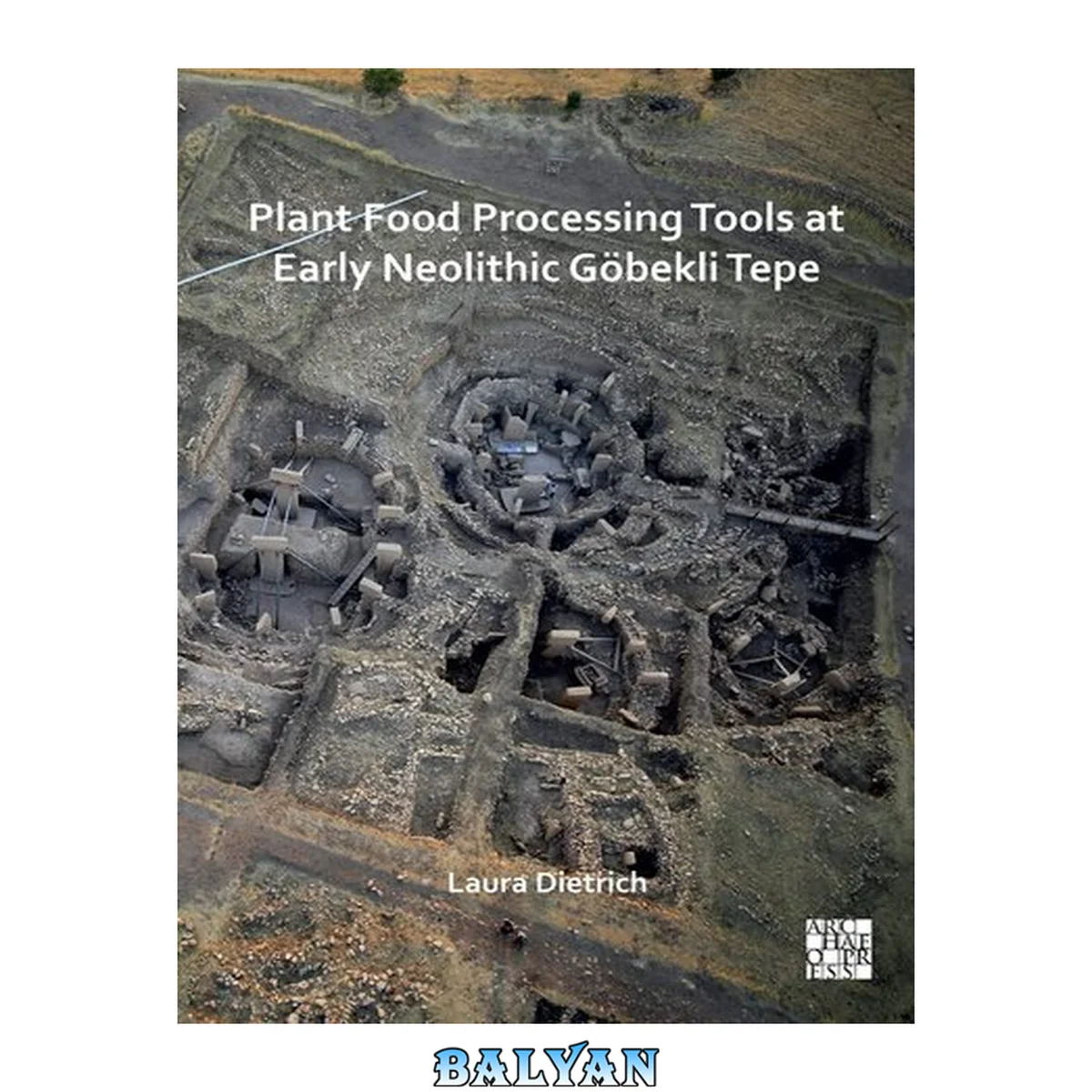
معرفی کتاب «Plant Food Processing Tools at Early Neolithic FORTHCOMING: Plant Food Processing Tools at Early Neolithic Göbekli Tepe» نوشتهٔ Bertrand Russell، Alfred North Whitehead و Laura Dietrich (editor)، منتشرشده توسط نشر Archaeopress Archaeology در سال 2021. این کتاب در فرمت pdf، زبان انگلیسی ارائه شده است.
Plant Food Processing Tools at Early Neolithic Gobekli Tepe reconstructs plant food processing at this key Pre-Pottery Neolithic (9600-8000 BC) site, with an emphasis on cereals, legumes and herbs as food sources, on grinding and pounding tools for their processing, and on the vessels implied in the consumption of meals and beverages. Functional investigations on grinding and pounding tools and on stone containers through use-wear and residue analyses are at the core of the book. Their corpus amounts to more than 7000 objects, constituting thus the largest collection published so far from the Neolithic of Upper Mesopotamia. The spectrum of tools and of processed plants is very broad, but porridges made of cereals, legumes and herbs, and beers predominate over bread-like food. The find contexts show that cooking took place around the well-known monumental buildings, while the large quantity of tools suggests feasting in addition to daily meals. Plant Food Processing Tools at Early Neolithic Göbekli Tepe reconstructs plant food processing at this key Pre-Pottery Neolithic (9600-8000 BC) site, with an emphasis on cereals, legumes and herbs as food sources, on grinding and pounding tools for their processing, and on the vessels implied in the consumption of meals and beverages. Functional investigations on grinding and pounding tools and on stone containers through use-wear and residue analyses are at the core of the book. Their corpus amounts to more than 7000 objects, constituting thus the largest collection published so far from the Neolithic of Upper Mesopotamia. The spectrum of tools and of processed plants is very broad, but porridges made of cereals, legumes and herbs, and beers predominate over bread-like food. The find contexts show that cooking took place around the well-known monumental buildings, while the large quantity of tools suggests feasting in addition to daily meals. Cover 1 Title Page 3 Copyright Page 4 Contents 5 List of Figures 6 FIGURE 1.1. The “stone garden” next to the excavation areas at Göbekli Tepe (©German Archaeological Institute, Photo Mehmet Gülebak). D-DAI-IST-GT16-MG-0070. 14 FIGURE 1.2. The “stone garden” next to the excavation areas at Göbekli Tepe, 3D (1) and detail (2) (©German Archaeological Institute, Photos Laura Dietrich and Hajo Höhler-Brockmann, 3d Laura Dietrich). DAI-IST-GT17-LD/HHB-0268-0269. 14 FIGURE 2.1. The archaeological site of Göbekli Tepe. Main excavation area with four monumental circular buildings and adjacent rectangular buildings (©German Archaeological Institute, Photo Erhan Kücük, Graphics André Beuger). 18 FIGURE 2.2. Stratigraphy of Göbekli Tepe. Eastern profile of area L9-78 in the main excavation area, cutting through building D (©German Archaeological Institute, compilation Jens Notroff). 19 FIGURE 3.1. Schema for the spatial description of wear (©Laura Dietrich). 26 FIGURE 3.2. Replicas of handstones and pestles from Göbekli Tepe used in the experimental program (©Laura Dietrich). 27 FIGURE 3.3. Production of coarse and fine flour and spreading pattern of the flour after 5min of grinding (coarse: above, fine: below) (©Laura Dietrich). 29 FIGURE 3.4. 3D-models of L13 (©Laura Dietrich). 30 FIGURE 3.5. 3D-model of L13 with the microscopically analyzed spots marked (©Laura Dietrich). 31 FIGURE 3.6. Macrophotos of L13 (working face) (©Laura Dietrich). 32 FIGURE 3.7. Microphotos of L13 (working face) (©Laura Dietrich). 33 FIGURE 3.8. 3D-models of L10 (©Laura Dietrich). 34 FIGURE 3.9. 3D-models of L10 (©Laura Dietrich). 35 FIGURE 3.10. 3D-model of L10 with the microscopically analyzed spots marked (©Laura Dietrich). 36 FIGURE 3.11. Macrophotos of L10 (working face) (©Laura Dietrich). 37 FIGURE 3.12 Microphotos of L10 (working face) (©Laura Dietrich). 38 FIGURE 3.13. Wear-markers (WM) 1, 2 and 3 formed during EP1 (©Laura Dietrich). 39 FIGURE 4.1. Handstones from Göbekli Tepe (©German Archaeological Institute, Photo Laura Dietrich). D-DAI-IST-GT18-LD-0001. 46 FIGURE 4.2. Typology of the handstones from Göbekli Tepe. Schematic depiction of shapes (white) and profiles (grey) (©Laura Dietrich). 48 FIGURE 4.3. Handling the originals: examples of haptic possibilities (©German Archaeological Institute, Photo Laura Dietrich). 49 FIGURE 4.4. Boulder in the basalt field (©Laura Dietrich). 50 FIGURE 4.5. Boulders in the basalt field (©Laura Dietrich). 50 FIGURE 4.6. Possible fragments from the production process from the excavations (©German Archaeological Institute, Photo Laura Dietrich). D-DAI-IST-GT18-LD-0004. 51 FIGURE 4.7. Original handstones and comparison between wear progression on salt blocks after 18 respectively 22 WU and profiles of the handstones at Göbekli Tepe (©German Archaeological Institute and Laura Dietrich, Photos Laura Dietrich). D-DAI-IST-GT18- 52 FIGURE 4.8. Blanks for handstones of type 6 (© German Archaeological Institute, Photo Laura Dietrich). D-DAI-IST-GT18-LD-0008. 53 FIGURE. 4.9. Schematic depiction with the classification of the surface deformations (©Laura Dietrich). 56 FIGURE 4.10. 3D-Meshes without color texture with surfaces of type 1 and 2 (©German Archaeological Institute, Photos and 3D-models Hajo Höhler-Brockmann). D-DAI-IST-GT17-HHB-0009-0013. 57 FIGURE 4.11. Handstone 18_000139 and experimental handstone L13 (©German Archaeological Institute and Laura Dietrich, Photos and 3D-models Laura Dietrich and Max Haibt). D-DAI-IST-GT17-HHB-0014 (left above). 58 FIGURE 4.12. Above: surface roughness modeled in CloudCompare and cleaned by SOR: 1-3, of the replica L13 after 1WU (1), 3WU (2) and 7WU (3); of the Neolithic handstone18_000139. Flatter surface of the margins and edges of the Neolithic (5) and experiment 59 FIGURE 4.13. Spatial distribution of the types (©Laura Dietrich). 60 FIGURE 4.14. Above: Microwear from replica L10 (5-8) used to grind coarse flour and from the Neolithic handstone 00_000034 (1-4). Note the similar topography on the center and margins and the wear-marker for coarse flour: erratic short gouges on flattened 61 FIGURE 4.15. Microwear from replica L13 (9-12) used to grind fine flour and from the Neolithic handstones 18_000139 (1-4) and 00_000028 (5-8). Note the typical wear-marker for fine flour: thin striations on flattened high topography on the margins (Nr. 3- 62 FIGURE 4.16. Reconstruction of use for handstones of type 1: processing of cereals to coarse flour (©German Archaeological Institute and Laura Dietrich, Photos Laura Dietrich). 64 FIGURE 4.17. Reconstruction of use for handstones of type 1: processing of cereals to fine flour (©German Archaeological Institute and Laura Dietrich, Photos Laura Dietrich and Hajo Höhler-Brockmann). 65 FIGURE 4.18. Reconstruction of use for handstones of type 2: processing of cereals to fine flour (©German Archaeological Institute and Laura Dietrich, Photos Laura Dietrich). 66 FIGURE 4.19. Reconstruction of use for handstones of type 2: mixed use for coarse and fine flour (©German Archaeological Institute and Laura Dietrich Photos Laura Dietrich). 67 FIGURE 4.20. Notched boxplot with the lengths of the complete and fragmented handstones of types 1 and 2 (©Laura Dietrich). 70 FIGURE 4.21. Distribution of grinding stones (©German Archaeological Institute and Laura Dietrich, map Laura Dietrich and André Beuger). The phytolith analyses of grinding stone surfaces were performed on the single finds marked with triangles. 71 FIGURE 4.22. The distribution of the handstones in the rectangular buildings (©Laura Dietrich). 72 FIGURE 4.23. The distribution of the handstones in the monumental buildings (©Laura Dietrich). 72 FIGURE 4.24. Rectangular buildings with grinding equipment (©German Archaeological Institute, Photos Klaus Schmidt). DAI-IST-GT99-KS-N02-15; DAI-IST-GT99-KS-D1401; DAI-IST-GT01-KS-N16-12; DAI-IST-GT98-KS-D980004; 74 FIGURE 4.25. Area L9-56 and Building 9 in different stages of excavation (©German Archaeological Institute, Photos Klaus Schmidt). D-DAI-IST-GT98-KS-N03-007A, D-DAI-IST-GT98-KS-N05- 007A, D-DAI-IST-GT98-KS-N12-0004, D-DAI-IST-GT99-KS-N6-0006. 75 FIGURE 4.26. Area K9-97 with Building 147 (old number 5) (©German Archaeological Institute, Photos Klaus Schmidt). D-DAI-IST-GT08-KS-N07-0004, D-DAI-IST-GT08-KS-N07-0004, D-DAI-IST-GT08-KS-N11-0005, D-DAI-IST-GT08-KS-N12-0006. 76 FIGURE 4.27. Area L9-07 with Building 134 (old number 17) (©German Archaeological Institute, Photo Klaus Schmidt). D-DAI-IST-GT12-KS-3364. 77 FIGURE 4.28. Handstones under a large limestone boulder in front of the pillar in building 134 (©German Archaeological Institute, Photo Klaus Schmidt). D-DAI-IST-GT12-KS-2798. 77 FIGURE 4.29. Sets of grinding stones at the pillar in area L9-27 (©German Archaeological Institute, Photo Klaus Schmidt). D-DAI-IST-GT12-KS. 78 FIGURE 4.30. “Fallen” grinding stones in area L9-27 (©German Archaeological Institute, Photo Klaus Schmidt). D-DAI-IST-GT12-KS-PXL-8664. 79 FIGURE 4.31. Handstone 18_000358 found on the floor next to pillar 18 in monumental Building D (©German Archaeological Institute, Photos Laura Dietrich). D-DAI-IST-GT18-LD-0030. 81 PLATE 4.1. Handstones (©German Archaeological Institute, Photos Laura Dietrich) 82 PLATE 4.2. Handstones (©German Archaeological Institute, Photos Laura Dietrich) 83 PLATE 4.3. Handstones (©German Archaeological Institute, Photos Laura Dietrich) 84 PLATE 4.4. Handstones (©German Archaeological Institute, Photos Laura Dietrich) 85 PLATE 4.5. Handstones (©German Archaeological Institute, Photos Laura Dietrich) 86 PLATE 4.6. Handstones (©German Archaeological Institute, Photos Laura Dietrich) 87 PLATE 4.7. Handstones (©German Archaeological Institute, Photos Laura Dietrich) 88 PLATE 4.8. Handstones (©German Archaeological Institute, Photos Laura Dietrich) 89 PLATE 4.9. Handstones (©German Archaeological Institute, Photos Laura Dietrich) 90 PLATE 4.10. Handstones (©German Archaeological Institute, Photos Laura Dietrich) 91 PLATE 4.11. Handstones (©German Archaeological Institute, Photos Laura Dietrich) 92 PLATE 4.12. Handstones (©German Archaeological Institute, Photos Laura Dietrich) 93 PLATE 4.13. Handstones (©German Archaeological Institute, Photos Laura Dietrich) 94 PLATE 4.14. Handstones (©German Archaeological Institute, Photos Laura Dietrich) 95 PLATE 4.15. Handstones (©German Archaeological Institute, Photos Laura Dietrich) 96 PLATE 4.16. Handstones (©German Archaeological Institute, Photos Laura Dietrich) 97 PLATE 4.17. Handstones (©German Archaeological Institute, Photos Laura Dietrich) 98 FIGURE 5.1. Types of pestles from Göbekli Tepe (©Laura Dietrich). 100 FIGURE 5.2. Pestle nr. 97_000651(©German Archaeological Institute, Photo Klaus Schmidt). D-DAI-IST-GT97-KS-5926. 102 FIGURE 5.3. Pestle nr. 10_000309 (©German Archaeological Institute, Photo Nico Becker). D-DAI-IST-GT10-NB-0113. 102 FIGURE 5.4. Pestle nr. 98_000169 (©German Archaeological Institute, Photo Laura Dietrich). D-DAI-IST-GT18-LD-0215-0216. 102 FIGURE 5.5. Pestle nr. 95_000819 (©German Archaeological Institute, Photo Laura Dietrich). D-DAI-IST-GT18-LD-0217. 102 FIGURE 5.6. Pestle nr. 99_000302 (© German Archaeological Institute, Photo Laura Dietrich). D-DAI-IST-GT18-LD-0218. 102 FIGURE 5.7. Pestle nr. 11_000028 (©German Archaeological Institute, Photo Nico Becker). D-DAI-IST-GT11-NB-3543 103 FIGURE 5.8. Pestle nr. 11_000031 (©German Archaeological Institute, Photo Nico Becker). D-DAI-IST-GT11-NB-3502; D-DAI-IST-GT11-NB-3546. 103 FIGURE 5.9. Pestle nr. 98_000510 (©German Archaeological Institute, Photo Laura Dietrich). D-DAI-IST-GT18-LD-0219. 103 FIGURE 5.10. Pestle nr. 09_000145 (©German Archaeological Institute, Photo Nico Becker). D-DAI-IST-GT09-NB-0189 104 FIGURE 5.11. Pestle nr. 10_000311 (©German Archaeological Institute, Photo Nico Becker). D-DAI-IST-GT10-NB-0121 104 FIGURE 5.12. Pestle nr. 01_000353 (© German Archaeological Institute, Photo Klaus Schmidt). D-DAI-IST-GT01-KS-6764 105 FIGURE 5.13. Pestle nr. 95_001743 (©German Archaeological Institute, Photo Laura Dietrich). D-DAI-IST-GT18-LD-0220. 105 FIGURE 5.14. Pestle nr. 12_000579 (©German Archaeological Institute, Photo Nico Becker). D-DAI-IST-GT12-NB-1108 105 FIGURE 5.15. Pestle nr. 12_000009 (©German Archaeological Institute, Photo Nico Becker). D-DAI-IST-GT12-NB-3935 105 FIGURE 5.16. Pestle nr. 95_000945 (©German Archaeological Institute, Photo Laura Dietrich). D-DAI-IST-GT18-LD-0221. 106 FIGURE 5.17. Pestle nr. 97_000270 (©German Archaeological Institute, Photo Laura Dietrich). D-DAI-IST-GT18-LD-0222. 106 FIGURE 5.18. Upper left: Pestle nr. 98-169, in the process of re-working into an axe through knapping (Photo Laura Dietrich). Upper right: Axe of a similar shape with knapped blade and pecked body. Lower left: Axe with pecked body. Lower right: Axe with g 106 FIGURE 5.19. Notched boxplot showing the distribution of lengths for pestle fragments (V1) and complete pestles (V2) (©Laura Dietrich). 107 FIGURE 5.20. Pestles: Distribution in the fillings of the rectangular buildings (©Laura Dietrich). 107 FIGURE 5.21. Distribution of pestles in building D (©Laura Dietrich). 108 FIGURE 6.1. Typology of the deformations of the working faces of netherstones including the terminology used (©Laura Dietrich). 110 FIGURE 6.2. The most frequent netherstone type at Göbekli Tepe: long flattened boulders (LB), oval to subrectangular and irregular in top-view with a flat or rounded, relatively stable base (©German Archaeological Institute and Laura Dietrich, Photos Laur 112 FIGURE 6.3. The second and third netherstone types: thin platters and short boulders (©German Archaeological Institute and Laura Dietrich, Photos Laura Dietrich). 113 FIGURE 6.4. Narrow boulders and hollowed boulder (©German Archaeological Institute and Laura Dietrich, Photos Laura Dietrich). 114 FIGURE 6.5. L-shaped boulder and small boulders (©German Archaeological Institute and Laura Dietrich, Photos Laura Dietrich). 115 FIGURE 6.6. The most frequent uses of boulders: oval-large deformation D2 (above) and small-circular depression D6 (below). (©German Archaeological Institute and Laura Dietrich, Photos Laura Dietrich). 116 FIGURE 6.7. Relatively frequent uses of boulders: narrow deformation D5 (above) and narrow-oval deformation D3 (below). (©German Archaeological Institute and Laura Dietrich, Photos Laura Dietrich). 118 FIGURE 6.8. Rare uses of boulders: subrectangular deformations (©German Archaeological Institute and Laura Dietrich, Photos Laura Dietrich). 119 FIGURE 6.9. EP4a showing the deformation of the salt netherstone in different use stages (©Laura Dietrich, Photos Laura Dietrich). 120 FIGURE 6.10. Netherstone Nr. 18_000053 and its stratigraphy of wear (©German Archaeological Institute and Laura Dietrich, Photos Laura Dietrich and Hajo Höhler-Brockmann; 3D-model N. Schäkel). D-DAI-IST-GT17-LD/HHB-0224. 121 FIGURE 6.11. Holes made from the outside in hollowed boulders with typical scar negatives (©German Archaeological Institute, Photos Laura Dietrich). D-DAI-IST-GT19-LD-0225-0228. 124 FIGURE 6.12. Hollowed boulder nr. 18_000025 with use-wear stratigraphy (©German Archaeological Institute and Laura Dietrich, Photos and 3D-models Laura Dietrich and Hajo Höhler Brockmann). D-DAI-IST-GT17-LD/HHB-0229. 125 FIGURE 6.13. Reconstruction of use of the hollowed boulders (©German Archaeological Institute and Laura Dietrich, Photos and 3D-models Hajo Höhler Brockmann and Laura Dietrich). 126 FIGURE 6.14. L-shaped boulders and their deformations (©German Archaeological Institute and Laura Dietrich, Photos Laura Dietrich). 126 FIGURE 6.15. Distribution of netherstones within the infills of the rectangular rooms (©Laura Dietrich). 128 FIGURE 6.16. Distribution of netherstones inside the filling of Building D (©Laura Dietrich). 128 PLATE 6.1. Netherstones (©German Archaeological Institute, Photos Hajo Höhler-Brockmann) 130 PLATE 6.2. Netherstones (©German Archaeological Institute, Photos Laura Dietrich) 131 PLATE 6.3. Netherstones (©German Archaeological Institute, Photos Laura Dietrich) 132 PLATE 6.4. Netherstones (©German Archaeological Institute, Photos Laura Dietrich) 133 PLATE 6.5. Netherstones (©German Archaeological Institute, Photos Laura Dietrich) 134 PLATE 6.6. Netherstones (©German Archaeological Institute, Photos Laura Dietrich) 135 PLATE 6.7. Netherstones (©German Archaeological Institute, Photos Laura Dietrich) 136 FIGURE 7.1. Stone vessels from Göbekli Tepe: shapes (©German Archaeological Institute and Laura Dietrich, Photos Nico Becker). D-DAI-IST-GT12-NB-1111, 1113; D-DAI-IST-GT11-NB-8783, 8792; 138 FIGURE 7.2. Stone troughs from Göbekli Tepe: shapes (©Laura Dietrich). 139 FIGURE 7.3. Stone troughs from Göbekli Tepe (Table 7.2 for contexts; ©German Archaeological Institute, Photos Nico Becker (1-3) and Oliver Dietrich (4). D-DAI-IST-GT11-NB-9313; D-DAI-IST-GT11-NB-9348; D-DAI-IST-GT10-NB-4458; D-DAI-IST-GT10-OD-4240. 140 FIGURE 7.4. Stone troughs in situ at Göbekli Tepe (©German Archaeological Institute, photos Thomas Urban (1) and Oliver Dietrich (2). 141 FIGURE 7.5. Stone vessels in situ at Göbekli Tepe (©German Archaeological Institute, Photos Laura Dietrich). D-DAI-IST-GT18-LD-0257. 145 FIGURE 7.6. Stone trough and stone vessel in situ at Göbekli Tepe (©German Archaeological Institute, Photo Klaus Schmidt). D-DAI-IST-GT08-KS-N07-07. 146 FIGURE 7.7. Stone trough ST4 in situ at Göbekli Tepe (©German Archaeological Institute, Photo Thomas Urban and Oliver Dietrich, compilation Jens Notroff) 148 FIGURE 7.8. Stone platters from Göbekli Tepe (©German Archaeological Institute, Photos Laura Dietrich and Hajo-Höhler Brockmmann, 3D-models Hajo Höhler-Brockmann). D-DAI-IST-GT17-HHB-0258-0259; D-DAI-IST-GT19-LD-0260-0263). 149 FIGURE 7.10. Deposition of platters and stone vessels in monumental building C, at one of the central pillars (©German Archaeological Institute, Photo Klaus Schmidt). D-DAI-IST-GT08-KS-6430. 150 FIGURE 7.9. Ensemble of handstone, fragmented netherstone and platter from below pillar 18 in monumental building D (©German Archaeological Institute, Photos Laura Dietrich). D-DAI-IST-GT19-LD-0264-0266. 150 FIGURE 7.11. Shape of the greenstone vessels (©German Archaeological Institute, Photos Klaus Schmidt and Nico Becker). D-DAI-IST-GT10-NB-0129; D-DAI-IST-GT99-KS-0511; D-DAI-IST-GT12-NB-1070; D-DAI-IST-GT11-NB-6787. 152 PLATE 7.1. Stone vessels (©German Archaeological Institute, 1-3, Photos Nico Becker, 4. Photos Klaus Schmidt) 156 PLATE 7.2. Stone vessels (©German Archaeological Institute, Photos Nico Becker) 157 PLATE 7.3. Stone vessels (©German Archaeological Institute, 1-2 Photos Klaus Schmidt, 3-4 Photos Nico Becker) 158 PLATE 7.4. Stone vessels (©German Archaeological Institute, 1-2, 4 Photos Klaus Schmidt, 3, 5-6 Photos Nico Becker) 159 PLATE 7.5. Stone vessels (©German Archaeological Institute, drawings Jens Notroff) 160 PLATE 7.6. Stone vessels (©German Archaeological Institute, drawings Jens Notroff) 161 PLATE 7.7. Stone vessels (©German Archaeological Institute, drawings Jens Notroff) 162 PLATE 7.8. Stone vessels (©German Archaeological Institute, drawings Jens Notroff) 163 PLATE 7.9. Stone vessels (©German Archaeological Institute, drawings Jens Notroff) 164 FIGURE 8.1. Göbekli Tepe and graphical reconstruction of the PPNB-Settlement (©German Archaeological Institute, Graphics Jens Notroff, Photo Nico Becker). D-DAI-IST-GT10-NB5687. 167 FIGURE 8.2. Processing cereals at Göbekli Tepe: reconstruction (©Laura Dietrich, reconstruction drawing Jens Notroff). 170 FIGURE 8.3. Processing legumes at Göbekli Tepe: reconstruction (©Laura Dietrich, reconstruction drawing Jens Notroff). 171 FIGURE 8.4. Processing ochre at Göbekli Tepe: reconstruction (©Laura Dietrich, reconstruction drawing Jens Notroff). 173 FIGURE 8.5. Reconstruction of the grinding and pounding tool kits and cereal products for the PPNA and Early/Middle PPNB (drawing Laura Dietrich) 175 FIGURE 9.1. Pillar 43 from Göbekli Tepe (©Oliver Dietrich) 179 FIGURE 9.2. Pillar 43 from Göbekli Tepe (Reconstruction Oliver Dietrich) 180 List of Tables 10 Appendices 11 Table 1: Handstones of type 1 (n=466)* 181 Table 2: Handstones of type 2 (n=246) 192 Table 3: Handstones of type 3 (n=3) 197 Table 4: Handstones of type 4 (n=16) 198 Table 5: Handstones of Type 5 (n=5) 198 Table 6: Handstones of Type 6 (n=120) 198 Table 7: Handstones of Type 7 (n=18) 201 Table 8: Handstones of type 8 (n=16) 201 Table 10: Handstones of type 10 (n=53) 202 Table 9: Handstones of type 9 (n=25) 202 Table 11: Netherstones of type 1/LB (n=128) 203 Table 12: Netherstones of type 2 (n=29) 206 Table 13: Netherstone of type 3 (n=11) 207 Table 14: Netherstones of type 4 (n=5) 207 Table 15: Netherstones of type 5 (n=4) 208 Table 16: Netherstones of type 6 (n=51) 208 Table 17: Netherstones of type 7 (n=66) 209 Table 18: Netherstones of type 8 (n=12) 210 Table 19. Pestles of type 1 (n=20) 211 Table 20. Pestles of type 2 (n=11) 211 Table 21: Pestles of type 3 (n=18) 212 Table 22: Pestles of type 4 (n=2) 212 Table 23: Pestles of type 5 (n=7) 212 Table 24: Pestles of type 6 (n=2) 212 Table 25: Pestles of type 7 (n=18) 213 Table 26: Pestles of type 8 (n=6) 213 Table 27: Pestles of type 9 (n=1) 213 Table 28: “Greenstone vessels” (n=83) 213 Table 29: Limestone containers (n=411) 218 Table 30: Platters (n=111) 225 Table 31a: Macroscopical description of handstone L13 227 Table 31b: Microscopical description of handstone L13 228 Table 31c: Macroscopical description of handstone L10 230 Table 31d: Microscopical description of handstone L10 231 TABLE 3.1. Zones of the filling of the rectangular and apsidal buildings as defined for the statistical purposes of the present study. 23 TABLE 3.2. Description schema for optical macroscopical and microscopical investigations. 25 TABLE 3.3. Overview on the experimental work with handstone L10 for the production of coarse flour (own work; average of 31 working hours). 28 TABLE 3.4. Overview on the experimental work with handstone L10 for the production of fine flour (own work, average of 16 working hours). 28 TABLE 3.5. Overview on the additional experimental work with different participants. 28 TABLE 3.6. Wear-markers defined on originals and replicas. 41 TABLE 4.1. Documentation of the handstones. 46 TABLE 4.2. Typology of the handstones from Göbekli Tepe (compare FIGURES 4.1 and 4.2). 47 TABLE 4.3. Blanks collected during the survey of the basalt field (survey and data Devrim Sönmez). 53 TABLE 4.4. Natural surfaces and surface deformations on handstones. 55 TABLE 4.5. Distribution of the surface deformations on handstones of type 1. 63 TABLE 4.6. Distribution of the surface deformations on handstones of type 2. 67 TABLE 4.7. Distribution of the surface deformations on handstones of type 3. 68 TABLE 4.8. Distribution of the surface deformations on handstones of type 4. 68 TABLE 4.9. Distribution of the surface deformations on handstones of type 5. 68 TABLE 4.10. Distribution of the surface deformations on handstones of type 6. 69 TABLE 4.11. Distribution of the surface deformations on handstones of type 7. 69 TABLE 4.12. Distribution of the surface deformations on handstones of type 8. 69 TABLE 4.13. Distribution of the surface deformations on handstones of type 9. 69 TABLE 4.14. Distribution of the surface deformations on handstones of type 10. 70 TABLE 4.15. Chronological distribution of the analyzed finds 72 TABLE 4.16. The distribution of the handstones in the rectangular buildings and outside (except the fills of the monumental buildings). 72 TABLE 4.17. Distribution of grinding stones in a selection of buildings in the main excavation area. 73 TABLE 5.1. Distribution in the fillings of the rectangular buildings. 108 TABLE 6.1. Boulder shapes at Göbekli Tepe. 111 TABLE 6.2. Contexts of the netherstones. 116 TABLE 7.1. Small and medium-sized vessels from Göbekli Tepe: description of shapes. 139 TABLE 7.2. In situ limestone troughs at Göbekli Tepe. 142 TABLE 7.3. Macroscopical and microscopical analyses on troughs, vessels, and platters from Göbekli Tepe. 143 TABLE 7.4. Find contexts of the stone vessels and troughs from Göbekli Tepe. 145 TABLE 7.5. Platters from Göbekli Tepe: shape description. 147 TABLE 7.6. Find contexts of the platters from Göbekli Tepe. 151 Highlights of the Study 13 The Site with Oliver Dietrich and Jens Notroff 16 Methods, Experiments and their Results 22 Handstones 45 Pestles 99 The Netherstones 109 Stone Containers and Platters 137 Discussion of the Results of the Analysis 165 Plants and Landscapes at Göbekli Tepe (Excursus) 178 Appendices 181 Bibliography 238 Plant Food Processing Tools at Early Neolithic Goebekli Tepe reconstructs plant food processing at this key Pre-Pottery Neolithic (9600-8000 BC) site, with an emphasis on cereals, legumes and herbs as food sources, on grinding and pounding tools for their processing, and on the vessels implied in the consumption of meals and beverages. Functional investigations on grinding and pounding tools and on stone containers through use-wear and residue analyses are at the core of the book. Their corpus amounts to more than 7000 objects, constituting thus the largest collection published so far from the Neolithic of Upper Mesopotamia. The spectrum of tools and of processed plants is very broad, but porridges made of cereals, legumes and herbs, and beers predominate over bread-like food. The find contexts show that cooking took place around the well-known monumental buildings, while the large quantity of tools suggests feasting in addition to daily meals
دانلود کتاب Plant Food Processing Tools at Early Neolithic FORTHCOMING: Plant Food Processing Tools at Early Neolithic Göbekli Tepe