Philosophers
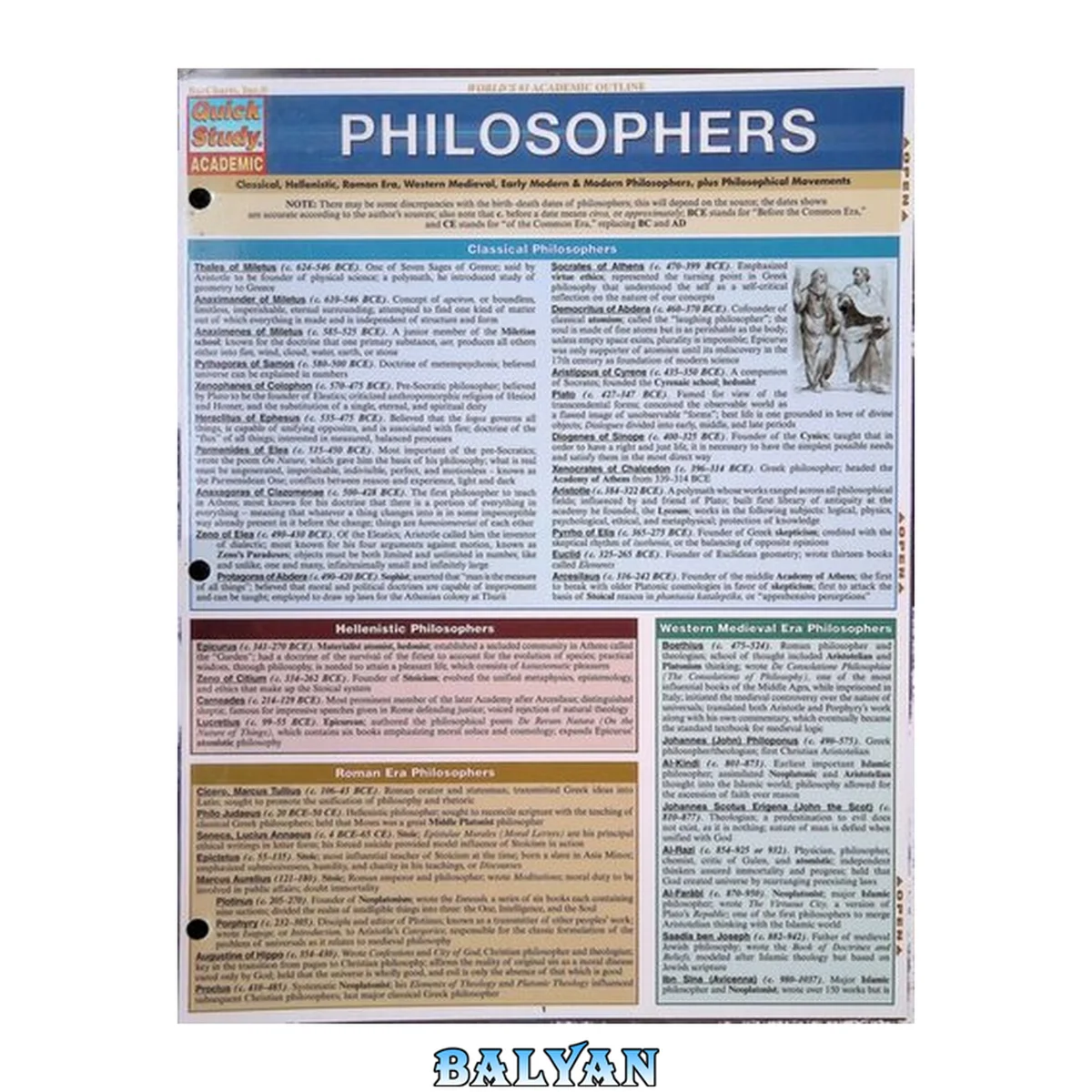
معرفی کتاب «Philosophers» نوشتهٔ Dogan Ibrahim، Elektor-Verlag GmbH و C. Wayne Mayhall، منتشرشده توسط نشر BarCharts در سال 2010. این کتاب در فرمت pdf، زبان انگلیسی ارائه شده است.
This book is about Raspberry Pi 4 display projects. The book starts by explaining how to install the latest Raspbian operating system on an SD card, and how to configure and use the GPIO ports.The core of the book explains the following topics in simple terms with fully tested and working example projectsSimple LED projectsBar graph LED projectsMatrix LED projectsBitmap LED projectsLED stripsLCDsOLED displaysE-paper displaysTFT displays7-inch touch screenGUI Programming with TkinderOne unique feature of this book is that it covers almost all types of display that readers will need to use in their Raspberry Pi based projects. The operation of each project is fully given, including block diagrams, circuit diagrams, and commented full program listings. It is therefore an easy task to convert the given projects to run on other popular platforms, such as Arduino or PIC microcontrollers. Table of Contents ● Preface Chapter 1 ● Installing the Operating System on Raspberry Pi 1.1 ● Overview 1.2 ● Raspbian Buster installation steps on Raspberry Pi 4 1.3 ● Using a networked connection 1.4 ● Remote access 1.5 ● Using Putty 1.6 ● Desktop remote access 1.7 ● Static IP address 1.8 ● Summary Chapter 2 ● Raspberry Pi Program Development 2.1 ● Overview 2.2 ● The nano text editor 2.3 ● Creating and running a Python program 2.4 ● Summary Chapter 3 ● GPIO 3.1 ● Overview 3.2 ● The Raspberry Pi 4 GPIO connector 3.3 ● Interfacing to the GPIO 3.3.1 ● Loads requiring small currents 3.3.2 ● Loads requiring higher currents 3.3.3 ● Using relays 3.4 ● The GPIO library 3.4.1 ● Pin numbering 3.4.2 ● Channel (I/O port pin) configuration 3.5 ● Raspberry Pi project development cycle 3.5.1 ● The hardware 3.5.2 ● The software 3.6 ● Summary Chapter 4 ● LED Projects 4.1 ● Overview 4.2 ● Project 1 - Alternate flashing red, green, and blue LEDs 4.3 ● Running a program automatically at startup time 4.4 ● Scheduling a program to run at specified times 4.5 ● Project 2 - Binary up counting LEDs 4.6 ● Project 3 - Random flashing Christmas lights 4.7 ● Project 4 - Lucky day of the week 4.8 ● Project 5 - LED bargraph 4.9 ● Project 6 - Using shift registers in LED displays 4.10 ● Project 7 - The BarGraph click board - Counting up in binary 4.11 ● Project 8 - The BarGraph click board - Bar graph 4.12 ● Project 9 - 2 digit multiplexed 7-Segment LED display seconds counter 4.13 ● Project 10 - 2 digit 7-segment temperature display 4.14 ● Project 11 - 4 digit 7-segment display seconds counter 4.15 ● Project 12 - Using the UT-M 7-SEG R Click board - 2 digit up counter 4.16 ● Project 13 - MAX7219 based 8 Digit 7-Segment LED - 8 digit up counter 4.17 ● Project 14 - Using a dot matrix display - Dot Matrix R Click 4.18 ● Using a 8x32 dot matrix display 4.19 ● Project 15 - Matrix display - Displaying letters 4.20 ● Project 16 - Matrix display - Drawing a rectangle box with letters 4.21 ● Project 17 - Matrix display - Scrolling text 4.22 ● Project 18 - Matrix display - Scrolling printable ASCII characters in small font 4.23 ● Using LED strips 4.24 ● Project 19 - LED strip: displaying different colours 4.25 ● Project 20 - LED strip: displaying random colours (all LEDs have same colours) 4.26 ● Project 21 - LED strip: displaying random colours (LEDs have different colours) 4.27 ● Summary Chapter 5 ● Using Liquid Crystal Displays (LCDs) 5.1 ● Overview 5.2 ● HD44780 LCD module 5.3 ● Installing the Python library for parallel LCDs 5.4 ● The library functions 5.5 ● Project 1 - Parallel LCD - Seconds Counter 5.6 ● Project 2 - Parallel LCD - Read text from the keyboard and display on LCD 5.7 ● Project 3 - Parallel LCD - Scrolling text read from the keyboard 5.8 ● Project 4 - Parallel LCD - Displaying temperature and humidity 5.9 ● Project 5 - Parallel LCD - Display the current date and time on the LCD 5.10 ● Using I2C LCDs 5.11 ● Project 6 - I2C LCD - Read text from the keyboard and display on LCD 5.12 ● Project 7 - I2C LCD - Display the current date and time on the LCD 5.13 ● Project 8 - I2C LCD - Displaying temperature and humidity 5.14 ● Summary Chapter 6 ● Using Organic Light Emitting Diode Displays (OLED) 6.1 ● Overview 6.2 ● Using OLED displays 6.3 ● Project 1 - Displaying pixels at the four corners of the display 6.4 ● Project 2 - Displaying text 6.5 ● Project 3 - Displaying Shapes 6.6 ● Project 4 - Creating and displaying a bitmap 6.7 ● Summary Chapter 7 ● Using e-paper Displays 7.1 ● Overview 7.2 ● How do e-paper displays work? 7.3 ● Use of the e-paper displays 7.4 ● Advantages and disadvantages of the e-paper displays 7.5 ● Comparing the e-paper displays with LCDs 7.6 ● Coloured e-paper displays 7.7 ● Project 1 - Using an e-paper - displaying rectangle with text inside 7.8 ● Project 2 - Using an e-paper - displaying an image 7.9 ● Summary Chapter 8 ● Plotting Graphs 8.1 ● Overview 8.2 ● Plotting in Python 8.2.1 ● Graph of a quadratic function 8.2.2 ● Drawing multiple graphs 8.3 ● Project - Real-Time graph of the temperature and humidity 8.4 ● Summary Chapter 9 ● Using Thin-Film-Transistor (TFT) Displays 9.1 ● Overview 9.2 ● The 1.8 inch TFT display 9.3 ● Project 1 - Drawing a green colour rectangle with blue colour text inside 9.4 ● Project 2 - Displaying the temperature in blue or red colour 9.5 ● Project 3 - Displaying thermometer image and temperature 9.6 ● Summary Chapter 10 ● Using the 7-inch Raspberry Pi Touch Screen 10.1 ● Overview 10.2 ● Installing the display 10.3 ● Project 1 - Drawing graphics 10.4 ● Project 2 - Taking selfie pictures using a camera and 7-inch display 10.5 ● The Tkinter graphical interface software 10.5.1 ● Label 10.5.2 ● Button 10.5.3 ● Entry 10.5.4 ● Grid 10.5.5 ● Radio button 10.5.6 ● Checkbox 10.5.7 ● Dialogs 10.5.8 ● Scale (slider) 10.5.9 ● Menu 10.5.10 ● Binding to events 10.6 ● Using the ttk module 10.7 ● Project 3 - GUI program to convert Degrees Centigrade to Degrees Fahrenheit 10.8 ● Project 4 - GUI program to display the ambient temperature and humidity ● Appendix A.1 ● Program: RGB.py A.2 ● Modified program: RGB2.py A.3 ● Program: LEDCounter.py A.4 ● Program: RandomLEDS.py A.5 ● Program: LuckyDay.py A.6 ● Program: BarLED.py A.7 ● Program: ShiftLED.py A.8 ● Modified Program: ShiftLED2.py A.9 ● Program: BarClick.py A.10 ● Program: BarClickGraph.py A.11 ● Program: SevenCount.py A.12 ● Program: SevenCount2.py A.13 ● Program: dht11.py A.14 ● Program: SevenCount4.py A.15 ● Program: UTM7SEG.py A.16 ● Program: MAX7219DISP.py A.17 ● Library: MAX7219 A.18 ● Program: MAX7219TEST.py A.19 ● Program: DotMatrix.py A.20 ● Modified Program: DotMatrix2.py A.21 ● Library: Matrix.py A.22 ● Font: Fonts.py A.23 ● Program: MatrixTEST.py A.24 ● ASCII fonts used in the program (ASCII.py) A.25 ● Library: MatrixAscii.py A.26 ● Program: MatrixAsciiTest.py A.27 ● Program: MatrixLetters.py A.28 ● Program: MatrixRectangle.py A.29 ● Program: MatrixScroll.py A.30 ● Program: MatrixTinyFont.py A.31 ● Program: LEDStripScan.py A.32 ● Program: LEDStripColours.py A.33 ● Program: LEDStripColours2.py A.34 ● Program: LCDCounter.py A.35 ● Program: LCDKeyboard.py A.36 ● Program: LCDScroll.py A.37 ● Program: LCDDHT11.py A.38 ● Program: LCDTIME.py A.39 ● Program: LCDI2CKeyboard.py A.40 ● Program: LCDI2CTIME.py A.41 ● Program: LCDI2CDHT11.py A.42 ● Program: OLEDCorners.py A.43 ● Program: OLEDText.py A.44 ● Program: OLEDRect.py A.45 ● Program: OLEDShape1.py A.46 ● Program: OLEDShape2.py A.47 ● Program: OLEDBitmap.py A.48 ● Program: EPAPERtext.py A.49 ● Program: EPAPERimg.py A.50 ● Program: graph.py A.51 ● Program: TFT1.py A.52 ● Program: TFTtemperature.py A.53 ● Program: TFTImgtemperature.py A.54 ● Program: graphs7inch.py A.55 ● Program: camdisp.py A.56 ● Program: camdisp2.py A.57 ● Program: gui1.py A.58 ● Program: gui2.py A.59 ● Program: gui3.py A.60 ● Program: gui5.py A.61 ● Program: gui6.py A.62 ● Program: gui7.py A.63 ● Program: gui8.py A.64 ● Program: gui9.py A.65 ● Program: gui10.py A.66 ● Program: gui11.py A.67 ● Program: gui12.py A.68 ● Program: gui13.py A.69 ● Program: gui14.py A.70 ● Program: CTOF.py A.71 ● Program: TH7display.py ● Index
دانلود کتاب Philosophers