در منشاء داستانها: تکامل، شناخت و داستاننویسی
On the Origin of Stories: Evolution, Cognition, and Fiction Evolution, Cognition, and Fiction
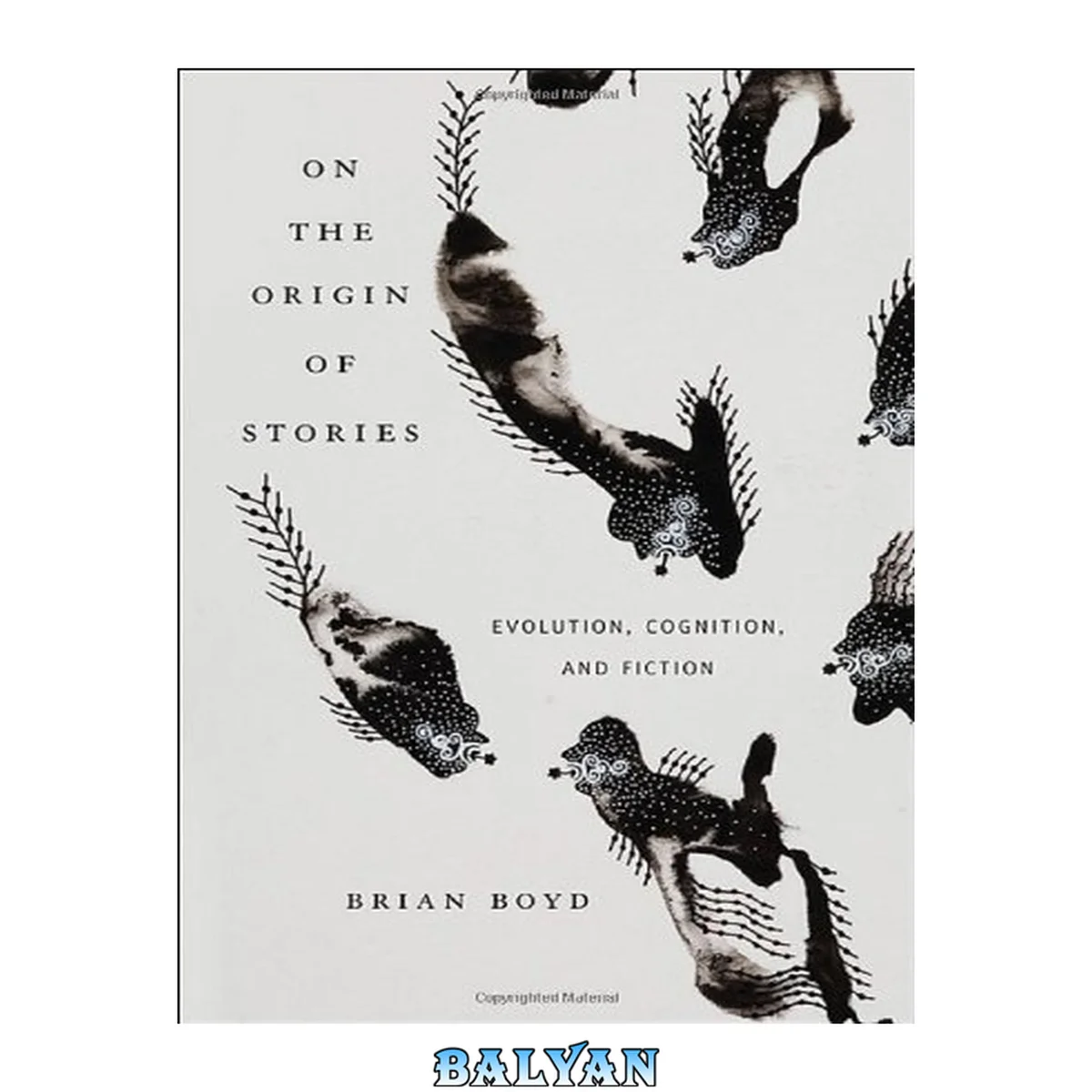
معرفی کتاب «در منشاء داستانها: تکامل، شناخت و داستاننویسی» (با عنوان لاتین On the Origin of Stories: Evolution, Cognition, and Fiction Evolution, Cognition, and Fiction) نوشتهٔ Christina Latham Koenig author Clive Oxenden author Jerry Lambert author و Brian Boyd, 1952-، منتشرشده توسط نشر Belknap Press: An Imprint of Harvard University Press در سال 2009. این کتاب در فرمت pdf، زبان انگلیسی ارائه شده است.
A century and a half after the publication of Origin of Species, evolutionary thinking has expanded beyond the field of biology to include virtually all human-related subjects—anthropology, archeology, psychology, economics, religion, morality, politics, culture, and art. Now a distinguished scholar offers the first comprehensive account of the evolutionary origins of art and storytelling. Brian Boyd explains why we tell stories, how our minds are shaped to understand them, and what difference an evolutionary understanding of human nature makes to stories we love.
Art is a specifically human adaptation, Boyd argues. It offers tangible advantages for human survival, and it derives from play, itself an adaptation widespread among more intelligent animals. More particularly, our fondness for storytelling has sharpened social cognition, encouraged cooperation, and fostered creativity.
After considering art as adaptation, Boyd examines Homer’s Odyssey and Dr. Seuss’s Horton Hears a Who! demonstrating how an evolutionary lens can offer new understanding and appreciation of specific works. What triggers our emotional engagement with these works? What patterns facilitate our responses? The need to hold an audience’s attention, Boyd underscores, is the fundamental problem facing all storytellers. Enduring artists arrive at solutions that appeal to cognitive universals: an insight out of step with contemporary criticism, which obscures both the individual and universal. Published for the bicentenary of Darwin’s birth and the 150th anniversary of the publication of Origin of Species, Boyd’s study embraces a Darwinian view of human nature and art, and offers a credo for a new humanism.
Gordon Burghardt, University of Tennessee - The Evolutionary Review
Masterful...[An] entrancing book...[Boyd] clearly invites comparison with Darwin's masterpiece. Like its namesake, Boyd's book is carefully constructed and constitutes, in Ernst Mayr's words, "one long argument."...While a number of evolutionary analyses of literature, fiction, myths, folklore, and art have appeared in the last 15 years or so, this one stands out for its accessibility and genuinely integrative approach, combined with a detailed analysis of two specific fictional works...Boyd covers an astonishing range of evolutionary concepts, human evolution, cognitive and developmental psychology, human ethology, anthropology, game theory and related topics. Having done research in several of these areas, I can attest that he has selected judiciously and described the science remarkably accurately and clearly...Unlike much of the early writings by promoters of simplistic Pleistocene EEA scenarios and typological human universals, Boyd explores detailed empirical observations and experiments, realizes that human variation is the engine of evolutionary change, but--and I view this as an essential strength--eschews a single-minded, or even primary, concern with adaptation...Boyd gets so much right!
Contents ......Page 8 Illustrations......Page 10 Acknowledgments......Page 12 Introduction: Animal, Human, Art, Story......Page 16 Book I: Evolution, Art, and Fiction......Page 28 Part 1: Evolution and Nature......Page 32 1. Evolution and Human Nature?......Page 34 2. Evolution, Adaptation, and Adapted Minds......Page 46 3. The Evolution of Intelligence......Page 57 4. The Evolution of Cooperation......Page 66 Part 2: Evolution and Art......Page 82 5. Art as Adaptation?......Page 84 6. Art as Cognitive Play......Page 95 7. Art and Attention......Page 114 8. From Tradition to Innovation......Page 128 Part 3: Evolution and Fiction......Page 142 9. Art, Narrative, Fiction......Page 144 10. Understanding and Recalling Events......Page 147 11. Narrative: Representing Events......Page 174 12. Fiction: Inventing Events......Page 192 13. Fiction as Adaptation......Page 203 Book II: From Zeus to Seuss: Origins of Stories......Page 224 Part 4: Phylogeny: The Odyssey......Page 228 14. Earning Attention (1): Natural Patterns: Character and Plot......Page 230 15. Earning Attention (2): Open-Ended Patterns: Ironies of Structure......Page 247 16. The Evolution of Intelligence (1): In the Here and Now......Page 270 17. The Evolution of Intelligence (2): Beyond the Here and Now......Page 284 18. The Evolution of Cooperation (1): Expanding the Circle......Page 302 19. The Evolution of Cooperation (2): Punishment......Page 318 Part 5: Ontogeny: Horton Hears a Who!......Page 334 20. Problems and Solutions: Working at Play......Page 336 21. Levels of Explanation: Universal, Local, and Individual......Page 349 22. Levels of Explanation: Individuality Again......Page 363 23. Levels of Explanation: Particular......Page 373 24. Meanings......Page 383 Conclusion: Retrospect and Prospects: Evolution, Literature, Criticism......Page 395 Afterword: Evolution, Art, Story, Purpose......Page 414 Notes......Page 432 Bibliography......Page 472 Index......Page 524 A century and a half after the publication of Origin of Species, evolutionary thinking has expanded beyond the field of biology to include virtually all human-related subjects - anthropology, archeology, psychology, economics, religion, morality, politics, culture, and art. Now a distinguished scholar offers the first comprehensive account of the evolutionary origins of art and storytelling. Brian Boyd explains why we tell stories, how our minds are shaped to understand them, and what difference an evolutionary understanding of human nature makes to stories we love. Art is a specifically human adaptation, Boyd argues. It offers tangible advantages for human survival, and it derives from play, itself an adaptation widespread among more intelligent animals. More particularly, our fondness for storytelling has sharpened social cognition, encouraged cooperation, and fostered creativity. After considering art as adaptation, Boyd examines Homer's Odyssey and Dr. Seuss' Horton Hears a Who! demonstrating how an evolutionary lens can offer new understanding and appreciation of specific works. What triggers our emotional engagement with these works? What patterns facilitate our responses? The need to hold an audience's attention, Boyd underscores, is the fundamental problem facing all storytellers. Enduring artists arrive at solutions that appeal to cognitive universals: an insight out of step with contemporary criticism, which obscures both the individual and universal. Published for the bicentenary of Darwin's birth and the 150th anniversary of the publication of Origin of Species, Boyd's study embraces a Darwinian view of human nature and art, and offers a credo for a new humanism This Is A Comprehensive Account Of The Evolutionary Origins Of Art And Storytelling. Brian Boyd Explains Why We Tell Stories, How Our Minds Are Shaped To Understand Them, And What Difference An Evolutionary Understanding Of Human Nature Makes To Stories We Love.--global Books In Print. Introduction: Animal, Human, Art, Story -- Book 1: Evolution, Art, And Fiction. Part 1. Evolution And Nature. Evolution And Human Nature? ; Evolution, Adaptation, And Adapted Minds ; The Evolution Of Intelligence ; The Evolution Of Cooperation -- Part 2. Evolution And Art. Art As Adaptation? ; Art As Cognitive Play ; Art And Attention ; From Tradition To Innovation -- Part 3. Evolution And Fiction. Art, Narrative, Fiction ; Understanding And Recalling Events ; Narrative: Representing Events ; Fiction: Inventing Events ; Fiction As Adaptation -- Book Ii: From Zeus To Seuss: Origins Of Stories. Part 4. Phylogeny: The Odyssey. Earning Attention (1): Natural Patterns: Character And Plot ; Earning Attention (s): Open-ended Patterns: Ironies Of Structure ; The Evolution Of Intelligence (1): In The Here And Now ; The Evolution Of Intelligence (2): Beyond The Here And Now ; The Evolution Of Cooperation (1): Expanding The Circle ; The Evolution Of Cooperation (2): Punishment -- Part 5. Ontogeny: Horton Hears A Who! Levels Of Explanation: Universal, Local, And Individual ; Levels Of Explanation: Individuality Again ; Levels Of Explanation: Particular ; Meanings -- Conclusion: Retrospect And Prospects: Evolution, Literature, Criticism -- Afterward: Evolution, Art, Story, Purpose. Brian Boyd. Includes Bibliographical References (p. 457-507)and Index. Belknap Press of Harvard University Press Contents 8 Illustrations 10 Acknowledgments 12 Introduction: Animal, Human, Art, Story 16 Book I: Evolution, Art, and Fiction 28 Part 1: Evolution and Nature 32 1. Evolution and Human Nature? 34 2. Evolution, Adaptation, and Adapted Minds 46 3. The Evolution of Intelligence 57 4. The Evolution of Cooperation 66 Part 2: Evolution and Art 82 5. Art as Adaptation? 84 6. Art as Cognitive Play 95 7. Art and Attention 114 8. From Tradition to Innovation 128 Part 3: Evolution and Fiction 142 9. Art, Narrative, Fiction 144 10. Understanding and Recalling Events 147 11. Narrative: Representing Events 174 12. Fiction: Inventing Events 192 13. Fiction as Adaptation 203 Book II: From Zeus to Seuss: Origins of Stories 224 Part 4: Phylogeny: The Odyssey 228 14. Earning Attention (1): Natural Patterns: Character and Plot 230 15. Earning Attention (2): Open-Ended Patterns: Ironies of Structure 247 16. The Evolution of Intelligence (1): In the Here and Now 270 17. The Evolution of Intelligence (2): Beyond the Here and Now 284 18. The Evolution of Cooperation (1): Expanding the Circle 302 19. The Evolution of Cooperation (2): Punishment 318 Part 5: Ontogeny: Horton Hears a Who! 334 20. Problems and Solutions: Working at Play 336 21. Levels of Explanation: Universal, Local, and Individual 349 22. Levels of Explanation: Individuality Again 363 23. Levels of Explanation: Particular 373 24. Meanings 383 Conclusion: Retrospect and Prospects: Evolution, Literature, Criticism 395 Afterword: Evolution, Art, Story, Purpose 414 Notes 432 Bibliography 472 Index 524 9780674033573Brian Boyd explains why we tell stories and how our minds are shaped to understand them. After considering art as adaptation, Boyd examines Homer's Odyssey and Dr. Seuss's Horton Hears a Who! demonstrating how an evolutionary lens can offer new understanding and appreciation of specific works. Published for the bicentenary of Darwin's birth and the 150th anniversary of the publication of Origin of Species, Boyd's study embraces a Darwinian view of human nature and art, and offers a credo for a new humanism.