در مورد شکل بهطور کلی و بدن بهطور خاص: اختراع مجازی در سینما
On The Figure In General And The Body In Particular: : Figurative Invention In Cinema
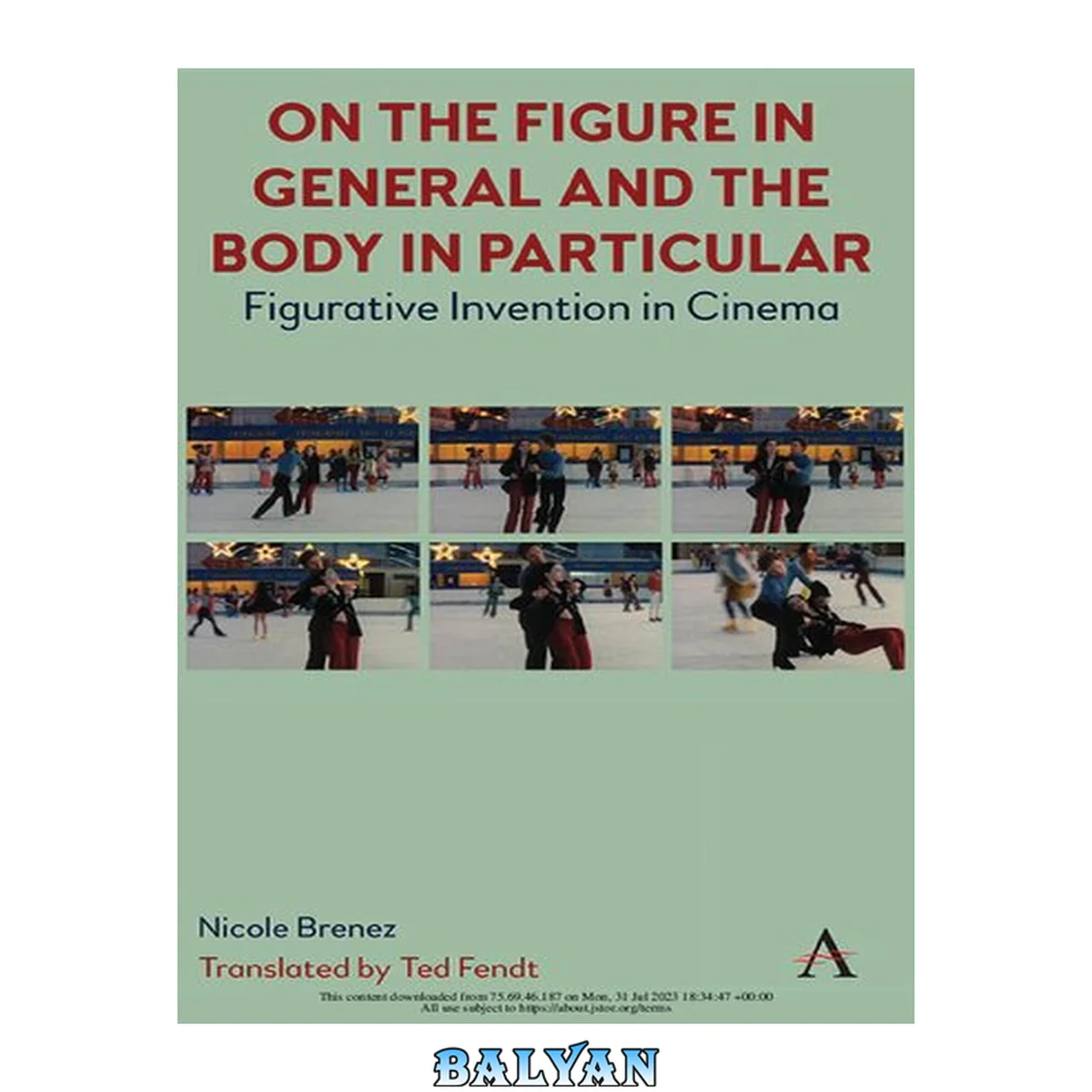
معرفی کتاب «در مورد شکل بهطور کلی و بدن بهطور خاص: اختراع مجازی در سینما» (با عنوان لاتین On The Figure In General And The Body In Particular: : Figurative Invention In Cinema) نوشتهٔ Shandi Boyes و Nicole Brenez, Ted Fendt (translator)، منتشرشده توسط نشر Anthem Press در سال 2023. این کتاب در فرمت pdf، زبان انگلیسی ارائه شده است.
In this selection of essays written for a variety of publications and platforms throughout the 1990s (essays, program notes, conferences), Nicole Brenez sets out and applies the tenets of what she dubs the "figurative analysis" of cinema. As the title suggests, her two main interests could broadly be summarized as the "figure" (in general) and the "body" (in particular). An actor performing on screen is, of course, a body, but Brenez goes beyond psychological or purely dramatic considerations, studying how formal elements such as framing, lighting, and editing determine what a body is and an audience's perception of it as well as how cinematic devices can be used to create new bodies – as in the science fiction films of the 1990s that posit hybrid, post-human forms. At the same time, a body can also be a collective of individuals or even themes and motifs brought together via cinematic means. The term "figure" also has a broad and rich meaning in Brenez's work, informing concepts such as "figural analysis," "figural economy," "figurative invention," or pure "figuration." While glimpses of these concepts have appeared in scattered translations over the years, this collection represents the first comprehensive and expansive selection of her writings on cinema in English. Brenez is interested in the myriad of shapes that figures take in film: shadows, silhouettes, and contours, but also themes and motifs, and how these are visually and aurally manifested. She is especially interested in the ways in which an individual film produces these figures or figurative constellations. Laying out a methodology in the book's introduction (a letter to John Ford biographer Tag Gallagher), Brenez goes on to analyze and interpret the myriad of figures found in movies by filmmakers ranging from John Woo to Paul Sharits as well as classics by Orson Welles and Sergei Eisenstein. At once rigorous and open, the originality of the films Brenez studies and her very stimulating intuitions and connections, has produced one of the major studies of cinema of the late 20th century. | Films fill our imagination with figures, figurines, and talismans. They ceaselessly rework the same archetypes and invent troubling prototypes – especially when they establish a deeper relationship to reality. How do we understand these presences that are both so characteristic and so diverse in cinema? How does film deal with bodies, movements, and gestures? Why are we so drawn to these shadows, silhouettes, and hypothetical beings? What organizes the figurative values at work in a film? How do cinematic creatures circulate from film to film and image to image? How does film articulate the links between the abstract and figurative? Is it possible to write a history of figurative forms? Starting from films themselves and works that are both classical (Sergei Eisenstein, Roberto Rossellini, Orson Welles) and contemporary (Abel Ferrara, Brian DePalma, Patricia Mazuy), celebrated (Robert Bresson, John Cassavetes, Ken Jacobs, Paul Sharits) and overlooked (Al Razutis, Jean Genet, Monte Hellman, and John Travolta), from auteurs as well as aesthetic questions (representations of dance, the naked body, character development...), the essays in this volume, most available for the first in English, aim to open a field that has been neglected by analysis, while also suggesting the tools necessary to understanding figurative phenomena specific to cinema. Contents Acknowledgements Introduction Part 1: Figurative Economies 1. Why Must the Dead Be Killed?:Observations on John Woo 2. Capitalism: Jack Smith 3. “Unusual Approach to Bodies”: Robert Bresson with Jean Eustache, Philippe Garrel, and Monte Hellman 4. Sketch/Skip/Excessive Synthesis: Jacques Tourneur’s Cat People, Dario Argento’s Suspiria, John McTiernan’s Predator Part 2: Adventures of the Classical Body in Modern Cinema 1. S.M. Eisenstein, Bella Figura, and Formal Deflagration 2. Anti-Bodies: Instances of the Classical Body in the Work of Jean Genet, Rainer Werner Fassbinder, and Gus Van Sant 3. Short-Circuit: Michael Cimino’s Heaven’s Gate Part 3: New Abstractions in Figurative Invention 1. The Contemporary Character 2. The Being According to the Image: Orson Welles’s Citizen Kane 3. “’Cause it sounds more French”: On a Secondary Character in Maurice Pialat’s Police 4. Thefts: Robert Bresson’s Pickpocket Part 4: Summonses – Figures of the Actor 1. The Actor as Affective Citizen: Fassbinder’s Beware of a Holy Whore 2. Lassie, Unfaithful to Dogs: Fred M. Wilcox’s Lassie Come Home 3. “Die for Mr. Jensen”: John Cassavetes’s A Woman Under the Influence 4. John Woo by John Woo: The Take and the Shot Part 5: Image Circuits 1. Travolta Himself: Dance and the Circulation of Images – Fantasy, Phantasm, and Phantasmata 2. Thirst: Barbara Loden’s Wanda 3. The Visual Study: The Forces of a Cinematic Form – Al Razutis, Ken Jacobs, Brian De Palma 4. The First Shot: Philippe Garrel’s Liberté, la nuit 5. Anti-Oedipus: John Woo’s Heroes Shed No Tears Part 6: Theoretical Invention 1. “As You Are”: Representation and Figuration – Questions of Terminology in the Work of Barthes, Eisenstein, Benjamin, and Epstein 2. The Physics of Cinema: Introduction to the Literary and Filmic Oeuvre of Paul Sharits 3. In the Meantime: Kirk Tougas’ The Politics of Perception 4. Epilogue: The Accident Bibliography Index
دانلود کتاب در مورد شکل بهطور کلی و بدن بهطور خاص: اختراع مجازی در سینما