Of Victorians and Vegetarians: The Vegetarian Movement in Nineteenth-century Britain (International Library of Historical Studies)
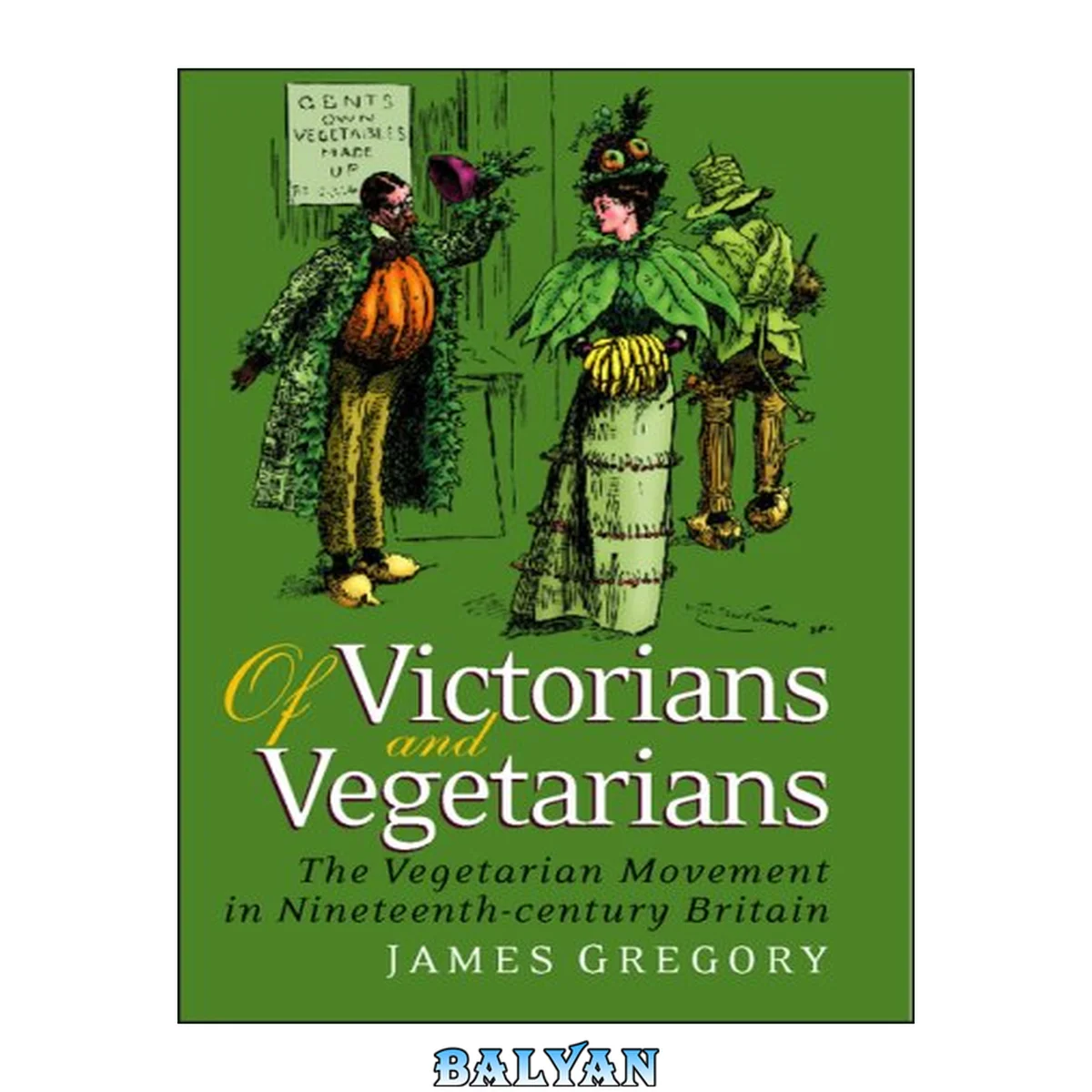
معرفی کتاب «Of Victorians and Vegetarians: The Vegetarian Movement in Nineteenth-century Britain (International Library of Historical Studies)» نوشتهٔ James Gregory, (Historian)، منتشرشده توسط نشر Tauris Academic Studies در سال 2007. این کتاب در فرمت pdf، زبان انگلیسی ارائه شده است.
Nineteenth-century Britain was one of the birthplaces of modern vegetarianism in the west, and was to become a reform movement attracting thousands of people. From the Vegetarian Society's foundation in 1847, men, women and their families abandoned conventional diet for reasons as varied as self-advancement, personal thrift, dissatisfaction with medical orthodoxy and repugnance for animal cruelty. They joined in the pursuit of a perfect society in which food reform combined with causes such as socialism and land reform, stimulated by the concern that carnivorism was in league with alcoholism and bellicosity. James Gregory provides a rich exploration of the movement, with its often colourful and sometimes eccentric leaders and grass-roots supporters. He explores the rich culture of branch associations, competing national societies, proliferating restaurants and food stores and experiments in vegetarian farms and colonies. “Of Victorians and Vegetarians” examines the wider significance of Victorian vegetarians, embracing concerns about gender and class, national identity, race and empire and religious authority. Vegetarianism embodied the Victorians' complicated response to modernity in its hostility to aspects of the industrial world's exploitation of technology, rejecting entrepreneurial attempts to create the foods and substitute artefacts of the future. Hostile, like the associated anti-vivisectionists and anti-vaccinationists, to a new ‘priesthood’ of scientists, vegetarians defended themselves through the new sciences of nutrition and chemistry. “Of Victorians and Vegetarians” uncovers who the vegetarians were, how they attempted to convert their fellow Britons (and the world beyond) to their ‘bloodless diet’ and the response of contemporaries in a variety of media and genres. Through a close study of the vegetarian periodicals and organisational archives, extensive biographical research and a broader examination of texts relating to food, dietary reform and allied reform movements, James Gregory provides us with the first fascinating foray into the impact of vegetarianism on the Victorians, the history of animal welfare, reform movements and food history. Nineteenth-century Britain was one of the birthplaces of modern vegetarianism in the west, and was to become a reform movement attracting thousands of people. From the Vegetarian Society's foundation in 1847, men, women and their families abandoned conventional diet for reasons as varied as self-advancement via personal thrift, dissatisfaction with medical orthodoxy, repugnance towards animal cruelty and the belief that carnivorism stimulated alcoholism and bellicosity. They joined in the pursuit of a more perfect society in which food reform combined with causes such as socialism and land reform. James Gregory provides an extensive exploration of the movement, with its often colourful and sometimes eccentric leaders and grass-roots supporters. He explores the rich culture of branch associations, competing national societies, proliferating restaurants and food stores and experiments in vegetarian farms and colonies. 'Of Victorians and Vegetarians' examines the wider significance of Victorian vegetarians, embracing concerns about gender and class, national identity, race and empire and religious authority. Vegetarianism embodied the Victorians' complicated response to modernity. While some vegetarians were averse to features of the industrial and urban world, other vegetarian entrepreneurs embraced technology in the creation of substitute foods and other commodities. Hostile, like the associated anti-vivisectionists and anti-vaccinationists, to a new 'priesthood' of scientists, vegetarians defended themselves through the new sciences of nutrition and chemistry. 'Of Victorians and Vegetarians' uncovers who the vegetarians were, how they attempted to convert their fellow Britons (and the world beyond) to their 'bloodless diet' and the response of contemporaries in a variety of media and genres. Through a close study of the vegetarian periodicals and organisational archives, extensive biographical research and a broader examination of texts relating to food, dietary reform and allied reform movements, James Gregory provides us with the first fascinating foray into the impact of vegetarianism on the Victorians. In doing so he gives revealing insights into the development of animal welfare, other contemporary reform movements and the histories of food and diet. Nineteenth-century Britain was one of the birthplaces of modern vegetarianism in the West. In 'Of Victorians and Vegetarians' James Gregory explores the relationship between this newly organized movement and wider culture and society. It evolved with a myriad of meanings and voices: partly for propagandist reasons, but also because of the varied motivations and characteristcs of vegetarians. Teetotallers, animal lovers, mystics, spiritualists and theosophists, as well as those who saw the diet as an effective and democratic medical treatment, all provided the constituents for a movement whose critics associated it with radicalism and faddism. Frequently counter-cultural, in its association with socialism and communitarianism throughout the period, vegetarianism also expressed in heightened form the already well-established values of self-help, philanthropy, thrift, Puritanism, domesticity and a belief in progress Contents......Page 6 List of Illustrations......Page 8 Abbreviations......Page 10 Acknowledgements......Page 12 Introduction......Page 14 1. The Vegetarian Movement, c. 1838-1901......Page 34 2. Physical Puritanism and Medical Orthodoxy......Page 82 3. Beasts and Saints: Zoophilia and Religion in the Movement......Page 101 4. Radicalism and Fadicalism......Page 124 5. Feeding the Vegetarian Mind and Body......Page 138 6. Class, Gender and Vegetarians......Page 164 7. Representing the Vegetarian......Page 187 Conclusion......Page 200 Notes......Page 208 Bibliography......Page 284 Index......Page 318 Nineteenth-century Britain was one of the birthplaces of modern vegetarianism in the West. In 'Of Victorians and Vegetarians' James Gregory explores the relationship between this newly organised movement and wider culture and society. It evolved with a myriad of meanings and voices: partly for propagandist reasons, but also because of the varied motivations and characteristcs of vegetarians. Teetotallers, animal lovers, mystics, spiritualists and theosophists, as well as those who saw the diet as an effective and democratic medical treatment, all provided the constituents for a movement whose 19th Century Britain Was One Of The Birthplaces Of Modern Vegetarianism In The West. James Gregory Explores The Relationship Between This Newly Organised Movement And Wider Cultural Society. The Vegetarian Movement, C.1838-1901 -- Physical Puritanism And Medical Orthodoxy -- Beasts And Saints: Zoophilia And Religion In The Movement -- Radicalism And Fadicalism -- Feeding The Vegetarian Mind And Body -- Class, Gender And The Vegetarians -- Representing The Vegetarian. James Gregory. Includes Bibliographical References (p. [271]-304) And Index.
دانلود کتاب Of Victorians and Vegetarians: The Vegetarian Movement in Nineteenth-century Britain (International Library of Historical Studies)