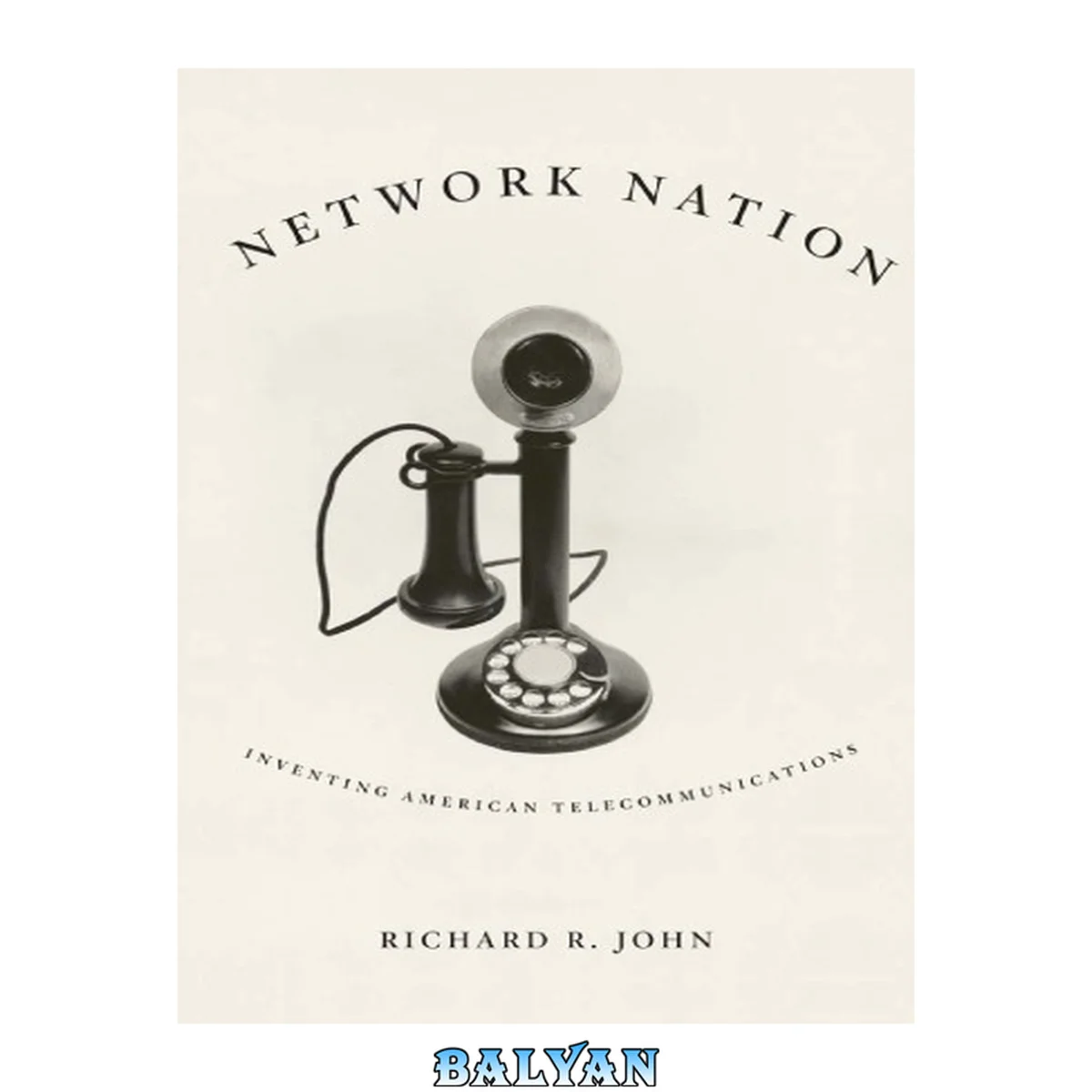
معرفی کتاب «Network Nation : Inventing American Telecommunications» نوشتهٔ John, Richard R.(Author)، منتشرشده توسط نشر Belknap Press of Harvard University Press در سال 2010. این کتاب در فرمت pdf، زبان انگلیسی ارائه شده است.
The telegraph and the telephone were the first electrical communications networks to become hallmarks of modernity. Yet they were not initially expected to achieve universal accessibility. In this pioneering history of their evolution, Richard R. John demonstrates how access to these networks was determined not only by technological imperatives and economic incentives but also by political decision making at the federal, state, and municipal levels. In the decades between the Civil War and the First World War, Western Union and the Bell System emerged as the dominant providers for the telegraph and telephone. Both operated networks that were products not only of technology and economics but also of a distinctive political economy. Western Union arose in an antimonopolistic political economy that glorified equal rights and vilified special privilege. The Bell System flourished in a progressive political economy that idealized public utility and disparaged unnecessary waste. The popularization of the telegraph and the telephone was opposed by business lobbies that were intent on perpetuating specialty services. In fact, it wasn't until 1900 that the civic ideal of mass access trumped the elitist ideal of exclusivity in shaping the commercialization of the telephone. The telegraph did not become widely accessible until 1910, sixty-five years after the first fee-for-service telegraph line opened in 1845. Network Nation places the history of telecommunications within the broader context of American politics, business, and discourse. This engrossing and provocative book persuades us of the critical role of political economy in the development of new technologies and their implementation. (20110609)
The telegraph and the telephone were the first electrical communications networks to become hallmarks of modernity. Yet they were not initially expected to achieve universal accessibility. In this pioneering history of their evolution, Richard R. John demonstrates how access to these networks was determined not only by technological imperatives and economic incentives but also by political decision making at the federal, state, and municipal levels. In the decades between the Civil War and the First World War, Western Union and the Bell System emerged as the dominant providers for the telegraph and telephone. Both operated networks that were products not only of technology and economics but also of a distinctive political economy. Western Union arose in an antimonopolistic political economy that glorified equal rights and vilified special privilege. The Bell System flourished in a progressive political economy that idealized public utility and disparaged unnecessary waste. The popularization of the telegraph and the telephone was opposed by business lobbies that were intent on perpetuating specialty services. In fact, it wasn't until 1900 that the civic ideal of mass access trumped the elitist ideal of exclusivity in shaping the commercialization of the telephone. The telegraph did not become widely accessible until 1910, sixty-five years after the first fee-for-service telegraph line opened in 1845.Network Nation places the history of telecommunications within the broader context of American politics, business, and discourse. This engrossing and provocative book persuades us of the critical role of political economy in the development of new technologies and their implementation.
List of Illustrations and Tables Introduction: Inventing American Telecommunications Making a Neighborhood of a Nation Professor Morse's Lightning Antimonopoly The New Postalic Dispensation Rich Man's Mail The Talking Telegraph Telephomania Second Nature Gray Wolves Universal Service One Great Medium? Epilogue: The Technical Millennium Chronology of American Telecommunications Notes Acknowledgements Index Traces the history of telecommunications in the United States, discussing how access to the telegraph and the telephone networks was influenced by politics, economics, and technology and explores how those same three factors continue to influence the development of telecommunications in the twenty-first century