Nazi Soundscapes : Sound, Technology and Urban Space in Germany, 1933-1945
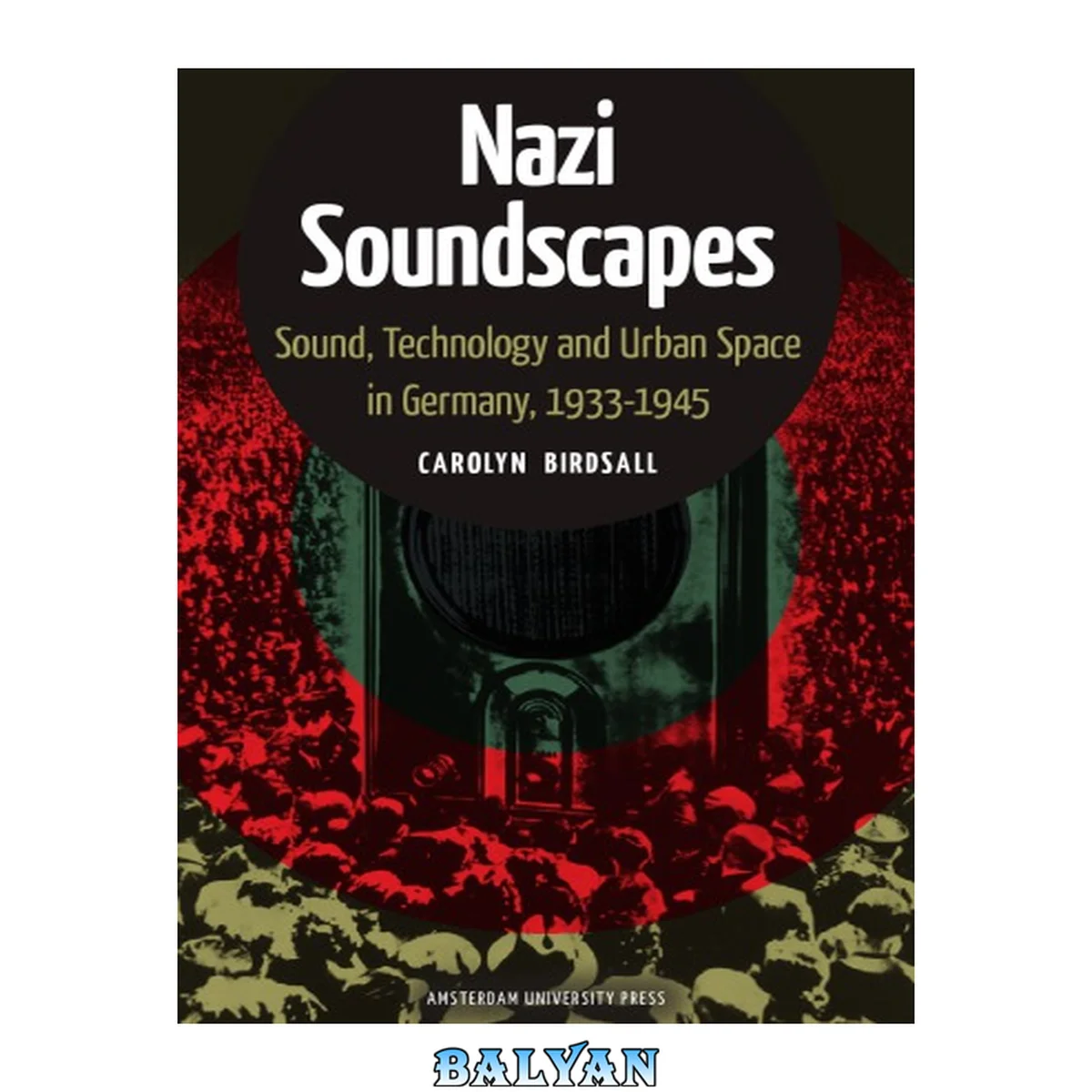
معرفی کتاب «Nazi Soundscapes : Sound, Technology and Urban Space in Germany, 1933-1945» نوشتهٔ Carolyn Birdsall، منتشرشده توسط نشر Amsterdam University Press در سال 2012. این کتاب در فرمت pdf، زبان انگلیسی ارائه شده است.
Following the formation of the German National Socialist Party in the 1920s, various forms of sound (popular music, voice, noise and silence) and media technology (radio and loudspeaker systems) were configured as useful to the partys political programme. Focusing on the urban soundscape of Düsseldorf, the author makes a persuasive case for investigating such sound events and technological devices in their specific contexts of production and reception. Nazi Soundscapes identifies strategies for controlling space and reworking identity patterns, but also the ongoing difficulties in manipulating mediated sounds and the spaces of listening reception, whether in the home, workplace, the cinema, public rituals or with wartime siren systems. The study revises visualist notions of social control, and reveals the disciplinary functions of listening (as eavesdropping) as well as the sonic dimensions to exclusion and violence during Nazism. An essential title for everyone interested in the links between German political culture, audiovisual media and urban history, Nazi Soundscapes provides a fascinating analysis of the cultural significance of sound between the 1920s and early 1940s. See http://soundclips.humanities.uva.nl for the sound clips discussed in the book. [C:\Users\Microsoft\Documents\Calibre Library] Acknowledgements 8 Abbreviations 10 Introduction 12 Modern Sound and the Metropolis 15 Modern Modes of Listening 19 Theorising Listening Attention and Sound Technology 22 Researching Historical Soundscapes 27 1. Affirmative Resonances in Urban Space 32 Auditory Perception and Affirmative Resonance 34 Sonic Brawling and Aesthetic Occupations of Public Space 36 Publicising Songs, Institutionalising Schlageter 42 The Call for National Awakening 53 Conclusion 62 2. The Festivalisation of the Everyday 66 A Festival for Everyone? 69 Radio and the Modern Festival 75 Festive Exclusions: The Carnival Heimat 83 Anti-Semitic Violence as Festival 91 Conclusion 100 3. Mobilising Sound for the Nation at War 104 Imagining National Community 106 Radio Sounds as National Celebration 110 Alarm Sounds as Acoustic Signals 120 Suspicious Sounds 131 Conclusion 139 4. Cinema as a Gesamtkunstwerk? 142 The Gesamtkunstwerk in Cinema 144 Acoustic Metaphors: From Symphony to Postcard 149 Rhythmic Harmony: Sound as a Controlled Event 157 Synchronising the Nazi Era? 164 Conclusion 172 Afterword: Echoes of the Past 174 Notes 181 Introduction 181 Notes to Chapter 1 185 Notes to Chapter 2 193 Notes to Chapter 3 200 Notes to Chapter 4 206 Notes to Afterword 214 Bibliography 218 Interviews (Selection) 254 Track List 256 Track 1 [03:05 mins] 256 Track 2 [03:18 mins] 256 Track 3 [02:05 mins] 256 Track 4 [27:55 mins] 256 Track 5 [02:30 mins] 257 Track 6 [00:30 mins] 257 Index 258 Index of Names 258 Index of Subjects 262 Following the formation of the German National Socialist Party in the 1920s, various forms of sound (popular music, voice, noise and silence) and media technology (radio and loudspeaker systems) were configured as useful to the party's political programme. Focusing on the urban "soundscape" of Düsseldorf, the author makes a persuasive case for investigating such sound events and technological devices in their specific contexts of production and reception. Nazi Soundscapes identifies strategies for controlling space and reworking identity patterns, but also the ongoing difficulties in manipulating mediated sounds and the spaces of listening reception, whether in the home, workplace, the cinema, public rituals or with wartime siren systems. The study revises visualist notions of social control, and reveals the disciplinary functions of listening (as eavesdropping) as well as the sonic dimensions to exclusion and violence during Nazism. An essential title for everyone interested in the links between German political culture, audiovisual media and urban history, Nazi Soundscapes provides a fascinating analysis of the cultural significance of sound between the 1920s and early 1940s. Click "http://soundclips.humanities.uva.nl/">here for the sound clips discussed in the book "Following the formation of the German National Socialist Party in the 1920s, various forms of sound (popular music, voice, noise and silence) and media technology (radio and loudspeaker systems) were configured as useful to the party's political programme. Focusing on the urban "soundscape" of Düsseldorf, the author makes a persuasive case for investigating such sound events and technological devices in their specific contexts of production and reception. Nazi Soundscapes identifies strategies for controlling space and reworking identity patterns, but also the ongoing difficulties in manipulating mediated sounds and the spaces of listening reception, whether in the home, workplace, the cinema, public rituals or with wartime siren systems. The study revises visualist notions of social control, and reveals the disciplinary functions of listening (as eavesdropping) as well as the sonic dimensions to exclusion and violence during Nazism. An essential title for everyone interested in the links between German political culture, audiovisual media and urban history, Nazi Soundscapes provides a fascinating analysis of the cultural significance of sound between the 1920s and early 1940s."--Publisher's website Na de formatie van de NSDAP in de jaren '20 werden verschillende vormen van geluid (stem, ruis, stilte, populaire muziek) en mediatechnologieën (radio- en luidsprekersystemen) ingezet voor hun politieke programma. Vanuit de historisch invalshoek van het stedelijke 'soundscape' van Düsseldorf, onderzoekt de auteur de productie en receptie van deze geluiden en technologieën. Nazi Soundscapes brengt in kaart hoe het politieke bestel de stedelijke ruimte en identiteitsformatie van burgers door middel van geluid beïnvloedt. Het geeft een kritisch perspectief op zowel visuele als auditieve manieren van controle en discipline, in het bijzonder bij uitsluiting en geweld tijdens het nationaal-socialisme (1933-1945). Nazi Soundscapes geeft een fascinerende kijk op de culturele betekenis van geluid tussen de jaren twintig en veertig. Een essentieel boek voor lezers met een interesse in de Duitse politieke cultuur, moderne media en stedelijke geschiedenis. Luister "http://soundclips.humanities.uva.nl/">hier naar de geluidsfragmenten die in het boek worden besproken Many images of Nazi propaganda are universally recognizable, and symbolize the ways that the National Socialist party manipulated German citizens. What might an examination of the party's various uses of sound reveal? In Nazi Soundscapes, Carolyn Birdsall offers an in-depth analysis of the cultural significance of sound and new technologies like radio and loudspeaker systems during the rise of the National Socialist party in the 1920s to the end of World War II. Focusing specifically on the urban soundscape of Düsseldorf, this study examines both the production and reception of sound-based propaganda in the public and private spheres. Birdsall provides a vivid account of sound as a key instrument of social control, exclusion, and violence during Nazi Germany, and she makes a persuasive case for the power of sound within modern urban history. Following the formation of the German National Socialist Party in the 1920s, various forms of sound (popular music, voice, noise and silence) and media technology (radio and loudspeaker systems) were configured as useful to the party's political programme. Focusing on the urban ""soundscape"" of Dusseldorf, the author makes a persuasive case for investigating such sound events and technological devices in their specific contexts of production and reception. Nazi Soundscapes identifies strategies for controlling space and reworking identity patterns, but also the ongoing difficulties in manipul
دانلود کتاب Nazi Soundscapes : Sound, Technology and Urban Space in Germany, 1933-1945
The first comprehensive study of film festivals that marks key historical moments and offers surprising insights into the workings of a highly influential cultural network