Naval Warfare 1914-1918: From Coronel To The Atlantic And Zeebrugge (The History of World War I)
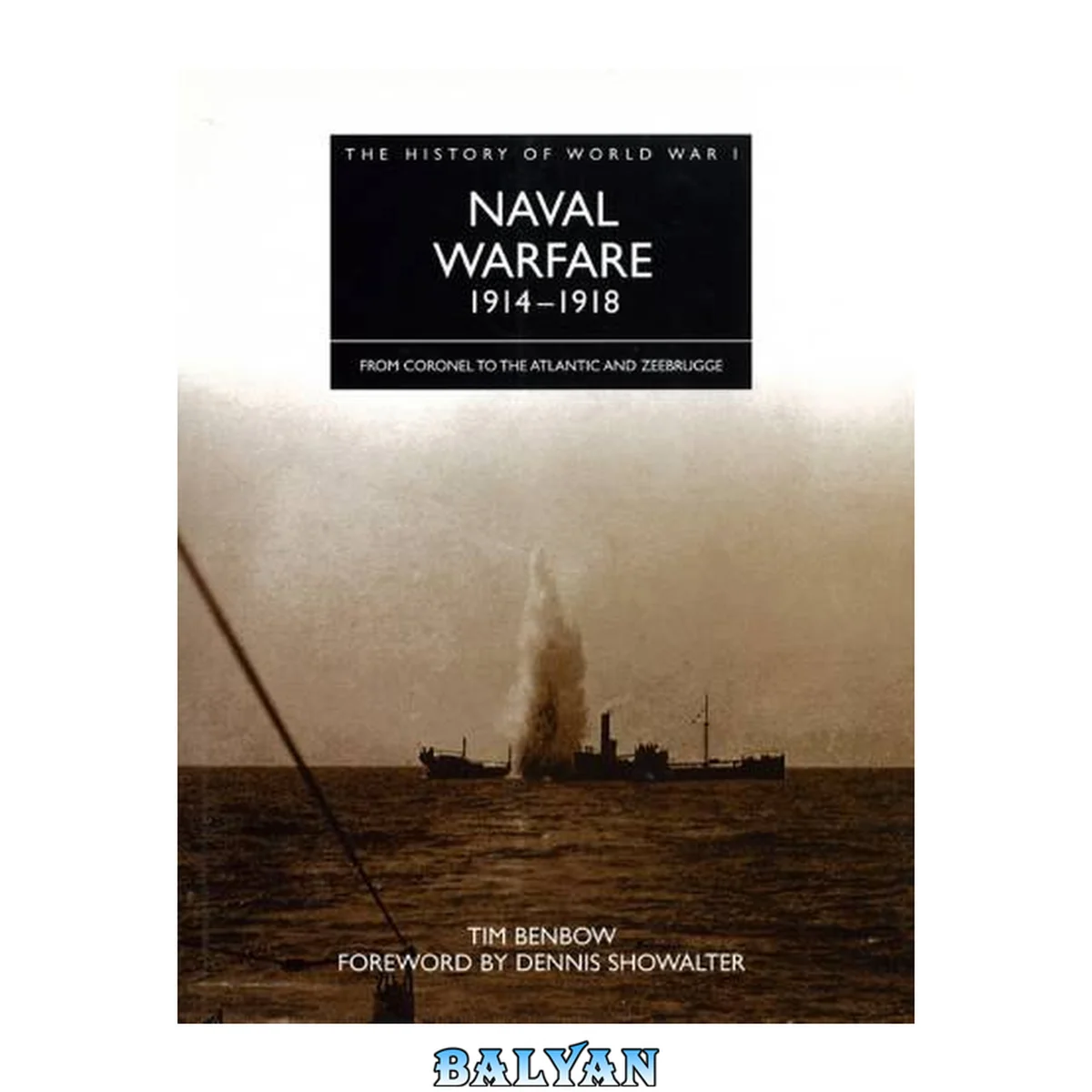
معرفی کتاب «Naval Warfare 1914-1918: From Coronel To The Atlantic And Zeebrugge (The History of World War I)» نوشتهٔ Great Britain. Royal Navy;Benbow, Tim، منتشرشده توسط نشر Amber Books Ltd در سال 2012. این کتاب در فرمت epub، زبان انگلیسی ارائه شده است.
At the start of the war, the German Empire had cruisers scattered across the globe, some of which were subsequently used to attack Allied merchant shipping. The British Royal Navy systematically hunted them down, though not without some embarrassment from its inability to protect Allied shipping. However, the bulk of the German East-Asia squadron did not have orders to raid shipping and was instead underway to Germany when it encountered elements of the British fleet. Soon after the outbreak of hostilities, Britain initiated a naval blockade of Germany. The strategy proved effective, cutting off vital military and civilian supplies. The 1916 Battle of Jutland developed into the largest naval battle of the war, the only full-scale clash of battleships during the war. The Kaiserliche Marine's High Seas Fleet, commanded by Vice Admiral Reinhard Scheer, squared off against the Royal Navy's Grand Fleet, led by Admiral Sir John Jellicoe. The engagement was a standoff, as the Germans, outmaneuvered by the larger British fleet, managed to escape and inflicted more damage to the British fleet than they received. Strategically, however, the British asserted their control of the sea, and the bulk of the German surface fleet remained confined to port for the duration of the war. German U-boats attempted to cut the supply lines between North America and Britain. The nature of submarine warfare meant that attacks often came without warning, giving the crews of the merchant ships little hope of survival. The U-boat threat lessened in 1917, when merchant ships entered convoys escorted by destroyers. With the last few men who served in World War I now dying out, and the 90th anniversary of the Armistice coming in November 2008, there is no better time to reevaluate this controversial war and shed fresh light on the conflict. With the aid of numerous black and white and color photographs, many previously unpublished, the World War I series recreates the battles and campaigns that raged across the surface of the globe, on land, at sea and in the air. The text is complemented by full-color maps that guide the reader through specific actions and campaigns.
The struggle for naval supremacy and the naval arms race inspired by HMS Dreadnought may have captured the headlines, but the opening stages of the naval war were dominated by the threat from German cruisers stationed outside European waters, until they were hunted down and sunk by the Royal Navy, notably at the Battle of the Falkland Islands in 1914.
Germany switched its focus to the U-boat, seeing it as a weapon capable of winning the war by starving Britain into surrender. Unrestricted submarine warfare led to the sinking of millions of tons of shipping, but it would also force the USA to enter the war on the Allied side in 1917.
In the Mediterranean, the French fleet took the lead, while Austria-Hungary supported German actions. The Allied attempt in 1915 to use maritime power to break the strategic deadlock with an amphibious operation in the Dardanelles ultimately failed, although Allied sea power helped sustain the successful campaigns against the Ottoman Empire in the Middle East.
What would prove to be the decisive naval engagement of the war took place in 1916 at the Battle of Jutland. Whilst the clash itself was inconclusive, the German High Seas Fleet would be all but confined to port for the rest of the war, handing the initiative to the Royal Navy. The resultant command of the seas allowed the Allies to carry fresh American armies and much-needed supplies to Europe in 1917.
However, victory for the Allies was ultimately delivered by the naval economic blockade. By preventing the import of war materials and food, the fighting power and morale of the German armed forces was weakened. It was the mutiny of the High Seas Fleet in October 1918 that prompted the German Revolution and the subsequent abdication of the Kaiser.
With the aid of over 300 photographs, complemented by full-colour maps, Naval Warfare provides a detailed guide to the background and conduct of World War I naval operations, describing the struggle to win control of the high seas around the globe.