More Effective C++: 35 New Ways to Improve Your Programs and Designs (Addison-Wesley Professional Computing Series)
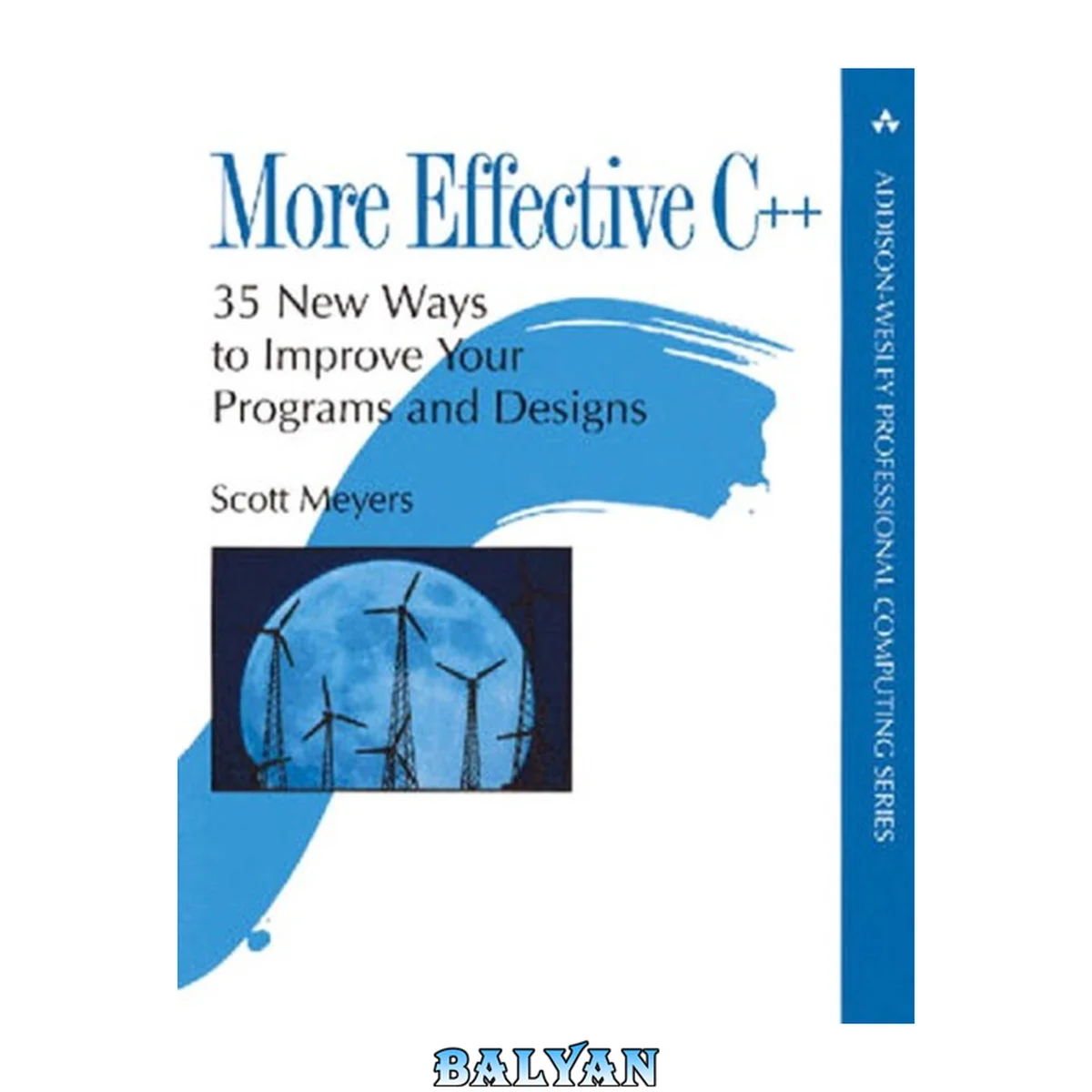
معرفی کتاب «More Effective C++: 35 New Ways to Improve Your Programs and Designs (Addison-Wesley Professional Computing Series)» نوشتهٔ Meyers, Scott، منتشرشده توسط نشر Addison-Wesley Professional در سال 2014. این کتاب در فرمت pdf، زبان انگلیسی ارائه شده است.
Praise for Scott Meyers’ first book, Effective C++: “I heartily recommend Effective C++ to anyone who aspires to mastery of C++ at the intermediate level or above.”
– The C/C++ User’s Journal
From the author of the indispensable Effective C++, here are 35 new ways to improve your programs and designs. Drawing on years of experience, Meyers explains how to write software that is more effective: more efficient, more robust, more consistent, more portable, and more reusable. In short, how to write C++ software that’s just plain better.
More Effective C++ includes:
- Proven methods for improving program efficiency, including incisive examinations of the time/space costs of C++ language features
- Comprehensive descriptions of advanced techniques used by C++ experts, including placement new, virtual constructors, smart pointers, reference counting, proxy classes, and double-dispatching
- Examples of the profound impact of exception handling on the structure and behavior of C++ classes and functions
- Practical treatments of new language features, including bool, mutable, explicit, namespaces, member templates, the Standard Template Library, and more. If your compilers don’t yet support these features, Meyers shows you how to get the job done without them.
More Effective C++ is filled with pragmatic, down-to-earth advice you’ll use every day. Like Effective C++ before it, More Effective C++ is essential reading for anyone working with C++.
Booknews
For programmers at the intermediate level and above. This sequel to the author's Effective C++ provides methods for improving program efficiency. Coverage includes examinations of the time/space costs of C++ language features; descriptions of advanced techniques (placement new, virtual constructors, smart pointers, reference county proxy classes, and double-dispatching); examples of the impact of exception handling; and treatment of new language features (e.g. bool, mutable, explicit, namespaces, member templates). Annotation c. Book News, Inc., Portland, OR (booknews.com)
This is the eBook version of the printed book. From the author of the indispensable Effective C++ , here are 35 new ways to improve your programs and designs. Drawing on years of experience, Meyers explains how to write software that is more effective : more efficient, more robust, more consistent, more portable, and more reusable. In short, how to write C++ software that’s just plain better. More Effective C++ includes: Proven methods for improving program efficiency, including incisive examinations of the time/space costs of C++ language features Comprehensive descriptions of advanced techniques used by C++ experts, including placement new, virtual constructors, smart pointers, reference counting, proxy classes, and double-dispatching Examples of the profound impact of exception handling on the structure and behavior of C++ classes and functions Practical treatments of new language features, including bool, mutable, explicit, namespaces, member templates, the Standard Template Library, and more. If your compilers don’t yet support these features, Meyers shows you how to get the job done without them. More Effective C++ is filled with pragmatic, down-to-earth advice you’ll use every day. Like Effective C++ before it, More Effective C++ is essential reading for anyone working with C++. Presents 35 ways to improve your programs and designs. This work explains how to write software that is more effective. It contains methods for improving program efficiency, including incisive examinations of the time/space costs of C++ language features; descriptions of advanced techniques used by C++ experts; and more. Meyers includes proven methods for improving program efficiency, comprehensive descriptions of advanced techniques such as virtual constructors, proxy classes and double-dispatching, and examples of the profound impact of exception handling