Money Code Space: Hidden Power in Bitcoin, Blockchain, and Decentralisation (OXFORD STUDIES DIGITAL POLITICS SERIES)
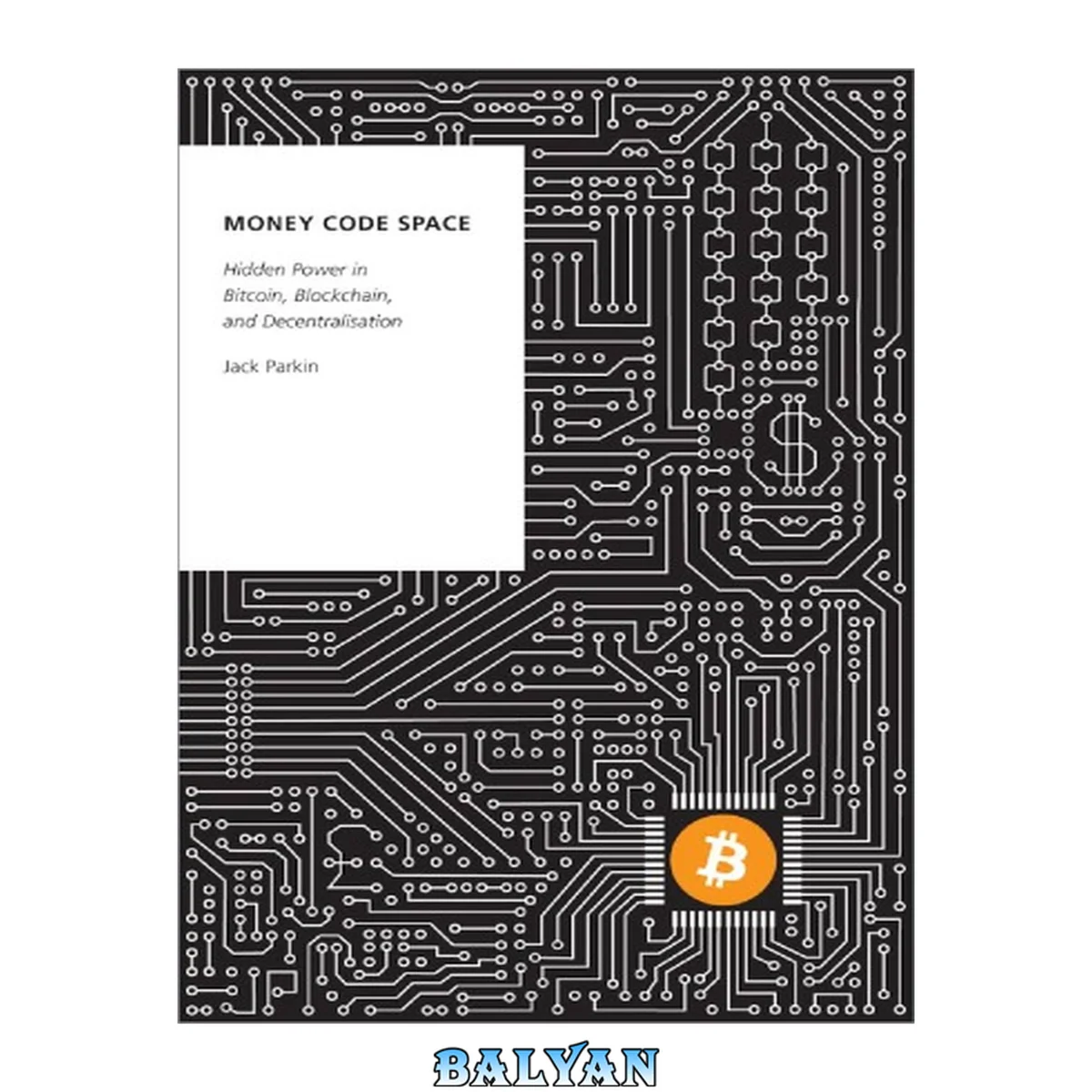
معرفی کتاب «Money Code Space: Hidden Power in Bitcoin, Blockchain, and Decentralisation (OXFORD STUDIES DIGITAL POLITICS SERIES)» نوشتهٔ Jack Parkin، منتشرشده توسط نشر Oxford University Press در سال 2020. این کتاب در فرمت pdf، زبان انگلیسی ارائه شده است. «Money Code Space: Hidden Power in Bitcoin, Blockchain, and Decentralisation (OXFORD STUDIES DIGITAL POLITICS SERIES)» در دستهٔ بدون دستهبندی قرار دارد.
## Abstract Newly emerging cryptocurrencies and blockchain technology present a challenging research problem in the field of digital politics and economics. Bitcoin—the first widely implemented cryptocurrency and blockchain architecture—seemingly separates itself from the existing territorial boundedness of nation-state money via a process of algorithmic decentralisation. Proponents declare that the utilisation of cryptography to advance financial transactions will disrupt the modern centralised structures by which capitalist economies are currently organised: corporations, governments, commercial banks, and central banks. Allegedly, software can create a more stable and democratic global economy; a world free from hierarchy and control. In Money Code Space, Jack Parkin debunks these utopian claims by approaching distributed ledger technologies as a spatial and social problem where power forms unevenly across their networks. First-hand accounts of online communities, open-source software governance, infrastructural hardware operations, and Silicon Valley start-up culture are used to ground understandings of cryptocurrencies in the “real world.” Consequently, Parkin demonstrates how Bitcoin and other blockchains are produced across a multitude of tessellated spaces from which certain stakeholders exercise considerable amounts of power over their networks. While money, code, and space are certainly transformed by distributed ledgers, algorithmic decentralisation is rendered inherently paradoxical because it is predicated upon centralised actors, practices, and forces. "Newly emerging cryptocurrencies and blockchain technology present a challenging research problem in the field of digital politics and economics. Bitcoin--the first widely implemented cryptocurrency and blockchain architecture--seemingly separates itself from the existing territorial boundedness of nation state money via a process of algorithmic decentralisation. Proponents declare that the utilisation of cryptography to advance financial transactions will disrupt the modern centralised structures by which capitalist economies are currently organised: corporations, governments, commercial banks, and central banks. Allegedly, software can create a more stable and democratic global economy; a world free from hierarchy and control. In Money/Code/Space, Jack Parkin debunks these utopian claims by approaching distributed ledger technologies as a spatial and social problem where power forms unevenly across their networks. First-hand accounts of online communities, open source software governance, infrastructural hardware operations, and Silicon Valley start-up culture are used to ground understandings of cryptocurrencies in the 'real world'. Consequently, Parkin demonstrates how Bitcoin and other blockchains are produced across a multitude of tessellated spaces from which certain stakeholders exercise considerable amounts of power over their networks. While money, code, and space are certainly transformed by distributed ledgers, algorithmic decentralisation is rendered inherently paradoxical because it is predicated upon centralised actors, practices, and forces"-- Provided by publisher Following the catastrophic events of the 2008 global financial crisis, an anonymous hacker released Bitcoin to claw back power from commercial and central banks. It quickly garnered an enthusiastic following who sought to forge a stable and democratic global economy--a world free from hierarchy and control. In their eyes, Bitcoin's underlying architecture, blockchain, hailed the dawn of decentralisation.Money Code Space shatters these emancipatory claims. In their place, Jack Parkin constructs a new framework for revealing the geographies of power that lie behind blockchain networks. Drawing on first-hand experience in cryptocurrency communities and start-up companies from Silicon Valley to London, Parkin untangles the complex web of culture, politics, and economics that truly drive decentralisation. Following the catastrophic events of the 2008 global financial crisis, an anonymous hacker released Bitcoin to claw back power from commercial and central banks. It quickly garnered an enthusiastic following who sought to forge a stable and democratic global economy--a world free from hierarchy and control. In their eyes, Bitcoin's underlying architecture, blockchain, hailed the dawn of decentralisation. Money Code Space shatters these emancipatory claims. In their place, Jack Parkin constructs a new framework for revealing the geographies of power that lie behind blockchain networks. Drawing on first-hand experience in cryptocurrency communities and start-up companies from Silicon Valley to London, Parkin untangles the complex web of culture, politics, and economics that truly drive decentralisation. Following the catastrophic events of the 2008 global financial crisis, an anonymous hacker released Bitcoin to claw back power from commercial and central banks. Its underlying architecture, blockchain, is now championed for delivering a decentralised global economy - a world free from hierarchy and control. This text shatters these emancipatory claims by revealing acute geographies of power that lie behind blockchain networks. Drawing on first-hand experience in cryptocurrency communities and start-up companies from Silicon Valley to London, Jack Parkin untangles the complex web of culture, politics, and economics that truly drive decentralisation Cover......Page 1 Title......Page 2 Title - series......Page 3 Title - complete......Page 4 Copyright......Page 5 Dedication......Page 6 Preface......Page 7 Acknowledgements......Page 13 Introduction......Page 15 1. Pandora's Blocks......Page 25 2. Money/Code/Space......Page 45 3. Follow the Digital Thing......Page 70 4. Building the Future......Page 87 5. Programming Politics......Page 106 6. Grounding Cryptocurrencies......Page 133 7. Embedded Centralism......Page 175 8. Blueprinting Blockchains......Page 206 Conclusion......Page 232 Appendices......Page 243 Notes......Page 244 References......Page 255 Index......Page 293 Following the catastrophic events of the 2008 global financial crisis, an anonymous hacker released Bitcoin to claw back power from commercial and central banks. Its underlying architecture, blockchain, is now championed for delivering a decentralised global economy--a world free from hierarchy and control. Money Code Space shatters these emancipatory claims by revealing acute geographies of power that lie behind blockchain networks. Drawing on first-hand experience in cryptocurrency communities and start-up companies from Silicon Valley to London, Jack Parkin untangles the complex web of cult
دانلود کتاب Money Code Space: Hidden Power in Bitcoin, Blockchain, and Decentralisation (OXFORD STUDIES DIGITAL POLITICS SERIES)