Metaphysical Animals : How Four Women Brought Philosophy Back to Life
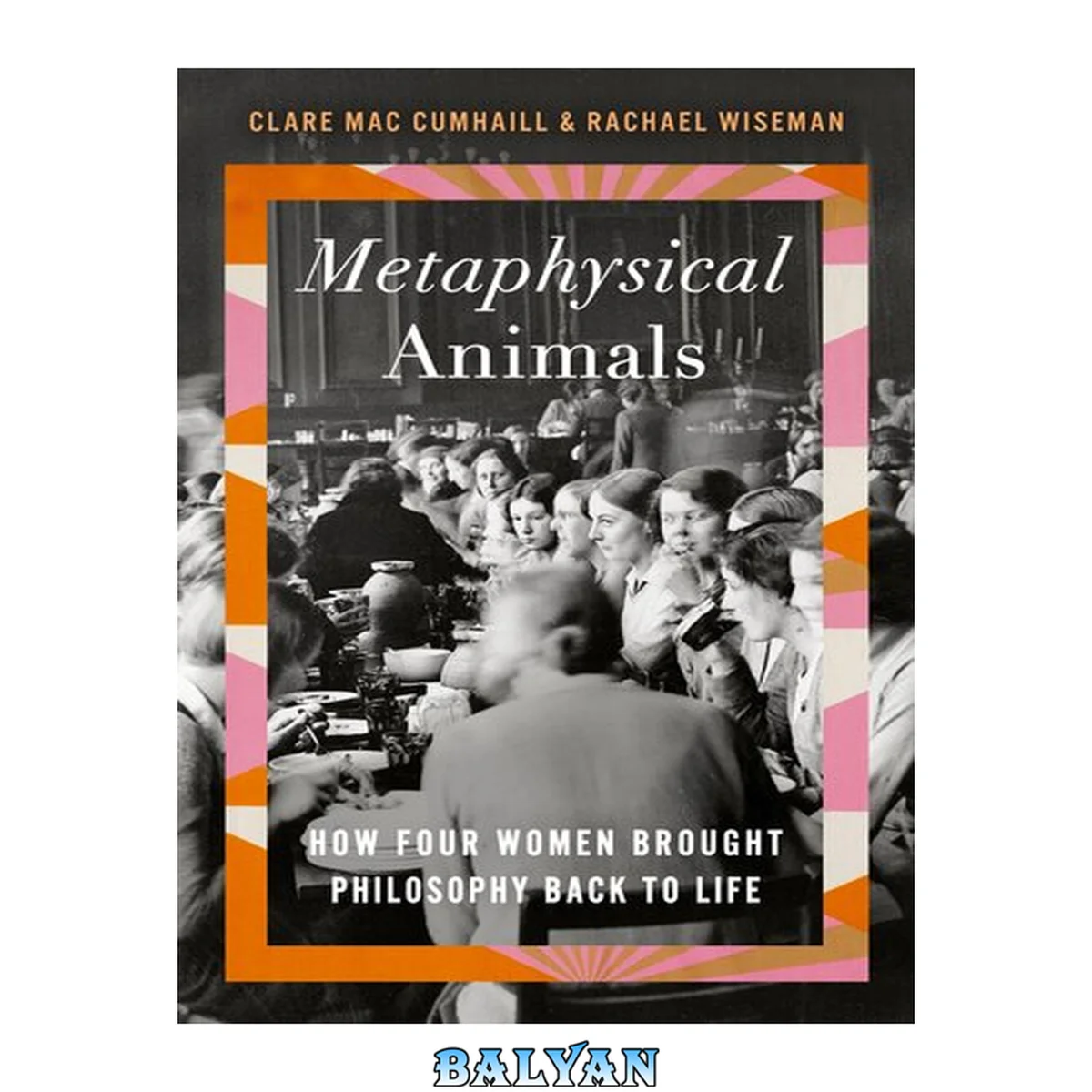
معرفی کتاب «Metaphysical Animals : How Four Women Brought Philosophy Back to Life» نوشتهٔ Clare Mac Cumhaill; Rachael Wiseman، منتشرشده توسط نشر Anchor Books در سال 2022. این کتاب در فرمت epub، زبان انگلیسی ارائه شده است.
A vibrant portrait of four college friends—Iris Murdoch, Philippa Foot, Elizabeth Anscombe, and Mary Midgley—who formed a new philosophical tradition while Oxford's men were away fighting World War II. The history of European philosophy is usually constructed from the work of men. In Metaphysical Animals, a pioneering group biography, Clare Mac Cumhaill and Rachael Wiseman offer a compelling alternative. In the mid-twentieth century Elizabeth Anscombe, Mary Midgley, Philippa Foot, and Iris Murdoch were philosophy students at Oxford when most male undergraduates and many tutors were conscripted away to fight in the Second World War. Together, these young women, all friends, developed a philosophy that could respond to the war’s darkest revelations. Neither the great Enlightenment thinkers of the past, the logical innovators of the early twentieth century, or the new Existentialist philosophy trickling across the Channel, could make sense of this new human reality of limitless depravity and destructive power, the women felt. Their answer was to bring philosophy back to life. We are metaphysical animals, they realized, creatures that can question their very being. Who am I? What is freedom? What is human goodness? The answers we give, they believed, shape what we will become. Written with expertise and flair, Metaphysical Animals is a lively portrait of women who shared ideas, but also apartments, clothes and even lovers. Mac Cumhaill and Wiseman show how from the disorder and despair of the war, four brilliant friends created a way of ethical thinking that is there for us today.°°° Dr CLARE MAC CUMHAILL & Dr RACHAEL WISEMAN are philosophy lecturers & friends. www.womeninparenthesis.co.uk, a scholarly project that makes the case for analytic philosophy’s first all-female philosophical school. A NEW YORK TIMES BOOK REVIEW BEST BOOK OF THE YEAR - A vibrant portrait of four college friends--Iris Murdoch, Philippa Foot, Elizabeth Anscombe, and Mary Midgley--who formed a new philosophical tradition while Oxford's men were away fighting World War II. The history of European philosophy is usually constructed from the work of men. In Metaphysical Animals, a pioneering group biography, Clare Mac Cumhaill and Rachael Wiseman offer a compelling alternative. In the mid-twentieth century Elizabeth Anscombe, Mary Midgley, Philippa Foot, and Iris Murdoch were philosophy students at Oxford when most male undergraduates and many tutors were conscripted away to fight in the Second World War. Together, these young women, all friends, developed a philosophy that could respond to the war's darkest revelations. Neither the great Enlightenment thinkers of the past, the logical innovators of the early twentieth century, or the new Existentialist philosophy trickling across the Channel, could make sense of this new human reality of limitless depravity and destructive power, the women felt. Their answer was to bring philosophy back to life . We are metaphysical animals, they realized, creatures that can question their very being. Who am I? What is freedom? What is human goodness? The answers we give, they believed, shape what we will become. Written with expertise and flair, Metaphysical Animals is a lively portrait of women who shared ideas, but also apartments, clothes and even lovers. Mac Cumhaill and Wiseman show how from the disorder and despair of the war, four brilliant friends created a way of ethical thinking that is there for us today. "A vibrant portrait of four college friends--Iris Murdoch, Philippa Foot, Elizabeth Anscombe, and Mary Midgley--who formed a new philosophical tradition while Oxford's men were away fighting World War II. The history of European philosophy is usually constructed from the work of men. In Metaphysical Animals, a pioneering group biography, Clare Mac Cumhaill and Rachael Wiseman offer a compelling alternative. In the mid-twentieth century Elizabeth Anscombe, Mary Midgley, Philippa Foot, and Iris Murdoch were philosophy students at Oxford when most male undergraduates and many tutors were conscripted away to fight in the Second World War. Together, these young women, all friends, developed a philosophy that could respond to the war's darkest revelations. Neither the great Enlightenment thinkers of the past, the logical innovators of the early twentieth century, or the new Existentialist philosophy trickling across the Channel, could make sense of this new human reality of limitless depravity and destructive power, the women felt. Their answer was to bring philosophy back to life. We are metaphysical animals, they realized, creatures that can question their very being. Who am I? What is freedom? What is human goodness? The answers we give, they believed, shape what we will become"-- Amazon A Delightful Group Portrait Of Four College Friends--iris Murdoch, Philippa Foot, Elizabeth Anscombe, And Mary Midgley--who Formed A New Philosophical Tradition Starting With The Ideas, Fears, And Hopes Of Women While Oxford's Men Were Away At War The History Of European Philosophy Is Usually Formed From The Ideas, Visions And Hopes Of Men, Many Of Whom Lived Monastic Lives Apart From Women And Children. In The Mid-twentieth Century, As Students At Oxford, Elizabeth Anscombe, Mary Midgley, Philippa Foot, And Iris Murdoch Launched An Alternative. In The 1930's, While The Men Of Their Class Went To War, These Four Women Dared To Question The Abstraction Of The Modern Male Philosophical Tradition, Returning Instead To Questions Of Virtue And Human Nature. They Did Their Philosophical Work Among Diapers And Babies, In Living Rooms And Teashops, And In A Landscape Of Bombed Out Buildings, Emergency Hospitals, And Displaced People. Each Woman Concluded That Human Life Is Not A Pursuit For An Isolated Individual, But For A Group. Metaphysical Animals Is A Retelling Of Modern Philosophy That Places Four Women At The Center. It Is A Story Of Love And War And Friendship That Offers A New Answer To The Fundamental Question: What Do We Live For? "A vibrant portrait of four college friends--Iris Murdoch, Philippa Foot, Elizabeth Anscombe, and Mary Midgley--who formed a new philosophical tradition while Oxford's men were away fighting World War II. ... In the mid-twentieth century Elizabeth Anscombe, Mary Midgley, Philippa Foot, and Iris Murdoch were philosophy students at Oxford when most male undergraduates and many tutors were conscripted away to fight in the Second World War. Together, these young women, all friends, developed a philosophy that could respond to the war's darkest revelations. Neither the great Enlightenment thinkers of the past, the logical innovators of the early twentieth century, or the new Existentialist philosophy trickling across the Channel, could make sense of this new human reality of limitless depravity and destructive power, the women felt. Their answer was to bring philosophy back to life. We are metaphysical animals, they realized, creatures that can question their very being. Who am I? What is freedom? What is human goodness? The answers we give, they believed, shape what we will become."-- Provided by publisher Four college friends-- Iris Murdoch, Philippa Foot, Elizabeth Anscombe, and Mary Midgley-- came of age during years of tumultuous events: Nazism, the Holocaust, Hiroshima and Nagasaki. The philisophy of the day struck them as inadequate for this new human reality of limitless depravity and destructive power. With most male undergraduates conscripted, the women shared ideas and created a philosophical revolution to counter the darkness of their times. - adapted from jacket
دانلود کتاب Metaphysical Animals : How Four Women Brought Philosophy Back to Life