Mesoamerican Codices: Calendrical knowledge and ceremonial practice in Indigenous religion and history (International)
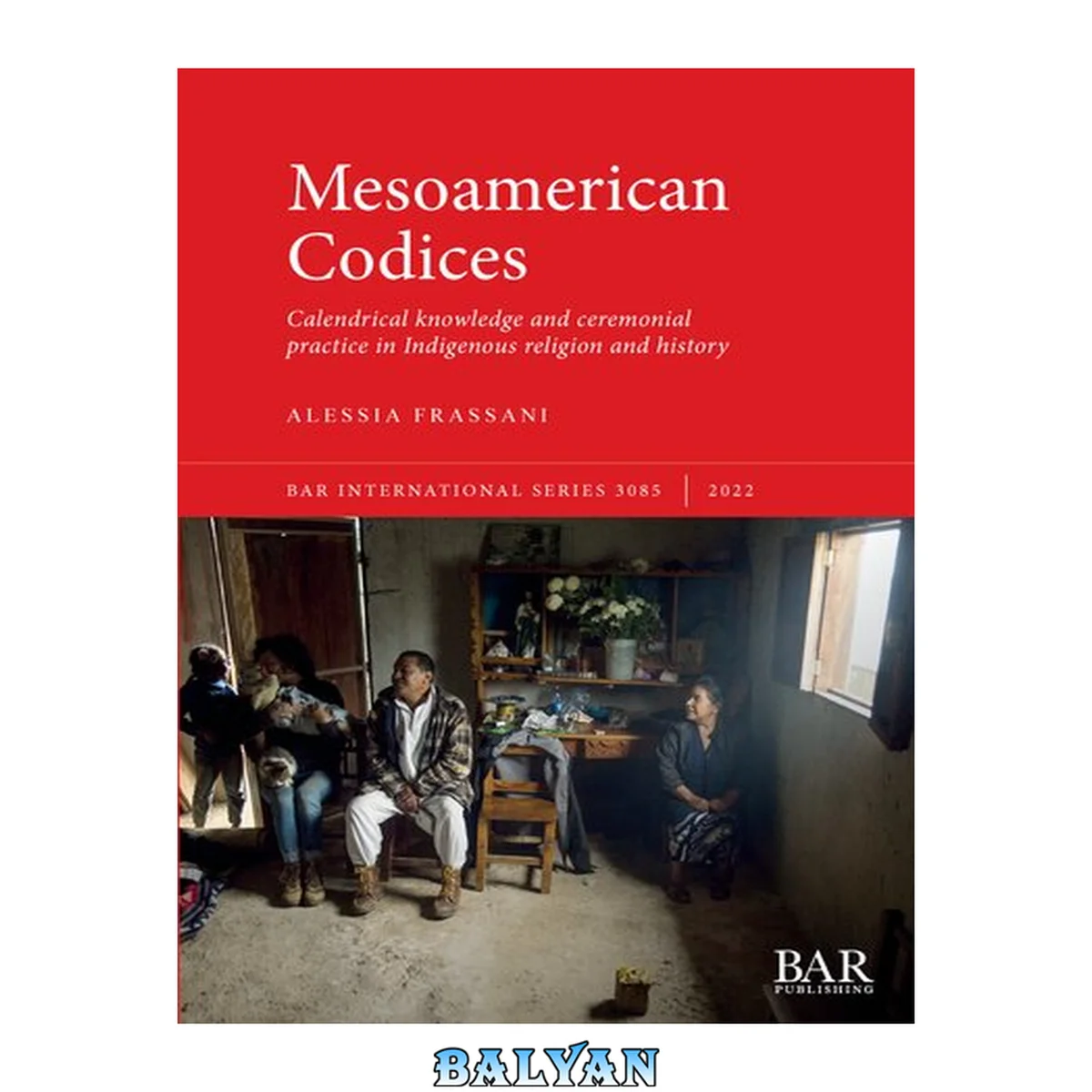
معرفی کتاب «Mesoamerican Codices: Calendrical knowledge and ceremonial practice in Indigenous religion and history (International)» نوشتهٔ Alessia Frassani، منتشرشده توسط نشر BaR Publishing. این کتاب در فرمت pdf، زبان انگلیسی ارائه شده است.
Religious manuscripts from ancient and early colonial Mexico offer a direct pathway into indigenous worldviews through the uniquely Mesoamerican medium of pictography. During the thousands of years preceding Spanish invasion, a complex calendrical system developed in the region, forming the basic organizing principle of this pictorial language. This book offers new interpretations and insights on both calendrics and the related iconography of Mesoamerican religious manuscripts, based on the author?s field work in the Sierra Mazateca in northern Oaxaca. Detailed calendrical analysis is included, along with audio recordings of chants, prayers, and ceremonies available as an online download. The author?s novel approach questions accepted notions of divination, chronology, and the dichotomy between ritual and historical time.0This is an open access title available under the terms of a CC BY-NC-ND 4.0 License. It is free to read, download and share on the BAR Digital platform Front Cover Title Page Copyright Page Of Related Interest Acknowledgments Dedication Contents List of Illustrations List of Audio Files Available Online Abstract Map of Places and Regions Mentioned in this Book Introduction 1. Diviners and Divination 1.1. Two examples of Mazatec divination 1.2. Priests and diviners in ancient and colonial images 1.3. Divination and ceremony 2. Night Ceremonies and Chants 2.1. Colonial views on night ceremonies 2.2. Mazatec night ceremonies 2.2.1. Marina Mendoza 2.2.2. Baldomero Pineda and the chant of the grandparents 2.2.3. Leonardo Morales 2.3. Colonial chanting 3. The Mesoamerican Calendar 3.1. The tonalpohualli 3.2. The xihuitl 3.3. The calendar and the festival cycle 3.4. The festival cycle in the southeastern Nahua region 4. The Ceremonial Cycle in Colonial Sourcesand the Ancient Books 4.1. Teotleco 4.2. Emblematic and narrative representations of the veintenas 4.3. The veintenas in the Codex Borgia 4.3.1. The quest 4.3.2. Conclusions 5. Ritual and Historical Time 5.1. Historical time and the Codex Borbonicus 5.2. The Christian and Mesoamerican calendars 6. Prophecy, Patronage, and Purpose in the Ancient Religious Manuscripts 6.1. The patronage of the Codex Borbonicus 6.2. The prophetic value of pictography 6.3. Provenience and dating of the Codex Borgia 6.4. New Fire and new codices 7. The Evolution of Early Colonial Pictography 7.1. The Codices Telleriano-Remensis and Vaticanus A 7.1.1. Quetzalcoatl as culture hero 7.1.2. Cosmology and the tonalpohualli 7.2. The Codices Tudela and Magliabechiano 7.2.1. Ritual cloaks 7.2.2. The tonalpohualli and the veintenas 7.2.3. Xochilhuitl and the pulque gods 7.2.4. The ceremonial use of plants 7.2.5. Gods and ceremonies in folios 89r–92r of the Codex Magliabechiano 8. Manuscript Painting and the Conventos 8.1. The work of Sahagún 8.1.1. The gods and the chants 8.1.2. The huehuetlatolli and the book 8.1.3. History and its moral 8.2. The Codex Yanhuitlan 8.3. Discussion Conclusion Manuscripts and Visual Sources Appendix Bibliography Back Cover Religious manuscripts from ancient and early colonial Mexico offer a direct pathway into indigenous worldviews through the uniquely Mesoamerican medium of pictography. During the thousands of years preceding Spanish invasion, a complex calendrical system developed in the region, forming the basic organising principle of this pictorial language. This book offers new interpretations and insights on both calendrics and the related iconography of Mesoamerican religious manuscripts, based on the author's field work in the Sierra Mazateca in northern Oaxaca. Detailed calendrical analysis is included, along with audio recordings of chants, prayers, and ceremonies available as an online download. The author's novel approach questions accepted notions of divination, chronology, and the dichotomy between ritual and historical time
دانلود کتاب Mesoamerican Codices: Calendrical knowledge and ceremonial practice in Indigenous religion and history (International)