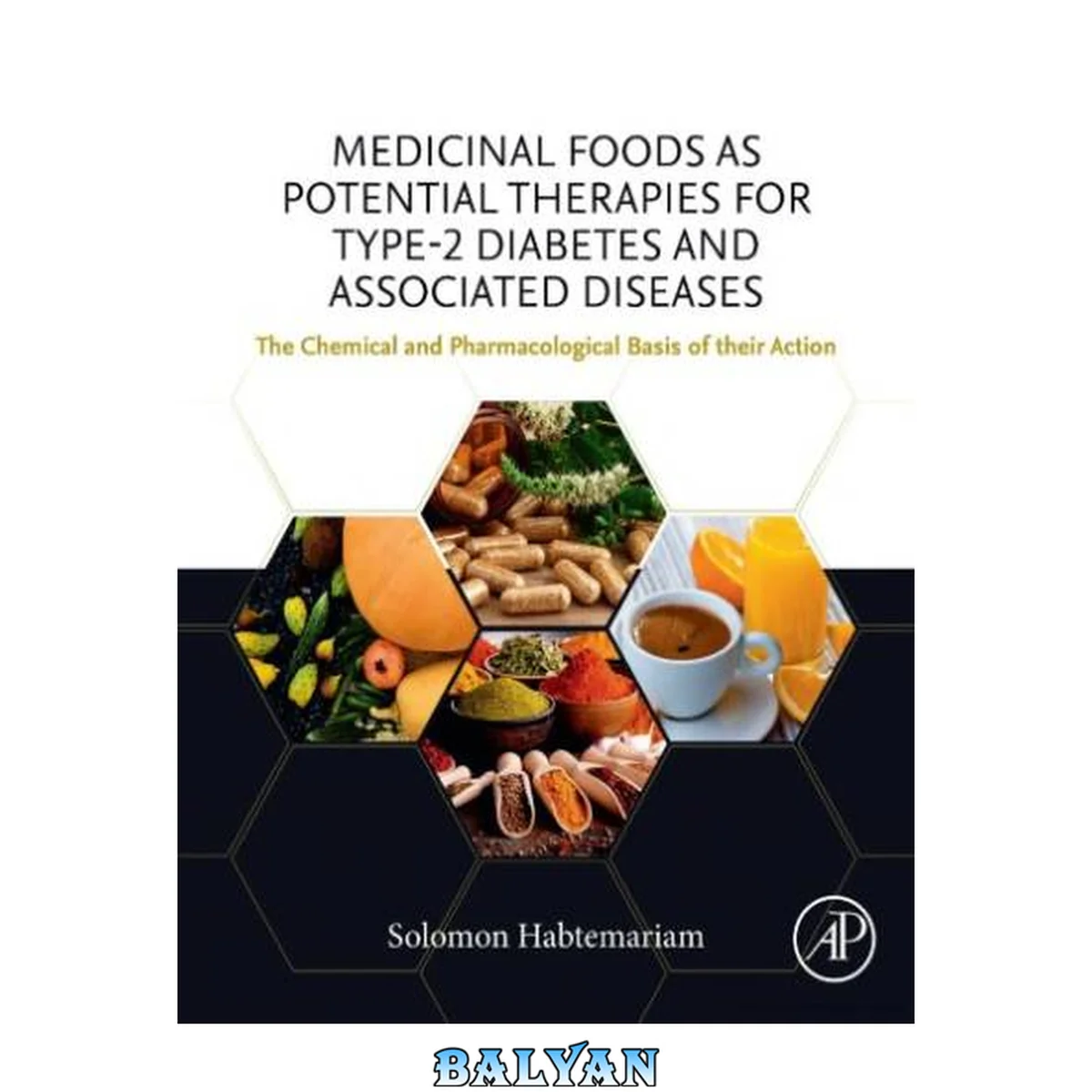
معرفی کتاب «Medicinal Foods As Potential Therapies for Type-2 Diabetes and Associated Diseases : The Chemical and Pharmacological Basis of Their Action» نوشتهٔ Solomon Habtemariam، منتشرشده توسط نشر Academic Press در سال 2019. این کتاب در فرمت pdf، زبان انگلیسی ارائه شده است.
Medicinal Foods as Potential Therapies for Type-2 Diabetes and Associated Diseases: The Chemical and Pharmacological Basis of their Action focuses on active pharmacological principles that modulate diabetes, associated risk factors, complications and the mechanism of action of widely used anti-diabetic herbal plants—rather than just the nutritional composition of certain foods. The book provides up-to-date information on acclaimed antidiabetic super fruits, spices and other food ingredients. Sections cover diabetes and obesity at the global level, the physiological control of carbohydrate and lipid metabolism, the pathophysiology of type-2 diabetes, the chemistry and pharmacology of a variety of spices, and much more. This book will be invaluable for research scientists and students in the medical and pharmaceutical sciences, medicinal chemistry, herbal medicine, drug discovery/development, nutrition science, and for herbal practitioners and those from the nutraceutical and pharm industries. Key Features Provides background knowledge on type-2 diabetes and its pathophysiology and therapeutic targets down to the molecular level Explores, in detail, the chemistry or secondary metabolites of the indicated foods that potentially modify diabetes and/or associated diseases Examines the pharmacological findings on medicinal foods, including available clinical trials Readership Research scientists and advanced students working in the fields of natural products, drug discovery, medicinal chemistry and pharmacology. Also medical students, herbal medicine practitioners, pharmaceutical and nutraceutical researchers and students; traders and stake holders in the food industry; aid agencies and diabetes/obesity-related societies Reviews "This book provides up-to-date information on antidiabetic super fruits, spices and other food ingredients. Sections also covers diabetes and obesity at the global level, the physiological control of carbohydrate and lipid metabolism, the pathophysiology of type-2 diabetes, the chemistry and pharmacology of a variety of spices, and more." --IFIS Publishing Cover......Page 1 MEDICINAL FOODS AS POTENTIAL THERAPIES FOR TYPE-2 DIABETES AND ASSOCIATED DISEASES: The Chemical and Pharmacological Basis of their Action ......Page 3 Copyright......Page 4 About the Author......Page 5 Preface......Page 6 Acknowledgements......Page 10 Section A: Type-2 diabetes: Prevalence and significance ......Page 11 Diabetes......Page 12 Classification of diabetes......Page 13 Diagnosis criteria: Diabetic and prediabetic conditions......Page 14 Global prevalence of diabetes......Page 16 The social and economic impact of diabetes......Page 18 Further reading......Page 19 Section B: Normal physiological control of carbohydrate and lipid metabolism and some common antidiabetic therapeutic targets ......Page 20 Introduction......Page 21 Carbohydrate digestion......Page 22 Mechanisms of glucose uptake and transport......Page 24 Glycogenesis......Page 26 Glycogenolysis......Page 28 Gluconeogenesis......Page 30 Hormonal regulation of glucose metabolism......Page 34 Production and release......Page 36 Mechanism of insulin action......Page 39 Glucagon and related peptides......Page 41 Incretins......Page 43 The AMP-activated protein kinase (AMPK) and cellular energy balance regulation......Page 45 References......Page 46 Overview of lipids chemistry......Page 48 Triacylglycerols or triglycerides (TGs)......Page 49 Cholesterol and steroids......Page 51 Lipid digestion......Page 56 Lipid uptake from the intestine and transport system......Page 58 Utilization of lipids as an energy source......Page 62 De novo fatty acid synthesis......Page 67 Hormonal control of lipid metabolism......Page 69 Summary of energy homeostasis and hormonal control......Page 71 References......Page 72 Section C: Pathophysiology of type 2 diabetes and therapeutic options ......Page 73 Acute emergencies......Page 74 Microvascular or microangiopathic damage of the capillaries......Page 75 Diabetic neuropathy......Page 78 Diabetic nephropathy......Page 79 The diabetic foot ulcer and amputation......Page 80 T2D and advanced glycated end products (AGEs)......Page 81 Oxidative stress in T2D pathology......Page 84 The NAD(P)H oxidase system in T2D......Page 85 The mitochondrial respiratory system......Page 86 Antioxidant defences......Page 87 Low-grade inflammation as a link between obesity and T2D......Page 89 References......Page 92 Type 2 diabetes diagnosis and management by lifestyle change......Page 94 Pharmacological management approach for T2D......Page 95 Biguanides......Page 97 GLP-1 receptor agonists and DPP-4 inhibitors......Page 100 Exenatide......Page 101 Dipeptidyl peptidase-4 (DPP-4) inhibitors......Page 102 The sodium-glucose cotransporter-2 (SGL2) inhibitors......Page 103 Sulfonylureas......Page 104 Thiazolidinedione (TZD) or glitazones......Page 106 Insulin......Page 109 Other antidiabetic drugs of choice......Page 110 Further readings......Page 111 The what and why of secondary plant metabolites......Page 113 General overview of secondary metabolites biosynthesis......Page 114 The terpenoids biosynthesis pathway......Page 115 The shikimate biosynthesis pathway......Page 123 The flavonoids (mixed shikimate and acetate) biosynthesis pathway......Page 128 Alkaloids......Page 131 Pharmacological principles of drugs action-How do plant food metabolites act?......Page 132 References......Page 135 Section D: Potential modulators of type-2 diabetes and associated diseases: Super fruits ......Page 137 Botanical and taxonomic perspectives......Page 138 Common usage and production......Page 140 Anthocyanins and anthocyanidins......Page 141 Other polyphenol constituents of bilberries and blueberries......Page 147 Bioavailability and pharmacokinetic profile......Page 149 Data from in vitro studies......Page 150 Antidiabetic and antiobesity potential assessments in animal models......Page 155 Human trials......Page 158 Bilberries/blueberries and diabetes retinopathy......Page 162 Antioxidant effect......Page 164 Anti-inflammatory effects......Page 166 Modulation of the insulin signal transduction pathways......Page 167 Conclusion......Page 168 References......Page 169 Further reading......Page 177 8 The chemical and pharmacological basis of bitter melon (Momordica charantia L.) as a potential therapy for typ .........Page 179 Introduction to the plant-Bitter melon......Page 180 Taxonomic and botanical considerations......Page 182 The chemistry of bitter melon......Page 183 Macro- and micronutrients......Page 184 Carotenoids and fatty acids......Page 185 Phenolic constituents......Page 189 Essential oils......Page 191 Cucurubitane-type triterpenes......Page 192 Oleane-type and other triterpenes......Page 210 Alkaloids......Page 213 Antidiabetic, antiobesity and lipid lowering effects of bitter melon......Page 214 Potentially active antidiabetic and/or antiobesity principles of bitter melon......Page 218 Effect on insulin secretion and signalling pathways......Page 220 Carbohydrate digestion and/or absorption......Page 229 Glucose metabolism in the liver......Page 230 Anti-inflammatory mechanisms......Page 231 Antioxidant effects......Page 234 Organ protection......Page 236 Other mechanisms and further active constituents......Page 237 Clinical trials......Page 238 Potential toxic and other undesirable effects......Page 240 References......Page 241 Further reading......Page 251 9 The chemical and pharmacological basis of guava (Psidium guajava L.) as potential therapy for type 2 diabetes .........Page 252 Botanical description and taxonomy......Page 253 Guava utilization as food and medicine......Page 254 Nutritional perspective......Page 255 Phenolic acids and related compounds......Page 257 Flavonoids......Page 258 Unusual phenolics and tannins......Page 265 Essential oils and other non-phenolic components......Page 268 Triterpenes......Page 272 The pharmacology of guava fruits in diabetes and associated diseases......Page 277 The pharmacology of guava leaves in diabetes and associated diseases......Page 283 Modulation of insulin and other signaling molecules related to glycaemic and lipid control......Page 285 Antioxidant mechanism......Page 289 Anti-inflammatory mechanisms......Page 290 Effects on carbohydrate digestion or absorption......Page 291 Other mechanisms......Page 293 Cardiovascular effects: Cardiac hypertrophy and hypertension......Page 294 Wound healing effects......Page 296 Overview of the guava antidiabetic principles......Page 297 Clinical studies......Page 298 References......Page 299 Further reading......Page 306 Introduction to Abelmoschus esculentus (L.) Moench......Page 307 Botanical and taxonomic considerations......Page 308 Economic significance......Page 311 Seed oil......Page 313 Non-oil components......Page 315 Polysaccharide components......Page 318 Effects of okra extracts and purified compounds on diabetes and associated diseases......Page 319 Organoprotective and other effects......Page 327 Toxicity......Page 328 References......Page 329 Further reading......Page 332 11 The chemical and pharmacological basis of papaya (Carica papaya L.) as potential therapy for type-2 diabetes......Page 333 Botanical and taxonomic considerations......Page 334 Extent of papaya fruits production/utilisation......Page 337 Uses as food and medicine......Page 340 Nutritional composition......Page 341 Phenolic acids and flavonoids derivatives......Page 342 Isothiocyanates and related compounds......Page 344 Alkaloids......Page 345 Enzymes and protein components......Page 346 In vitro studies......Page 347 Antidiabetic and lipid lowering effects in animal models......Page 349 Papaya and wound healing......Page 352 Antihypertensive effect......Page 355 Evidence of efficacy from human trials......Page 356 Conclusion......Page 358 References......Page 359 Further reading......Page 363 12 The chemical and pharmacological basis of pomegranate (Punica grantum L.) as potential therapy for type-2&sp......Page 364 Botany and taxonomy......Page 365 Uses as food and medicine......Page 369 The chemistry of pomegranate......Page 371 Phenolic acids and related compounds......Page 372 Flavonoids......Page 375 Tannins......Page 381 Lignans......Page 389 Seed oil......Page 390 Other compounds......Page 392 Evidence of efficacy from in vitro and in vivo studies......Page 393 General anti-inflammatory effects......Page 401 Fruits......Page 404 Flowers......Page 408 Seed oil and punicic acid......Page 411 Leaves......Page 413 Evidence of efficacy from clinical studies......Page 414 Pharmacokinetics and toxicological perspectives......Page 418 General summary and conclusion......Page 419 References......Page 421 Further reading......Page 431 13 The chemical and pharmacological basis of prickly pear cactus (Opuntia species) as potential therapy for type .........Page 433 Taxonomic and botanical perspectives......Page 434 Food production......Page 439 The chemistry of cactus pears......Page 441 Betalains......Page 442 Polyphenols......Page 443 Seeds oil......Page 447 Polysaccharides components......Page 448 Antidiabetic effect demonstrated through animal studies......Page 449 Antiobesity and lipid lowering potential......Page 451 Antioxidant effects......Page 453 Anti-inflammatory mechanisms......Page 455 Polysaccharides......Page 456 Antioxidant effects of indicaxanthin and betanin......Page 457 Antidiabetic effects of cactus pear pigments......Page 459 Other compounds......Page 460 Diuretic effects......Page 461 Human studies on prickly pears......Page 462 General summary and conclusions......Page 463 References......Page 464 Further reading......Page 470 Introduction......Page 471 Botanical and taxonomic perspectives......Page 473 Ornamental, food, and medicinal values......Page 475 Antidiabetic effects in animals models......Page 477 Chemical components of C. pepo......Page 478 Polyphenols......Page 479 Terpenoids......Page 480 Tocopherols......Page 482 Polysaccharides......Page 484 Antidiabetic effect of C. moschata......Page 485 Antidiabetic effects of C. ficifolia......Page 491 Antidiabetic effect of C. maxima......Page 493 Conclusions......Page 495 References......Page 496 Further reading......Page 500 Section E: Potential modulators of type-2 diabetes and associated diseases: Spices ......Page 501 14 The chemical and pharmacological basis of cinnamon (Cinnamomum species) as potential therapy for type-2&spi1......Page 502 Introduction......Page 503 Taxonomic and botanical descriptions......Page 504 Medicinal uses......Page 507 The chemistry of the cinnamon bark......Page 508 Volatile components......Page 509 Non-volatile components......Page 511 General pharmacology......Page 516 Evidence of efficacy from studies on animal models: Cinnamon powder and crude extracts......Page 518 Glucose production......Page 520 Gene and protein expression/activation......Page 521 Antioxidant and antiglycation effects......Page 523 Cinnamaldehyde......Page 525 Cinnamaldehyde and glycaemic control......Page 526 Antiobesity and lipid lowering effects......Page 527 Polar and phenolic components as active principles......Page 529 Evidence of efficacy from human trials......Page 531 Other pharmacological effect of cinnamon relevant to T2D......Page 534 Toxicological profile......Page 535 Overview of pharmacokinetics profile......Page 536 General summary and conclusions......Page 537 References......Page 539 Further reading......Page 547 16 The chemical and pharmacological basis of cloves (Syzygium aromaticum (L.) Merr. M.Perry) as potent......Page 548 Botanical and taxonomic perspectives......Page 549 Culinary and medicinal uses of clove......Page 552 Essential oils......Page 553 Flavonoids......Page 555 Phenolic acids and derivatives......Page 556 Tannins......Page 557 Terpenoids......Page 558 Antidiabetic effects-Crude extract and preparations......Page 562 Antidiabetic effects-Active principles of cloves......Page 564 Antiobesity and antihyperlipidaemic effects......Page 568 General summary and conclusion......Page 569 References......Page 571 Further reading......Page 575 17 The chemical and pharmacological basis of fenugreek (Trigonella foenum-graecum L.) as potential therapy for t .........Page 576 Botanical and taxonomic perspectives......Page 577 Uses as food and medicine......Page 580 The chemistry of fenugreek......Page 581 Oil components of fenugreek seeds......Page 582 Saponins......Page 584 Alkaloids......Page 590 Flavonoids......Page 592 Other shikimic acid-derived compounds of fenugreek seeds......Page 595 Carbohydrates and gums......Page 597 Unusual amino acid: 4-Hydroxyisoleucine......Page 599 Glycaemic control in various animal and in vitro models......Page 601 Hypolipidaemic and antiobesity effects in various animal and in vitro models......Page 603 Antihyperglycaemic effects......Page 606 Antihyperlipidaemic effects......Page 607 4-Hydroxyisoleucine......Page 608 Saponins......Page 611 Dietary fibre and carbohydrate fractions......Page 613 Fenugreek in other diabetes-related pathologies......Page 616 Antioxidant and organoprotective effects of fenugreek......Page 617 Anti-inflammatory effects......Page 620 Adverse effect......Page 622 Conclusions......Page 623 References......Page 624 Further reading......Page 633 18 The chemical and pharmacological basis of ginger (Zingiber officinale Roscoe) as potential therapy for diabet .........Page 635 Taxonomic and botanical perspectives......Page 636 Utilization of ginger as food and medicine......Page 639 Less-volatile components......Page 642 Essential oils......Page 645 Quality control measures......Page 646 Evidence of efficacy from animal experiments......Page 647 Evidence of efficacy from human studies......Page 648 Mechanisms of improvement of insulin signalling and glucose homeostasis by ginger products......Page 649 Evidence of efficacy from animal studies......Page 651 Mechanisms of antiobesity and antihyperlipidaemic effect of ginger......Page 652 Atherosclerosis......Page 655 Crude extract preparations......Page 656 Effects of the isolated compounds......Page 657 Platelet function......Page 660 Antioxidant effects as mechanisms for the diverse effects of ginger in diabetes and associated diseases......Page 661 Anti-inflammatory mechanisms......Page 663 Ginger in diabetic retinopathy......Page 667 Ginger in diabetic nephropathy......Page 668 Overview of pharmacokinetics profile......Page 669 Conclusions......Page 671 References......Page 672 Further readings......Page 682 19 The chemical and pharmacological basis of garlic (Allium sativum L.) as potential therapy for type 2 diabetes .........Page 684 Taxonomy and origin......Page 685 Garlic utilization as food and medicine......Page 686 Organosulphur compounds in fresh garlic preparations......Page 693 Aged garlic preparations......Page 695 Aged black garlic......Page 697 Phenolic composition of garlic......Page 698 Chemical variability of garlic products......Page 701 Evidence of efficacy from animal experiments......Page 702 Evidence of efficacy from human studies......Page 705 Evidence of efficacy from animal studies......Page 706 Evidence of efficacy from human studies......Page 707 Evidence of efficacy from animal studies......Page 708 Evidence of efficacy from human studies......Page 710 Improvement of insulin signalling and glucose homeostasis by garlic products......Page 711 Lipid lowering, antiobesity and anti-adipogenic effects of garlic......Page 712 Mechanisms of cardiovascular protection by garlic......Page 716 Mechanisms related to hydrogen sulphide (H2S)......Page 717 Mechanisms related to angiotensin converting enzyme (ACE)......Page 719 Mechanisms related to nitric oxide and other signalling pathways......Page 720 Mechanisms related to platelet function......Page 722 Antioxidant effects as mechanisms for the diverse effect of garlic in diabetes and associated diseases......Page 723 Anti-inflammatory mechanisms......Page 726 Garlic in diabetic nephropathy......Page 727 Overview of pharmacokinetics profile......Page 728 Toxicity remarks......Page 729 References......Page 730 Further reading......Page 743 20 The chemical and pharmacological basis of turmeric (Curcuma longa L.) as potential therapy for type 2 diabete .........Page 745 The chemistry of turmeric......Page 746 Antidiabetic effects in animal models......Page 752 Antidiabetic effects in human subjects......Page 753 Effects on animal models......Page 754 Effects on human subjects......Page 755 Neuropathy......Page 756 Endothelial dysfunction......Page 757 Nephropathy......Page 758 Retinopathy......Page 759 Wound healing......Page 761 Insulin signalling and glucose homeostasis......Page 762 Lipid lowering and anti-adipogenic effects......Page 764 Antioxidant mechanisms......Page 767 Anti-inflammatory mechanisms......Page 769 β-Cell protection......Page 771 Toxicology and pharmacokinetic profile......Page 772 General summary and conclusions......Page 773 References......Page 775 Further reading......Page 782 Section F: Potential modulators of type 2 diabetes and associated diseases: Beverages, other foods, and herbal supplements ......Page 784 21 Chemical and pharmacological evidences for coffee as a modulator of type 2 diabetes and metabolic syndrome......Page 785 Introduction......Page 786 Economic significance......Page 788 Taxonomy and botany......Page 792 The chemistry of coffee relevant to potential effect on metabolic syndrome......Page 795 The inverse association between coffee drinking and risk for T2D-Epidemiological evidences......Page 798 General antidiabetic effect......Page 801 Caffeine as an adenosine receptor antagonist......Page 803 Caffeine as a phosphodiesterase inhibitor......Page 805 Coffee as a modulator of glycaemic control and insulin sensitivity......Page 806 Antiobesity and lipid lowering verses hyperlipidaemic effects of coffee......Page 811 Antioxidant and anti-inflammatory mechanisms of coffee......Page 814 Coffee and hypertension......Page 817 Comments on bioavailability and toxicity......Page 818 Conclusions......Page 819 References......Page 820 Further reading......Page 830 22 The chemical and pharmacological basis of tea (Camellia sinensis (L.) Kuntze) as potential therapy for type 2 .........Page 831 The global tea industry......Page 832 Botany and taxonomy......Page 835 Chemistry......Page 838 General antidiabetic, antiobesity and lipid lowering effects in experimental animals......Page 843 General antioxidant effects......Page 859 Anti-inflammatory effects......Page 861 Effects on carbohydrate digestion and glucose absorption in the gut......Page 863 Effects on lipid digestion and faecal fat excretion......Page 864 Effects on insulin signalling and molecular targets in glycaemic control and fat metabolism......Page 865 Effects on endothelial dysfunction and cardiovascular system......Page 871 Overview of pharmacokinetics......Page 872 Epidemiology related to tea and T2D risks......Page 873 Inverse correlation between tea intake and cardiovascular risks in humans......Page 874 Glycaemic control in human subject......Page 876 Antiobesity and lipid lowering effect in human subjects......Page 877 Antihypertensive effect in human subjects......Page 882 Antioxidant effect of tea in human subjects......Page 883 Toxicity considerations......Page 884 References......Page 885 Further reading......Page 898 23 The chemical and pharmacological basis of rooibos (Aspalathus linearis (Burm. F.) R. Dahlgren) as potential t .........Page 899 Introduction......Page 900 Chemical components relevant to the pharmacology of rooibos......Page 903 The pharmacological basis of rooibos for diabetes and metabolic syndrome: In vitro and in vivo evidence......Page 909 Antioxidant activity......Page 916 Anti-inflammatory mechanisms......Page 917 Glucose and lipid metabolism......Page 919 Pancreatic β-cell protection and insulin release......Page 921 Antiobesity and anti-adipogenesis effects and lipid lowering effects......Page 922 Cardiovascular effect......Page 923 Overview of bioavailability and pharmacokinetics profile of rooibos......Page 926 References......Page 927 Further reading......Page 933 24 The chemical and pharmacological basis of yerba maté (Ilex paraguariensis A.St.-Hil.) as potential therapy......Page 934 Introduction......Page 935 Botanical and taxonomic perspectives......Page 936 Polyphenols......Page 937 Triterpenes and/or saponins......Page 943 Alkaloids......Page 945 Perspectives on variability of active components in mate extracts......Page 946 Evidences of efficacy of yerba mate for metabolic syndrome......Page 947 General antioxidant effects and mechanisms......Page 951 Anti-inflammatory mechanism......Page 953 Antihyperglycaemic and other effects on glucose homeostasis......Page 954 Antiobesity effect......Page 956 Pancreatic lipase and choleretic effects as antiobesity and lipid lowering mechanisms......Page 961 Cardiovascular effects......Page 962 Clinical trials and toxicological perspectives......Page 963 Conclusions......Page 966 References......Page 967 Further reading......Page 974 25 Other common and exotic foods with growing importance as antidiabetic agents......Page 975 Introduction......Page 976 The chemistry of cocoa active principles......Page 977 Antidiabetic and antiobesity effects of cocoa......Page 979 Human studies......Page 982 Introduction......Page 983 The chemistry of coconut......Page 984 Therapeutic potential of coconut for diabetes and associated diseases......Page 985 Introduction......Page 988 General antidiabetic effect of F. carica L. fruits......Page 989 Chemical components of F. carica fruits......Page 990 Antidiabetic effects of the active components......Page 992 Introduction......Page 993 M. oleifera as antidiabetic agent......Page 994 The active pharmacological components of M. oleifera and M. stenopetala......Page 997 Introduction......Page 1001 Soybean chemistry......Page 1002 Antidiabetic and related pharmacology in experimental models......Page 1003 Antidiabetic and related effects in human subjects......Page 1005 Introduction to sweet potato......Page 1006 Phytochemical components of sweet potato......Page 1008 Effects of sweet potato on diabetes and associated diseases......Page 1012 Introduction to walnuts......Page 1014 The chemistry and pharmacology of walnut (Juglans regia L.) seeds related to diabetes and associated diseases......Page 1015 The chemistry and pharmacology of walnut (Juglans regia L.) leaves related to diabetes and associated diseases......Page 1020 References......Page 1022 Further reading......Page 1037 26 Antidiabetic herbal medicines rebranded as dietary supplements......Page 1038 Overview of herbal medicines rebranding as supplements......Page 1039 Aloe vera as antidiabetic agent......Page 1041 Andrographis paniculata (Burm. F.) Wall. Ex Nees as antidiabetic agent......Page 1044 Experimental evidences for Banaba as antidiabetic agent......Page 1047 Overview of the genus and chemical profiles......Page 1053 Cassia auriculata-Now reclassified as Senna auriculata (L.) Roxb......Page 1054 Other Senna and Cassia species of interest......Page 1057 Ginkgo biloba L.......Page 1058 Overview of the genus Panax......Page 1064 Chemical composition of ginseng......Page 1065 Antidiabetic and antiobesity effects......Page 1068 Cardioprotective effects of ginsenosides......Page 1070 Perspectives from human studies on ginseng......Page 1071 The active pharmacological principles......Page 1072 General antidiabetic, antiobesity, and lipid lowering effects......Page 1075 Effects on the cardiovascular system......Page 1077 Perspectives from human studies......Page 1078 Overview of the plant......Page 1079 Potential active principles......Page 1080 General antidiabetic, antiobesity, and lipid lowering effects......Page 1084 Comparative assessments and mechanism of action for the active principles......Page 1085 Human study......Page 1087 Significance of olive leaves as food and medicine......Page 1088 Chemistry of the potential active principles......Page 1089 Antidiabetic effects of olive leaves......Page 1091 The pharmacology of olive leaf active principles related to diabetes and associated diseases......Page 1092 Effect of olive leaf extract on human subjects......Page 1093 Significance of Scutellaria baicalensis Georgi......Page 1094 Chemistry of Scutellaria baicalensis Georgi......Page 1095 Effects related to diabetes and/or metabolic syndrome......Page 1096 Significance of St John's wort-Hypericum perforatum L.......Page 1098 Standardized extracts and active principles......Page 1100 Potential therapy for diabetes and associated diseases......Page 1101 References......Page 1103 Further reading......Page 1122 A......Page 1124 B......Page 1127 C......Page 1128 D......Page 1130 E......Page 1131 F......Page 1132 G......Page 1133 H......Page 1136 I......Page 1137 L......Page 1138 M......Page 1139 O......Page 1140 P......Page 1141 R......Page 1143 S......Page 1144 T......Page 1145 W......Page 1147 Z......Page 1148 Back Cover......Page 1149 "Medicinal Foods as Potential Therapies for Type-2 Diabetes: The Chemical and Pharmacological Basis of their Action is the first book to focus on active pharmacological principles that modulate diabetes, associated risk factors, and complications and the mechanism of action of widely used anti-diabetic herbal plants, rather than the nutritional composition of the foods. It provides up-to-date information on the scientific basis of some acclaimed antidiabetic super fruits, species and other food ingredients. The global incidence of diabetes and its major risk factor, obesity, is growing with epidemic proportion, and so there is growing interest in finding new drugs from natural and synthetic sources to help halt this epidemic. The book is divided into six sections: the first part addresses fact and figures of diabetes and obesity at global level. In the second part, the physiological control of carbohydrate and lipid metabolism as well as some common therapeutic targets are presented. In section 3, the pathophysiology of type-2 diabetes and therapeutic options are presented. A dedicated section on super fruits include the therapeutic potential of bilberry and blueberries, bitter melon, okra, prickly pear cactus and other fruits that gain importance as antidiabetic agents in recent years. In section 5, the chemistry and pharmacology of spices including cinnamon, cloves, fenugreek, garlic, ginger and turmeric are presented to outline their antidiabetic potential. The last section includes beverages such as tea, coffee and yerba mate as well as a dedicated chapter on food supplements and other food products with emerging antidiabetic potential. Medicinal Foods as Potential Therapies for Type-2 Diabetes: The Chemical and Pharmacological Basis of their Action is invaluable research scientists and students in medical and pharmaceutical sciences, medicinal chemistry, herbal medicine, drug discovery/development, nutrition science as well as herbal practitioners, industries from the nutraceutical and pharmaceutical areas, and organizations dealing with diabetes and obesity managements"-- Provided by publisher
Medicinal Foods as Potential Therapies for Type-2 Diabetes and Associated Diseases: The Chemical and Pharmacological Basis of their Action focuses on active pharmacological principles that modulate diabetes, associated risk factors, complications and the mechanism of action of widely used anti-diabetic herbal plants—rather than just the nutritional composition of certain foods. The book provides up-to-date information on acclaimed antidiabetic super fruits, spices and other food ingredients. Sections cover diabetes and obesity at the global level, the physiological control of carbohydrate and lipid metabolism, the pathophysiology of type-2 diabetes, the chemistry and pharmacology of a variety of spices, and much more.
This book will be invaluable for research scientists and students in the medical and pharmaceutical sciences, medicinal chemistry, herbal medicine, drug discovery/development, nutrition science, and for herbal practitioners and those from the nutraceutical and pharm industries.
- Provides background knowledge on type-2 diabetes and its pathophysiology and therapeutic targets down to the molecular level
- Explores, in detail, the chemistry or secondary metabolites of the indicated foods that potentially modify diabetes and/or associated diseases
- Examines the pharmacological findings on medicinal foods, including available clinical trials