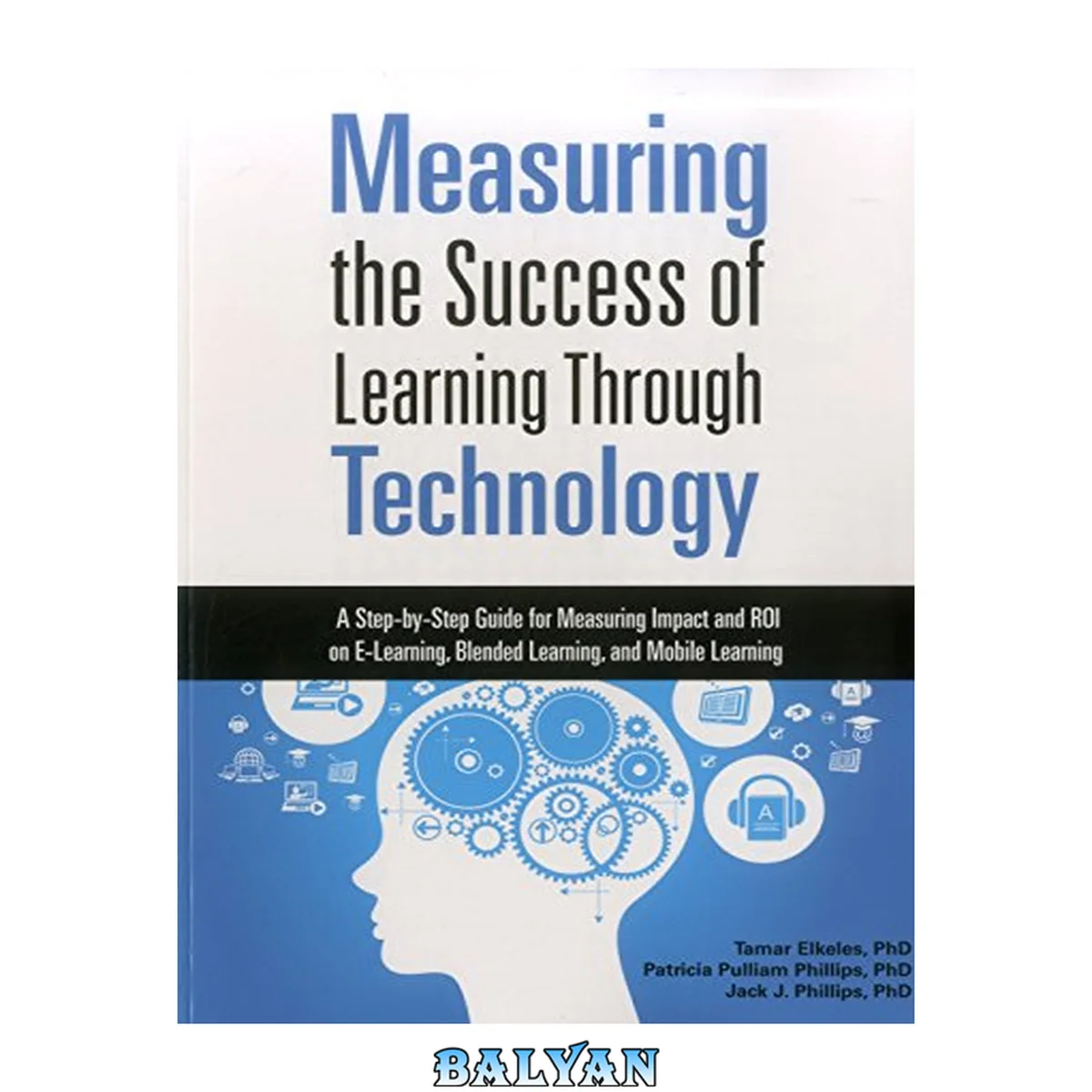
معرفی کتاب «Measuring the Success of Learning Through Technology: A Guide for Measuring Impact and Calculating ROI on E-Learning, Blended Learning, and Mobile Learning» نوشتهٔ Tamar Elkeles, Patricia Pulliam Phillips, Jack J. Phillips، منتشرشده توسط نشر American Society for Training and Development در سال 2014. این کتاب در 9 صفحه، فرمت pdf، زبان انگلیسی ارائه شده است.
Learn to measure the results of your technology-based learning programs with this step-by-step guide. Few would dispute the convenience, cost, and efficiency of learning through technology. Whether e-learning, blended learning, or mobile learning, it's usually just in time, just enough, and just for the user. The challenge with e-learning lies in proving its value and showing the results. The cost savings and the outcome of the learning program must be considered to determine the true value of these programs. Renowned ROI experts Jack and Patti Phillips have joined with Tamar Elkeles, the chief learning officer for Qualcomm, to provide this guide for measuring the success of e-learning programs. By following the steps prescribed in this book, designers and developers can significantly affect the success of e-learning at the application and impact levels, ultimately making the ROI easy to develop. Part I of the book outlines the steps that make up the logical approach to evaluation using the ROI Methodology. Part II describes how the methodology has been applied in real-life case studies. These studies represent a variety of industries and applications and are written by experienced professionals in the field of learning and development. Title Page Copyright Table of Contents Preface Acknowledgments Part I: The ROI Methodology: A Credible Approach to Evaluating Your Learning Through Technology Programs Chapter 1 Learning Through Technology: Trends and Issues The Evolution of Learning Techniques Concerns About Technology-Based Learning Final Thoughts Chapter 2 Measuring ROI: The Basics ROI Defined The ROI Methodology ROI Process Benefits of ROI Final Thoughts Chapter 3 Evaluation Planning and Data Collection Achieving Business Alignment Developing the Evaluation Plans Considerations for Collecting Data Methods for Collecting Data Generating High Response Rates Identifying the Source Determining the Timing of Data Collection Final Thoughts Chapter 4 Data Analysis Isolating the Effects of Learning Techniques to Isolate the Effects of Learning Selecting Isolation Techniques Types of Data Data Conversion Methods Five Steps to Data Conversion Fully Loaded Costs ROI Calculation Intangible Benefits Final Thoughts Chapter 5 Reporting and Using the Results The Importance of Reporting Results Identify the Needs Identify the Audience Select the Media Develop the Report Communicate Results and Evaluate the Results of Communication Delivering Bad News Using the Data Final Thoughts Chapter 6 Designing for Results Communication With Results in Mind Changing the Role of Participants Creating Expectations Design for Relevance Design for Results Built-In Application Tools Use Transfer Tools Involving the Participant’s Manager Final Thoughts Part II: Evaluation in Action: Case Studies Describing the Evaluation of Learning Through Technology Programs Chapter 7 Measuring ROI in Work Engagement: A Blended Learning Solution Chapter 8 Measuring ROI in Sales Training: A Game-Based Program Chapter 9 Measuring ROI in a Sales Program: A Web-Based Learning Solution Chapter 10 Measuring ROI in an English-as-a-Second-Language Program: An Online Learning Solution Chapter 11 Measuring ROI in an Upgrade Selling Program: A Mobile Learning Solution Chapter 12 Measuring ROI in a Sales Program: An E-Learning Solutions About the ROI Institute Index About the Authors
Learn to measure the results of your technology-based learning programs with this step-by-step guide.Few would dispute the convenience, cost, and efficiency of learning through technology. Whether e-learning, blended learning, or mobile learning, it's usually just in time, just enough, and just for the user. The challenge with e-learning lies in proving its value and showing the results. The cost savings and the outcome of the learning program must be considered to determine the true value of these programs. Renowned ROI experts Jack and Patti Phillips have joined with Tamar Elkeles, the chief learning officer for Qualcomm, to provide this guide for measuring the success of e-learning programs.By following the steps prescribed in this book, designers and developers can significantly affect the success of e-learning at the application and impact levels, ultimately making the ROI easy to develop. Part I of the book outlines the steps that make up the logical approach to evaluation using the ROI Methodology. Part II describes how the methodology has been applied in real-life case studies. These studies represent a variety of industries and applications and are written by experienced professionals in the field of learning and development.
Annotation Learn to measure the results of your technology-based learning programs with this step-by-step guide. Few would dispute the convenience, cost, and efficiency of learning through technology. Whether e-learning, blended learning, or mobile learning, it's usually just in time, just enough, and just for the user. The challenge with e-learning lies in proving its value and showing the results. The cost savings and the outcome of the learning program must be considered to determine the true value of these programs. By following the steps prescribed in this book: * Designers and developers can significantly affect the success of e-learning at the application and impact levels, ultimately making the ROI easy to develop. * Implement the logical approach to evaluation using the ROI Methodology. * See how the methodology has been applied in real-life case studies, written by experienced professionals in the field of learning and development The challenge with e-learning lies in proving its value and showing the results. The cost savings and the outcome of the learning program must be considered to determine the true value of these programs. In this guide the authors measure the success of e-learning programs. By following the steps prescribed in this book, designers and developers can significantly affect the success of e-learning at the application and impact levels, ultimately making the ROI easy to develop. Part I of the book outlines the steps that make up the logical approach to evaluation using the ROI Methodology. Part II describes how the methodology has been applied in real-life case studies representing a variety of industries and applications, written by experienced professionals in the field of learning and development. -- Edited summary from book