Mass production of beneficial organisms : invertebrates and entomopathogens
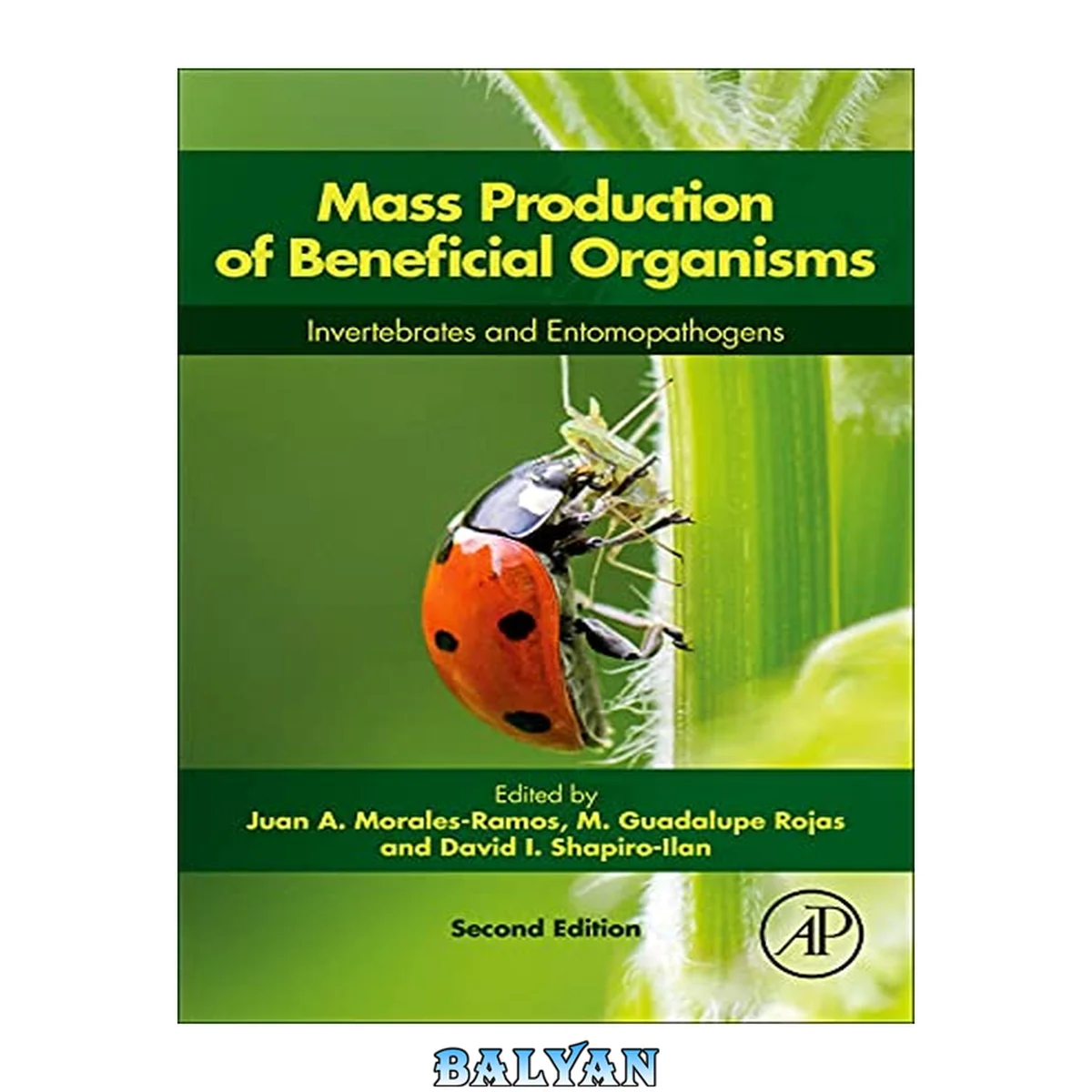
معرفی کتاب «Mass production of beneficial organisms : invertebrates and entomopathogens» نوشتهٔ Juan A. Morales-Ramos, M. Guadalupe Rojas, David I. Shapiro-Ilan (Editors)، منتشرشده توسط نشر Academic Press در سال 2022. این کتاب در فرمت pdf، زبان انگلیسی ارائه شده است.
Main subject categories: • Invertebrates • Arthropoda • Entomopathogens • Mass biological reproductionMass Production of Beneficial Organisms: Invertebrates and Entomopathogens, Second Edition explores the latest advancements and technologies for large-scale rearing and manipulation of natural enemies while presenting ways of improving success rate, predictability of biological control procedures, and demonstrating their safe and effective use.Organized into three sections, Parasitoids and Predators, Pathogens, and Invertebrates for Other Applications, this second edition contains important new information on production technology of predatory mites and hymenopteran parasitoids for biological control, application of insects in the food industry and production methods of insects for feed and food, and production of bumble bees for pollination. Beneficial organisms include not only insect predators and parasitoids, but also mite predators, nematodes, fungi, bacteria and viruses.In the past two decades, tremendous advances have been achieved in developing technology for producing these organisms. Despite that and the globally growing research and interest in biological control and biotechnology applications, commercialization of these technologies is still in progress. This is an essential reference and teaching tool for researchers in developed and developing countries working to produce “natural enemies” in biological control and integrated pest management programs.• Highlights the most advanced and current techniques for mass production of beneficial organisms and methods of evaluation and quality assessment • Presents methods for developing artificial diets and reviews the evaluation and assurance of the quality of mass-produced arthropods• Provides an outlook of the growing industry of insects as food and feed and describes methods for mass producing the most important insect species used as animal food and food ingredients Front Cover Mass Production of Beneficial Organisms Copyright Page Dedication Contents List of contributors Preface Reference Section I 1 Introduction 1.1 Challenges of mass-producing beneficial organisms 1.2 Challenges of arthropod mass production for biological control 1.3 Challenges of mass-producing pathogens for biological control 1.4 Challenges of mass-producing invertebrates for their products and ecological services References Further reading 2 Production of coleopteran predators 2.1 Introduction 2.1.1 Aims of this chapter 2.1.2 Predatory beetles in culture 2.1.3 Overview of the content 2.2 Foods and production of predators 2.2.1 Feeding preferences and natural prey 2.2.2 Feeding on factitious foods and plant products 2.2.3 Feeding on artificial diets 2.3 Rearing density and production 2.3.1 Crowding 2.3.2 Cannibalism 2.3.3 Design of oviposition substrates and rearing enclosures 2.3.4 Rearing scale 2.4 Temperature and production 2.4.1 Optimizing temperature for rearing 2.4.2 Reducing temperature for cold storage 2.5 Quality control and production 2.5.1 Safeguards against unwanted pathogens and parasites 2.5.2 Preventing colony deterioration 2.5.3 In-shipment, postshipment and prerelease assessments 2.6 Conclusions and recommendations 2.6.1 Synthesis 2.6.2 Future research Acknowledgments References 3 Production of heteropteran predators 3.1 Introduction 3.2 Foods 3.2.1 Natural prey 3.2.2 Factitious prey 3.2.3 Artificial diets 3.2.3.1 Definitions 3.2.3.2 Effect on development and reproduction 3.2.3.3 Effect on predation potential 3.2.3.4 Challenges for the practical use of artificial diets 3.3 Plant materials and alternatives 3.3.1 Plant substrates 3.3.2 Artificial substrates 3.4 Abiotic conditions 3.4.1 Optimal climatic conditions for rearing 3.4.2 Cold storage 3.5 Crowding and cannibalism 3.6 Microorganisms 3.7 Breeding and colony maintenance 3.8 Mass-rearing systems 3.9 Conclusion Acknowledgments References 4 Production of dipteran parasitoids 4.1 Introduction 4.2 Dipteran parasitoids as biocontrol agents 4.2.1 Tachinidae 4.2.2 Other dipteran parasitoids 4.2.3 Side effects 4.3 Aspects of dipteran parasitoid biology of special interest for production 4.3.1 Host range 4.3.2 Oviposition strategies 4.3.3 Host–parasitoid interactions 4.4 Production techniques 4.4.1 In vivo production 4.4.1.1 Larval food: natural hosts versus alternative hosts 4.4.1.2 Infestation mode 4.4.1.3 Influence of host age at parasitization 4.4.1.4 Abiotic conditions for preimaginal development 4.4.2 In vitro production 4.4.2.1 Nutritional requirements and other needs of dipteran parasitoids 4.4.2.1.1 Nitrogen sources 4.4.2.1.2 Lipids 4.4.2.1.3 Carbohydrates 4.4.2.1.4 Miscellaneous 4.4.2.1.5 Other needs 4.4.2.2 In vitro rearing 4.4.2.3 Continuous in vitro culture 4.4.3 Adult maintenance 4.4.3.1 Food and water supply 4.4.3.2 Space availability and adult management 4.4.3.3 Abiotic conditions 4.4.4 Sterilization and antimicrobial agents 4.4.5 Quality control 4.4.6 Storage and shipment procedures 4.5 Perspectives and concluding remarks References 5 Production of hymenopteran parasitoids 5.1 Introduction 5.2 Mass rearing of aphelinid parasitoids of the silverleaf whitefly 5.3 Laboratory culture 5.3.1 Plant culture 5.3.2 Whitefly oviposition 5.3.3 Parasitoid culture 5.4 Outdoor field cage production 5.4.1 Plant culture 5.4.2 Whitefly oviposition 5.4.3 Parasitoid culture 5.5 Large-scale greenhouse-based system 5.5.1 Plant production 5.5.2 Insect and disease control 5.5.3 Whitefly colony 5.5.4 Parasitoid production 5.5.5 Parasitoid processing 5.5.6 Storage of parasitoid pupae 5.6 Final remarks 5.7 Production of Tamarixia radiata Watson parasitoid of Diaphorina citri Kuwayama 5.8 Diaphorina citri 5.8.1 Taxonomy 5.8.2 Origin and distribution 5.8.3 Ecology and habits 5.9 Tamarixia radiata 5.9.1 Taxonomy 5.9.2 Origin and distribution 5.9.3 Ecology and habits 5.10 Mass production 5.10.1 Infrastructure, equipment, and materials 5.11 Host plant production 5.11.1 Characteristics, advantages, and disadvantages of using Murraya paniculata 5.11.2 Seed collection 5.11.3 Pulping and transport of fruit 5.11.4 Seed drying and storage 5.12 Production of Murraya paniculata 5.12.1 Substrate preparation 5.13 Sowing 5.13.1 Transplanting and watering 5.13.2 Fertilization 5.13.3 Pruning 5.13.4 Uses and reuse of plants 5.14 Host insect production 5.14.1 Environmental conditions for rearing 5.14.2 Selection of adults for reproduction 5.15 Parasitoid production 5.15.1 Obtaining broodstock 5.15.2 Environmental conditions for breeding 5.15.3 Parasitization 5.15.4 Collection of adults 5.15.5 Handling and packaging prior to release 5.16 Breeds of Tamarixia radiata established in other countries 5.17 Production of parasitoids of muscoid flies 5.18 Host production 5.19 Parasitoid rearing and housing 5.19.1 Host:parasitoid ratios 5.19.2 Use of killed host pupae for parasitoid production 5.19.3 Disease concerns 5.20 Production of Catolaccus grandis (Burks) parasitoid of the boll weevil 5.20.1 In vivo production 5.20.2 Factitious hosts 5.20.3 In vitro production 5.21 Final remarks and future perspective USDA disclaimer References Further reading 6 Mass-production of arthropods for biological control of weeds: a global perspective 6.1 Introduction 6.1.1 Theory and rationale for biological control of weeds 6.1.2 Scope of chapter 6.2 Scope of mass-rearing of biological control agents of weeds 6.2.1 Definition of mass-rearing of weed biological control agents 6.2.2 Summary of the extent of use of mass-rearing in weed biological control 6.2.3 Benefits of mass-rearing in biological weed control 6.3 Critical factors in the design and use of mass-rearing protocols in biological weed control 6.3.1 Decision-making regarding the need for mass-rearing 6.3.2 Decision-making regarding the feasibility of mass-rearing 6.3.3 Critical factors in the design of mass-rearing protocols 6.3.3.1 Production of host substrates 6.3.3.2 Knowledge of agent population biology and plant-insect ecology 6.3.4 Implementation of mass-rearing 6.3.4.1 Monitoring of output level and efficiency 6.3.4.2 Evaluation of success of mass-rearing 6.4 Case studies on mass-rearing in biological weed control 6.4.1 United States 6.4.1.1 History of use 6.4.1.2 Case study: a shoot tip-galling wasp on arundo 6.4.1.2.1 Key challenges in designing a mass-rearing program 6.4.1.2.2 Summary of the mass-rearing protocol 6.4.1.2.3 Summary of output of mass-rearing and cost 6.4.1.2.4 Impact of mass-rearing on agent establishment and efficacy 6.4.2 Canada 6.4.2.1 History of use 6.4.2.2 Case study: a root weevil on houndstongue 6.4.2.2.1 Key challenges in designing the mass-rearing program 6.4.2.2.2 Summary of the mass-rearing protocol 6.4.2.2.3 Output of mass-rearing and estimated cost 6.4.2.2.4 Impact of mass-rearing on establishment and efficacy 6.4.3 South Africa 6.4.3.1 History of use 6.4.3.1.1 History of mass-rearing in biological control 6.4.3.1.2 Mass-rearing as employment opportunities 6.4.3.1.3 Mass-rearing programs at schools 6.4.3.2 Case study: a leaf-feeding planthopper on waterhyacinth 6.4.3.2.1 Key challenges in designing mass-rearing program 6.4.3.2.2 Output of mass-rearing and estimated cost 6.4.3.2.3 Impact of mass-rearing on establishment and efficacy 6.4.4 Australia 6.4.4.1 History of use 6.4.4.2 Case study: two leaf-feeding moths on Parkinsonia 6.4.4.2.1 Key challenges in designing mass-rearing program 6.4.4.2.2 Summary of the mass-rearing protocol 6.4.4.2.3 Output of mass-rearing and estimated cost 6.4.4.2.4 Impact of mass-rearing on establishment and efficacy 6.4.5 New Zealand 6.4.5.1 History of use 6.4.5.2 Case study: a leaf-feeding butterfly on Japanese honeysuckle 6.4.5.2.1 Key challenges in designing mass-rearing program 6.4.5.2.2 Brief summary of mass-rearing protocol 6.4.5.2.3 Output of mass-rearing, estimated cost, and impact 6.4.5.3 Case study: a leaf-feeding beetle on Tradescentia 6.4.5.3.1 Key challenges in designing mass-rearing program 6.4.5.3.2 Brief summary of mass-rearing protocol 6.4.5.3.3 Output of mass-rearing and estimated cost 6.4.5.3.4 Impact of mass-rearing on establishment and efficacy 6.5 Summary and conclusions 6.5.1 Conclusions from case studies 6.5.1.1 Factors that prompted mass-rearing 6.5.1.2 Factors conducive to successful mass-rearing 6.5.1.3 Costs of mass-rearing 6.6 Recommendations 6.6.1 Measuring and communicating benefits of mass-rearing 6.6.2 Keeping mass-rearing at the forefront of implementation 6.6.3 Frontiers in mass-rearing of weed biological control agents Acknowledgments References 7 Mass production of predatory mites: state of the art and future challenges 7.1 Introduction 7.1.1 Mites and their importance as biocontrol agents 7.1.2 Brief historical overview 7.2 Phytoseiidae 7.2.1 Lifestyles of phytoseiid predatory mites 7.2.2 Mass-rearing systems for phytoseiid predatory mites 7.3 System 1: both tetranychid prey mites and predatory mites are produced on plants in greenhouses 7.4 System 2: tetranychid prey mites are reared on plants in greenhouses. The predator is reared in climate rooms on detach... 7.5 System 3: tetranychid prey mites are reared on plants in greenhouses. The predator is reared in a climate room on pure ... 7.6 System 4: predatory mites are grown on factitious food sources 7.6.1 Factitious prey mites 7.6.2 Other factitious food 7.7 System 5: predatory mites grown on plants or parts thereof using pollen 7.8 System 6: predatory mites are grown on artificial diet 7.8.1 From laboratory colony to mass production scale: a huge step 7.9 Prey mite 7.9.1 Suitable species 7.9.2 Suitable life stages 7.9.3 Suitable diet/rearing substrate 7.9.4 Predator:prey ratio 7.10 Climate management 7.10.1 Carbon dioxide concentration 7.10.2 Temperature and metabolic heat 7.10.3 Relative humidity and substrate moisture content 7.11 Intraspecific competition 7.12 Contamination management 7.13 Nonphytoseiid predatory mites 7.13.1 Soil predatory mites 7.13.2 Poultry mite predators 7.13.3 Prostigmatid predators 7.14 Diseases 7.14.1 Spider mites—the case of Neozygites 7.14.2 Astigmatid prey mites 7.14.3 Predatory mites 7.15 Challenges and future prospects 7.15.1 Off-plant rearing systems for types I and IV predatory mites 7.15.2 Artificial diets 7.15.3 Role of endosymbionts 7.15.4 Automation 7.15.5 Strain selection 7.15.6 Genetic variation References 8 Artificial diet development for entomophagous arthropods 8.1 Introduction 8.1.1 Levels of development 8.1.2 Degrees of difficulty 8.2 Arthropod nutrition 8.2.1 Carbohydrate 8.2.2 Lipid 8.2.3 Protein 8.2.4 Vitamins 8.2.5 Minerals 8.3 Determining the basic diet formulation 8.3.1 Chemical analysis 8.3.2 Water content 8.3.3 Macronutrient ratios 8.4 Presentation 8.4.1 Feeding adaptations 8.4.2 Encapsulation of liquid diets 8.4.3 Gels and carriers for solid formulations 8.4.4 Feeding stimulants 8.5 Diet refining 8.5.1 Improving diet quality 8.5.2 From chemically defined to economically sound 8.5.3 Industrialized insect components 8.5.4 Dietary self-selection 8.5.5 Diet preservation 8.6 Future perspectives 8.6.1 Multiple diet component testing 8.6.2 Multiomic assessment of diet quality 8.6.3 Endosymbionts 8.7 Concluding remarks References 9 Concepts and methods of quality assurance for mass-reared parasitoids and predators 9.1 Introduction 9.2 Quality assurance in the marketplace 9.3 Customer involvement in quality assurance 9.4 Building a complete quality assurance system 9.4.1 Management 9.4.2 Methods development 9.4.3 Material 9.4.4 Production 9.4.5 Research 9.4.6 Utilization 9.4.7 Personnel 9.4.8 Quality control 9.5 Quality assessments of mass-reared natural enemies 9.6 Quality assurance and control data acquisition and analysis 9.7 Quality assurance system review 9.7.1 Approach 9.7.2 Review of functions (successes and failures) 9.7.3 Conclusions 9.7.4 Recommendations (based on evidence and insights) 9.7.4.1 Attachments to report 9.8 Research on quality assessment for mass-reared parasitoids and predators 9.9 Conclusion Acknowledgements References Section II 10 Production of entomopathogenic nematodes 10.1 Introduction 10.2 In vivo production 10.2.1 Basic method 10.2.2 Factors affecting efficiency 10.2.3 Recent advances and future directions 10.3 In vitro production—solid culture 10.3.1 Basic method 10.3.2 Factors affecting efficiency 10.3.3 Recent advances and future directions 10.4 In vitro production–liquid culture 10.4.1 Basic method 10.4.2 Factors affecting efficiency 10.4.3 Recent advances and future directions 10.5 Analysis and conclusion 10.5.1 Comparison of production methods 10.5.2 Strain selection, improvement and stability 10.6 Conclusion References 11 Mass production of entomopathogenic fungi—state of the art 11.1 Introduction 11.2 Production methods for the important insect pathogenic fungi 11.2.1 Lagenidium giganteum 11.2.2 Leptolegnia chapmani 11.2.3 Coelomomyces spp. Keilin 11.2.4 Entomophthorales 11.2.5 Microsporidia 11.2.6 Ascomycetes Hypocreales 11.2.6.1 Solid substrate fermentation 11.2.6.1.1 The end products of solid substrate fermentation 11.2.6.1.2 Substrates and media 11.2.6.1.3 Equipment for fermentations 11.2.6.1.4 Fermentation parameters: (inoculum, moisture, temperature, aeration, pH) 11.2.6.1.5 Downstream processing 11.2.6.1.6 Major technical problems/solutions in solid substrate fermentation 11.2.6.2 Submerged fermentation 11.2.6.2.1 The end products of submerged fermentation 11.2.6.2.2 Media 11.2.6.2.3 Fermentation parameters (air, agitation, pH) 11.2.6.2.4 Equipment for submerged fermentation 11.2.6.2.5 Downstream processing 11.2.6.2.6 Major technical problems/solutions in submerged fermentation 11.2.6.3 Other, novel, production methods 11.2.6.4 Other ascomycetes 11.2.6.4.1 Cordyceps (Isaria) 11.2.6.4.2 Akanthomyces (Lecanicillium) 11.2.6.4.3 Hirsutella thompsonii 11.2.6.4.4 Metarhizium (Nomuraea) rileyi 11.2.6.4.5 Aschersonia 11.2.6.4.6 Culicinomyces 11.3 Process and quality control in mass production 11.4 Current knowledge about the effect of cultural conditions on propagule attributes 11.4.1 Age of conidia 11.4.2 Conidia produced under certain nutrient conditions or under osmotic stress 11.4.3 Conidia produced after photoirradiation during vegetative growth 11.5 The challenge in mass production of entomopathogenic fungi References 12 Commercial production of entomopathogenic bacteria 12.1 Introduction 12.2 Biology of commercial entomopathogens 12.3 Pathogenesis and pest control impact 12.4 Culture selection and maintenance 12.5 Inoculum preparation 12.6 Fermentation 12.7 Recovery and concentration steps 12.8 Formulation 12.9 Formulation standardization 12.10 Quality assurance methods 12.11 Conclusion References 13 Production of entomopathogenic viruses 13.1 Introduction 13.1.1 General introduction 13.1.2 Entomopathogenic viruses 13.1.3 Baculoviruses 13.1.3.1 Taxonomy 13.1.3.2 Baculovirus phenotypes and their function 13.1.3.3 Occlusion-derived virus–midgut interactions 13.2 In vivo production of baculovirus-based biopesticides 13.2.1 Introduction 13.2.2 Increased adoption of nucleopolyhedrovirus products 13.2.3 Production using infected larvae 13.2.4 Challenges for existing baculovirus pesticides and the case for in vitro production 13.3 In vitro production—current status 13.3.1 Introduction 13.3.2 Cell lines available 13.3.3 Virus isolates available 13.3.4 Low-cost media 13.3.5 Current status of bioreactor-based production—HearNPV as a case study 13.3.5.1 Overview of bioreactor-based processes 13.3.5.2 Maximum fed-batch yields reported 13.3.5.3 Economic feasibility 13.4 Limitations to bioreactor production of baculovirus-based pesticides 13.4.1 Lack of a chemically defined media 13.4.2 Low budded virus titers 13.4.3 Occlusion-derived viruses produced in cell culture may have a lower speed of kill 13.4.4 Viral genome instability during in vitro passaging 13.4.4.1 Natural virus populations 13.4.4.2 Selection and generation of mutants in cell culture 13.4.4.3 Instability through transposable elements 13.4.5 Complications with high-density cell culture 13.5 Future research directions for bioreactor production of baculovirus-based pesticides 13.5.1 Chemically defined media for insect cell culture 13.5.2 Genomics/transcriptomics of insect cell lines 13.5.3 Metabolomics of insect cell lines 13.5.4 Genetically modified viruses 13.5.4.1 Viruses with increased speed of kill 13.5.4.2 Viruses with increased infectivity 13.5.4.3 Changing the ratio of budded virus and occlussion-derived virus production 13.5.4.4 Stabilized genomes 13.5.5 Future potential 13.6 Conclusion Acknowledgements References 14 Formulations of entomopathogens as bioinsecticides 14.1 Introduction 14.1.1 Goals and benefits of formulations 14.1.2 Challenges of microbial pesticides 14.2 Biological considerations 14.2.1 Biological attributes for the microbe 14.2.1.1 Activity 14.2.1.2 Viability and storage stability 14.2.1.3 Residual activity 14.2.1.4 Efficacy 14.2.1.5 Integration with production 14.2.2 Potential hazards 14.2.2.1 Contamination issues 14.2.2.2 Biohazard worker exposure concerns 14.2.2.3 Allergenicity 14.2.2.4 Combustion, thermal degradation, dust explosion hazards 14.3 Physical considerations 14.3.1 Cost 14.3.2 Formulation form 14.3.3 Ingredients 14.3.4 Processing 14.3.5 Mixing/handling/packaging 14.3.6 Consumer esthetics 14.3.7 Application 14.4 Additional considerations on formulation 14.4.1 Sources of technologies 14.4.2 Legal requirements 14.4.3 Current effective formulations 14.4.4 Unique applications 14.5 Conclusions and future of biopesticide formulations USDA disclaimer References 15 Mass production of entomopathogens in less industrialized countries 15.1 Introduction 15.2 Issues and opportunities for entomopathogen uptake in less industrialized countries 15.3 Practical constraints for entomopathogen uptake in developing countries 15.4 Production of entomopathogens in less industrialized countries 15.5 Production of entomopathogenic fungi 15.5.1 The LUBILOSA system 15.5.2 The Caroni system 15.6 Additional examples from other countries 15.6.1 China 15.6.2 India 15.6.3 Brazil 15.6.4 Cuba 15.6.5 Honduras 15.6.6 Kenya and South Africa 15.7 Other systems 15.8 Mass production of baculoviruses 15.8.1 Country case studies 15.8.1.1 China 15.8.1.2 India 15.8.1.3 Thailand 15.8.1.4 South Africa 15.8.1.5 East Africa (Kenya and Tanzania) 15.8.1.6 South America and potato tuber moth 15.9 Other production systems 15.10 Generic production issues 15.10.1 Product quality 15.10.2 Scale of production and application rates 15.10.3 Safety 15.10.4 Economics of production 15.11 Requirements for establishing biopesticide industries in less-industrialized countries 15.11.1 Research and information 15.11.2 Registration and regulation in less-industrialized countries 15.11.3 Responsibility 15.11.4 Future Acknowledgments References Section III 16 Potential and challenges for the use of insects as feed for aquaculture 16.1 Introduction 16.2 Insects in aquafeeds: performances and digestibility 16.2.1 Insect proteins: effects on fish meal and soybean meal sparing 16.2.2 Insect fat and oils: effects on fish and soybean oil sparing 16.3 Insects and fish health 16.3.1 Gut morphology 16.3.2 Immune response 16.3.3 Oxidative status 16.3.4 Gut microbiota 16.4 Challenges and future perspectives 16.5 Conclusions References 17 The role of insects for poultry feed: present and future perspective 17.1 Introduction 17.2 General nutrient composition of insects and insect-derived ingredients 17.2.1 Impacts of processing method and form 17.2.2 Functional aspects of insects in poultry diets 17.2.2.1 Antimicrobial peptides 17.2.2.2 Chitin 17.2.2.3 Lauric acid 17.3 Insects in meat bird production 17.3.1 Broilers 17.3.2 Other meat birds 17.4 Insects in egg layer production 17.5 Impact of insect-derived ingredients on behavior and welfare 17.6 Barriers and hurdles for use of insects in poultry diets 17.6.1 Organic classification 17.7 Summary and the conclusions References 18 Insects as food for insectivores 18.1 Introduction 18.2 Nutrient content of insects 18.2.1 Protein and amino acids 18.2.2 Fats and fatty acids 18.2.3 Carbohydrates 18.2.4 Fiber and chitin 18.2.5 Minerals 18.2.6 Vitamins and carotenoids 18.2.6.1 Vitamin A 18.2.6.2 Vitamin D 18.2.6.3 Vitamin E 18.2.6.4 B-vitamins 18.2.6.5 Vitamin C 18.2.7 Other nutrients 18.2.7.1 Choline 18.2.7.2 Taurine 18.2.7.3 Sterols 18.3 Effects of insect size/life stage on nutrient composition 18.4 Effects of insect diet on insect nutrient composition 18.5 Effects of environment on insect composition 18.5.1 Temperature 18.5.2 Humidity 18.5.3 Photoperiod 18.6 Nutrient requirements of insectivores including nutrient availability 18.6.1 Availability and digestibility 18.7 Enhancing the nutrient composition of insects as food for insectivores 18.7.1 Gut loading 18.7.2 Dusting 18.7.3 Feeding nutrient enhanced diets during growth 18.7.3.1 Fatty acids 18.7.3.2 Calcium 18.7.3.3 Carotenoids 18.7.3.4 Vitamin E 18.8 Other considerations 18.8.1 Pathogens/parasites 18.8.2 Heavy metals 18.8.3 Mycotoxins 18.8.4 Other toxins 18.8.5 Uric acid 18.9 Conclusions References 19 Production of solitary bees for pollination in the United States 19.1 Introduction 19.2 The alfalfa leafcutting bee 19.3 The alkali bee 19.4 The blue orchard bee 19.5 Other solitary bees of interest for pollination 19.6 Concluding remarks Acknowledgments References 20 Production of bumblebees (Hymenoptera: Apidae) for pollination and research 20.1 An introduction to rearing bumblebees 20.2 Bumblebee lifecycle 20.3 Pathogens, parasites, and pests—an overview 20.4 Rearing facilities 20.4.1 General setup and equipment 20.4.2 Environmental conditions 20.4.3 Bumblebee rearing units 20.5 Nutrition 20.5.1 Nectar substitute 20.5.2 Pollen provisions 20.5.3 Pollen preparation 20.6 Gyne collection and transportation 20.7 Installing gynes and stimulating broodiness 20.8 Colony care and senescence 20.8.1 Sanitation 20.8.2 Deploying colonies into the wild 20.9 Mating trials 20.10 Overwintering gynes 20.11 Closing remarks References 21 Current and potential benefits of mass earthworm culture 21.1 Introduction 21.1.1 Ecological groupings 21.1.2 Selection of species 21.1.3 Cultivation techniques 21.2 Current applications 21.2.1 As a protein source 21.2.2 In organic waste management 21.2.3 As fishing bait 21.2.4 In soil restoration 21.2.5 In agro-ecosystems 21.2.6 In laboratory experimentation 21.2.6.1 Moisture 21.2.6.2 Temperature 21.2.6.3 Substrate 21.2.6.4 Feed 21.2.6.5 Density 21.2.6.6 Species interactions 21.2.7 In ecotoxicology 21.3 The future for mass earthworm culture References Index Back Cover Mass Production of Beneficial Organisms: Invertebrates and Entomopathogens, Second Edition explores the latest advancements and technologies for large-scale rearing and manipulation of natural enemies while presenting ways of improving success rate, predictability of biological control procedures, and demonstrating their safe and effective use. Organized into three sections, Parasitoids and Predators, Pathogens, and Invertebrates for Other Applications, this second edition contains important new information on production technology of predatory mites and hymenopteran parasitoids for biological control, application of insects in the food industry and production methods of insects for feed and food, and production of bumble bees for pollination. Beneficial organisms include not only insect predators and parasitoids, but also mite predators, nematodes, fungi, bacteria and viruses. In the past two decades, tremendous advances have been achieved in developing technology for producing these organisms. Despite that and the globally growing research and interest in biological control and biotechnology applications, commercialization of these technologies is still in progress. This is an essential reference and teaching tool for researchers in developed and developing countries working to produce "natural enemies” in biological control and integrated pest management programs. Highlights the most advanced and current techniques for mass production of beneficial organisms and methods of evaluation and quality assessment Presents methods for developing artificial diets and reviews the evaluation and assurance of the quality of mass-produced arthropods Provides an outlook of the growing industry of insects as food and feed and describes methods for mass producing the most important insect species used as animal food and food ingredients
دانلود کتاب Mass production of beneficial organisms : invertebrates and entomopathogens