Mahayana Buddhism: The Doctrinal Foundations (The Library of Religious Beliefs and Practices)
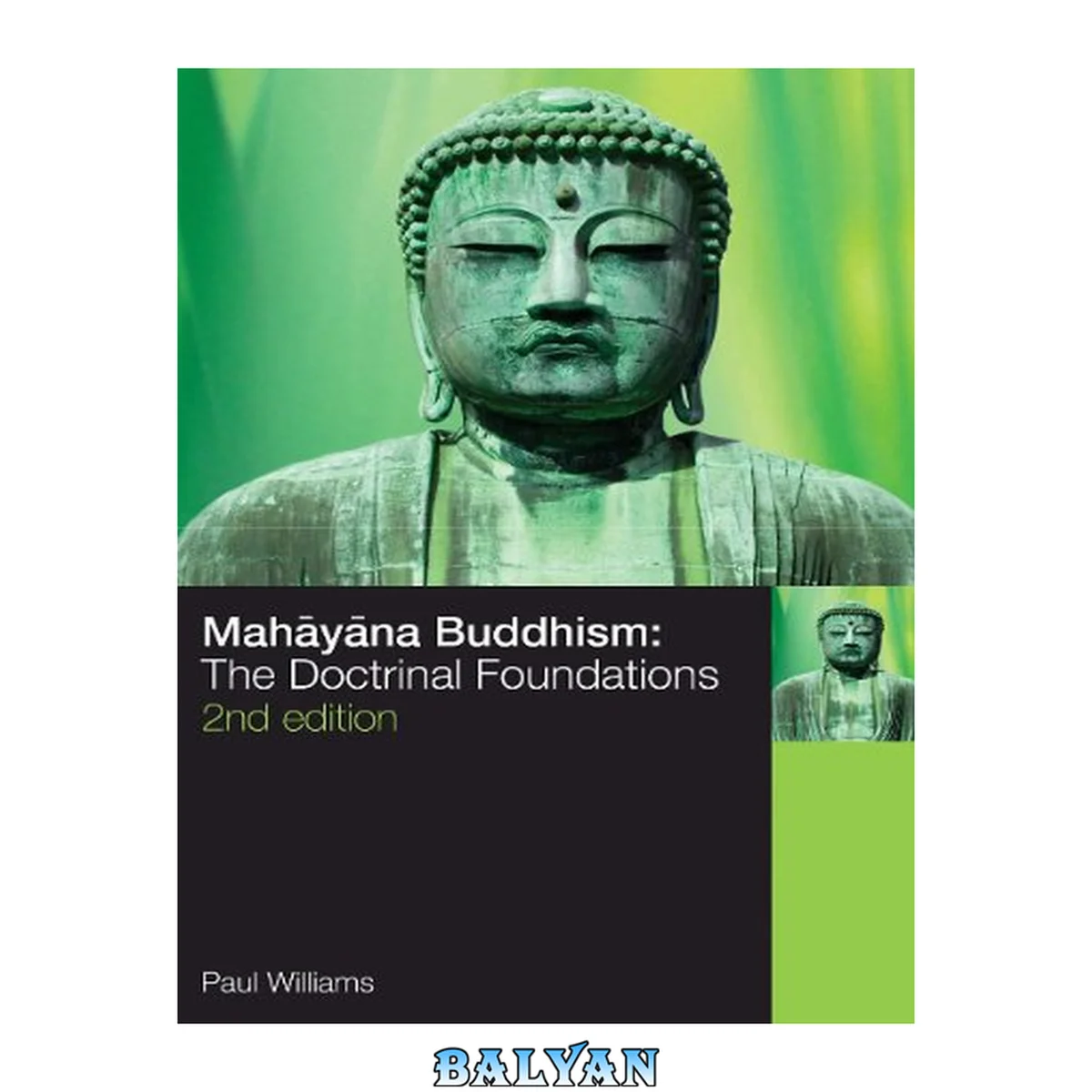
معرفی کتاب «Mahayana Buddhism: The Doctrinal Foundations (The Library of Religious Beliefs and Practices)» نوشتهٔ Paul Williams، منتشرشده توسط نشر Routledge در سال 2008. این کتاب در فرمت pdf، زبان انگلیسی ارائه شده است.
Originating in India, Mahayana Buddhism spread across Asia, becoming the prevalent form of Buddhism in Tibet and East Asia. Over the last twenty-five years Western interest in Mahayana has increased considerably, reflected both in the quantity of scholarly material produced and in the attraction of Westerners towards Tibetan Buddhism and Zen.
Paul Williams’ Mahayana Buddhism is widely regarded as the standard introduction to the field, used internationally for teaching and research and has been translated into several European and Asian languages. Everyone studying this important tradition will find Williams’ book the ideal companion to their studies.
Paul Williams is Professor of Indian and Tibetan Philosophy and Co-director of the Centre for Buddhist Studies at the University of Bristol. The author of six books and an editor of a further eight, he is a former President of the UK Association for Buddhist Studies. Among his other books for Routledge is Buddhist Thought: A Complete Introduction to the Indian Tradition (2000).
Originating in India, Mahayana Buddhism spread across Asia, becoming the prevalent form of Buddhism in Tibet and East Asia. Over the last twenty-five years Western interest in Mahayana has increased considerably, reflected both in the quantity of scholarly material produced and in the attraction of Westerners towards Tibetan Buddhism and Zen.
Paul Williams' Mahayana Buddhism is widely regarded as the standard introduction to the field, used internationally for teaching and research and has been translated into several European and Asian languages. Everyone studying this important tradition will find Williams' book the ideal companion to their studies.
Paul Williams is Professor of Indian and Tibetan Philosophy and Co-director of the Centre for Buddhist Studies at the University of Bristol. The author of six books and an editor of a further eight, he is a former President of the UK Association for Buddhist Studies. Among his other books for Routledge is Buddhist Thought: A Complete Introduction to the Indian Tradition (2000).
Book Cover......Page 1 Title......Page 4 Copyright......Page 5 Contents......Page 8 Preface and acknowledgements......Page 11 1 Introduction......Page 14 2 The Perfection of Wisdom (Prajnaparamita) Sutras......Page 58 3 Madhyamika......Page 76 4 Yogacara......Page 97 5 The Tathagatagarbha......Page 116 6 Huayan – the Flower Garland tradition......Page 142 7 The Saddharmapundarika (Lotus) Sutra and its influences......Page 162 8 On the bodies of the Buddha......Page 185 9 The path of the Bodhisattva......Page 200 10 Trust, self-abandonment and devotion: the cults of Buddhas and Bodhisattvas......Page 222 Notes......Page 280 References......Page 402 Index of names......Page 435 Index of subjects......Page 443 There is a Tibetan saying that just as every valley has its own language so every teacher has his own doctrine.