Mad in America : Bad Science, Bad Medicine, and the Enduring Mistreatment of the Mentally Ill (2nd Edition)
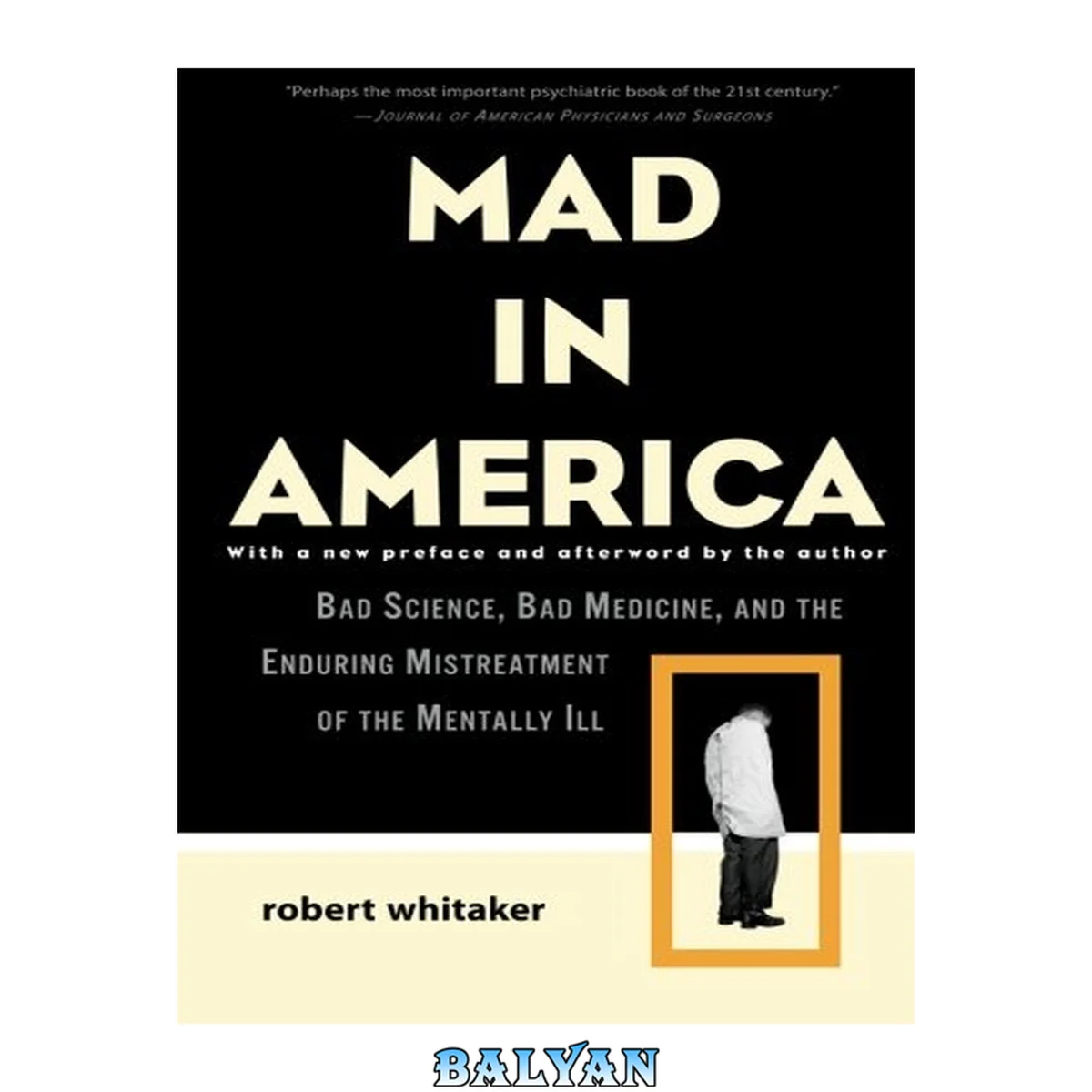
معرفی کتاب «Mad in America : Bad Science, Bad Medicine, and the Enduring Mistreatment of the Mentally Ill (2nd Edition)» نوشتهٔ Zadie Smith، Jenny Sterlin، Ana María de la Fuente Suárez و Whitaker, Robert(Author)، منتشرشده توسط نشر Basic Books در سال 2010. این کتاب در فرمت pdf، زبان انگلیسی ارائه شده است.
Schizophrenics in the United States currently fare worse than patients in the world’s poorest countries. In Mad in America, medical journalist Robert Whitaker argues that modern treatments for the severely mentally ill are just old medicine in new bottles, and that we as a society are deeply deluded about their efficacy. The widespread use of lobotomies in the 1920s and 1930s gave way in the 1950s to electroshock and a wave of new drugs. In what is perhaps Whitaker’s most damning revelation, Mad in America examines how drug companies in the 1980s and 1990s skewed their studies to prove that new antipsychotic drugs were more effective than the old, while keeping patients in the dark about dangerous side effects.
A haunting, deeply compassionate book—now revised with a new introduction—Mad in America raises important questions about our obligations to the mad, the meaning of “insanity,” and what we value most about the human mind.
"Schizophrenics in the United States currently fare worse than patients in the world's poorest countries. In Mad in America, medical journalist Robert Whitaker argues that modern treatments for the severely mentally ill are just old medicine in new bottles, and that we as a society are deeply deluded about their efficacy. The widespread use of lobotomies in the 1920s and 1930s gave way in the 1950s to electroshock and a wave of new drugs. In what is perhaps Whitaker's most damning revelation, Mad in America examines how drug companies in the 1980s and 1990s skewed their studies to prove that new antipsychotic drugs were more effective than the old, while keeping patients in the dark about dangerous side effects. A haunting, deeply compassionate book, now revised with a new introduction, Mad in America raises important questions about our obligations to the mad, the meaning of 'insanity, ' and what we value most about the human mind"--Provided by publisher Schizophrenics in the United States currently fare worse than patients in the world s poorest countries. In Mad in America, medical journalist Robert Whitaker argues that modern treatments for the severely mentally ill are just old medicine in new bottles, and that we as a society are deeply deluded about their efficacy. The widespread use of lobotomies in the 1920s and 1930s gave way in the 1950s to electroshock and a wave of new drugs. In what is perhaps Whitaker s most damning revelation, Mad in America examines how drug companies in the 1980s and 1990s skewed their studies to prove that new antipsychotic drugs were more effective than the old, while keeping patients in the dark about dangerous side effects. A haunting, deeply compassionate book now revised with a new introduction Mad in America raises important questions about our obligations to the mad, the meaning of insanity, and what we value most about the human mind. CONTENTS 11 PREFACE TO THE REVISED EDITION 13 ACKNOWLEDGMENTS 17 THE ORIGINAL BEDLAM 19 1 BEDLAM IN MEDICINE 21 2 THE HEALING HAND OF KINDNESS 37 THE DARKEST ERA 57 3 UNFIT TO BREED 59 4 TOO MUCH INTELLIGENCE 91 5 BRAIN DAMAGE AS MIRACLE THERAPY 125 BACK TO BEDLAM 157 6 MODERN- DAY ALCHEMY 159 7 THE PATIENTS’ REALITY 179 8 THE STORY WE TOLD OURSELVES 213 9 SHAME OF A NATION 229 10 THE NUREMBERG CODE DOESN’T APPLY HERE 251 MAD MEDICINE TODAY 269 11 NOT SO ATYPICAL 271 EPILOGUE 305 AFTERWORD TO THE REVISED EDITION 311 NOTES 323 INDEX 355 "Medical journalist Robert Whitaker ... traces the treatment of mental illness through the use of lobotomies in the 1920s and 1930s, to the electroshock therapy of the 1950s, to what is perhaps his most damning revelation: drug companies in the 1980s and 1990s skewed research to prove that new antipsychotic drugs were more effective than the old, while keeping patients in the dark about dangerous side effects. A haunting, deeply compassionate book updated to address the latest medical treatments and trends, Mad in America raises important questions about our obligations to the mad, the meaning of "insanity," and what we value most about the human mind."--Cover Content: Preface to the revised edition -- pt. 1. The original Bedlam. Bedlam in medicine -- The healing hand of kindness -- pt. 2. The darkest era. Unfit to breed -- Too much intelligence -- Brain damage as miracle therapy -- pt. 3. Back to Bedlam. Modern-day alchemy -- The patient's reality -- The story we told ourselves -- Shame of a nation -- The Nuremberg Code doesn't apply here -- pt. 4. Mad medicine today. Not so atypical -- Epilogue -- Afterword to the revised edition. Preface to the revised edition The original Bedlam (1750-1900). Bedlam in medicine ; The healing hand of kindness The darkest era (1900-1950). Unfit to breed ; Too much intelligence ; Brain damage as miracle therapy Back to Bedlam (1950-1990s). Modern-day alchemy ; The patient's reality ; The story we told ourselves ; Shame of a nation ; The Nuremberg Code doesn't apply here Mad medicine today (1990s-present). Not so atypical ; Epilogue Afterword to the revised edition. A social history of the treatment of the mentally ill in America, this survey reveals the various methods of treatment from the 17th century to today: spinning, chilling, lobotomizing, and electroshock therapy, to name a few. Whitaker's position is skeptical when he compares the treatment of the mentally ill in America to those affected in other countries.