Love, Poverty, and War: Journeys and Essays (Nation Books)
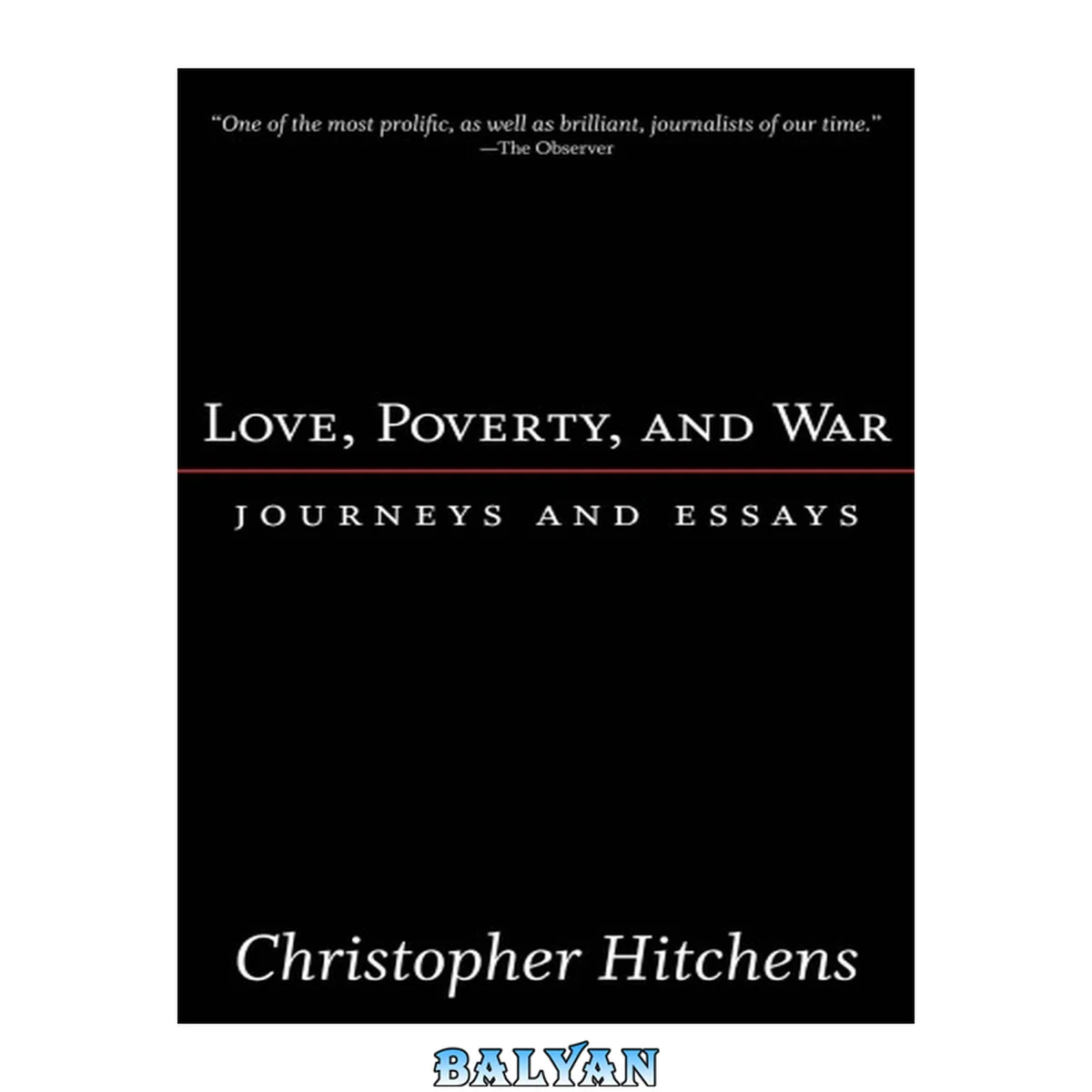
معرفی کتاب «Love, Poverty, and War: Journeys and Essays (Nation Books)» نوشتهٔ Om Prakash Saini و Hitchens, Christopher، منتشرشده توسط نشر Atlantic ; Nation در سال 2005. این کتاب در فرمت pdf، زبان انگلیسی ارائه شده است.
"I did not, I wish to state, become a journalist because there was no other ‘profession' that would have me. I became a journalist because I did not want to rely on newspapers for information." Love, Poverty and War: Journeys and Essays showcases America's leading polemicist's rejection of consensus and cliché, whether he's reporting from abroad in Indonesia, Kurdistan, Iraq, North Korea, or Cuba, or when his pen is targeted mercilessly at the likes of William Clinton, Mother Theresa ("a fanatic, a fundamentalist and a fraud"), the Dalai Lama, Noam Chomsky, Mel Gibson and Michael Bloomberg. Hitchens began the nineties as a "darling of the left" but has become more of an "unaffiliated radical" whose targets include those on the "left," who he accuses of "fudging" the issue of military intervention in the Balkans, Afghanistan and Iraq. Yet, as Hitchens shows in his reportage, cultural and literary criticism, and opinion essays from the last decade, he has not jumped ship and joined the right but is faithful to the internationalist, contrarian and democratic ideals that have always informed his work.
'I did not, I wish to state, become a journalist because there was no other'profession'that would have me. I became a journalist because I did not want to rely on newspapers for information.'Love, Poverty and War: Journeys and Essays showcases America's leading polemicist's rejection of consensus and cliché whether he's reporting from abroad in Indonesia, Kurdistan, Iraq, North Korea, or Cuba, or when his pen is targeted mercilessly at the likes of William Clinton, Mother Theresa ('a fanatic, a fundamentalist and a fraud'), the Dalai Lama, Noam Chomsky, Mel Gibson and Michael Bloomberg. Hitchens began the nineties as a'darling of the left'but has become more of an'unaffiliated radical'whose targets include those on the'left,'who he accuses of'fudging'the issue of military intervention in the Balkans, Afghanistan and Iraq. Yet, as Hitchens shows in his reportage, cultural and literary criticism, and opinion essays from the last decade, he has not jumped ship and joined the right but is faithful to the internationalist, contrarian and democratic ideals that have always informed his work. Showcases America's leading polemicist's rejection of consensus and cliché, whether he's reporting from abroad in Indonesia, Kurdistan, Iraq, North Korea, or Cuba, or when his pen is targeted mercilessly at the likes of William Clinton, Mother Theresa ("a fanatic, a fundamentalist and a fraud"), the Dalai Lama, Noam Chomsky, Mel Gibson and Michael Bloomberg. Hitchens began the nineties as a "darling of the Left" but has become more of an "unaffiliated radical" whose targets include those on the Left, who he accuses of "fudging" the issue of military intervention in the Balkans, Afghanistan and Iraq. Yet, as Hitchens shows in his reportage, cultural and literary criticism, and opinion essays from the 1990s to 2004, he has not jumped ship and joined the Right but is faithful to the internationalist, contrarian and democratic ideals that have always informed his work.--From publisher description. In the first part of this book, Christopher Hitchens confronts the legacy of Kipling, Trotsky and Churchill, and celebrates the work of Joyce, Proust and Borges. In then turns to Hitchen's journeys around America and his moving assessment of the United States after 9/11. In the fateful spring and early summer of 1940 the people of Britain clustered around their wireless sets to hear defiant and uplifting oratory from their new Prime Minister, Winston Churchill.