صداهای گمشده از تایتانیک: تاریخ شفاهی قطعی
Lost voices from the Titanic : the definitive oral history
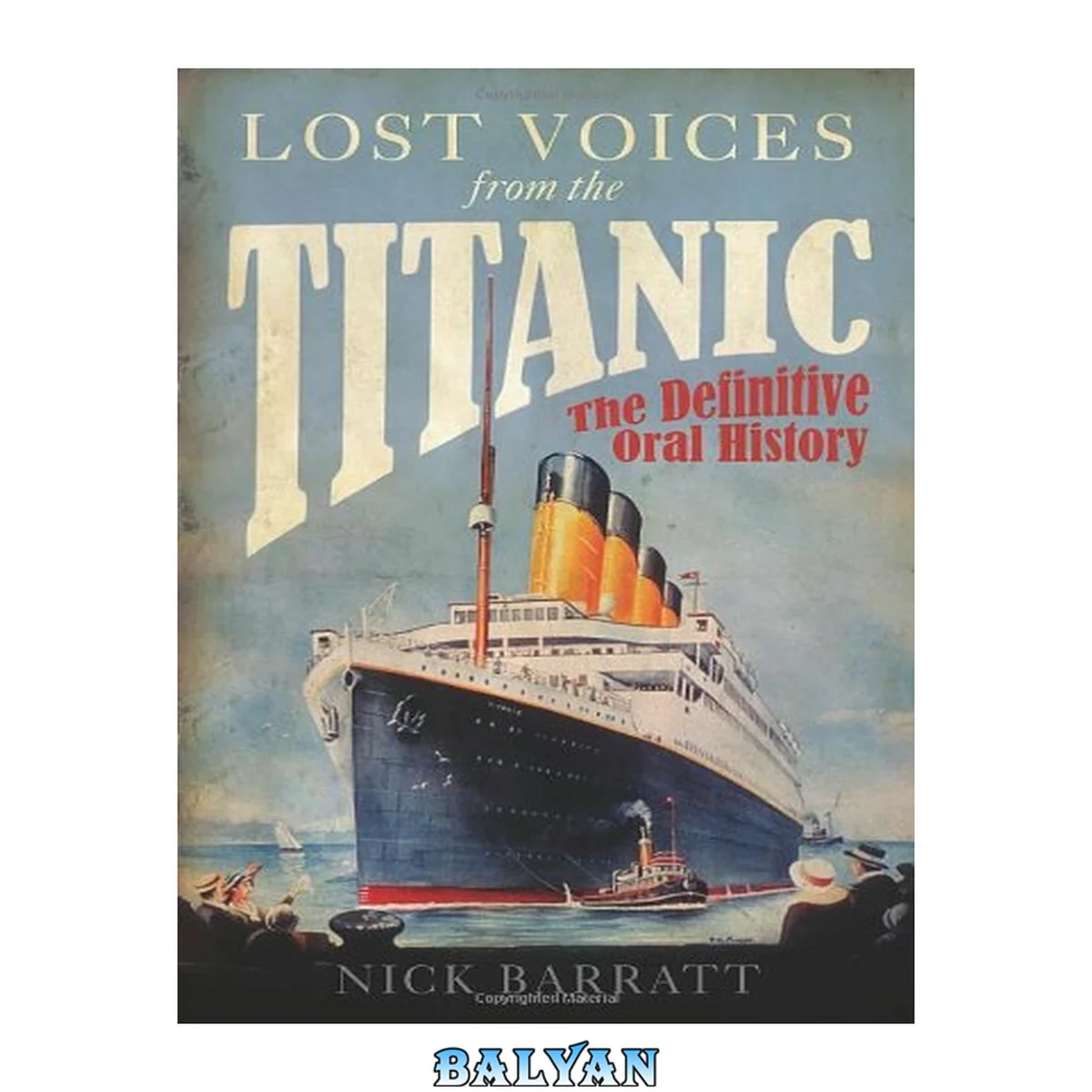
معرفی کتاب «صداهای گمشده از تایتانیک: تاریخ شفاهی قطعی» (با عنوان لاتین Lost voices from the Titanic : the definitive oral history) نوشتهٔ Nick Barratt، منتشرشده توسط نشر Arrow Books Ltd در سال 2010. این کتاب در فرمت epub، زبان انگلیسی ارائه شده است.
This is the story of the world’s most infamous ship, told in the words of those who designed her, built her, sailed her and survived her sinking. Starting from its original conception and design by the owners and naval architects at the White Star Line through construction at Harland and Wolff’s shipyards in Belfast, Nick Barratt explores the pre-history of the Titanic. He examines the aspirations of the owners, the realities of construction and the anticipation of the first sea-tests, revealing that the seeds of disaster were sown by the failure to implement sealed bulkheads. Barratt then looks at the Titanic’s maiden voyage in April 1912, examining the lives of various passengers in more detail, from the first-class aristocrats to the families in third-class and steerage. Similarly, the stories of representatives from the White Star Line who were on board, as well as crew members, are told in their own words to offer a very different perspective on the voyage. Finally, the book examines the disaster itself when Titanic struck the iceberg and sank hours later. Survivors from passengers and crew recount what happened, taking us back in time to the full horror of that freezing Atlantic night when up to 1,520 people perished. Running up to the centenary of her sinking in April 2012 this is the story of the world's most infamous ship, told for the first time in the words of those who designed her, built her, sailed her and survived her. Starting from its original conception and design by the owners and naval architects at the White Star Line through construction at Harland and Wolff's shipyards in Belfast, Nick Barratt explores the pre-history of the Titanic. He examines the aspirations of the owners, the realities of construction and the anticipation of the first sea-tests, revealing that the seeds of disaster were sown by the failure to implement sealed bulkheads – for which the original plans are now available. Barratt then looks at what it was like to embark on the Titanic's maiden voyage in April 1912. The lives of various passengers are examined in more detail, from the first class aristocrats enjoying all the trappings of privilege, to the families in third-class and steerage who simply sought to leave Britain for a better life in America. Similarly, the stories of representatives from the White Star Line who were present, as well as members of the crew, are told in their own words to give a very different perspective of the voyage.Finally, the book examines the disaster itself, when Titanic struck the iceberg on 14 April and sunk hours later. Survivors from passengers and crew explain what happened, taking you back in time to the full horror of that freezing Atlantic night when up to 1,520 people perished. The tragedy is also examined from the official boards of enquiry, and its aftermath placed in a historic context – the damage to British prestige and pride, and the changes to maritime law to ensure such an event never took place again. The book concludes by looking at the impact on those who escaped, and what became of them in the ensuing years; and includes the words of the last living survivor, Millvina Dean. Starting from its original conception and design by the owners and naval architects at the White Star Line through construction at Harland and Wolff's shipyards in Belfast, Nick Barratt explores the pre-history of the Titanic . He examines the aspirations of the owners, the realities of construction and the anticipation of the first sea-tests, revealing that the seeds of disaster were sown by the failure to implement sealed bulkheads - for which the original plans are now available. Barratt then looks at what it was like to embark on the Titanic's maiden voyage in April 1912. The lives of various passengers are examined in more detail, from the first class aristocrats enjoying all the trappings of privilege, to the families in third-class and steerage who simply sought to leave Britain for a better life in America. Similarly, the stories of representatives from the White Star Line who were present, as well as members of the crew, are told in their own words to give a very different perspective of the voyage. Finally, the book examines the disaster itself, when Titanic struck the iceberg on 14 April and sunk hours later. Survivors from passengers and crew explain what happened, taking you back in time to the full horror of that freezing Atlantic night when up to 1,520 people perished. The tragedy is also examined from the official boards of enquiry, and its aftermath placed in a historic context - the damage to British prestige and pride, and the changes to maritime law to ensure such an event never took place again. The book concludes by looking at the impact on those who escaped, and what became of them in the ensuing years; and includes the words of the last living survivor, Millvina Dean. This is the story of the world’s most infamous ship, told in the words of those who designed her, built her, sailed her and survived her sinking.Starting from its original conception and design by the owners and naval architects at the White Star Line through construction at Harland and Wolff’s shipyards in Belfast, Nick Barratt explores the pre-history of the Titanic. He examines the aspirations of the owners, the realities of construction and the anticipation of the first sea-tests, revealing that the seeds of disaster were sown by the failure to implement sealed bulkheads.Barratt then looks at the Titanic’s maiden voyage in April 1912, examining the lives of various passengers in more detail, from the first-class aristocrats to the families in third-class and steerage. Similarly, the stories of representatives from the White Star Line who were on board, as well as crew members, are told in their own words to offer a very different perspective on the voyage.Finally, the book examines the disaster itself when __Titanic__ struck the iceberg and sank hours later. Survivors from passengers and crew recount what happened, taking us back in time to the full horror of that freezing Atlantic night when up to 1,520 people perished. On April 15, 1912, the largest, most expensive, most luxurious ship ever built sank beneath the icy waves of the northern Atlantic. Over 1,500 people lost their lives. Award-winning historian Nick Barratt tells the story of theTitanic for the first time in the words of those who designed her, built her, sailed her and those who perished and survived her.-- Back cover
دانلود کتاب صداهای گمشده از تایتانیک: تاریخ شفاهی قطعی