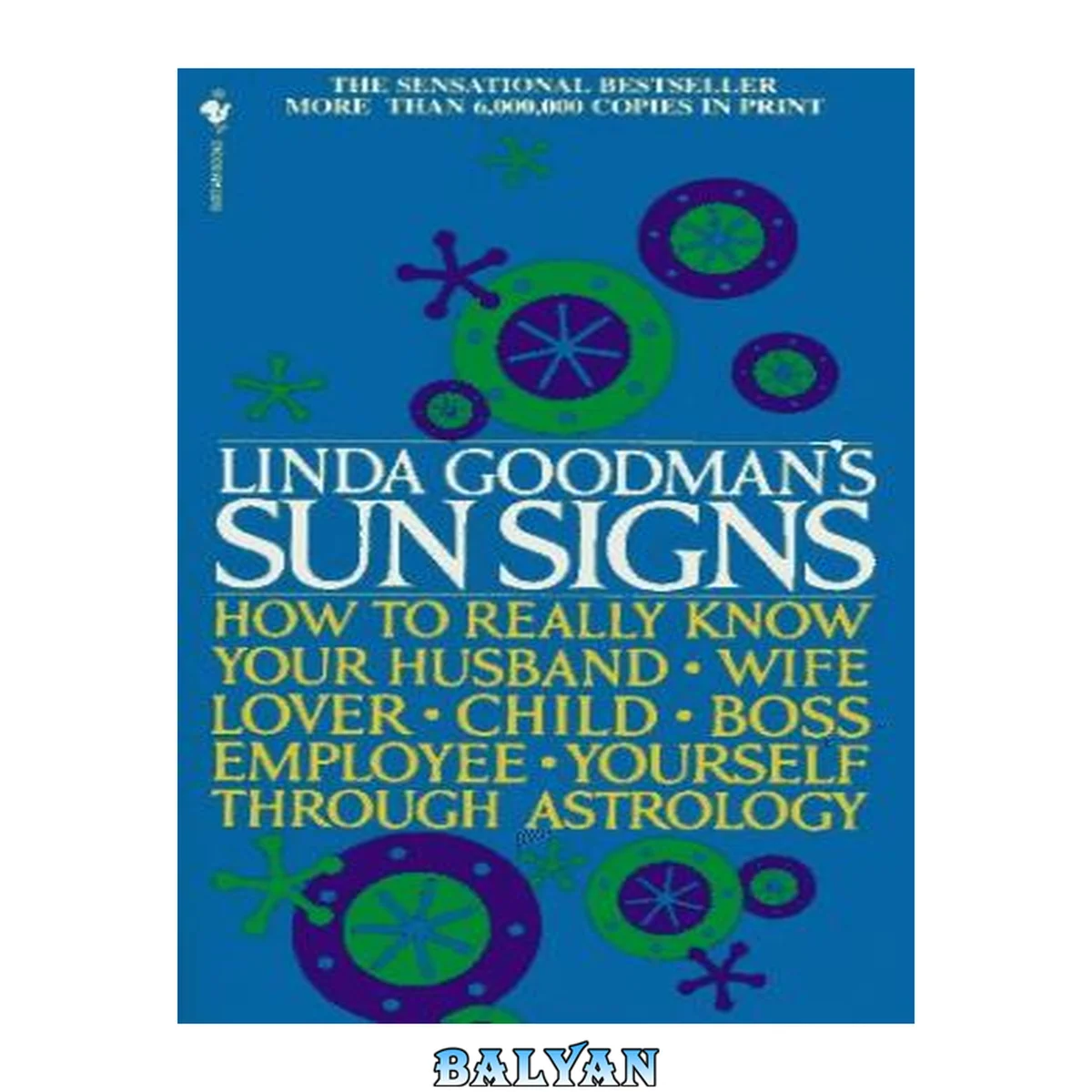
معرفی کتاب «Linda Goodman's Sun Signs - How To Really Know Your Husband, Wife, Lover, Child, Boss, Employee, Yourself Through Astrology» نوشتهٔ Bowen، Murray و Goodman, Linda، منتشرشده توسط نشر 0. این کتاب در فرمت prc، زبان انگلیسی ارائه شده است.
A stimulating theoretical exploration of the process of individual development within the family and the subsequent influence of this on society. [I] would recommend it as being of interest to professionals engaged in enabling individuation in various circumstances, from families [and] organizations to the elderly. -- James Atkinson, The British Journal of PsychiatryOne of the fathers of family therapy, Murray Bowen is both a pioneer and a chronicler. In publishing his collected papers, he traces the development of his theory from his 1950s research on families of schizophrenics, to his experiment in differentiating himself from his own [professional] family, to his method of working with the family of origin rather than the nuclear family. His book is a historical treasure. -- Marianne Riché, Menninger Foundation Half title......Page 2 Title......Page 5 Copyright......Page 6 Acknowledgments......Page 7 Contents......Page 9 Introduction......Page 12 I. Schizophrenia and the Family......Page 17 Chapter 1 Treatment of Family Groups With a Schizophrenic Member (1957)......Page 18 Chapter 2 The Role of the Father in Families With a Schizophrenic Patient (1959)......Page 32 Chapter 3 Family Relationships in Schizophrenia (1959a)......Page 39 Chapter 4 A Family Concept of Schizophrenia (1960)......Page 63 Chapter 5 Family Psychotherapy (1961)......Page 91 Chapter 6 Out-Patient Family Psychotherapy (1961a)......Page 113 II. Family Systems Theory......Page 122 Chapter 7 Intrafamily Dynamics in Emotional Illness (1965)......Page 123 Chapter 8 Family Psychotherapy With Schizophrenia in the Hospital and Private Practice (1965a)......Page 137 Chapter 9 The Use of Family Theory in Clinical Practice (1966)......Page 170 Chapter 10 Family Therapy and Family Group Therapy (1971)......Page 209 Chapter 11 Principles and Techniques of Multiple Family Therapy (1971a)......Page 273 Chapter 12 Alcoholism and the Family (1974)......Page 292 Chapter 13 Societal Regression as Viewed Through Family Systems Theory (1974a)......Page 303 III. The Bowen Theory......Page 318 Chapter 14 Family Therapy After Twenty Years (1975)......Page 319 Chapter 15 Family Reaction to Death (1976)......Page 359 Chapter 16 Theory in the Practice of Psychotherapy (1976)......Page 375 Chapter 17 An Interview With Murray Bowen (1976)......Page 432 Chapter 18 Society, Crisis, and Systems Theory (1973)......Page 457 IV. Applications......Page 500 Chapter 19 Problems of Medical Practice Presented by Families With a Schizophrenic Member (1959b)......Page 501 Chapter 20 Toward the Differentiation of Self in Administrative Systems (1972)......Page 508 Chapter 21 On the Differentiation of Self (1972)......Page 513 Chapter 22 Toward the Differentiation of Self in One’s Family of Origin (1974)......Page 581 References......Page 602 Index......Page 607 " When Bowen was a student and practitioner of classical psychoanalysis at the Menninger Clinic, he became engrossed in understanding the process of schizophrenia and its relationship to mother-child symbiosis. Between the years 1950 and 1959, at Menninger and later at the National Institute of Mental Health (as first chief of family studies), he worked clinically with over 500 schizophrenic families. This extensive experience was a time of fruition for his thinking as he began to conceptualize human behavior as emerging from within the context of a family system. Later, at Georgetown University Medical School, Bowen worked to extend the application of his ideas to the neurotic family system. Initially he saw his work as an amplification and modification of Freudian theory, but later viewed it as an evolutionary step toward understanding human beings as functioning within their primary networkDtheir family. One of the most renowned theorist and therapist in the field of family work, this book encompasses the breadth and depth of Bowen's contributions. It presents the evolution of Bowen's Family Theory from his earliest essays on schizophrenic families and their treatment, through the development of his concepts of triangulation, intergenerational conflict and societal regression, and culminating in his brilliant exploration of the differentiation of one's self in one's family of origin." --provided by publisher
When Bowen was a student and practitioner of classical psychoanalysis at the Menninger Clinic, he became engrossed in understanding the process of schizophrenia and its relationship to mother-child symbiosis. Between the years 1950 and 1959, at Menninger and later at the National Institute of Mental Health (as first chief of family studies), he worked clinically with over 500 schizophrenic families. This extensive experience was a time of fruition for his thinking as he began to conceptualize human behavior as emerging from within the context of a family system. Later, at Georgetown University Medical School, Bowen worked to extend the application of his ideas to the neurotic family system. Initially he saw his work as an amplification and modification of Freudian theory, but later viewed it as an evolutionary step toward understanding human beings as functioning within their primary networkDtheir family. One of the most renowned theorist and therapist in the field of family work, this book encompasses the breadth and depth of Bowen's contributions. It presents the evolution of Bowen's Family Theory from his earliest essays on schizophrenic families and their treatment, through the development of his concepts of triangulation, intergenerational conflict and societal regression, and culminating in his brilliant exploration of the differentiation of one's self in one's family of origin.
"When Murray Bowen was a student and practitioner of classical psychoanalysis at the Menninger Clinic, he became engrossed in understanding the process of schizophrenia and its relationship to mother-child symbiosis. Between the years 1950 and 1959 at Menninger, and later at the National Institutes of Mental Health (as the first chief of family studies), he worked clinically with over 500 schizophrenics and their families. This extensive experience was a time of fruition for his thinking as he began to conceptualize human behavior as emerging from within the context of a family system. Later, at Georgetown University Medical School, Bowen worked to extend the application of his ideas to the neurotic family system. Initially he saw his work as an amplification and modification of Freudian theory, but later viewed it as revolutionary and distinct from that paradigm. Bowen has become one of the most renowned theorists and therapists in the field of family work, and this book encompasses the breadth and depth of his contributions. Book jacket."--BOOK JACKET