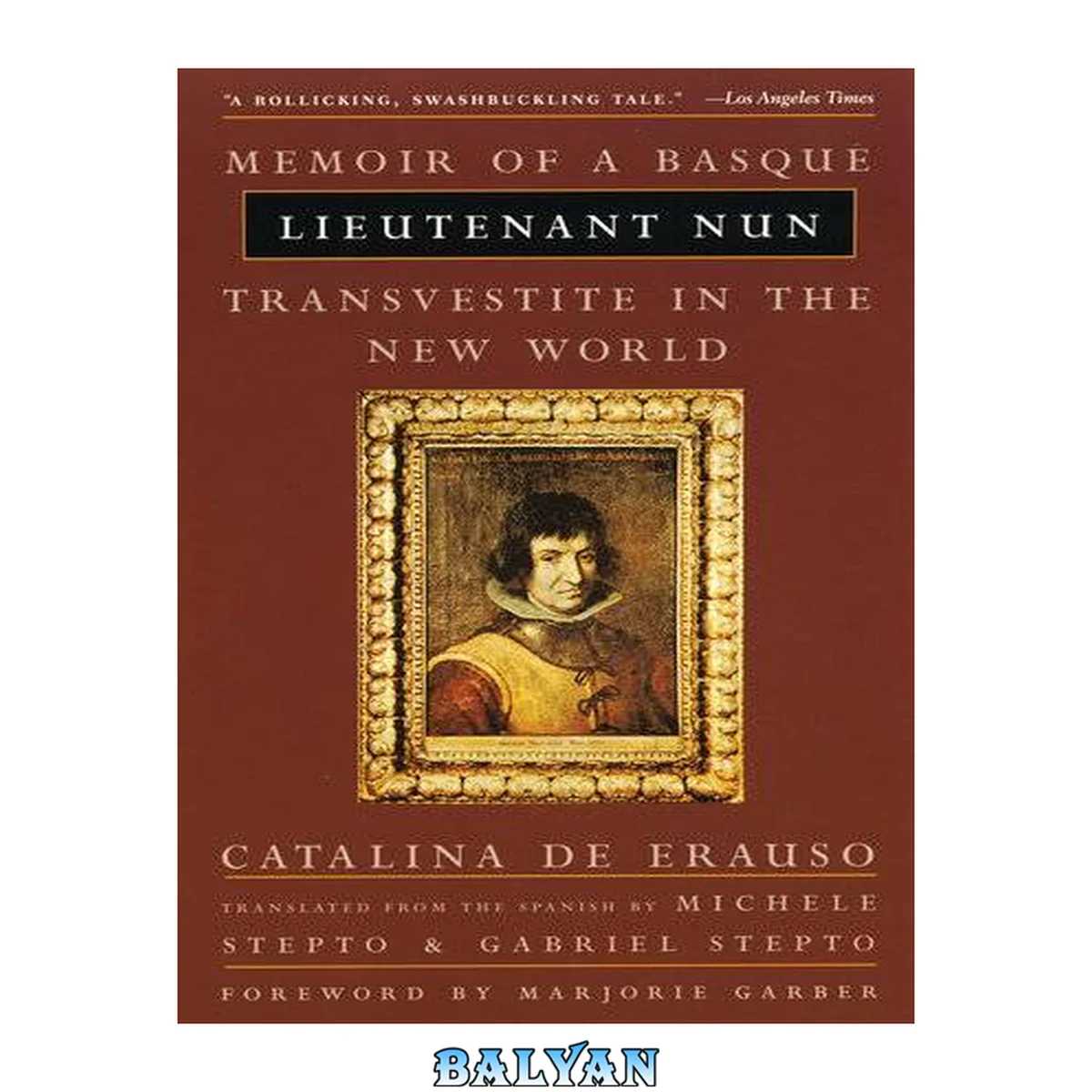
معرفی کتاب «Lieutenant nun : memoir of a Basque transvestite in the New World» نوشتهٔ Catalina de Erauso، translated from the Spanish by Michele Stepto، Gabriel Stepto و foreword by Marjorie Garber، منتشرشده توسط نشر Beacon Press در سال 2011. این کتاب در فرمت epub، زبان انگلیسی ارائه شده است. «Lieutenant nun : memoir of a Basque transvestite in the New World» در دستهٔ تاریخ جهان قرار دارد.
Named a New York Times Book Review Notable Book of 1996 One of the earliest known autobiographies by a woman, this is the extraordinary tale of Catalina de Erauso, who in 1599 escaped from a Basque convent dressed as a man and went on to live one of the most wildly fantastic lives of any woman in history. A soldier in the Spanish army, she traveled to Peru and Chile, became a gambler, and even mistakenly killed her own brother in a duel. During her lifetime she emerged as the adored folkloric hero of the Spanish-speaking world. This delightful translation of Catalina's own work introduces a new audience to her audacious escapades. From the "Introduction" by translator Michele Stepto: "Sometime between 1626 and 1630 -- that is, between the visit to Naples, which concludes her memoir, and her return to the Americas -- she wrote down in manuscript or dictated to an amanuensis an account of her life." The "Translator's Note" further explains: "Only the Muoz and Ferrer copies of the original manuscript now exist. The present translation into English is based largely on a 1918 edition of Ferrer's Historia [de la Monja Alfrez Doa Catalina de Erauso, escrita por ella misma (1829)], though we have also consulted Muoz's Vida y sucesos [de la Monja Alfrez...Escrita por ella misma (1784)], recently made available in an excellent edition edited by Rima de Vallbona. Born in 1585, Catalina de Erauso led one of the most wildly fantastic lives of any woman in history. Refusing to be regimented into the quiet habits of a nun's life, she escaped from a Basque convent at age fourteen dressed as a man, and continuing her deception, ventured to Peru and Chile as a soldier in the Spanish army. After mistakenly killing her own brother in a duel, she roamed the Andean highlands, becoming a gambler and a killer, and always just evading the grasp of the law. Distinguished for her fighting skills and cursed with a quick temper, Catalina de Erauso spent much of her life balancing precariously between valor and villainy. One of the earliest known autobiographies by a woman, Lieutenant Nun offers a portrait of a bold young girl who defied her society's gender roles, yet remained committed to its service as a participant in the conquest of the Americas. She is an adored folkloric hero of the Spanish-speaking world, and this delightful translation introduces a new audience to the audacious escapades of Catalina de Erauso, the Lieutenant Nun.
"English version of Historia de la monja alfâerez (1988), the 'autobiographical' account of a Basque woman who fled convent life in Spain; made her way to the Indies disguised as a page boy; and spent 22 years as a soldier in the colonies, mostly in Chile and the Perus, in early 17th century. Traditionally rejected as a work of fiction, Catalina de Erauso's story has been verified - to the extent that verification is possible - as well as authenticated by recent scholarship. [MTH]"--Handbook of Latin American Studies, v. 58.
"English version of Historia de la monja alférez (1988), the 'autobiographical' account of a Basque woman who fled convent life in Spain; made her way to the Indies disguised as a page boy; and spent 22 years as a soldier in the colonies, mostly in Chile and the Perus, in early 17th century. Traditionally rejected as a work of fiction, Catalina de Erauso's story has been verified - to the extent that verification is possible - as well as authenticated by recent scholarship. [MTH]"--Handbook of Latin American Studies, v. 58.