Lectures on the History of Political Philosophy
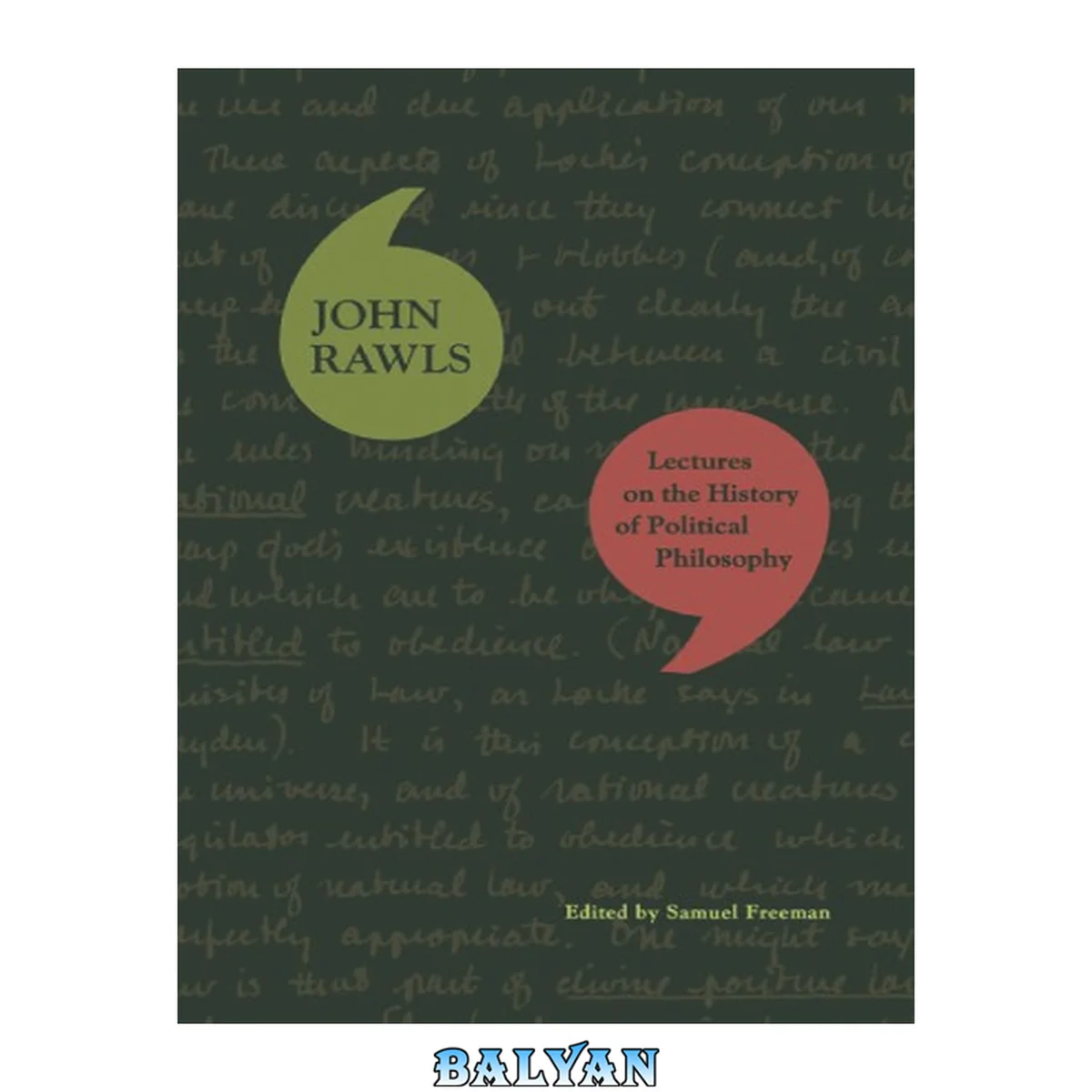
معرفی کتاب «Lectures on the History of Political Philosophy» نوشتهٔ Craig Dilouie و Rawls, John; Freeman, Samuel Richard، منتشرشده توسط نشر Belknap Press: An Imprint of Harvard University Press در سال 2007. این کتاب در فرمت pdf، زبان انگلیسی ارائه شده است.
This last book by the late John Rawls, derived from written lectures and notes for his long-running course on modern political philosophy, offers readers an account of the liberal political tradition from a scholar viewed by many as the greatest contemporary exponent of the philosophy behind that tradition.
Rawls's goal in the lectures was, he wrote, to identify the more central features of liberalism as expressing a political conception of justice when liberalism is viewed from within the tradition of democratic constitutionalism. He does this by looking at several strands that make up the liberal and democratic constitutional traditions, and at the historical figures who best represent these strands—among them the contractarians Hobbes, Locke, and Rousseau; the utilitarians Hume, Sidgwick, and J. S. Mill; and Marx regarded as a critic of liberalism. Rawls's lectures on Bishop Joseph Butler also are included in an appendix. Constantly revised and refined over three decades, Rawls's lectures on these figures reflect his developing and changing views on the history of liberalism and democracy—as well as how he saw his own work in relation to those traditions.
With its clear and careful analyses of the doctrine of the social contract, utilitarianism, and socialism—and of their most influential proponents—this volume has a critical place in the traditions it expounds. Marked by Rawls's characteristic patience and curiosity, and scrupulously edited by his student and teaching assistant, Samuel Freeman, these lectures are a fitting final addition to his oeuvre, and to the history of political philosophy as well.
Steven B. Smith - New York Sun
While many contemporary philosophers have deliberately shunned the history of political philosophy as irrelevant to doing philosophy, Rawls shows himself to be a conscientious and painstaking reader of the great works of the philosophical tradition of which he was a part. He regarded his own work as both indebted to and as culminating the great tradition that he interprets for his readers.
Lectures on Hobbes......Page 8 Editor’s Foreword......Page 10 Introductory Remarks......Page 18 Texts Cited......Page 20 Introduction Remarks on Political Philosophy......Page 22 Hobbes I. Hobbes’s Secular Moralism and the Role of His Social Contract......Page 44 Hobbes II. Human Nature and the State of Nature......Page 62 Hobbes III. Hobbes’s Account of Practical Reasoning......Page 75 Hobbes IV. The Role and Powers of the Sovereign......Page 94 Appendix: Hobbes Index......Page 115 Lectures on Locke......Page 122 Locke I. His Doctrine of Natural Law......Page 124 Locke II. His Account of a Legitimate Regime......Page 143 Locke III. Property and the Class State......Page 159 Lectures on Hume......Page 178 Hume I. “Of the Original Contract”......Page 180 Hume II. Utility, Justice, and the Judicious Spectator......Page 195 Lectures on Rousseau......Page 210 Rousseau I. The Social Contract: Its Problem......Page 212 Rousseau II. The Social Contract: Assumptions and the General Will (I)......Page 235 Rousseau III. The General Will (II) and the Question of Stability......Page 250 Lectures on Mill......Page 270 Mill I. His Conception of Utility......Page 272 Mill II. His Account of Justice......Page 287 Mill III. The Principle of Liberty......Page 305 Mill IV. His Doctrines as a Whole......Page 318 Appendix: Remarks on Mill’s Social Theory [c. 1980]......Page 335 Lectures on Marx......Page 338 Marx I. His View of Capitalism as a Social System......Page 340 Marx II. His Conception of Right and Justice......Page 356 Marx III. His Ideal: A Society of Freely Associated Producers......Page 375 Appendixes......Page 394 Four Lectures on Henry Sidgwick......Page 396 Five Lectures on Joseph Butler......Page 437 Course Outline......Page 479 Index......Page 481 This last book by the late John Rawls, derived from written lectures and notes for his long-running course on modern political philosophy, offers readers an account of the liberal political tradition from a scholar viewed by many as the greatest contemporary exponent of the philosophy behind that tradition. Rawls' goal in the lectures was, he wrote, "to identify the more central features of liberalism as expressing a political conception of justice when liberalism is viewed from within the tradition of democratic constitutionalism". He does this by looking at several strands that make up the liberal and democratic constitutional traditions, and at the historical figures who best represent these strands - among them the contractarians Hobbes, Locke, and Rousseau; the utilitarians Hume, Sidgwick, and J.S. Mill; and Marx regarded as a critic of liberalism. Rawls' lectures on Bishop Joseph Butler also are included in an appendix. Constantly revised and refined over three decades, Rawls' lectures on these figures reflect his developing and changing views on the history of liberalism and democracy - as well as how he saw his own work in relation to those traditions. With its clear and careful analyses of the doctrine of the social contract, utilitarianism, and socialism - and of their most influential proponents - this volume has a critical place in the traditions it expounds. Marked by Rawls' characteristic patience and curiosity, and scrupulously edited by his student and teaching assistant, Samuel Freeman, these lectures are a fitting final addition to his oeuvre, and to the history of political philosophy as well This Last Book By The Late John Rawls, Derived From Written Lectures And Notes For His Long-running Course On Modern Political Philosophy, Offers Readers An Account Of The Liberal Political Tradition From A Scholar Viewed By Many As The Greatest Contemporary Exponent Of The Philosophy Behind That Tradition.--jacket. Remarks On Political Philosophy -- Lectures On Hobbes -- Lectures On Locke -- Lectures On Hume -- Lectures On Rousseau -- Lectures On Mill -- Lectures On Marx. John Rawls ; Edited By Samuel Freeman. Includes Bibliographical References And Index.Constantly revised and refined over three decades, Rawls's lectures on various historical figures reflect his developing and changing views on the history of liberalism and democracy. With its careful analyses of the doctrine of the social contract, utilitarianism, and socialism, this volume has a critical place in the traditions it expounds.