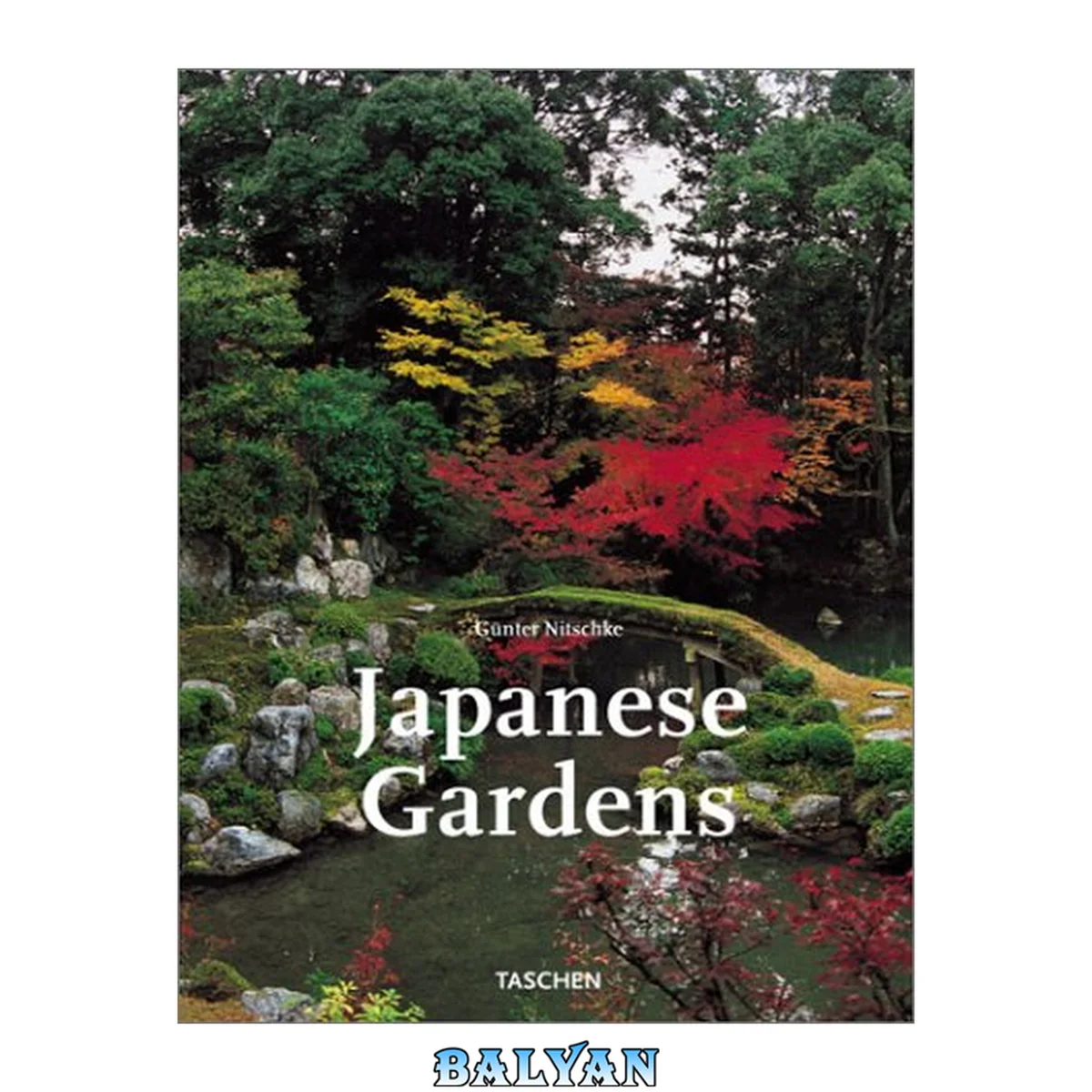
معرفی کتاب «باغهای ژاپنی: زاویهٔ راست و فرم طبیعی» (با عنوان لاتین Japanese gardens : right angle and natural form) نوشتهٔ James Norbury و Nitschke Gunter, Gunter Nitschke, Günter Nitschke، منتشرشده توسط نشر Benedikt Taschen در سال 2002. این کتاب در 8 صفحه، فرمت pdf، زبان انگلیسی ارائه شده است.
Nature crafted by man The Japanese garden, like all gardens, is more than mere nature; it is nature crafted by man. It needs the hands of the designer to give it meaning. The Japanese garden belongs to the realm of architecture; at its best, it is nature as art. The phases of its history document the constant redefinition of man’s position within and towards nature. Its changing forms respond both to socio-economic developments and to religious and philosophical trends, and thereby reflect the spiritual climate in which its architecture was conceived. At the same time as detailing the characteristics distinguishing and differentiating each of the five major epochs in the history of the Japanese garden , the author identifies the common motif which underlies them all: the recurrent attempt to unite beauty as natural accident and beauty as human-perfected type, to achieve an aesthetic symbiosis between the seeming randomness of natural form and the strict geometry of the right angle. "This extraordinary book provides a detailed, engrossing history of Japanese gardens with separate chapters for each historical era. It is beautifully illustrated with color photos as well as historical black and white." - Suite 101, New YorkAbout the AuthorGünter Nitschke, born in Berlin, studied architecture (Germany), town planning (London), and classical and modern Japanese (Tokyo). He taught East Asian architecture and urbanism at Princeton and MIT for 18 years, more recently at UCLA and LA Pomona, and since 1987 at Kyoto Seika University. He is also Director of the Institute for East Asian Architecture and Urbanism in Kyoto. The exhibition “Japanese Gardens 2000” in Stuttgart was designed by him. His Floating Bridges of Dreams received First Prize in the 1998 International Urban Design Competition for a New Image of Kyoto in the 21st Century. He has also written numerous critical essays and books. The Japanese garden, like all gardens, is more than mere nature; it is nature crafted by man. It needs the hands of the designer to give it meaning. The Japanese garden belongs to the realm of architecture; at its best, it is nature as art. The phases of its history document the constant redefinition of man's position within and towards nature. Its changing forms respond both to socio-economic developments and to religious and philosophical trends, and thereby reflect the spiritual climate in which its architecture was conceived.
At the same time as detailing the characteristics distinguishing and differentiating each of the five major epochs in the history of the Japanese garden, the author identifies the common motif which underlies them all: the recurrent attempt to unite beauty as natural accident and beauty as human-perfected type, to achieve an aesthetic symbiosis between the seeming randomness of natural form and the strict geometry of the right angle.
In this reissued title, the author identifies the common motif underlying five major epochs in Japanese gardening, which is the recurrent attempt to unite natural beauty and human perceptions of beauty to achieve an aesthetic symbiosis. It has taken major ecological disasters to remind humankind that our earth is both a living and a conscious entity.