Introduction to Python for Engineers and Scientists : Open Source Solutions for Numerical Computation
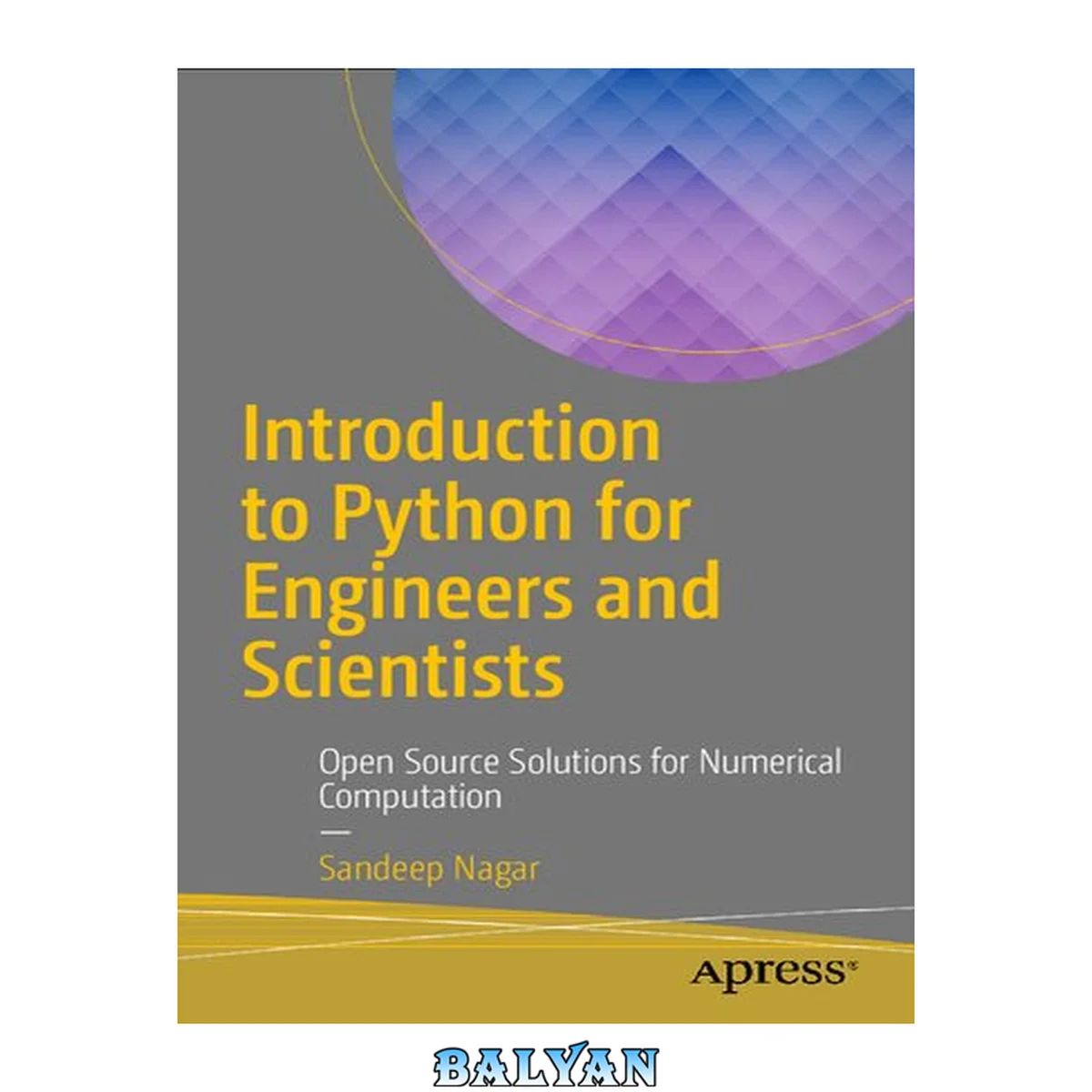
معرفی کتاب «Introduction to Python for Engineers and Scientists : Open Source Solutions for Numerical Computation» نوشتهٔ Miguel، Nicolelis و Sandeep Nagar، منتشرشده توسط نشر Apress : Imprint: Apress در سال 2017. این کتاب در فرمت pdf، زبان انگلیسی ارائه شده است.
Familiarize yourself with the basics of Python for engineering and scientific computations using this concise, practical tutorial that is focused on writing code to learn concepts. Introduction to Python is useful for industry engineers, researchers, and students who are looking for open-source solutions for numerical computation. In this book you will learn by doing, avoiding technical jargon, which makes the concepts easy to learn. First you'll see how to run basic calculations, absorbing technical complexities incrementally as you progress toward advanced topics. Throughout, the language is kept simple to ensure that readers at all levels can grasp the concepts. What You'll Learn Understand the fundamentals of the Python programming language Apply Python to numerical computational programming projects in engineering and science Discover the Pythonic way of life Apply data types, operators, and arrays Carry out plotting for visualization Work with functions and loops Who This Book Is For Engineers, scientists, researchers, and students who are new to Python. Some prior programming experience would be helpful but not required. Table of Contents About the Author About the Technical Reviewer Acknowledgments Chapter 1: Philosophy of Python 1.1 Introduction 1.1.1 High-Level Programming 1.1.2 Interactive Environment 1.1.3 Object Orientation 1.1.4 Multipurpose Nature 1.1.5 Minimalistic Design 1.1.6 Portability 1.1.7 Extensibility 1.2 History 1.2.1 Python 2 vs. Python 3 1.3 Python and Engineering 1.4 Modular Programming 1.5 Summary 1.6 Bibliography Chapter 2: Introduction to Python Basics 2.1 Introduction 2.2 Installation 2.2.1 Windows 2.2.2 Ubuntu 2.2.3 Mac OS X 2.3 Using the Python Interpreter 2.4 Anaconda IDE 2.5 Python as a Calculator 2.6 Modules 2.6.1 Using a Module 2.7 Python Environment 2.7.1 Installing virtualenv 2.7.2 Activating virtualenv 2.7.3 Deactivating the Virtual Environment 2.8 Summary 2.9 Bibliography Chapter 3: IPython 3.1 Introduction 3.2 Installing IPython 3.3 IPython Notebooks 3.3.1 Installing a Jupyter Notebook 3.4 Saving a Jupyter Notebook 3.5 Online Jupyter Environment 3.6 Summary 3.7 Bibliography Chapter 4: Data Types 4.1 Introduction 4.2 Logical 4.3 Numeric 4.3.1 Integer 4.3.2 Floating Point Numbers 4.3.3 How to Store a Floating Point Number 4.3.4 Complex Numbers 4.4 Sequences 4.4.1 Strings 4.4.2 Lists and Tuples 4.5 Sets and Frozensets 4.6 Mappings 4.7 Null Objects 4.8 Summary 4.9 Bibliography Chapter 5: Operators 5.1. Introduction 5.2. Concept of Variables 5.2.1 Rules of Naming Variables 5.3. Assignment Operator 5.4. Arithmetic Operators 5.5. Changing and Defining Data Type 5.5.1 Order of Usage 5.5.2 Comparison Operators 5.6. Membership Operator 5.7. Identity Operator 5.8. Bitwise Operators 5.8.1 Using Bitwise Operations 5.9. Summary Chapter 6: Arrays 6.1 Introduction 6.2 numpy 6.3 ndarray 6.4 Automatic Creation of Arrays 6.4.1 zeros() 6.4.2 ones() 6.4.3 ones_like() 6.4.4 empty() 6.4.5 empty_like() 6.4.6 eye() 6.4.7 identity() 6.4.8 full() 6.4.9 full_like() 6.4.10 Random Numbers Random Integers Random Floating Point Numbers Random Choice Beta Distribution Binomial Distribution Normal Distribution Other Distributions 6.5 Numerical Ranges 6.5.1 A Range of Numbers 6.5.2 Linearly Spaced Numbers 6.5.3 Logarithmically Spaced Numbers 6.5.4 meshgrid() 6.5.5 mgrid() and ogrid() 6.6 tile() 6.7 Broadcasting 6.8 Extracting Diagonal 6.9 Indexing 6.10 Slicing 6.11 Copies and Views 6.12 Masking 6.12.1 Fancy Indexing 6.12.2 Indexing with Boolean Arrays 6.13 Arrays Are Not Matrices 6.14 Some Basic Operations 6.14.1 sum 6.14.2 Minimum and Maximum 6.14.3 Statistics: Mean, Median, and Standard Deviation 6.14.4 sort() 6.14.5 Rounding Off 6.15 asarray() and asmatrix() 6.16 Summary 6.17 Bibliography Chapter 7: Plotting 7.1 Introduction 7.2 matplotlib 7.2.1 pylab vs. pyplot 7.3 Plotting Basic Plots 7.3.1 Plotting More than One Graph on Same Axes 7.3.2 Various Features of a Plot 7.4 Setting Up to Properties 7.5 Histograms 7.6 Bar Charts 7.7 Error Bar Charts 7.8 Scatter Plots 7.9 Pie Charts 7.10 Polar Plots 7.11 Decorating Plots with Text, Arrows, and Annotations 7.12 Subplots 7.13 Saving a Plot to a File 7.14 Displaying Plots on Web Application Servers 7.14.1 IPython and Jupyter Notebook 7.15 Working with matplotlib in Object Mode 7.16 Logarithmic Plots 7.17 Two Plots on the Same Figure with at least One Axis Different 7.18 Contour Plots 7.19 3D Plotting in matplotlib 7.19.1 Line and Scatter Plots 7.19.2 Wiremesh and Surface Plots 7.19.3 Contour plots in 3D 7.19.4 Quiver Plots 7.20 Other Libraries for Plotting Data 7.20.1 plotly 7.21 Summary 7.22 Bibliography Chapter 8: Functions and Loops 8.1 Introduction 8.2 Defining Functions 8.2.1 Function Name 8.2.2 Descriptive String 8.2.3 Indented Block of Statements 8.2.4 Return Statement 8.3 Multi-input and Multi-output Functions 8.4 Namespaces 8.4.1 Scope Rules 8.5 Concept of Loops 8.6 for Loop 8.7 if-else Loop 8.8 while Loop 8.9 Infinite Loops 8.10 while-else 8.11 Summary Chapter 9: Object-Oriented Programming 9.1 Introduction 9.2 Procedural Programming vs. OOP 9.3 Objects 9.4 Types 9.5 Object Reference 9.5.1 Garbage Collection 9.5.2 Copy and Deepcopy 9.6 Class 9.6.1 Creating a Class 9.6.2 Class Variables and Class Methods 9.6.3 Constructor Built-in Class Attributes 9.7 Summary 9.8 Bibliography Chapter 10: Numerical Computing Formalism 10.1 Introduction 10.2 Physical Problems 10.3 Defining a Model 10.4 Python Packages 10.5 Python for Science and Engineering 10.6 Prototyping a Problem 10.6.1 What Is Prototyping? 10.6.2 Python for Fast Prototyping 10.7 Large Dataset Handling 10.8 Instrumentation and Control 10.9 Parallel Processing 10.10 Summary 10.11 Bibliography Index Familiarize yourself with the basics of Python for engineering and scientific computations using this concise, practical tutorial that is focused on writing code to learn concepts. Introduction to Python is useful for industry engineers, researchers, and students who are looking for open-source solutions for numerical computation. In this book you will learn by doing, avoiding technical jargon, which makes the concepts easy to learn. First you'll see how to run basic calculations, absorbing technical complexities incrementally as you progress toward advanced topics. Throughout, the language is kept simple to ensure that readers at all levels can grasp the concepts. You will: Understand the fundamentals of the Python programming language Apply Python to numerical computational programming projects in engineering and science Discover the Pythonic way of life Apply data types, operators, and arrays Carry out plotting for visualization Work with functions and loops
دانلود کتاب Introduction to Python for Engineers and Scientists : Open Source Solutions for Numerical Computation