مدیریت حشرات در ذخیرهسازی و فرآوری مواد غذایی، ویرایش دوم
Insect Management for Food Storage And Processing, 2nd Ed.
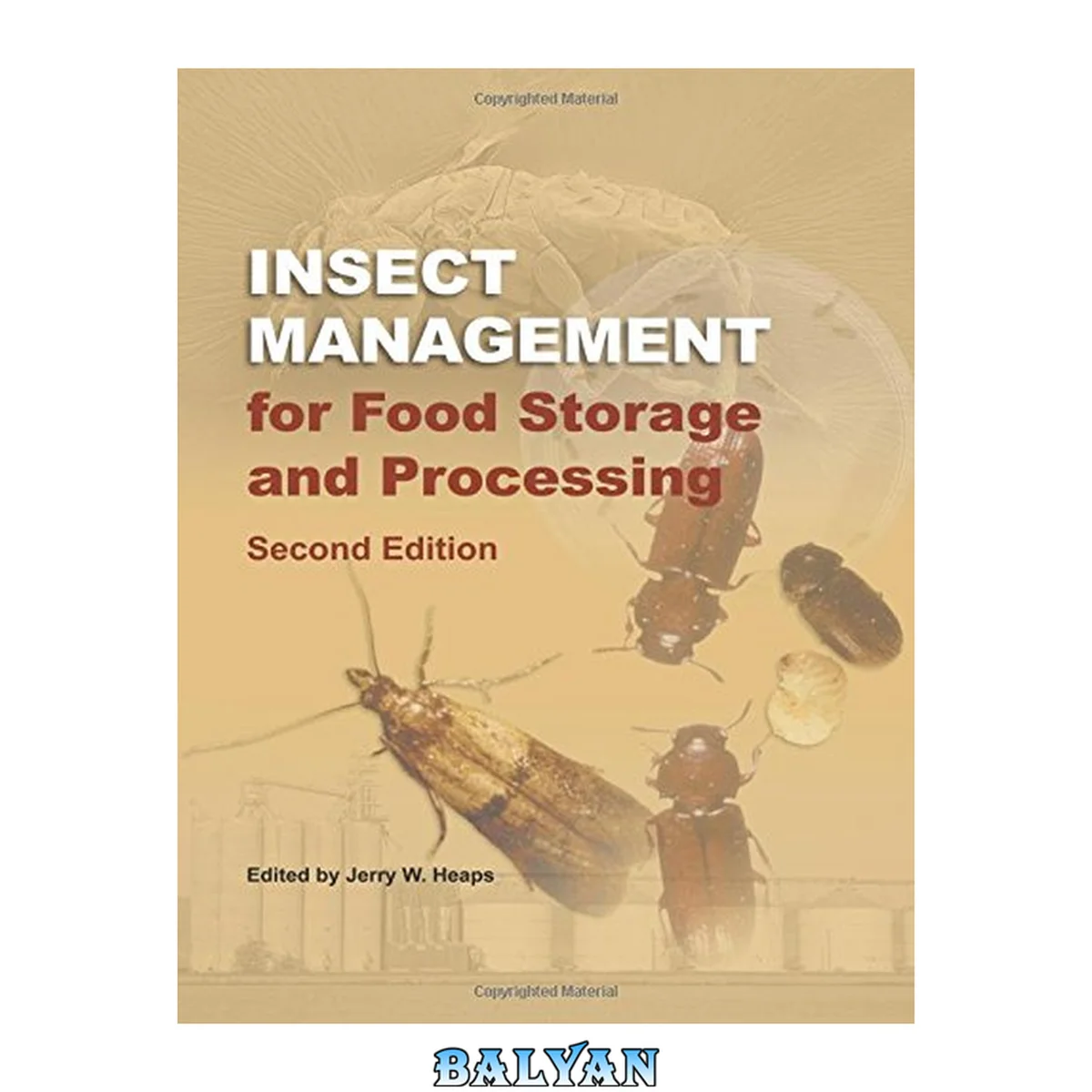
معرفی کتاب «مدیریت حشرات در ذخیرهسازی و فرآوری مواد غذایی، ویرایش دوم» (با عنوان لاتین Insect Management for Food Storage And Processing, 2nd Ed.) نوشتهٔ Heaps, Jerry W، منتشرشده توسط نشر AACC American Association of Cereal Chemists در سال 2006. این کتاب در فرمت pdf، زبان انگلیسی ارائه شده است.
Insect Management for Food Storage and Processing, Second Edition has been completely revised and updated with new chapters on topics including inspection techniques; retail pest management; environmental manipulation (e.g., hot, cold, modified atmospheres, ionization) to control insects; and the latest scientific research on integrated pest management (IPM) control techniques. Common and unusual exterior/interior pest insects are covered and examples of both chemical and non-chemical pest insect control strategies are thoroughly discussed. The book provides the latest practical and scientific research information on how to solve pest insect problems in a timely and economical manner. Chapter authors are recognized around the world as experts in their respective fields. Scientific language is put in simple terms so those working in a food plant or warehouse environment can easily take information from the chapters and apply it for effective pest insect control strategies. Control methods explained have survived the test of time. This edition is timely due to the rapidly changing pesticide and food safety regulatory environment food processing personnel must work in every day. Chapter information presented is original research that contains basic reference material, literature reviews, and actual pest insect case histories that authors have experienced with control methods that work. The book is written so its readers can pick it up and use it as a ready reference right on the plant floor. It s a must read for commercial and structural pest control operators, technicians, or directors; food plant inspectors, auditors, and plant sanitarians; as well as QA managers, food safety consultants, and university extension personnel MuPDF error: syntax error: invalid key in dict MuPDF error: syntax error: invalid key in dict MuPDF error: syntax error: invalid key in dict MuPDF error: syntax error: invalid key in dict MuPDF error: syntax error: invalid key in dict MuPDF error: syntax error: invalid key in dict MuPDF error: syntax error: invalid key in dict MuPDF error: syntax error: invalid key in dict MuPDF error: syntax error: invalid key in dict Front Cover 1 Insect Management for Food Storage and Processing 3 Copyright Page 4 Table of Contents 9 Contributors 5 Preface to the Second Edition 6 Foreword to the First Edition 8 Chapter 1. Introduction to the Second Edition 13 PEST IDENTIFICATION 13 HOLISTIC PEST MANAGEMENT 14 PREVENTION 14 SUMMARY 15 References Cited 15 Part I: Basics of Insect Pest Management 17 Chapter 2. Integrated Pest Management Strategies for the Food Industry 19 RAW-MATERIAL SUPPLIER 19 FOOD-PROCESSING FACILITY 20 POTENTIAL INSECT-CONTROL STRATEGIES UNDER DEVELOPMENT FOR THE FOOD INDUSTRY 22 CONCLUSIONS 22 References Cited 22 Recommended Reading 22 Chapter 3: Role of the Pest Management Professional in Food-Processing Pest Management 23 THEN AND NOW 23 DECISIONS 24 ROLE OF THE PEST MANAGEMENTPROFESSIONAL 26 SUMMARY 30 References Cited 30 Additional Resources 30 Chapter 4: Inspection Techniques 31 WHERE TO BEGIN 32 EXTERIOR GROUNDS 33 ROOF AREAS 34 PLANT INTERIOR 34 Chapter 5: Facility Inspections: Supporting Insect Pest Management in the Food-Manufacturing Environment 37 PLANT GROUNDS: THE IMMEDIATE PLANTEXTERIOR ENVIRONMENT 38 BUILDING(S): CONSTRUCTION ELEMENTS AND MAINTENANCE 39 CLEANING PROGRAMS AND PRACTICES 43 Reference Cited 45 Chapter 6. Insect-Resistant Packaging 47 HISTORY OF FOOD PACKAGING 47 IMPORTANCE OF INSECT-RESISTANT PACKAGING 47 INSECT RESPONSE TO FOOD ODOR 48 INSECT PESTS OF PACKAGED FOODS 48 TESTING FOR INSECT RESISTANCE 49 METHODS TO REDUCE INFESTATION 49 CONCLUSION 50 References Cited 50 Chapter 7. Stored-Product Insect Behavior 51 EXPLOITATION OF PATCHY ENVIRONMENTS 51 RESPONSE TO STIMULI 55 CONCLUSIONS 60 References Cited 60 Part II: Environmental and Nonchemical Manipulation 65 Chapter 8: Insect Light Traps 67 HISTORY 67 PRINCIPLES OF OPERATION 68 TRAP CONSTRUCTION 72 REGULATION AND COMPLIANCE CONCERNS 73 SYSTEM DESIGN 75 MISCELLANEOUS FACILITY MANAGEMENT FOR FLYING-INSECT CONTROL 77 CONCLUSION 78 Acknowledgments 78 References Cited 78 Chapter 9. Biological Control of Stored-Product Pests 79 ADVANTAGES OF BIOLOGICAL CONTROL 79 DISADVANTAGES OF BIOLOGICAL CONTROL 80 APPROACHES OF BIOLOGICAL CONTROL 80 NATURAL ENEMIES 80 BULK GRAIN STORAGE 82 MILLS, BAKERIES, WAREHOUSES, AND RETAIL STORES 87 FUTURE OF BIOLOGICAL CONTROL IN STORED PRODUCTS 95 References Cited 96 Chapter 10. Temperature Modification for Insect Control 101 BACKGROUND AND HISTORY OF HEAT TREATMENTS 102 EFFECTS OF HEAT ON INSECTS 102 CALCULATING HEAT ENERGY REQUIREMENTS 104 DELIVERY OF HEAT TREATMENTS 105 HEAT-TREATMENT CASE STUDIES 109 SUMMARY 113 Acknowledgments 113 References Cited 113 Chapter 11. Modified Atmospheres for the Control of Stored-Product Insects and Mites 117 OVERVIEW 117 EFFECTS OF MA ON STORED-PRODUCT INSECTS AND MITES 120 EFFECTS OF MA ON PRODUCT QUALITY 128 GENERATION AND APPLICATION OF MA 131 SPECIFIC APPLICATIONS OF MA 140 ECONOMICS OF TREATMENT 142 CURRENT USAGE OF MA 144 RESEARCH NEEDS 145 Acknowledgments 147 References Cited 147 Chapter 12. Irradiation 159 IRRADIATION EFFECTS ON PESTS 159 RADIATION EFFECTS ON STORAGE PESTS 160 IRRADIATION EQUIPMENT FOR DISINFESTATION: REALITY AND CONCEPTS 161 SO, WHAT’S NEW IN IRRADIATION? 162 PEST CONTROL IN AN IRRADIATION FACILITY 163 Acknowledgments 164 References Cited 164 Related Websites 164 Chapter 13. Pheromones for Stored-Product Protection 165 A WORLD OF ODORS 165 HISTORY OF PHEROMONE STUDY 165 PHEROMONES OF STORED-PRODUCT INSECTS 166 PHEROMONES (AND LURES) ARE NOT CREATED EQUAL 167 USING PHEROMONE TRAPS 168 TIPS FOR USING PHEROMONE TRAPS 170 TRAPPING STORED-FOOD MOTHS 170 TRAPPING STORED-FOOD BEETLES 172 CAPTURING MULTIPLE STORED-PRODUCT INSECT SPECIES WITH A PHEROMONE PITFALL TRAP 175 SUMMARY 175 Acknowledgments 176 References Cited 176 Part III: Chemical Control 177 Chapter 14. Insect Management with Residual Insecticides 179 CLASSES OF RESIDUAL INSECTICIDES 179 RESIDUAL INSECTICIDE APPLICATIONS 180 FACTORS AFFECTING RESIDUAL INSECTICIDE PERFORMANCE 180 CONCLUSION 183 References Cited 184 Chapter 15. Insecticide Space Treatments in Food Plants 187 THE CONCEPT OF SPACE TREATMENTS 187 TYPES OF EQUIPMENT FOR AEROSOL SPACE TREATMENT 188 COMPOUNDS USED FOR SPACE TREATMENTS 189 SAFETY PRACTICES 191 MANAGING SPACE TREATMENT PROGRAMS 193 FUTURE RESEARCH 193 CONCLUDING REMARKS 193 References Cited 193 Chapter 16. Commodity and Space Fumigations in the Food Industry 195 WHEN TO CHOOSE FUMIGATION 195 PHYSICAL CONDITIONS THAT AFFECT FUMIGATION 196 MOVEMENT OF GASES 196 DOSAGE AND EXPOSURE PERIODS 196 GOOD SEALING IS VITAL 197 PLACARDING OF FUMIGATED AREAS 197 CHOICE OF FUMIGANTS 198 METHYL BROMIDE 198 PHOSPHINE (HYDROGEN PHOSPHIDE) 200 SULFURYL FLUORIDE 203 PREPARATION FOR FUMIGATION OF A FOOD-HANDLING FACILITY WITH PROFUME 204 FUMIGATION MANAGEMENT PLAN 205 FUTURE TRENDS IN FUMIGATION 209 References Cited 210 Part IV: Safety and Environmental Health 211 Chapter 17. Insecticides and Occupational Health in the Food Industry 213 BACKGROUND 213 TYPES OF INSECTICIDES FOUND IN THE FOOD INDUSTRY 213 USAGE IN THE FOOD INDUSTRY 213 HAZARDS OF INSECTICIDES 213 ROUTES OF ENTRY AND PROTECTION TECHNIQUES 214 THE RESPIRATORY PROTECTION PROGRAM 215 TOXICOLOGICAL CONCEPTS 215 SAFE INSECTICIDE USAGE 218 DETERMINING INSECTICIDE EXPOSURE CONCENTRATIONS 218 MEDICAL EXAMINATIONS 218 FIRST AID TREATMENT 218 EMERGENCY TREATMENT FOR INSECTICIDE POISONING 218 GOVERNMENT REGULATIONS 219 SUMMARY 219 Useful Websites 219 Part V: Summary 221 Chapter 18. The Science and Technology of Postharvest Insect Control: Challenges, Accomplishments, and Future Directions 223 CHALLENGES 223 RESEARCH ACCOMPLISHMENTS AND PROSPECTS 225 Acknowledgments 232 References Cited 232 Useful Websites 234 Index 235 Insect Management for Food Storage and Processing, Second Edition is completely revised and updated with new chapters on topics including inspection techniques; retail pest management; environmental manipulation (e.g., hot, cold, modified atmospheres, ionization) to control insects; and the latest scientific research on integrated pest management (IPM) control techniques. Common and unusual exterior/interior pest insects are covered and examples of both chemical and non-chemical pest insect control strategies are thoroughly discussed. The book provides the practical and science-based strategies to solve pest insect problems in an effective and economical manner. Chapter authors are recognized around the world as experts in their respective fields. Scientific language is put in simple terms so those working in a food plant or warehouse environment can easily take information from the chapters and apply it for effective pest insect control strategies. Control methods explained have survived the test of time. This edition addresses the pesticide and food safety regulatory environment food processing personnel must work in every day. Chapter information presented is original research that contains basic reference material, literature reviews, and actual pest insect case histories that authors have experienced with control methods that work. The book is written so its readers can pick it up and use it as a ready reference across any food manufacturing or production environment. It's a must read for commercial and structural pest control operators, technicians, or directors; food plant inspectors, auditors, and plant sanitarians; as well as QA managers, food safety consultants, and university extension personnel.
دانلود کتاب مدیریت حشرات در ذخیرهسازی و فرآوری مواد غذایی، ویرایش دوم