مگالیتهای اندونزی: میراث فرهنگی فراموششده
Indonesian Megaliths: A Forgotten Cultural Heritage (Laboratoire d'archéologie préhistorique UNIGE)
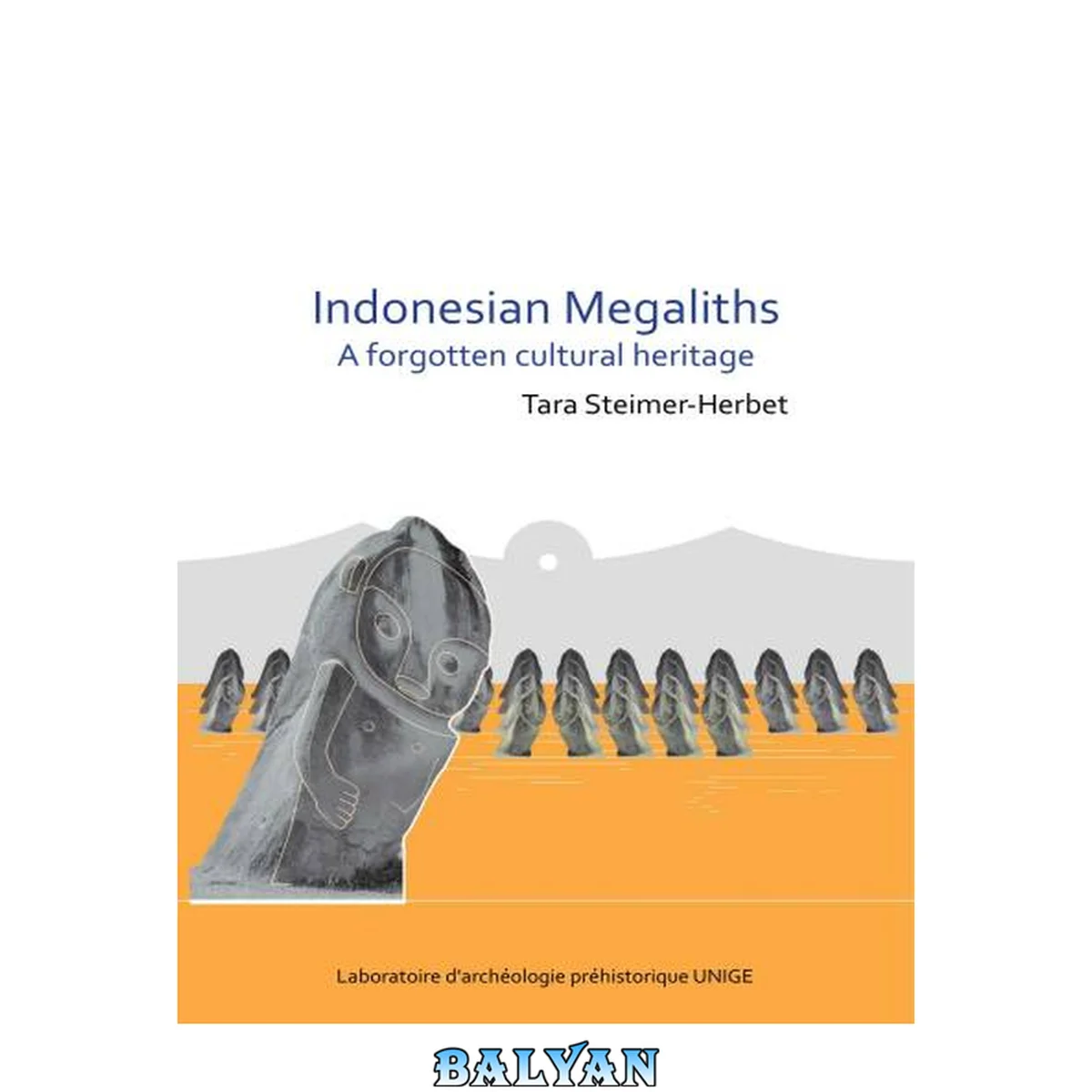
معرفی کتاب «مگالیتهای اندونزی: میراث فرهنگی فراموششده» (با عنوان لاتین Indonesian Megaliths: A Forgotten Cultural Heritage (Laboratoire d'archéologie préhistorique UNIGE)) نوشتهٔ Tara Steimer-Herbet، منتشرشده توسط نشر Archaeopress Access Archaeology در سال 2018. این کتاب در فرمت pdf، زبان انگلیسی ارائه شده است.
Indonesian Megaliths: A forgotten cultural heritage' highlights aspects of Indonesian culture which are currently misunderstood and sometimes threatened by destruction. Although they are relatively recent in origin, the Indonesian megaliths offer similarities to their counterparts in the Middle East and Arabia: they reflect the rise to prominence of local chiefs in a context of acculturation which prompted the need to build megalithic monuments to bury the dead, and to honour, commemorate and communicate with ancestors. In societies of oral tradition, these stones punctuate the landscape to transmit the memory of men and social structure from one generation to the next. Based on scientific documents (articles, archaeological reports) and field visits, this new exploration clarifies various elements of the Indonesian megaliths, including their function in the daily life of the tribes and the use of certain stones for musical purposes (lithophony). In Nias, Sumba and Toraya, the megalith tradition is still alive and ethno-anthropological studies of these three regions provide a unique chance to complement the archaeological perspectives on megalithic monuments abandoned for several centuries in the rest of the Archipelago. The book includes numerous photographs documenting the monuments which were taken during the author’s stay in Indonesia (2010-2013). Indonesian Megaliths: A forgotten cultural heritage highlights aspects of Indonesian culture which are currently misunderstood and sometimes threatened by destruction. Although they are relatively recent in origin, the Indonesian megaliths offer similarities to their counterparts in the Middle East and Arabia: they reflect the rise to prominence of local chiefs in a context of acculturation which prompted the need to build megalithic monuments to bury the dead, and to honour, commemorate and communicate with ancestors. In societies of oral tradition, these stones punctuate the landscape to transmit the memory of men and social structure from one generation to the next. Based on scientific documents (articles, archaeological reports) and field visits, this new exploration clarifies various elements of the Indonesian megaliths, including their function in the daily life of the tribes and the use of certain stones for musical purposes (lithophony). In Nias, Sumba and Toraja, the megalith tradition is still alive and ethno-anthropological studies of these three regions provide a unique chance to complement the archaeological perspectives on megalithic monuments abandoned for several centuries in the rest of the Archipelago. The book includes numerous photographs documenting the monuments which were taken during the author’s stay in Indonesia (2010–2013). Cover 1 Copyright Page 4 Fig. 1 Monumental statue of Palindo in Bada Valley (Sulawesi) 5 Frontispiece 5 Fig. 2 Map of Indonesia with the studies areas 6 Map 2 6 Contents Page 7 List of Figures 8 Introduction 15 Fig. 3 Map of the studied areas where are the remains of the first phase of the megalithic societies are: the region of Bondowoso, the region of Sukabumi, the region of Kuningan (Java); the Pasemah plateau, the Highland of Jambi, the region of Lampung (Su 16 First part: Hindu-Buddhist Kingdoms and Indigenous Peoples of Java, Sumatra and Sulawesi 16 The region of Bondowoso in East Java 17 The region of Sukabumi in West Java 19 The region of Kuningan in West Java 32 The plateau of Pasemah, the Highlands of Jambi and Lampung forests in South and Central Sumatra 35 Lore Lindu: the Easter Island in Sulawesi 47 Fig. 4a Dolmen or «Pandhusa» from Grujugan in Bondowoso Valley (Java) 17 Fig. 4b Willems picture during the excavation of a dolmen or «Pandhusa» from Grujugan in Bondowoso Valley (Java) (fig. 4b – Willems 1938, fig. 19) 17 Fig. 5a Sarcophagus cylinder in the middle of corn field close to Glinseran in Bondowoso Valley 18 Fig. 5b Overturned sarcophagus cylinders from Nangkaan in Bondowoso Valley 18 Fig. 5c Top part of a sarcophagus cylinder from Glinseran in Bondowoso Valley 18 Fig. 6 General view of a sarcophagus cylinder from Glinseran in Bondowoso Valley in the midst of corn field 18 Fig. 7a-b Broken sarcophagi cylinders from Glinseran in Bondowoso Valley 19 Fig. 8a-c Dolmen from Grujugan in Bondowoso Valley 20 Fig. 9a Foundation of an ancient house from Grujugan in Bondowoso Valley 21 Fig. 9b Few «kenong», pillars of the foundation of the ancient houses from Grujugan in Bondowoso Valley 21 Fig. 10 «kenong» or pillars of the ancient houses from Grujugan in Bondowoso 22 Fig. 11 Statue of Grujugan in Bondowoso Valley 22 Fig. 9c Sketch after excavation of the foundation of an ancient house in Pakuman from Heekeren (1958, fig. 18) 22 Fig. 12 General view of the 4th terrace with the rectangular structure from the site of Gunung Padang in Sukabumi region (Java) 23 Fig. 13a View of the many stone prisms scattered in the slope between the 3rd terrace and the 4th one from site of Gunung Padang in Sukabumi region (Java) 23 Fig. 13b Monumental stone steps to climb up to the site of Gunung Padang in Sukabumi region (Java) 23 Fig. 13c Stone steps between the 4th terrace and the 3rd one in the site of Gunung Padang in Sukabumi region (Java) 24 Fig. 14 Retaining wall for the 5th terrace from the site of Gunung Padang in Sukabumi region (Java) 24 Fig. 15a Rectangular structure in the 4th terrace, view from the back side (Gunung Padang in Sukabumi region - Java) 25 Fig. 15b Entrance of the rectangular structure (Gunung Padang site in Sukabumi region, Java) 25 Fig. 16 Aerial view of terraces 1, 2 and 3 from the site of Gunung Padang in Sukabumi region (Java) 26 Fig. 17a-b Monuments from the 1st terrace from the site of Gunung Padang in Sukabumi region (Java 26 Fig. 18a-e Standing stone from Tugu Gede in Mount Halimun (Java) 27 Fig. 19a Pyramidal platform from Pangguyangan in Mount Halimun (Java) 28 Fig. 19b Upper part of the steps to the pyramidal platform from Pangguyangan in Mount Halimun (Java) 28 Fig. 19c Detail of the retaining wall of the Pyramidal platform from Pangguyangan in Mount Halimun (Java) 28 Fig. 19d Lower part of the steps access to the platform from Pangguyangan in Mount Halimun (Java) 29 Fig. 20a-b Statue from Ciarca in Mount Halimun (Java) 29 Fig. 21a-b Stone seats from Tugu Gede in Mount Halimun (Java) 29 Fig. 22a-b Cauldron stone from Tugu Gede in Mount Halimun (Java) 30 Fig. 23a-b Offering for the spirits in the place of Tugu Gede in Mount Halimun (Java) 31 Fig. 24 Aerial view of the site of Cipari in Kuningan region (Java) 32 Fig. 25a-b Cist from the site of Cipari in Kuningan region (Java) 33 Fig. 26 Circle and oval structures from the site of Cipari in Kuningan region (Java) 33 Fig. 27 Upright flat slabs and benches bound the second from the site of Cipari in Kuningan region (Java) 33 Fig. 28 Standing stone from the site of Cipari in Kuningan region (Java) 34 Fig. 29a-b Standing stone on a platform and grinding stones (Dakon) from the site of Cipari in Kuningan region (Java) 34 Fig. 30 Cow Statue from the site of Kadugede in Kuningan region (Java) 35 Fig. 31a-c Statues from Tegurwangi on the plateau of Pasemah (Sumatra) 36 Fig. 32a-b Statues from Belumai on the plateau of Pasemah (Sumatra) 37 Fig. 33 Character engraved on the wall in a place called Batu Balai from Tegurwangi on the plateau of Pasemah (Sumatra) 37 Fig. 34a-c Statues from Belumai on the plateau of Pasemah (Sumatra) 38 Fig. 35a-c Statue from Kota Raya on the plateau of Pasemah (Sumatra) 39 Fig. 36a Dolmen from Gunung Megang on the plateau of Pasemah (Sumatra) 40 Fig. 36b Dolmens from Tanjung Arau on the plateau of Pasemah (Sumatra) 40 Fig. 36c Dolmens from Tanjung Arau on the plateau of Pasemah (Sumatra) 41 Fig. 36d Dolmen from Tegurwangi on the plateau of Pasemah (Sumatra) 41 Fig. 36e Dolmen from Belumai on the plateau of Pasemah (Sumatra) 41 Fig. 37a-b Pictures details of the paintings covering the interior walls of Tanjung Arau dolmens and two drawings published by Willems in 1938 (after C. W. P. de Bie, fig. 20 & 21) 42 Fig. 37c-d Draw of the paintings covering the interior walls of Tanjung Arau dolmens and two drawings published by Willems in 1938 (after C. W. P. de Bie, fig. 20 & 21) 42 Fig. 38a-b Bas-relief of a woman and an elephant in the waterfall of Cawang on the plateau of Pasemah (Sumatra) 43 Fig. 39a Bas-relief of human in the rock tombs of Batu-Tering (Sumbawa) 44 Fig. 39b Bas-relief of crocodile in the rock tombs of Batu-Tering (Sumbawa) 44 Fig. 40 Stone seats around a table from Ustano Rajo Alam in Minangkabau region (Sumatra) 44 Fig. 41a-b Standing stone on a grave from Ustano Rajo Alam in Minangkabau region (Sumatra) 45 Fig. 42 Standing stones from Ustano Rajo Alam in Minangkabau region (Sumatra) 45 Fig. 43a Standing stone from Guguk in Minangkabau region (Sumatra) 45 Fig. 43b Carving detail on the standing stone from Guguk in Minangkabau region (Sumatra) 45 Fig. 44a Standing stone from Balubus in Minangkabau region (Sumatra) 46 Fig. 44b Detail of the decors on standing stone from Balubus in Minangkabau region (Sumatra) 46 Fig. 44c Standing stone from Balubus in Minangkabau region (Sumatra) 46 Fig. 45a Statue from Palindo in Bada Valley (Sulawesi) 48 Fig. 45b Detail of the face of the statue from Palindo in Bada Valley (Sulawesi) 48 Fig. 46a Statue from Maturu in Bada Valley (Sulawesi) 48 Fig. 46b Detail of the face of the statue from Maturu in Bada Valley (Sulawesi) 49 Fig. 47 Statue from Langke Bulawa in Bada Valley (Sulawesi) 49 Fig. 48 Statue from Loga in Bada Valley (Sulawesi) 49 Fig. 49a Statue from Tinoe-Badang Kaya in Besoa Valley (Sulawesi) 50 Fig. 49b Detail of the face of the statue from Tinoe-Badang Kaya in Besoa Valley (Sulawesi) 50 Fig. 50a-b Oba Statue in Bada Valley (Sulawesi) 50 Fig. 51a Head of Watu Balao Statue in Bada Valley (Sulawesi) 51 Fig. 51b Detail of the head of Watu Balao Statue in Bada Valley (Sulawesi) 51 Fig. 52 Jar (Kalamba) from Suso in Bada Valley (Sulawesi) 51 Fig. 53a Monumental Jar (Kalamba) and a traditional house from Pokekea in Besoa Valley (Sulawesi) 52 Fig. 53b Detail of the strip of faces of the monumental jar (Kalamba) in Pokekea in Besoa Valley 52 Fig. 54a-c Jars (Kalambas) from Pokekea in Besoa Valley (Sulawesi) 52 Fig. 55a-c Jar (Kalamba) lid with five caracters from Pokekea in Besoa Valley (Sulawesi) 53 Fig. 56a-b Jar (Kalamba) lid with four figures from Pokekea in Besoa Valley (Sulawesi) 53 Fig. 57a-b Detail of a caractere and decors from jar’s (Kalamba) lid from Pokekea in Besoa Valley (Sulawesi) 54 Fig. 58a Statues in front of a rectangular structure from Pokekea in Besoa Valley (Sulawesi) 54 Fig. 58b-c Statues in front of a rectangular structure from Pokekea in Besoa Valley (Sulawesi) 55 Fig. 59a-b Statues in black granit from Pokekea in Besoa Valley (Sulawesi) 56 Fig. 60 Statue from Tadulako in Besoa Valley (Sulawesi) 57 Fig. 61 Map of the studied areas where the remains of the second phase of the megalithic societies are: Lamboya to Kodi in the West Sumba, the Ngada in Central Flores, the Toraja in Central Sulawesi, the Batak in North Sumatra and the Niha in Nias 58 Second Part: The Influence of European Traders from the 16th Century to Today, from Sumba to Nias 58 West Sumba, from Lamboya to Kodi 60 Flores, among the Ngada, at the feet of Inieri Mont 77 Central Sulawesi, the country of the Toraja 83 North Sumatra, in Toba among the Batak 91 Nias, amongs the Niha in the Central, in North and South 100 Fig. 62a-c Dolmens in the villages of Waru-Wora and Wayniapu in Lamboya region (Sumba) 59 Fig. 62d-f Dolmens in the villages of Waru-Wora and Wayniapu in Lamboya region (Sumba) 60 Fig. 63 Natara, the space dedicated to ceremonies that may be sometime located in the periphery of the village of Waru-Wora in Lamboya region (Sumba) 60 Fig. 64a-b Dolmens outside of the enclosure wall of Waru-Wora’s village in Lamboya region (Sumba) 60 Fig. 65 Dolmens from the ancient place of Ratengaro’s village in Kodi region (Sumba) 61 Fig. 66a-b Decoration of the dolmens in Lamboya region (Sumba) 61 Fig. 66c-j Decoration of the dolmens in Lamboya region (Sumba) 62 Fig. 66k-o Decoration of the dolmens in Lamboya region (Sumba) 63 Fig. 67a-d Dolmens on mound or platform in Lamboya region (Sumba) 64 Fig. 68a-d Domestic activities of the inhabitants around or up to the dolmens in Lamboya region (Sumba) 65 Fig. 69a-d Piled dolmens from Tarong’s village in Lamboya region (Sumba) 66 Fig. 70 Around the cemetery in Tarong village small straw huts are places for prayer where only the shamans have the right to enter (Sumba) 67 Fig. 71a Monumental dolmen with a stelae from Kampung Pasunga village in Anakalang region (Sumba) 67 Fig. 71b Detail of a stelae in front of monumental dolmen from Kampung Pasunga village in Anakalang region (Sumba) 68 Fig. 72 Prince Reda Ana Buni of the village of Tabela Wuntu 68 Fig. 73 Monumental dolmen in front of Prince Reda Ana Buni’s house Tabela Wuntu village in Anakalang region (Sumba) 68 Fig. 74a-e Tarik batu a ceremony for the stone acquisition and transport in Wayniapu village in Kodi region (Sumba) 69 Fig. 74f-m Tarik batu a ceremony for the stone acquisition and transport in Wayniapu village in Kodi region (Sumba) 70 Fig. 74n-q Tarik batu a ceremony for the stone acquisition and transport in Wayniapu village in Kodi region (Sumba) 71 Fig. 74r Tarik batu a ceremony for the stone acquisition and transport in Wayniapu village in Kodi region (Sumba) 71 Fig. 74s Tarik batu a ceremony for the stone acquisition and transport in Wayniapu village in Kodi region (Sumba) 72 Fig. 75 Construction of the stone chest and it’s cover using a wooden scaffolding in Wayniapu and Ratengaro villages in Kodi region (Sumba) 72 Fig. 76 Remains of a wooden scaffolding in Wayniapu and Ratengaro villages in Kodi region (Sumba) 73 Fig. 77a-d Tarik batu ceremony: pulling covert for a dolmen chamber in Ratengaro village in Kodi region (Sumba) 73 Fig. 77e-f Tarik batu ceremony: pulling covert for a dolmen chamber in Ratengaro village in Kodi region (Sumba) 74 Fig. 78 Dolmens from the ancient place of Ratengaro’s village in Kodi region (Sumba) 74 Fig. 79 Dolmens from the ancient place of Ratengaro’s village in Kodi region (Sumba) 74 Fig. 80a Dolmens from the ancient place of Ratengaro’s village in Kodi region (Sumba) 75 Fig. 80b Detail of dolmens from the ancient place of Ratengaro’s village in Kodi region (Sumba) 75 Fig. 81 A small dolmen dedicated to the remains of a crocodile in Ratengaro village in Kodi region (Sumba) 75 Fig. 82 View from Bena of Inieri Mont in Bajawa region (Flores) 76 Fig. 83a-c Male (Ngadhu) and female (bhaga) houses representations from Bena village in Bajawa region (Flores) 77 Fig. 84 Table from Bena village in Bajawa region (Flores) 78 Fig. 85 Altars table from Bena village in Bajawa region (Flores) 78 Fig. 86 Isolated standing stone from Tololela village in Bajawa region (Flores) 78 Fig. 87a-b Group of standing stones or isolated from Bena village in Bajawa region (Flores) 78 Fig. 88a-c Small wooden figurines from Bena village in Bajawa region (Flores) 79 Fig. 88d Small wooden figurines from Bena village in Bajawa region (Flores) 80 Fig. 89a-c Standing stones, sacrifice table and christian graves from Bena village in Bajawa region (Flores) 80 Fig. 90 Standing stones from Gurussina village in Bajawa region (Flores) 80 Fig. 91a-b Standing stones and plateforms from Gurussina village in Bajawa region (Flores) 81 Fig. 92a-b Access to the female (bhaga) house, a small stone stair has been arranged 81 Fig. 93a-b Stone platforms from Tololela are fortified constructions 81 Fig. 94a-b Christian graves from Tololela village in Bajawa region (Flores) 82 Fig. 95a-d Standing stones and altars tables of the old village of Wogo in Bajawa region (Flores) 82 Fig. 96a-d Ceremony for the dead from Anjin village in Tanah Toraja (Sulawesi) 83 Fig. 97a Wood sarcophagi from Kete Kesu village in Tanah Toraja (Sulawesi) 84 Fig. 97b Sculls from Kete Kesu village in Tanah Toraja (Sulawesi) 84 Fig. 97c Wood sarcophagi from Kete Kesu village in Tanah Toraja (Sulawesi) 84 Fig. 98a-c Liang Pa’ in the cliff of Lemo, Tampang Allo, Batutumonga in Tanah Toraja (Sulawesi) 85 Fig. 99a-b Liang Pa’ in the cliff of Lemo, Tampang Allo, Batutumonga in Tanah Toraja (Sulawesi) 86 Fig. 100a Cement graves (Patane) from Kete Kesu and Lempo in Tanah Toraja (Sulawesi) 87 Fig. 100b Cement grave (Patane) from Kete Kesu and Lempo in Tanah Toraja (Sulawesi) 87 Fig. 101 Children graves (Pasillaran) from Kalimbuang Bori and Gambira in Tanah Toraja (Sulawesi) 87 Fig. 102 Detail of children graves (Pasillaran) from Kalimbuang Bori and Gambira in Tanah Toraja (Sulawesi) 87 Fig. 103a-c Stone cutter of liang Pa’ from Lempo in Tanah Toraja (Sulawesi) 88 Fig. 104 Wooden figures (Tau-tau) of Tampang Allo from Lemo in Tanah Toraja (Sulawesi) 88 Fig. 105a-c Menhirs (Simbuang) from Kalimbuang Bori village in Tanah Toraja (Sulawesi) 89 Fig. 105d-e Menhirs (Simbuang) from Kalimbuang Bori village in Tanah Toraja (Sulawesi) 90 Fig. 106 General view of the place to honor the death (Rante) from Kalimbuang Bori village in Tanah Toraja (Sulawesi) 90 Fig. 107 Sarcophagus in the suburb of Pollung Parsingaran in Toba region (Sumatra) 91 Fig. 108a-b Sarcophagus from Pollung Parsingaran village in Toba region (Sumatra) 92 Fig. 109 Female figure from Pollung Parsingaran village in Toba region (Sumatra) 92 Fig. 110 Cylindrical urn from Pollung Parsingaran in Toba region (Sumatra) 92 Fig. 111 Quadrangular urn from Simanindo in Toba region (Sumatra) 93 Fig. 112a-b Sarcophagus from Simbolon in Toba region (Sumatra) 93 Fig. 112c Female statue from Simbolon in Toba region (Sumatra) 94 Fig. 113a Sarcophagus from Pollung Parsingara in Toba region (Sumatra) 94 Fig. 113b Sarcophagus close to Simanindo in Toba region (Sumatra) 94 Fig. 113c Sarcophagus from Hutaraja in Toba region (Sumatra) 95 Fig. 113d Modern sarcophagus from Tomok in Toba region (Sumatra) 95 Fig. 114 Female statue from Tomok in Toba region (Sumatra) 95 Fig. 115a-d Modern sarcophagus from Northern part of Samosir Island in Toba region (Sumatra) 96 Fig. 116a Circle of justice from Ambarita in Toba region (Sumatra) 97 Fig. 116b Circle of justice from Ambarita in Toba region (Sumatra) 97 Fig. 116c Statue from Ambarita in Toba region (Sumatra) 97 Fig. 117a-c Sarcophagus from Tomok in Toba region (Sumatra) 98 Fig. 118a-c Pillars from Pagar Batu in Toba region (Sumatra) 99 Fig. 119 Chief house from Bawomataluo village in Nias 100 Fig. 120 Boundary wall from Botohili village in Nias 100 Fig. 121a Statue from Dahana village in Nias 101 Fig. 121b Statue from Laila Satua village in Nias 101 Fig. 121c-d Statue from Onolimbu village in Nias 102 Fig. 121e Statue from Onolimbu village in Nias 102 Fig. 121f Standing stones from Orahili village in Nias 102 Fig. 122a View of the megalithic monument from chiefs’ house of Bawomataluo village in Nias 103 Fig. 122b Stone bench from Orahili village in Nias 103 Fig. 122c Stone bench from Orahili village in Nias 103 Fig. 122d Stone bench and standing stone on the road to Togizita in Nias 104 Fig. 123 Statue from Bitaha village in Nias 104 Fig. 124a NI’o gazi and falling standing stone from Lahusa Satua village in Nias 104 Fig. 124b NI’o gazi and standing stone from Lahusa Satua village in Nias 105 Fig. 124c NI’o gazi and Osa-osa from Laila Satua village in Nias 105 Fig. 124d Osa-osa from Lahusa Sibolwo village in Nias 105 Fig. 125 Statue from Lolomoyo village in Nias 106 Fig. 126 Statue from Ononamolo in the forest in Nias 106 Fig. 127a Osa-osa from Lahusa Sibolwo village in Nias 106 Fig. 127b Lasara’s head from Lahusa Sibolwo village in Nias 106 Fig. 128a Standing stone from Onowaembo village in Nias 106 Fig. 128b Standing stone from Onowaembo village in Nias 107 Fig. 128c Standing stone from Laila Satua village in Nias 107 Fig. 129 Wood sarcophagus with a lasara from Bawomataluo village in Nias 107 Fig. 130a Details from the statues in Hiligohe village in Nias: bracelet 108 Fig. 130b Details from the statues in Hiligohe village in Nias: betel nut 108 Fig. 130c Details from the statues in Hiligohe village in Nias: earrings 108 Fig. 131a Statue from Lolojiruji village in Nias 109 Fig. 131b Statue from Lolojiruji village in Nias 109 Fig. 132a Statue from Onolimbu village in Nias 109 Fig. 132b Statue from Simae ‘asi village in Nias 109 h.gjdgxs 110 Fig. 133 Statue (30 cm high) from Hilimegai village in Nias 110 Fig. 134 Statue from Hiligohe village in Nias (4 m de haut) 110 Fig. 135 Standing stones from Bawomataluo village in Nias 110 Fig. 136a-b Table of circular stone from Hilimaenamolo village in Nias 111 Fig. 137 Jumping pyramids from Bawomataluo village in Nias 111 Bibliography 112 Indonesia,megaloths
دانلود کتاب مگالیتهای اندونزی: میراث فرهنگی فراموششده