In the Shadow of Hitler: Alabama's Jews, the Second World War, and the Holocaust (The Modern South)
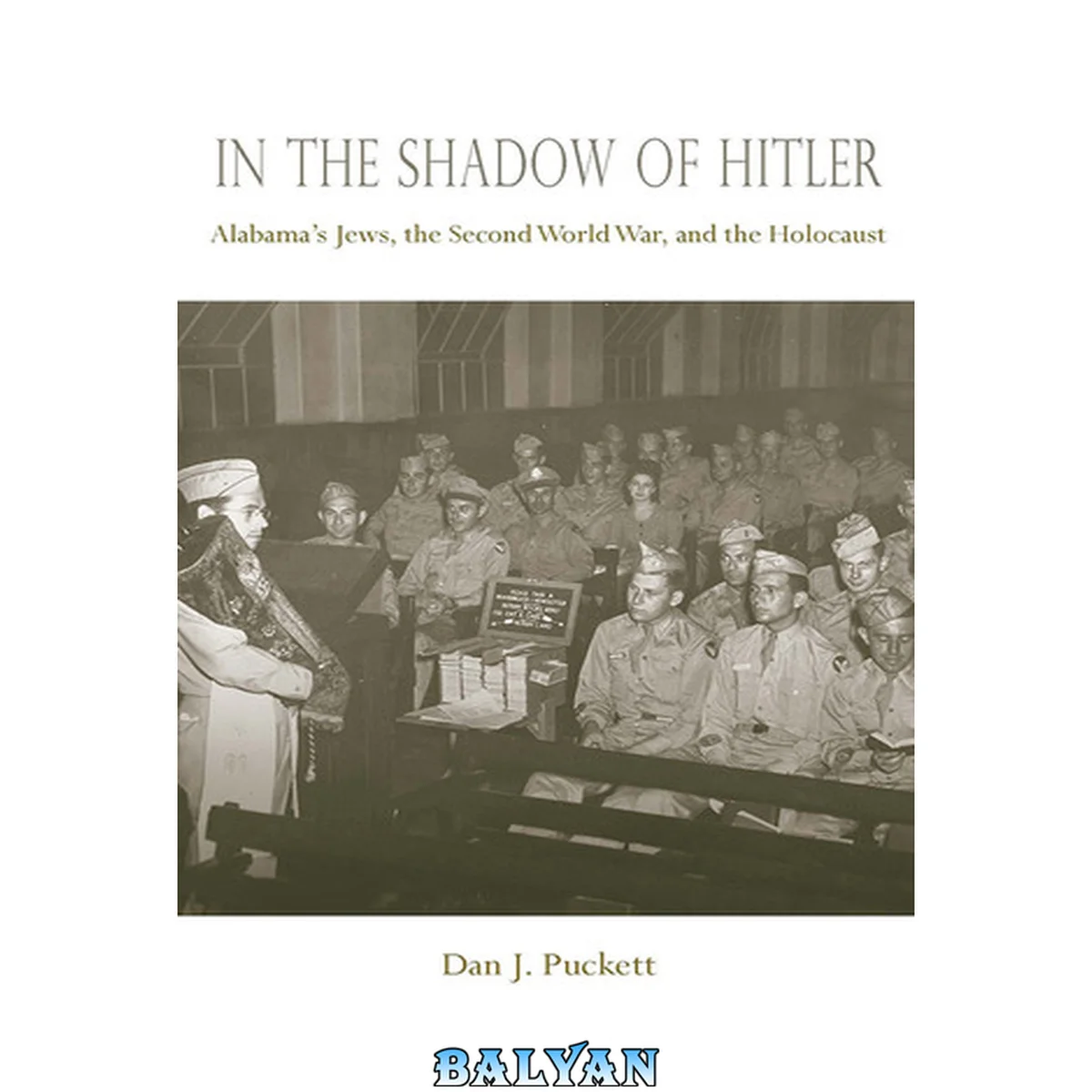
معرفی کتاب «In the Shadow of Hitler: Alabama's Jews, the Second World War, and the Holocaust (The Modern South)» نوشتهٔ Dan J. Puckett، منتشرشده توسط نشر Univ of Alabama Pr (Txt); University Alabama Press در سال 2014. این کتاب در فرمت pdf، زبان انگلیسی ارائه شده است.
__In the Shadow of Hitler__chronicles the experiences of Alabama Jews as they worked to overcome their own divisions in order to aid European Jews before, during, and after the Second World War.In this extensive study of how southern Jews in the United States responded to the Nazi persecution of European Jews, Dan J. Puckett recounts the divisions between Alabama Jews in the early 1930s. As awareness of the horrors of the Holocaust spread, Jews across Alabama from different backgrounds and from Reform, Conservative, and Orthodox traditions worked to bridge their internal divisions in order to mount efforts to save Jewish lives in Europe. Only by leveraging their collective strength were Alabama’s Jews able to sway the opinions of newspaper editors, Christian groups, and the general public as well as lobby local, state, and national political leaders. Puckett’s comprehensive analysis is enlivened and illustrated by true stories that will fascinate all readers of southern history. One such story concerns the Altneuschule Torah of Prague and describes how the Nazis, during their brutal occupation of Czechoslovakia, confiscated 1,564 Torahs and sacred Judaic objects from communities throughout Bohemia and Moravia as exhibits in a planned museum to the extinct Jewish race. Recovered after the war by the Czech Memorial Scrolls Trust, the Altneuschule Torah was acquired in 1982 by the Orthodox congregation Ahavas Chesed of Mobile. Ahavas Chesed re-consecrated the scroll as an Alabama memorial to Czech Jews who perished in Nazi death camps. __In the Shadow of Hitler__illustrates how Alabama’s Jews, in seeking to influence the national and international well-being of Jews, were changed, emerging from the war period with close cultural and religious cooperation that continues today. In the Shadow of Hitler chronicles the experiences of Alabama Jews as they worked to overcome their own divisions in order to aid European Jews before, during, and after the Second World War. In this extensive study of how southern Jews in the United States responded to the Nazi persecution of European Jews, Dan J. Puckett recounts the divisions between Alabama Jews in the early 1930s. As awareness of the horrors of the Holocaust spread, Jews across Alabama from different backgrounds and from Reform, Conservative, and Orthodox traditions worked to bridge their internal divisions in order to mount efforts to save Jewish lives in Europe. Only by leveraging their collective strength were Alabama’s Jews able to sway the opinions of newspaper editors, Christian groups, and the general public as well as lobby local, state, and national political leaders. Puckett’s comprehensive analysis is enlivened and illustrated by true stories that will fascinate all readers of southern history. One such story concerns the Altneuschule Torah of Prague and describes how the Nazis, during their brutal occupation of Czechoslovakia, confiscated 1,564 Torahs and sacred Judaic objects from communities throughout Bohemia and Moravia as exhibits in a planned museum to the extinct Jewish race. Recovered after the war by the Czech Memorial Scrolls Trust, the Altneuschule Torah was acquired in 1982 by the Orthodox congregation Ahavas Chesed of Mobile. Ahavas Chesed re-consecrated the scroll as an Alabama memorial to Czech Jews who perished in Nazi death camps. In the Shadow of Hitler illustrates how Alabama’s Jews, in seeking to influence the national and international well-being of Jews, were changed, emerging from the war period with close cultural and religious cooperation that continues today. A regional study on the impact of antisemitism in the 1930s-50s, and of the Holocaust, on the Jews of Alabama. The struggle against antisemitism and for integration of Jews in the "Deep South" was intertwined with the fight for civil rights for the black population. An upsurge of anti-Jewish feelings amongst the state's white population followed the Scottsboro case of 1931 and the Tuscaloosa case of 1933 - trials in which the defendants were blacks and the defense attorneys were Jews. However, despite evident similarities between Nazi racial antisemitism and the Jim Crow system in the South, Jewish spokesmen avoided criticizing the latter, at least before the Nazi wartime murder of Jews began. The Nazi takeover in Germany in 1933 and the task of aiding European Jews and supporting their admission to the U.S. caused Alabama's Jews to overcome their internal divisions (between Central and Eastern European Jews, and between Reform and Orthodox Jews) and to unite their efforts. Dwells on antisemitism in Alabama during the war, including vicious anti-Jewish agitation by the Catholic priest Arthur Terminiello, and of the preacher Trevor P. Mordecai from the Anglo-Saxon Federation of America, as well as on the Goldman vs. Hicks case of 1941, which had an antisemitic character. In postwar America, World War II was remembered as a "good war"; the Holocaust was not part of its memorialization. The Holocaust remained on the fringes of both Jewish and non-Jewish consciousness in Alabama until the late 1960s. (From the Bibliography of the Vidal Sassoon International Center for the Study of Antisemitism - The Hebrew University of Jerusalem) In the Shadow of Hitler is the first comprehensive state study of how southern Jews-and non-Jews-dealt with the coming of the Good War and the Nazi persecution of European Jews. In 1982, the Orthodox congregation of Ahavas Chesed in Mobile, Alabama, reconsecrated a Torah scroll from the Altneuschule in Prague, Czechoslovakia, that had been seized by the Nazis in the midst of the Holocaust. The Nazis, over the course of their occupation of Czechoslovakia, confiscated from Jewish communities throughout Bohemia and Moravia 1,564 Torahs, among numerous other Judaic ceremonial Contents 8 Acknowledgments 10 Abbreviations 14 Introduction 18 1. Alabama’s Jews and Nazism, 1933–38 36 2. The Refugee Crisis, 1938–41 57 3. Zionism in Alabama, 1933–45 91 4. The Alabama Press, Nazi Antisemitism, and the Holocaust 122 5. The War 148 6. Antisemitism and Racism during the War 202 7. Postwar Alabama 223 Postscript 242 Notes 252 Bibliography 310 Index 330 This is the first comprehensive state study of how southern Jews-and non-Jews-dealt with the coming of the Good War and the Nazi persecution of European Jews. Dan J. Puckett examines the Jews of Alabama and shows that they were fully aware of events that affected Jews both nationally and internationally.
دانلود کتاب In the Shadow of Hitler: Alabama's Jews, the Second World War, and the Holocaust (The Modern South)