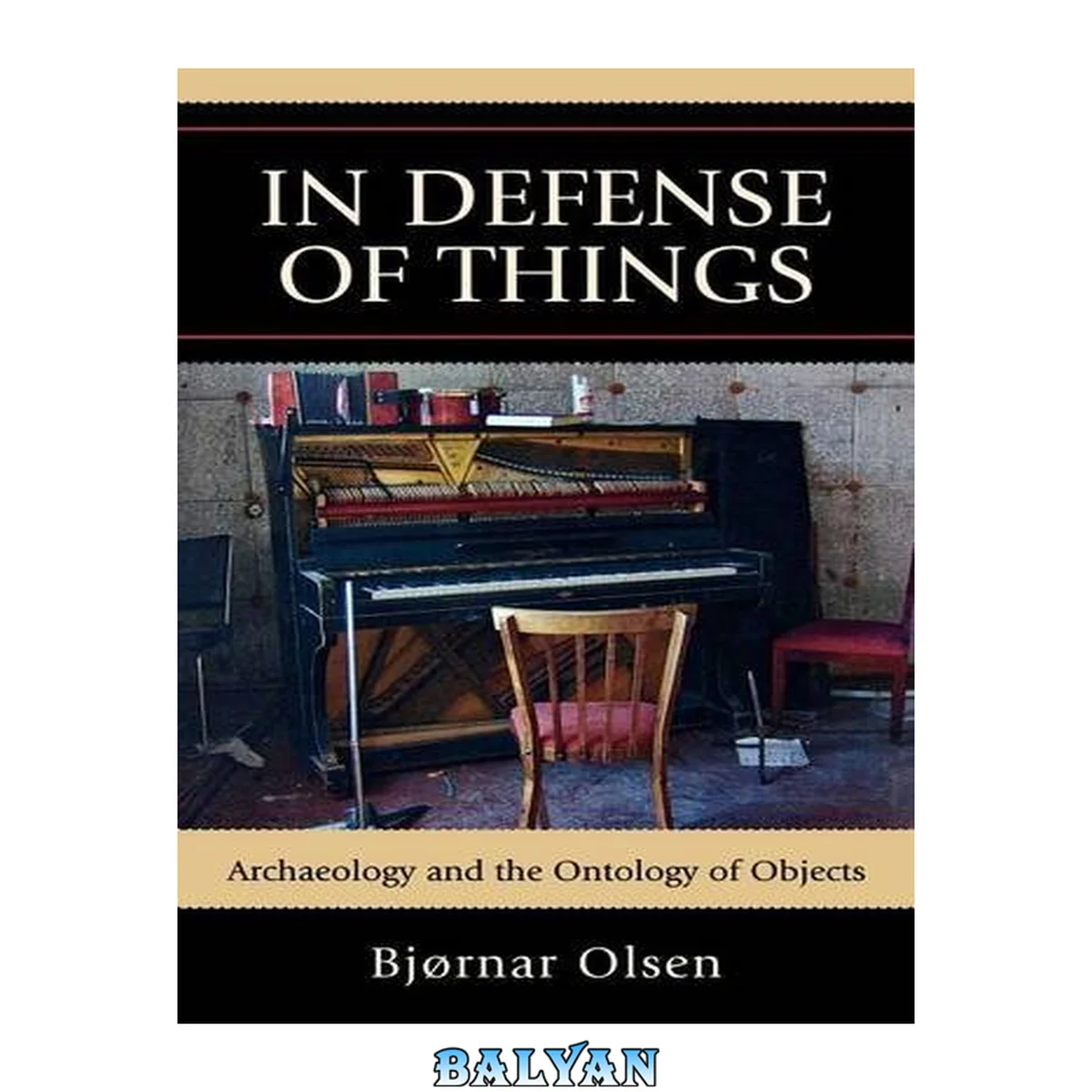
معرفی کتاب «In Defense of Things: Archaeology and the Ontology of Objects (Archaeology in Society)» نوشتهٔ Spark، Muriel و Bjornar Olsen، منتشرشده توسط نشر AltaMira Press در سال 2010. این کتاب در فرمت pdf، زبان انگلیسی ارائه شده است.
In much recent thinking, social and cultural realms are thought of as existing prior to―or detached from―things, materiality, and landscape. It is often assumed, for example, that things are entirely 'constructed' by social or cultural perceptions and have no existence in and of themselves. Bjornar Olsen takes a different position. Drawing on a range of theories, especially phenomenology and actor-network-theory, Olsen claims that human life is fully mixed up with things and that humanity and human history emerge from such relationships. Things, moreover, possess unique qualities that are inherent in our cohabitation with them―qualities that help to facilitate existential security and memory of the past. This important work of archaeological theory challenges us to reconsider our ideas about the nature of things, past and present, demonstrating that objects themselves possess a dynamic presence that we must take into account if we are to understand the world we and they inhabit. ""This excellent book by Bjrnar Olsen provides us with the best critical survey of material culture studies currently available. He also shows how writing about th̀ings' from an archaeological perspective makes new theoretical contributions."--Michael Rowlands, University College London" ""Since the emergence of'material culture studies' in the 1980s, there has been a growing need for a more fundamental rethinking of the nature of material things. This excellent book is one of the most sustained and sophisticated attempts to grapple with the problems of the tangible world, and it is to be unreservedly recommended."--Julian Thomas, University of Manchester" "In much recent thinking, social and cultural realms are thought of as existing prior to--or detached from--the material world. It is often assumed, for example, that things are entirely "constructed" by social or cultural perceptions and have no meaningful existence in and of themselves. Bjrnar Olsen takes a different position. Drawing on a range of theories, especially phenomenology and actor-network theory, Olsen claims that human life is fully mixed up with things and that humanity and human history emerge from such relationships. Things, moreover, possess unique qualities that they bring to our cohabitation with them--qualities that also help to facilitate our existential security and memory of the past. This important work challenges us to reconsider our ideas about the nature of things, past and present, demonstrating that objects themselves possess a dynamic presence that we must take into account if we are to understand the world we and they inhabit."--BOOK JACKET
In much recent thinking, social and cultural realms are thought of as existing prior to-or detached from-the material world. It is often assumed, for example, that things are entirely "constructed" by social or cultural perceptions and have no meaningful existence in and of themselves. Bjørnar Olsen takes a different position. Drawing on a range of theories, especially phenomenology and actor-network theory, Olsen claims that human life is fully mixed up with things and that humanity and human history emerge from such relationships. Things, moreover, possess unique qualities that they bring to our cohabitation with them-qualities that also help to facilitate our existential security and memory of the past. This important work challenges us to reconsider our ideas about the nature of things, past and present, demonstrating that objects themselves possess a dynamic presence that we must take into account if we are to understand the world we and they inhabit.
Brothers in arms? : archaeology and material culture studies Material culture as text : scenes from a troubled engagement The phenomenology of things Tacit matter : the silencing of things Temporality and memory : how things remember Living with things : matter in place In defense of things. This important work of archaeological theory challenges us to reconsider our ideas about the nature of things, past and present, arguing that objects themselves possess a dynamic presence that we must take into account if we are to understand the world we and they inhabit.