I, Robot (The Robot Series)
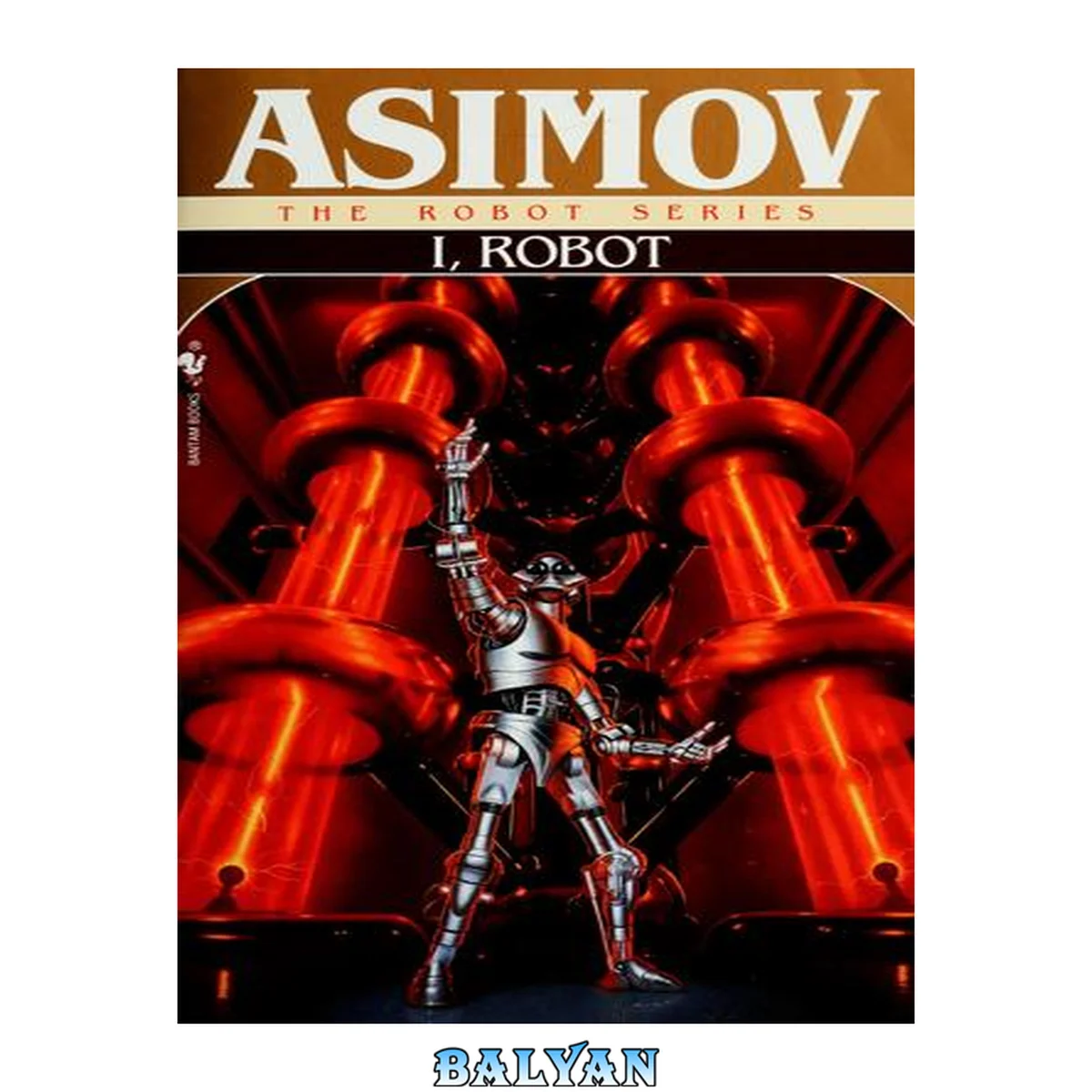
معرفی کتاب «I, Robot (The Robot Series)» نوشتهٔ Amy Ireland، Maya B. Kronic و Asimov, Isaac، منتشرشده توسط نشر Bantam Books; Spectra در سال 1991. این کتاب در فرمت epub، زبان انگلیسی ارائه شده است.
The three laws of Robotics:1) A robot may not injure a human being or, through inaction, allow a human being to come to harm.2) A robot must obey orders given to it by human beings except where such orders would conflict with the First Law.3) A robot must protect its own existence as long as such protection does not conflict with the First or Second Law.With these three, simple directives, Isaac Asimov changed our perception of robots forever when he formulated the laws governing their behavior. In I, Robot, Asimov chronicles the development of the robot through a series of interlinked stories: from its primitive origins in the present to its ultimate perfection in the not-so-distant future--a future in which humanity itself may be rendered obsolete.Contents: vii • Introduction (I, Robot) • (1950) • short story by Isaac Asimov1 • Robbie • (1940) • short story by Isaac Asimov (variant of Strange Playfellow)30 • Runaround • [Mike Donovan] • (1942) • novelette by Isaac Asimov56 • Reason • [Mike Donovan] • (1941) • short story by Isaac Asimov82 • Catch That Rabbit • [Mike Donovan] • (1944) • short story by Isaac Asimov111 • Liar! • [Susan Calvin] • (1941) • short story by Isaac Asimov136 • Little Lost Robot • [Susan Calvin] • (1947) • novelette by Isaac Asimov174 • Escape! • [Susan Calvin] • (1945) • short story by Isaac Asimov206 • Evidence • [Susan Calvin] • (1946) • novelette by Isaac Asimov240 • The Evitable Conflict • [Susan Calvin] • (1950) • novelette by Isaac Asimov Isaac Asimov's I, Robot launches readers on an adventure into a not-so-distant future where man and machine , struggle to redefinelife, love, and consciousness—and where the stakes are nothing less than survival. Filled with unforgettable characters, mind-bending speculation, and nonstop action, I, Robot is a powerful reading experience from one of the master storytellers of our time. I, ROBOT They mustn't harm a human being, they must obey hitman orders, and they must protect their own existence...but only so long as that doesn't violate rules one and two. With these Three Laws of Robotics, humanity embarked on perhaps its greatest adventure: the invention of the first positronic man. It was a bold new era of evolution that would open up enormous possibilities—and unforeseen risks. For the scientists who invented the earliest robots weren't content that their creations should ' remain programmed helpers, companions, and semisentient worker-machines. And soon the robots themselves; aware of their own intelligence, power, and humanity, aren't either. As humans and robots struggle to survive together—and sometimes against each other—on earth and in space, the future of both hangs in the balance. Human men and women confront robots gone mad, telepathic robots, robot politicians, and vast robotic intelligences that may already secretly control the world. And both are asking the same questions: What is human? And is humanity obsolete? In l, Robot Isaac Asimov changes forever our perception of robots, and human beings and updates the timeless myth of man's dream to play god. with all its rewards—and terrors. --front flap Isaac Asimov's I, Robot launches readers on an adventure into a not-so-distant future where man and machine , struggle to redefinelife, love, and consciousnessand where the stakes are nothing less than survival. Filled with unforgettable characters, mind-bending speculation, and nonstop action, I, Robot is a powerful reading experience from one of the master storytellers of our time. I, ROBOT They mustn't harm a human being, they must obey human orders, and they must protect their own existence...but only so long as that doesn't violate rules one and two. With these Three Laws of Robotics, humanity embarked on perhaps its greatest adventure: the invention of the first positronic man. It was a bold new era of evolution that would open up enormous possibilitiesand unforeseen risks. For the scientists who invented the earliest robots weren't content that their creations should ' remain programmed helpers, companions, and semisentient worker-machines. And soon the robots themselves; aware of their own intelligence, power, and humanity, aren't either. As humans and robots struggle to survive togetherand sometimes against each otheron earth and in space, the future of both hangs in the balance. Human men and women confront robots gone mad, telepathic robots, robot politicians, and vast robotic intelligences that may already secretly control the world. And both are asking the same questions: What is human? And is humanity obsolete? In l, Robot Isaac Asimov changes forever our perception of robots, and human beings and updates the timeless myth of man's dream to play god. with all its rewardsand terrors. --front flap The three laws of Robotics: 1) A robot may not injure a human being or, through inaction, allow a human being to come to harm 2) A robot must obey orders given to it by human beings except where such orders would conflict with the First Law. 3) A robot must protect its own existence as long as such protection does not conflict with the First or Second Law. With these three, simple directives, Isaac Asimov changed our perception of robots forever when he formulated the laws governing their behavior. In I, Robot, Asimov chronicles the development of the robot through a series of interlinked stories: from its primitive origins in the present to its ultimate perfection in the not-so-distant future--a future in which humanity itself may be rendered obsolete. Here are stories of robots gone mad, of mind-reading robots, and robots with a sense of humor. Of robot politicians, and robots who secretly run the world--all told with the dramatic blend of science fact and science fiction that has become Asmiov's trademark I, Robot is a fixup novel of science fiction short stories or essays by American writer Isaac Asimov. The stories originally appeared in the American magazines Super Science Stories and Astounding Science Fiction between 1940 and 1950 and were then compiled into a book for stand-alone publication by Gnome Press in 1950, in an initial edition of 5,000 copies. The stories are woven together by a framing narrative in which the fictional Dr. Susan Calvin tells each story to a reporter (who serves as the narrator) in the 21st century. Although the stories can be read separately, they share a theme of the interaction of humans, robots, and morality, and when combined they tell a larger story of Asimov's fictional history of robotics. ---------- Contains: "Introduction" "Robbie" (1940, 1950) "Runaround" (1942) "Reason" (1941) "Catch That Rabbit" (1944) "Liar!" (1941) "Little Lost Robot" (1947) "Escape!" (1945) "Evidence" (1946) "The Evitable Conflict" (1950) In a brilliant, chilling series of nine related short stories, the author chronicles robot development from its crude mid-twentieth century beginnings to a state of such perfection that a hundred years later robots are running man's world for his own good. Dr. Asimov has endowed his mechanical creations with disarmingly human personalities -- from Robbie, the beloved, mute nursemaid of an eight-year-old girl, to Stephen Byerley who was elected first World Co-ordinator
دانلود کتاب I, Robot (The Robot Series)
In this collection, one of the great classics of science fiction, Asimov set out the principles of robot behavior that we know as the Three Laws of Robotics. Here are stories of robots gone mad, mind-reading robots, robots with a sense of humor, robot politicians, and robots who secretly run the world, all told with Asimov's trademark dramatic blend of science fact and science fiction.