Human spaceflight operations : lessons learned from 60 years in space
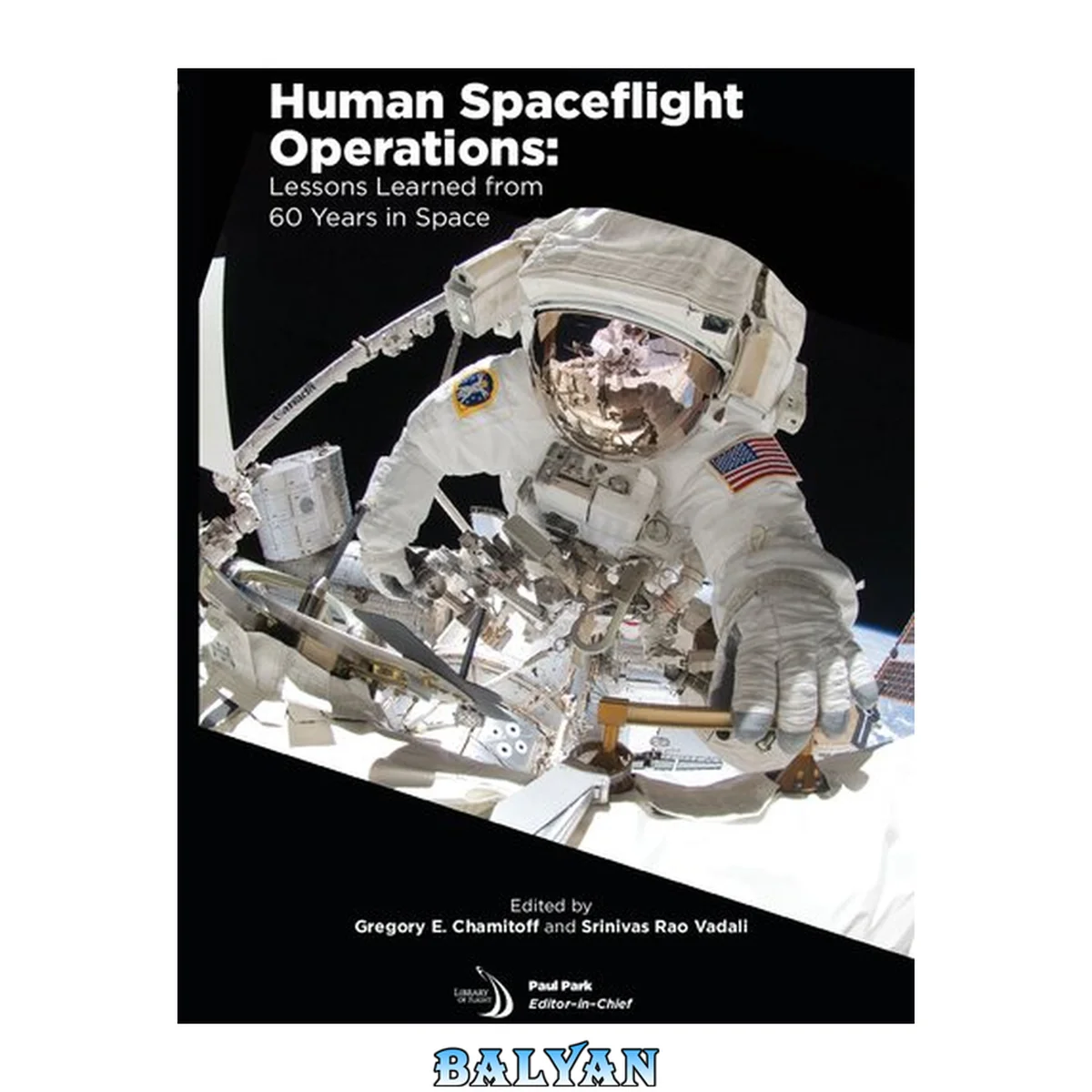
معرفی کتاب «Human spaceflight operations : lessons learned from 60 years in space» نوشتهٔ Gregory Errol Chamitoff, Srinivas Rao Vadali، منتشرشده توسط نشر American Institute of Aeronautics and Astronautics در سال 2021. این کتاب در فرمت pdf، زبان انگلیسی ارائه شده است.
The purpose of Human Spaceflight Operations: Lessons Learned from 60 Years in Space is to share collective experience on human spaceflight operations. For the many authors, this is nothing less than a work of passion. They are sharing their life s work with the goal of passing on their experience to the next generation of space engineers, designers, operators, and crew. The lessons learned are applicable to anyone working in the space industry as part of a current or future national or international space program, private space enterprise, human, or robotic mission. The book s chapters cover the primary technical disciplines related to spaceflight operations. In each case, the essential concepts and evolution of the systems and technology are discussed in some detail, but the focus is on how spaceflight operations are performed. Lessons learned are derived from incidents that occurred during actual space missions. Some of these lessons are explained directly by the astronauts who experienced them firsthand. This is not a book on space mission design, of which there are many. The aim is to shine light on the subject of space operations, as distinct from engineering design. However, the most important lesson is perhaps that operational requirements must be considered very carefully in the design process. The subjects covered are wide ranging, but all within the scope of human space mission operations. There are many other space-related lessons learned beyond operations political, financial, managerial, and these can be found in some of the references provided. It is the hope of the authors that through the process of explaining how things really work in Space and Mission Control, future missions can benefit from the experience (and mistakes) of so many pioneers that have come before. Cover Half Title Title Page Copyright Page Contents Preface Foreword Acknowledgments Chapter 1: Introduction Importance of Lessons Learned Evolution of Human Spaceflight Operations Engineering & Operations in Human Spaceflight 60 Years of Spaceflight Experience Chapter 2: Mission Integration and Execution Mission Operations Culture of Mission Operations Inside the Flight Control Room Flight Control Methods Cultural Integration Fundamentals of Flight Operations Human Factors Spaceflight Resource Management (SFRM) Team Interactions Failure Modes and Redundancy Final Considerations for the Next Mission Control References Chapter 3: Mission Engineering The Evolution of Mission Engineering Characteristics of Mission Engineering Functional Questions Time Frames of Mission Engineering Levels of Awareness for Mission Engineering The Future Evolution of Mission Engineering Lessons Learned from Mission Engineering Conclusions Acknowledgment References Chapter 4: Space-Based Power Systems Power in Space International Space Station Power Operations System Interactions Practical Examples and Case Studies References Chapter 5: Environmental Control and Life Support Systems The Evolution of Life Support Systems The Crew Atmosphere Control and Supply (ACS) Atmosphere Revitalization (AR) Fire Detection and Suppression (FDS) Temperature and Humidity Control (THC) Water Recovery and Management (WRM) Regenerative Life Support Emergencies References Chapter 6: Command, Control and Communication Space Communications Command and Data Handling “The Brains” Between Communications Links Crew Control, Monitoring and Interface to the CDH System Space Communications Lessons Learned During ISS Assembly and Operations The Future of C.3 References Chapter 7: Thermal Control Systems The Thermal Environment of Space Thermal Control: Background Theory Elements of a Spacecraft Thermal Control System Operations—Mission Control Center (MCC) and On-orbit System Repressurization System Interactions Failure Modes/Redundancy Practical Examples and Case Studies References Chapter 8: Trajectory Design and Operations Trajectory Design and Operations Basic Orbital Mechanics Building Blocks of Trajectory Operations Fly the Mission: The Plan . Train . Fly Model Lessons to Take Forward Acknowledgments References Chapter 9: Guidance, Navigation, Control and Propulsion GNC Overview Navigation Guidance Entry Entry Guidance Soyuz Entry Control Propulsion Systems Conclusion: GNC/P Lessons for Future Spacecraft References Chapter 10: Extravehicular Activity Extravehicular Activity: The Big Picture Spacesuits Critical Support Systems EVA Tools and Equipment Training Facilities and Development New Challenges for the Spacewalks of the Future References Chapter 11: Space Robotics Types of Space Robotics Robotics Design Principles of Space Manipulators Failure Management and Response Operational Considerations and Tools ISS Robotic Operations Team Coordination Training Short Duration Missions Future Operations References Chapter 12: Science and Payload Operations Payload Operations Skylab and Spacelab—Precursors to ISS ISS Timeline—From the Perspective of Payload Operations ISS, A One-of-a-Kind Research Facility What Types of Facilities Support Science Onboard ISS? ISS Utilization Payload Operations Integration Payload Operations Lessons Learned Science and Research Operations in the Future Acknowledgments References Chapter 13: Spaceflight Medical Operations Space Medicine The Astronaut Space Physiology Medical Aspects of Spacewalking (EVA) The Suit vs Astronaut Physiology of Return to Gravity Historical Medical Events Medical Event Preparedness Where Do We Go from Here? Acknowledgments References Chapter 14: Mission Planning Overview of Mission Planning Team Dynamics History of Mission Planning Mission Planning A Day in the Life of ISS Mission Planning Lessons Learned The Future of Mission Planning Acknowledgment References Chapter 15: Mission Safety Spaceflight is not Safe Definition of Safety and Risk Studying Abnormal Events and Lessons Learned Responses to Perceived Risk Response #1—Engineering Changes Response #2—Revised Regulation Response #3—Improving Human Behavior Response #4—Improving Organizational Structure Where is Human Spaceflight Now? Recommendations for Future Human Spaceflight Operations References Chapter 16: Spacecraft Processing and Launch Operations Evolution of the Kennedy Space Center Space Shuttle Operations The Space Station Processing Facility (SSPF) Launch Pad Workflow Landing Operations A Spaceport for the Future Closing Remarks References Chapter 17: Astronaut Operations Astronaut History Spaceflight Training Dynamic Flight Living and Working in Space Lessons Learned for Future Missions References Epilogue Appendix A: Homework Problems Appendix B: About the Authors Index "The purpose of 'Human spaceflight operations : lessons learned from 60 years in space' is to share collective experience on human spaceflight operations. The lessons learned are applicable to anyone working in the space industry as part of a current or future national or international space program, private space enterprise, human, or robotic mission. The book's chapters cover the primary technical disciplines related to spaceflight operations. In each case, the essential concepts and evolution of the systems and technology are discussed in some detail, but the focus is on how spaceflight operations are performed. Lessons learned are derived from incidents that occurred during actual space missions. Some of these lessons are explained directly by the astronauts who experienced them firsthand"-- Provided by publisher
دانلود کتاب Human spaceflight operations : lessons learned from 60 years in space