Huế 1968: A Turning Point of the American War in Vietnam
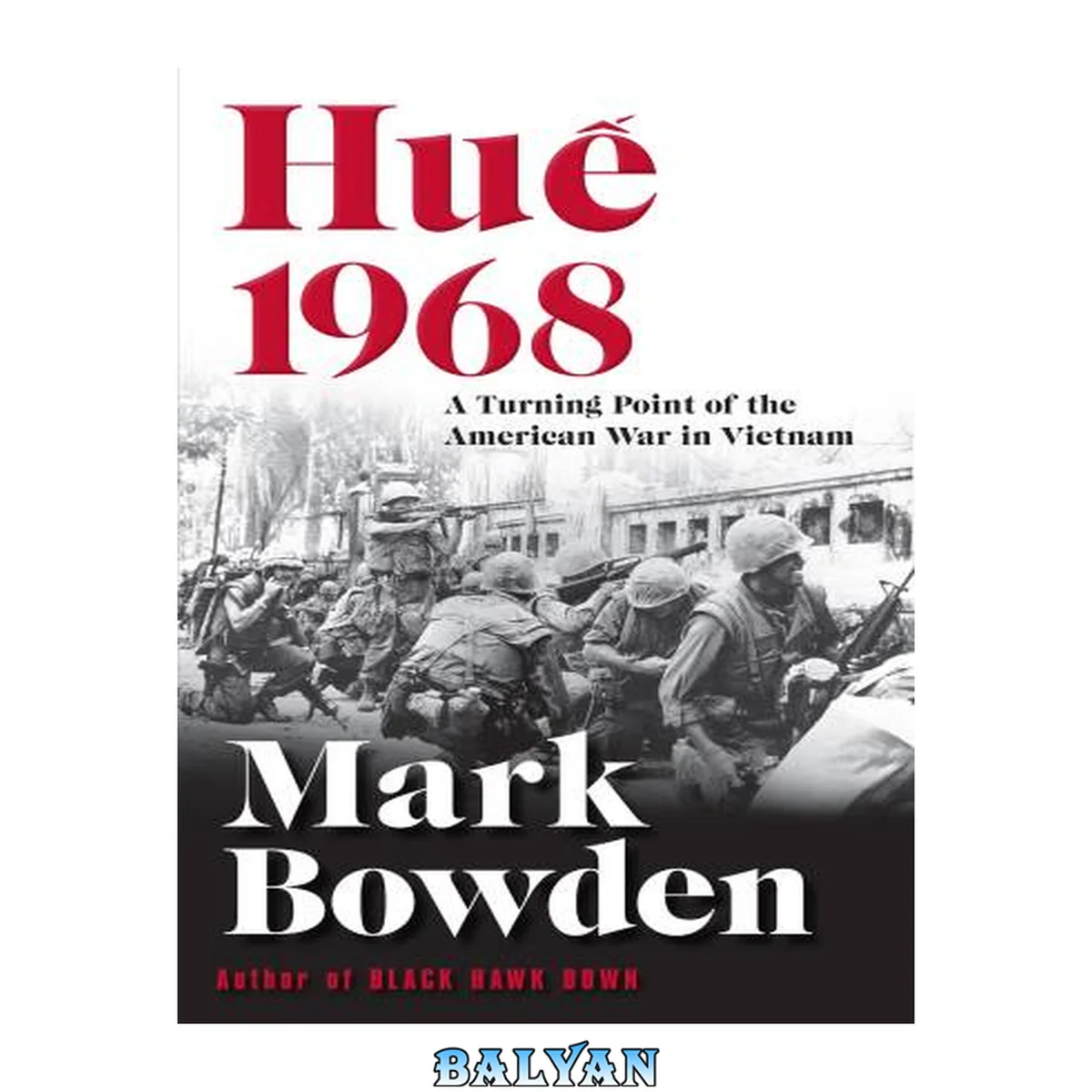
معرفی کتاب «Huế 1968: A Turning Point of the American War in Vietnam» نوشتهٔ Jaegwon Kim و Bowden, Mark، منتشرشده توسط نشر Atlantic Monthly Press;Grove Atlantic در سال 2017. این کتاب در فرمت epub، زبان انگلیسی ارائه شده است.
A Los Angeles Times Book Prize Finalist in History
Winner of the 2018 Marine Corps Heritage Foundation Greene Award for a distinguished work of nonfiction
"An extraordinary feat of journalism . . . full of emotion and color."—Karl Marlantes, Wall Street Journal
The first battle book from Mark Bowden since his #1 New York Times bestseller Black Hawk Down, Hue 1968 is the story of the centerpiece of the Tet Offensive and a turning point in the American War in Vietnam.In the early hours of January 31, 1968, the North Vietnamese launched over one hundred attacks across South Vietnam in what would become known as the Tet Offensive. The lynchpin of Tet was the capture of Hue, Vietnam?s intellectual and cultural capital, by 10,000 National Liberation Front troops who descended from hidden camps and surged across the city of 140,000. Within hours the entire city was in their hands save for two small military outposts. American commanders refused to believe the size and scope of the Front?s presence, ordering small companies of marines against thousands of entrenched enemy troops. After several futile and deadly days, Lieutenant Colonel Ernie Cheatham would finally come up with a strategy to retake the city, block by block and building by building, in some of the most intense urban combat since World War II.
With unprecedented access to war archives in the U.S. and Vietnam and interviews with participants from both sides, Bowden narrates each stage of this crucial battle through multiple viewpoints. Played out over 24 days and ultimately costing 10,000 lives, the Battle of Hue was by far the bloodiest of the entire war. When it ended, the American debate was never again about winning, only about how to leave. Hue 1968 is a gripping and moving account of this pivotal moment. In mid-1967, the North Vietnam leadership had started planning an offensive intended to win the war in a single stroke. Part military action and part popular uprising, the effort included attacks across South Vietnam, but the most dramatic and successful would be the capture of Huế, the country's intellectual and cultural capital. At 2:30 a.m. on January 31, the first day of the Lunar New Year (called Tet), ten thousand National Liberation Front troops descended from hidden camps and -- led by locals like eighteen-year-old village girl and Viet Cong member Che Thi Mung -- surged across the city of 140,000. By morning, all of Huế was in Front hands save for two small military outposts. The American commanders in country and politicians in Washington refused to believe the size and scope of the Front's presence. Captain Chuck Meadows was ordered to lead his 160-marine Golf Company in the first attempt to reenter Huế later that day. Facing thousands of entrenched enemy troops, he reported: "We are outgunned and outmanned." After several futile and deadly days, Lieutenant Colonel Ernie Cheatham would finally come up with a strategy to retake the city, block by block and building by building, in some of the most intense urban combat since World War II. With unprecedented access to war archives in the United States and Vietnam and interviews with participants from both sides, Bowden narrates each stage of this crucial battle through multiple points of view. Played out over twenty-four days of terrible fighting and ultimately costing more than ten thousand combatant and civilian lives, the Battle of Hue was by far the bloodiest of the entire war. When it ended, the American debate over the war was never again about winning, only about how to leave In mid-1967, the North Vietnam leadership had started planning an offensive intended to win the war in a single stroke. Part military action and part popular uprising, the effort included attacks across South Vietnam, but the most dramatic and successful would be the capture of Hue^, the country's intellectual and cultural capital. At 2:30 a.m. on January 31, the first day of the Lunar New Year (called Tet), ten thousand National Liberation Front troops descended from hidden camps and -- led by locals like eighteen-year-old village girl and Viet Cong member Che Thi Mung -- surged across the city of 140,000. By morning, all of Hue^ was in Front hands save for two small military outposts. The American commanders in country and politicians in Washington refused to believe the size and scope of the Front's presence. Captain Chuck Meadows was ordered to lead his 160-marine Golf Company in the first attempt to reenter Hue^ later that day. Facing thousands of entrenched enemy troops, he reported: "We are outgunned and outmanned." After several futile and deadly days, Lieutenant Colonel Ernie Cheatham would finally come up with a strategy to retake the city, block by block and building by building, in some of the most intense urban combat since World War II. With unprecedented access to war archives in the United States and Vietnam and interviews with participants from both sides, Bowden narrates each stage of this crucial battle through multiple points of view. Played out over twenty-four days of terrible fighting and ultimately costing more than ten thousand combatant and civilian lives, the Battle of Hue was by far the bloodiest of the entire war. When it ended, the American debate over the war was never again about winning, only about how to leave "An extraordinary feat of journalism ... full of emotion and color."--Karl Marlantes, Wall Street Journal The first battle book from Mark Bowden since his #1 New York Times bestseller Black Hawk Down, Hue 1968 is the story of the centerpiece of the Tet Offensive and a turning point in the American War in Vietnam. In the early hours of January 31, 1968, the North Vietnamese launched over one hundred attacks across South Vietnam in what would become known as the Tet Offensive. The lynchpin of Tet was the capture of Hue, Vietnam's intellectual and cultural capital, by 10,000 National Liberation Front troops who descended from hidden camps and surged across the city of 140,000. Within hours the entire city was in their hands save for two small military outposts. American commanders refused to believe the size and scope of the Front's presence, ordering small companies of marines against thousands of entrenched enemy troops. After several futile and deadly days, Lieutenant Colonel Ernie Cheatham would finally come up with a strategy to retake the city, block by block and building by building, in some of the most intense urban combat since World War II. With unprecedented access to war archives in the U.S. and Vietnam and interviews with participants from both sides, Bowden narrates each stage of this crucial battle through multiple viewpoints. Played out over 24 days and ultimately costing 10,000 lives, the Battle of Hue was by far the bloodiest of the entire war. When it ended, the American debate was never again about winning, only about how to leave. Hue 1968 is a gripping and moving account of this pivotal moment The author of Black Hawk Down vividly recounts a pivotal Vietnam War battle in this New York Times bestseller: "An extraordinary feat of journalism". —Karl Marlantes, Wall Street Journal In Hue 1968 , Mark Bowden presents a detailed, day-by-day reconstruction of the most critical battle of the Tet Offensive. In the early hours of January 31, 1968, the North Vietnamese launched attacks across South Vietnam. The lynchpin of this campaign was the capture of Hue, Vietnam's intellectual and cultural capital. 10,000 troops descended from hidden camps and surged across the city, taking everything but two small military outposts. American commanders refused to believe the size and scope of the siege, ordering small companies of marines against thousands of entrenched enemy troops. After several futile and deadly days, Lieutenant Colonel Ernie Cheatham would finally come up with a strategy to retake the city block by block, in some of the most intense urban combat since World War II. With unprecedented access to war archives in the United States and Vietnam and interviews with participants from both sides, Bowden narrates each stage of this crucial battle through multiple viewpoints. Played out over 24 days and ultimately costing 10,000 lives, the Battle of Hue was by far the bloodiest of the entire war. When it ended, the American debate was never again about winning, only about how to leave. A Los Angeles Times Book Prize Finalist in History Winner of the 2018 Marine Corps Heritage Foundation Greene Award for a distinguished work of nonfiction By January 1968, despite an influx of half a million American troops, the fighting in Vietnam seemed to be at a stalemate.Yet General William Westmoreland, commander of American forces, announced a new phase of the war in which 'the end begins to come into view.' The North Vietnamese had different ideas. In mid-1967, the leadership in Hanoi had started planning an offensive intended to win the war in a single stroke. Part military action and part popular uprising, the Tet Offensive included attacks across South Vietnam, but the most dramatic and successful would be the capture of Hue, the country's cultural capital. At 2:30 a.m. on January 31, 10,000 National Liberation Front troops descended from hidden camps and surged across the city of 140,000. By morning, all of Hue was in Front hands save for two small military outposts. With unprecedented access to war archives in the U.S. and Vietnam and interviews with participants from both sides, Bowden narrates each stage of this crucial battle through multiple points of view. Played out over twenty-four days of terrible fighting and ultimately costing 10,000 combatant and civilian lives, the Battle of Hue was by far the bloodiest of the entire war. When it ended, the American debate was never again about winning, only about how to leave. In__Hue 1968__, Bowden masterfully reconstructs this pivotal moment in the American war in Vietnam. Interviews With Participants From Both Sides Of The Conflict And Materials From Vietnamese And American Archives Provide Multiple Points Of View On Each Stage Of The Battle Of Hue. The Infiltration -- The Fall Of Huế -- Futility And Denial -- Counterattack In The Triangle And Disaster At La Chu -- Sweeping The Triangle -- Taking Back The Citadel. Mark Bowden. Includes Bibliographical References. The infiltration The fall of Hûé Futility and denial Counterattack in the Triangle and disaster at La Chu Sweeping the Triangle Taking back the Citadel.