Hitler’s Air Bridges: The Luftwaffe’s Supply Operations of the Second World War
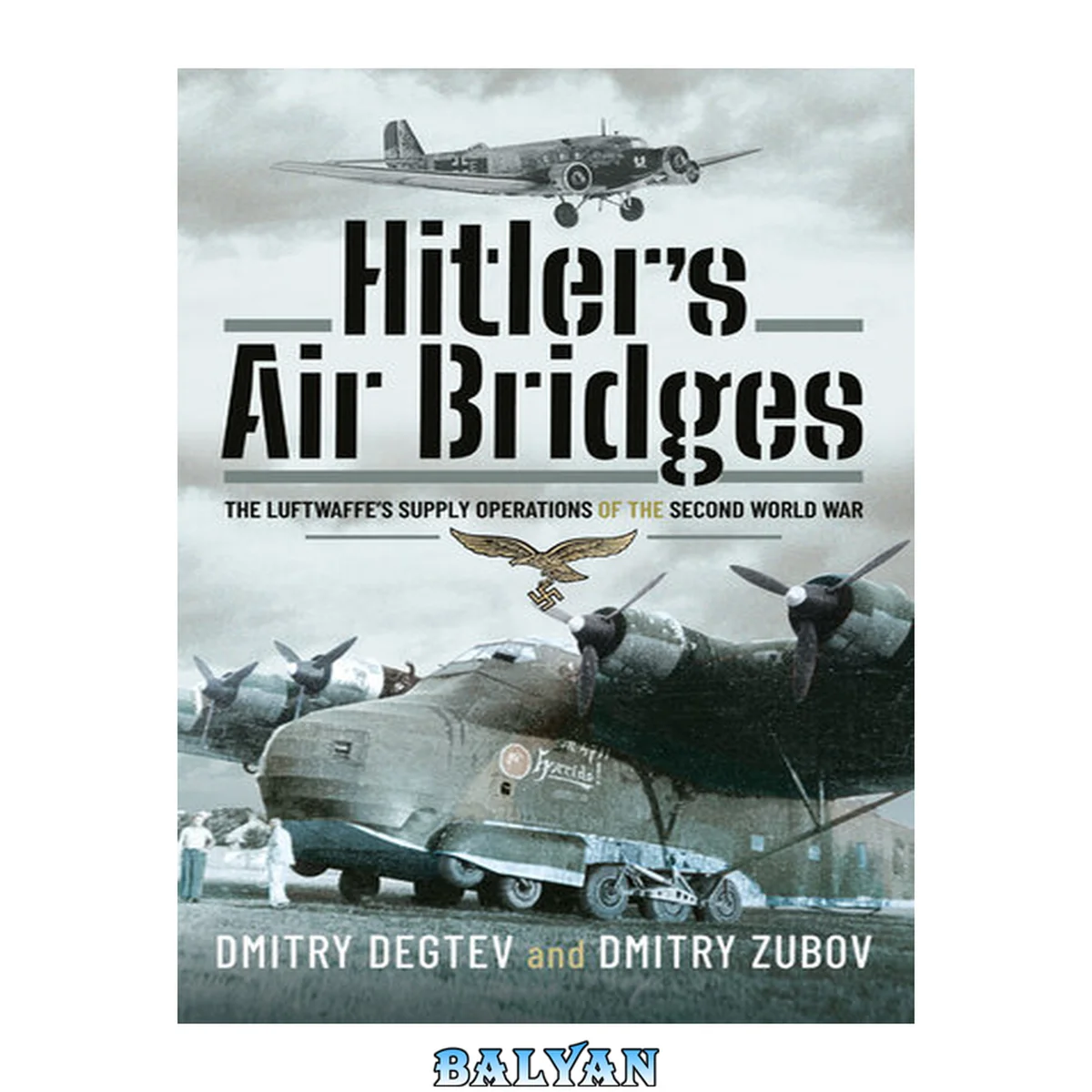
معرفی کتاب «Hitler’s Air Bridges: The Luftwaffe’s Supply Operations of the Second World War» نوشتهٔ Teng Shou-hsin و Dmitry Degtev; Dmitry Zubov، منتشرشده توسط نشر Air World در سال 2022. این کتاب در فرمت epub، زبان انگلیسی ارائه شده است.
Much has been written about the famous fighters and bombers of the Luftwaffe which proved so successful in the invasion of Poland, the Battle of France, the Battle of Britain and in the early operations in Eastern Europe. Little attention, however, has been focused on the Luftwaffe's transport aircraft which played a vital role in supplying German forces in every theatre. In early May 1940, the battle of Norway was nearing its climax, but General Eduard Dietl's 3rd Jäger division was blocked by the Allies in the Narvik area. Only the Luftwaffe could provide effective assistance to the encircled troops. The special purpose groups KGr.zbV107 and KGr.zbV108 were ordered to supply the division by air. Transports delivered ammunition, food, and even boots for German sailors who found themselves on land. This was the first of a number of occasions in which the Luftwaffe's transport Gruppen, often equipped with the slow, but reliable Junkers 52, created an 'air bridge' to supply troops cut off or surrounded by the enemy. The transport Gruppen had previously been involved in supporting the advance of German forces during the Polish campaign, this being followed by the capture of Denmark, The Netherlands, Belgium, and Greece. During Operation Barbarossa, German troops were dispersed over the vast expanses of Russia. It was a country without roads where the normal supply by trucks and trains to the troops was difficult and sometimes impossible. Often, it was only the Luftwaffe's transport aircraft that kept the Germans fighting. But with Hitler's insistence that there should be no retreat despite the overwhelming strength of the Soviet forces, his Germans armies found themselves surrounded and the Luftwaffe had to create air bridges to supply the beleaguered troops. Nowhere was this more evident than the Battle of Stalingrad, Göring having convinced Hitler that the Luftwaffe was capable of keeping the Sixth Army supplied. As the war increasingly turned against the Third Reich, air bridges were vital in supporting and maintaining its garrisons in places such as Demyansk, Holm, Korsun, Budapest, Breslau, and many others. Hitler's Air Bridges presents the story of the Luftwaffe's transport Gruppen more extensively and in greater detail than ever before. A former fighter pilot chronicles his career flying for the Royal Air Force for over four decades in this action-packed memoir. For forty-four years, Clive Rowley flew with the Royal Air Force, and for thirty-one of those years he specialized as an air defense fighter pilot. Such was his love of fast fighter aircraft that, in order to stay flying, he transferred to Specialist Aircrew terms of service, relinquishing any chance of further promotion above his rank of squadron leader. During those years Clive flew Lightnings, Hawks, and Tornado F.3s but, perhaps more intriguingly, for eleven years he flew Hurricanes and Spitfires with the Battle of Britain Memorial Flight (BBMF), the RAF's, if not the world's most famous “warbird” display team, which he ultimately led and commanded. Many readers will have watched him, perhaps unknowingly, as he flew these iconic aircraft, often alongside the Lancaster, at air shows and large-scale commemorations around the UK and Europe. During the Cold War, Clive flew the BAC Lightning from Gütersloh in Germany and in the UK, becoming an expert in the art of air combat in the process. Then for sixteen years he flew the Tornado F.3 as the RAF moved into expeditionary operations. Packed with humorous and often hair-raising anecdotes, but also revealing the shock and sorrow he felt at the deaths of friends and colleagues, this book is a highly detailed account of life as a fighter pilot in the RAF in the last three decades of the twentieth century and into the twenty-first. Clive is open about the fears he sometimes felt in this dangerous world and how he allayed them to continue flying for more than four decades. This book is illustrated with wonderful photographs from his time on the front line as well as with the BBMF, many of which have never been published before. If you have ever wondered what it is like to fly supersonic jet fighters, like the Lightning and the Tornado F.3, or iconic “warbirds,” such as the Hurricane and Spitfire, Clive Rowley brings you into those cockpits and shares his experiences. For forty-four years, Clive Rowley flew with the Royal Air Force and for thirty-one of those years he specialised as an air defence fighter pilot. Such was his love of fast fighter aircraft that, in order to stay flying, he transferred to Specialist Aircrew terms of service, relinquishing any chance of further promotion above his rank of squadron leader. During those years Clive flew Lightnings, Hawks and Tornado F.3s but, perhaps more intriguingly, for eleven years he flew Hurricanes and Spitfires with the Battle of Britain Memorial Flight (BBMF), the RAFs, if not the worlds most famous warbird display team, which he ultimately led and commanded. Many readers will have watched him, perhaps unknowingly, as he flew these iconic aircraft, often alongside the Lancaster, at air shows and large-scale commemorations around the UK and Europe. During the Cold War Clive flew the BAC Lightning from Gtersloh in Germany and in the UK, becoming an expert in the art of air combat in the process. Then for sixteen years he flew the Tornado F.3 as the RAF moved into expeditionary operations. Packed with humorous and often hair-raising anecdotes, but also revealing the shock and sorrow he felt at the deaths of friends and colleagues, this book is a highly detailed account of life as a fighter pilot in the RAF in the last three decades of the twentieth century and into the twenty-first. Clive is open about the fears he sometimes felt in this dangerous world and how he allayed them to continue flying for more than four decades. This book is illustrated with wonderful photographs from his time on the front line as well as with the BBMF, many of which have never been published before. If you have ever wondered what it is like to fly supersonic jet fighters, like the Lightning and the Tornado F.3, or iconic warbirds, such as the Hurricane and Spitfire, Clive Rowley brings you into those cockpits and shares his experiences.
دانلود کتاب Hitler’s Air Bridges: The Luftwaffe’s Supply Operations of the Second World War