Historia Freak de la Música: Un relato de la Historia de la Música a través de 500 curiosidades (Spanish Edition)
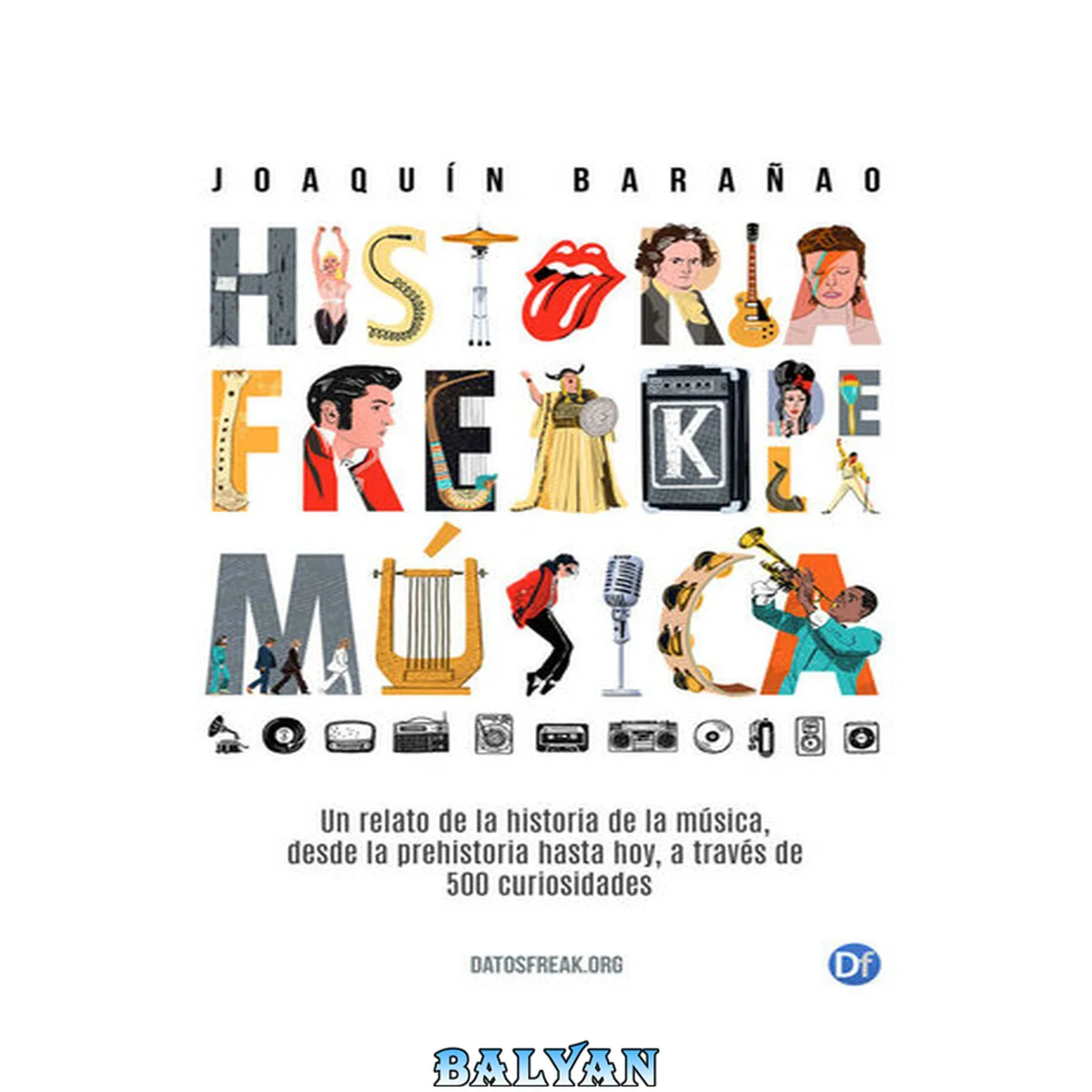
معرفی کتاب «Historia Freak de la Música: Un relato de la Historia de la Música a través de 500 curiosidades (Spanish Edition)» نوشتهٔ Joaquín Barañao، منتشرشده توسط نشر Algora Publishing در سال 2015. این کتاب در 28 صفحه، فرمت epub، زبان انگلیسی ارائه شده است.
"If you lie awake worrying about the overnight transition from December 31, 1 b.c., to January 1, a.d. 1 (there is no year zero), then you will enjoy Duncan Steel's Marking Time."--American Scientist
"No book could serve as a better guide to the cumulative invention that defines the imaginary threshold to the new millennium."--Booklist
A Fascinating March through History and the Evolution of the Modern-Day Calendar . . .
In this vivid, fast-moving narrative, you'll discover the surprising story of how our modern calendar came about and how it has changed dramatically through the years. Acclaimed author Duncan Steel explores each major step in creating the current calendar along with the many different systems for defining the number of days in a week, the length of a month, and the number of days in a year. From the definition of the lunar month by Meton of Athens in 432 b.c. to the roles played by Julius Caesar, William the Conqueror, and Isaac Newton to present-day proposals to reform our calendar, this entertaining read also presents "timely" tidbits that will take you across the full span of recorded history. Find out how and why comets have been used as clocks, why there is no year zero between 1 b.c. and a.d. 1, and why for centuries Britain and its colonies rang in the New Year on March 25th. Marking Time will leave you with a sense of awe at the haphazard nature of our calendar's development. Once you've read this eye-opening book, you'll never look at the calendar the same way again.
Publishers Weekly
Australian astronomer Steel (Rogue Asteroids and Doomsday Comets) appears to have packed three disparate books into this single volume: a general history of the development of the calendar system, a more advanced version larded with astronomical information for the science buff or professional, and a reassessment of why England settled the mid-Atlantic coast of North America. According to Steel, Elizabeth I's colonization activities were part of her maneuvering against Pope Gregory XIII. Well aware of the Gregorian calendar's flaws, English scientists thought that if they developed a superior calendar, it would help effect a rapprochement with European nations fence-sitting in the quarrel between London and Rome. Possession of territory on the 77th meridian, in the vicinity of what is now Washington, D.C., was crucial, because English calendar reformers considered it to be "God's longitude." Steel's account of this grand, somewhat daft scheme makes an intriguing study in its own right, yet it gets lost amid a tangle of unrelated facts. He advances other interesting theories with abundant background information to back them up: that Jesus was born in April 5 B.C.E. and that there was no room at the inn because it was Passover, not because of an empire-wide census; that the Star of Bethlehem was a comet; and that some major celestial event occurred around 3000 to 4000 B.C.E. because so many of the world's calendar systems began around that time. Steel seems to have never met an interesting fact he didn't like to repeat, and this unfortunate habit bogs down an otherwise excellent study of calendar systems. (Nov.) Copyright 1999 Cahners Business Information.
The chronology of ancient Egypt and Babylonia is wrong to a dramatic degree, with some major historical events mis-dated almost two thousand years before they actually occurred, according historian Emmet Sweeney. Sweeney argues that the pyramids, for instance, were not built around 2350 BC, as is currently thought, but only around 800 BC. The dating of ancient history is often much more tenuous than most people realize and is not based on science but on venerated literary tradition. This chronology had already been established by the third century BC, when Jewish historians utilizing the "History of Egypt" by the Hellenistic author Manetho sought to link Egypt's history with that of the Bible. The pyramids were partly constructed of hard granite and display in their design a knowledge of Pythagorean geometry, yet in 2350 BC the Egyptians only had copper and flint tools and such principles of mathematics had yet to be formulated. This mystery has led to all sorts of weird and wonderful theorizing - not least the idea that the pyramids were built by aliens or Atlanteans. But revise the date of the pyramids' construction to around 800 BC, when steel tools were available and more sophisticated principles of geometry were widely understood, and the mystery is solved. Sweeney's conclusions are revolutionary but they are in line with a growing number of academics who acknowledge that there may be something radically wrong with ancient chronology. Wolfgang Helck, Germany's foremost Egyptologist, recently admitted that work on chronology "has clearly arrived at a crisis." The Pyramid Age is part of an originally-researched reconstruction, "Ages in Alignment", which begins with the start of literate civilization and ends with the conquest of Alexander. The current volume will be followed by Ramessides, Medes and the Persians. Inspired by Velikovsky's 1952 series "Ages in Chaos," this series seeks to complete the work which Velikovsky commenced, identifying the problems he could not solve and bringing forward a great body of evidence which supports his claims, including the identification of Hatshepsut with the Queen of Sheba. For decades now scholars have attempted to solve the enigma. Yet the answer was stunningly simple, and in front of us all the time. This book takes you across the full span of recorded history to examine the ways in which people and events forged the calendar that we have today. Starting with Stonehenge and the first written records of the year and the day by the Sumerians around 3500 B.C., astronomer Steel charts the calendar's ever-changing, erratic trajectory--from the Egyptians' reliance on the star Sirius to the numbering of the years linked to the celebration of Easter in Christian churches. A provocative history lesson and a unique, entertaining read rolled into one, Marking Time will leave you with a sense of awe at the random, hit-or-miss nature of our calendar's development--a quality that parallels the growth of civilization itself. What results is a truthful, and, above all, very human view of the calendar as we know it. You will never look at the calendar the same way again.--From publisher description The Genesis, Definition, And Historical Overview / Toru Mitsui -- The Effects Of Karaoke On Music Life In Japan / Hiroshi Ogawa -- Middle-aged And Older Women And Karaoke / Shinobu Oku -- The Adaptability Of Karaoke In The United Kingdom / William Kelly -- From Tv To Holidays : Karaoke In Italy / Paolo Prato -- Filling Voids Along The Byway : Identification And Interpretation In The Swedish Forms Of Karaoke / Johan Fornas -- Singing In A Cultural Enclave : Karaoke In Japanese-brazilian Community / Shuhei Hosokawa -- The Karaoke Dilemna : On The Interaction Between Collectivism And Individualism / Casy Man Kong Lum -- Karaoke In East Asia / Akiko Otake And Shuehei Hosokawa. Edited By Tōru Mitsui And Shūhei Hosokawa. Includes Bibliographical References And Index. The genesis of karaoke : how the combination of technology and music evolved / Tōru Mitsui The effects of karaoke on music in Japan / Hiroshi Ogawa Karaoke and middle-aged and older women / Shinobu Oku The adaptability of karaoke in the United Kingdom / William H. Kelly From TV to holidays : karaoke in Italy / Paolo Prato Filling voids along the byway : identification and interpretation in the Swedish forms of karaoke / Johan Fornäs Singing in a cultural enclave : karaoke in a Japanese-Brazilian community / Shūhei Hosokawa The karaoke dilemma : on the interaction between collectivism and individualism in the karaoke space / Casy Man Kong Lum Karaoke in East Asia : modernization, Japanization, or Asianization? / Akiko Ōtake and Shūehei Hosokawa Using the theoretical framework of thinkers from Erving Goffman to Foucault, the contributors to this volume consider the technological, spatial, communicative, ethnic, national, political, musical and gender aspects of karaoke in specific places and times across the globe. This study explores the influence of karaoke in such different societies as the United Kingdom, North America, Australia, Italy, Sweden, Brazil, Korea and Japan. The essays not only answer a variety of questions about this phenomenon, but also open up possible ways of theorising contemporary music practice in the future "Steel takes you across the full span of recorded history, behind the seismic shifts within politics, religion, and science, and examines the ways in which people and events forged the calendar that we have today. Starting with Stonehenge and the first written records of the year and the day by the Sumerians around 3500 B.C., Marking Time charts the calendar's ever-changing, erratic trajectory - from the Egyptians' reliance on the star Sirius to the numbering of the years, linked to the celebration of Easter in Christian churches."--BOOK JACKET. For the new millennium, a timely history of time. For all the talk of the millennium, one would think the calendar was an established fact of science, as irrefutable as the atomic weight of hydrogen. But as this book points out, the calendar is an evolving invention of our struggle to measure time Fifteen miles south of Washington, D.C., abreast the Potomac River where it flows through the verdant countryside of Virginia, stands Mount Vernon, the home and tomb of George Washington, first president of the United States. In the middle of the room two Japanese men in business suits are singing 'Mrs Robinson' in English into a microphone, a phenomenon which puzzles Persse for several reasons, one of which he cannot instantly identify.