Health care matters : pharmaceuticals, obesity, and the quality of life
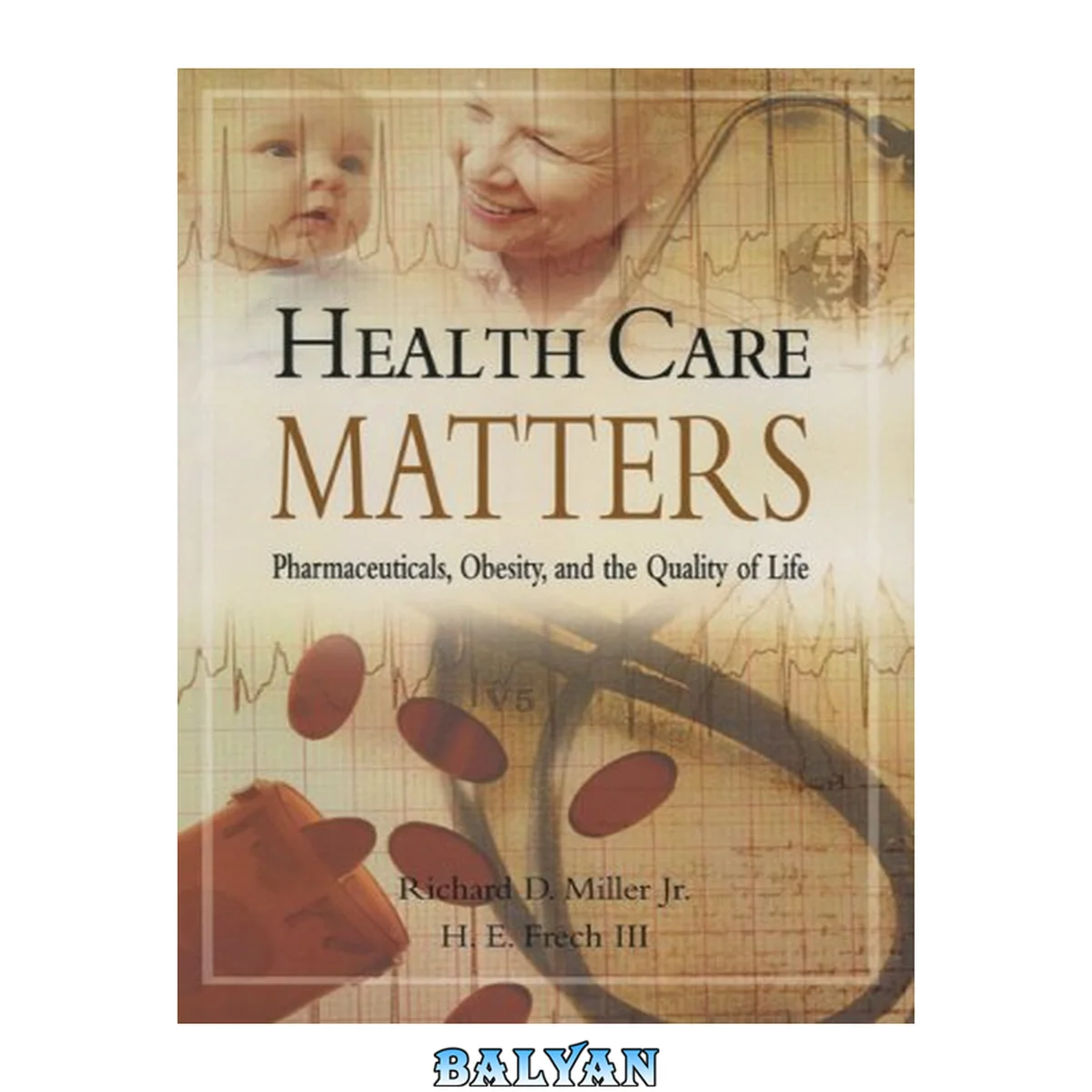
معرفی کتاب «Health care matters : pharmaceuticals, obesity, and the quality of life» نوشتهٔ Richard D. Miller (Jr.); H. E. Frech، منتشرشده توسط نشر American Enterprise Institute for Public Policy Research در سال 2004. این کتاب در فرمت pdf، زبان انگلیسی ارائه شده است.
This book shows that it is time to rethink conventional wisdom regarding consumption of pharmaceuticals. For many years, health policy in developed countries has rested on the assumption that health-care consumption does relatively little to produce better health. This new study shows that it is time to rethink conventional wisdom, particularly regarding consumption of pharmaceuticals. In this sequel to their 1999 book, The Productivity of Health Care and Pharmaceuticals: An International Comparison, Richard D. Miller Jr. and H. E. Frech III extend their analysis to quality of life, disease-specific life expectancy, and the impact of obesity. This is possible because of newly available data from the World Health Organization and the Organisation for Economic Co-operation and Development (OECD) on disability-adjusted life expectancy, obesity, and disease-specific death rates. Employing a logical econometric model, Miller and Frech focus on eighteen member countries of the OECD. They find that pharmaceutical consumption is even more powerful in improving the quality of life than in improving the length of life. They find variation by cause of death and by age. For individuals under seventy, pharmaceutical consumption lowers circulatory disease mortality but has little effect on mortality due to either cancer or respiratory disease. At later ages, pharmaceutical consumption generally has a stronger impact. The fact that pharmaceutical consumption produces better health lends support to proposals to increase coverage of drugs in both public and private health insurance systems. Most fundamentally, it shows that policy should no longer be based on the assumption that health-care consumption does not improve health, but rather on a new understanding that such consumption -- especially pharmaceutical use -- does matter Literature Review -- Conclusions From Our Earlier Literature Review -- Our Earlier Work -- Recent Aggregate Studies Of The Production Of Health -- Studies Within The United States -- International Studies -- Epidemiological Studies Of Risk Factors -- Obesity -- Other Studies Of The Productivity Of Pharmaceuticals -- Extending Our Earlier Work On Pharmaceutical Consumption -- Quality Of Life -- Cause-specific Mortality -- Modeling The Production Of Health -- Our Model -- Data Sources -- Health Indicators -- Medical-care Inputs -- Measuring Pharmaceutical Consumption -- Other Explanatory Variables -- The Model Specification And Estimation -- Results -- Descriptive Statistics -- Empirical Results For Disability-adjusted And Unadjusted Life Expectancy -- The Effects Of Lifestyle And Wealth -- The Effect Of Nonpharmaceutical Medical-care Consumption -- The Effect Of Pharmaceutical Consumption -- Empirical Results For Circulatory Disease Mortality -- The Effects Of Lifestyle And Wealth -- The Effect Of Nonpharmaceutical Medical-care Consumption -- The Effect Of Pharmaceutical Consumption -- Empirical Results For Cancer Mortality -- The Effects Of Lifestyle And Wealth -- The Effect Of Nonpharmaceutical Medical-care Consumption -- The Effect Of Pharmaceutical Consumption -- Empirical Results For Respiratory Disease Mortality -- The Effects Of Lifestyle And Wealth -- The Effect Of Nonpharmaceutical Medical-care Consumption -- The Effect Of Pharmaceutical Consumption -- Sensitivity Testing -- Adult Obesity, Circa 1980 And Circa 2000. Richard D. Miller, Jr. And H.e. Frech, Iii. Includes Bibliographical References (p. 69-74) And Index. "For many years, health policy in developed countries has rested on the assumption that health-care consumption does relatively little to produce better health. This new study shows that it is time to rethink conventional wisdom, particularly regarding consumption of pharmaceuticals. In this sequel to their 1999 book, The Productivity of Health Care and Pharmaceuticals: An International Comparison, Richard D. Miller Jr. and H. E. Frech III extend their analysis to quality of life, disease-specific life expectancy, and the impact of obesity. This is possible because of newly available data from the World Health Organization and the Organisation for Economic Co-operation and Development (OECD) on disability-adjusted life expectancy, obesity, and disease-specific death rates."--BOOK JACKET For many years, health policy in wealth countries has rested on the assumption that health-care consumption is not productive, that it does relatively little to produce better health.
دانلود کتاب Health care matters : pharmaceuticals, obesity, and the quality of life