Handbook of the neuroscience of language
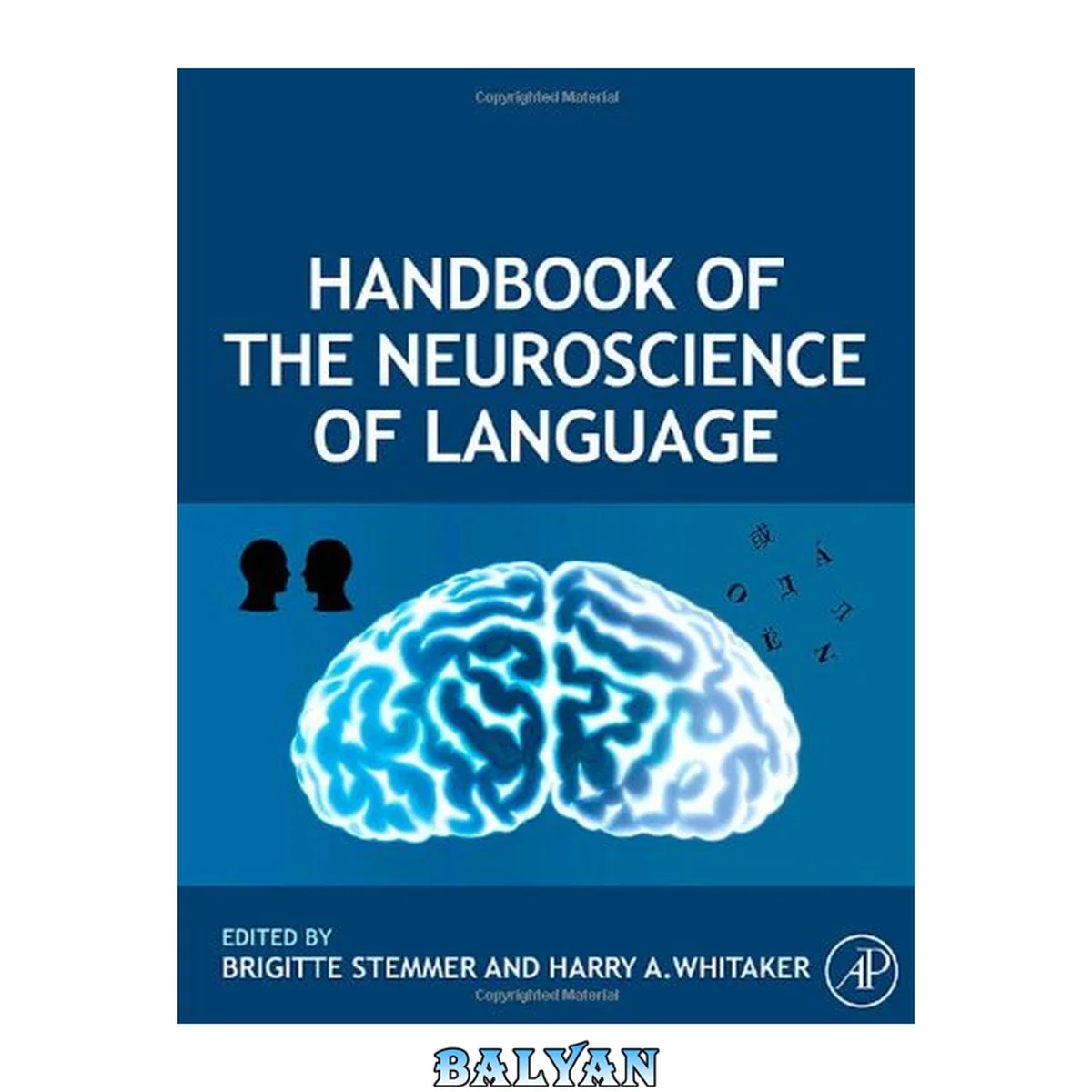
معرفی کتاب «Handbook of the neuroscience of language» نوشتهٔ Elizabeth Heavey و Stemmer B., Whitaker H.A. (eds.)، منتشرشده توسط نشر AP Elsevier در سال 2008. این کتاب در فرمت pdf، زبان انگلیسی ارائه شده است.
In the last ten years the neuroscience of language has matured as a field. Ten years ago, neuroimaging was just being explored for neurolinguistic questions, whereas today it constitutes a routine component. At the same time there have been significant developments in linguistic and psychological theory that speak to the neuroscience of language. This book consolidates those advances into a single reference.The Handbook of the Neuroscience of Language provides a comprehensive overview of this field. Divided into five sections, section one discusses methods and techniques including clinical assessment approaches, methods of mapping the human brain, and a theoretical framework for interpreting the multiple levels of neural organization that contribute to language comprehension. Section two discusses the impact imaging techniques (PET, fMRI, ERPs, electrical stimulation of language cortex, TMS) have made to language research. Section three discusses experimental approaches to the field, including disorders at different language levels in reading as well as writing and number processing. Additionally, chapters here present computational models, discuss the role of mirror systems for language, and cover brain lateralization with respect to language. Part four focuses on language in special populations, in various disease processes, and in developmental disorders. The book ends with a listing of resources in the neuroscience of language and a glossary of items and concepts to help the novice become acquainted with the field.Editors Stemmer & Whitaker prepared this book to reflect recent developments in neurolinguistics, moving the book squarely into the cognitive neuroscience of language and capturing the developments in the field over the past 7 years. * History section focuses on topics that play a current role in neurolinguistics research, aphasia syndromes, and lesion analysis* Includes section on neuroimaging to reflect the dramatic changes in methodology over the past decade* Experimental and clinical section reflects recent developments in the field Front Cover......Page 1 Handbook of the Neuroscience of Language......Page 4 Copyright Page......Page 5 Contents......Page 8 Contributors......Page 18 Preface......Page 20 Prologue......Page 22 PART I: METHODS AND TECHNIQUES......Page 28 1.1. Introduction......Page 30 1.2. Nature of Language Deficits......Page 31 1.3. Theoretical Models for the Assessment of Language Impairment......Page 32 1.4. Classical Tests and Aphasia Assessment Procedures......Page 33 1.5 Classical Tests for the Assessment of Language Impairment in Special Populations......Page 35 1.6. Interface between Language and Other Cognitive Functions......Page 36 1.7. Challenges and Future Directions......Page 37 2.2. What is the Hypothesis Testing Approach to Assessment?......Page 40 2.3. Hypothesis Testing of Language Impairment: Assessment Resources and Considerations......Page 43 2.5. Challenges and Future Directions......Page 47 Appendix – Hypothesis Testing: A Worked Example......Page 48 3.2. Historical Background......Page 50 3.4. Rationale Underlying the IAT Procedure......Page 51 3.5. Components of the IAT Procedure......Page 52 3.6. Problems and Considerations in IAT Protocol Administration and Interpretation......Page 53 3.8. Validation and Reliability Studies......Page 55 3.9. Supplementary and Alternative Techniques for Establishing Language Lateralization......Page 56 3.10. Challenges and Future Directions......Page 58 4.1. Introduction......Page 60 4.2. Broca's Region......Page 62 4.3. Wernicke's Region......Page 66 4.5. Interhemispheric Cytoarchitectonic Differences......Page 67 4.6. Cytoarchitectonic Maps for the Analysis of Language......Page 68 4.7. Challenges and Future Directions......Page 69 5.1. Introduction......Page 72 5.2. Principles of Brain Structure and Function......Page 73 5.3. From Anatomical Structure to Neurolinguistic Function......Page 76 5.4. Time Dynamics of Fronto–Temporal Activations......Page 78 5.6. Challenges and Future Directions: Levels of Brain, Levels of Language?......Page 80 6.1. Introduction......Page 84 6.2. Electromagnetic Functional Neuroimaging Techniques......Page 85 6.3. Hemodynamic Functional Neuroimaging Techniques......Page 87 6.4. Repetitive Transcranial Magnetic Stimulation......Page 91 6.5. Near-Infrared Spectroscopy......Page 92 6.6. Challenges and Future Directions......Page 93 PART II: NEUROIMAGING OF LANGUAGE......Page 96 7.1. Introduction......Page 98 7.2. PET versus fMRI – Some Methodological Issues......Page 99 7.3. Crucial PET Findings......Page 100 7.4. Challenges and Future Directions......Page 105 8.1. Introduction......Page 108 8.2. Recognizing Auditory Input as Speech......Page 109 8.3. Word Representation: Form and Meaning......Page 110 8.4. From Words to Sentences: Syntactic Processing......Page 111 8.5. From Words to Sentences: Semantic Processing of Sentences......Page 112 8.6. From Sentences to Discourse......Page 113 8.7. Challenges and Future Directions......Page 114 9.1. Introduction......Page 118 9.2. Language-Related Components and Their Functional Significance......Page 119 9.3. Challenges and Future Directions......Page 130 10.2. Description of the Technique......Page 132 10.4. Selected Findings with Cortical Stimulation Technique......Page 134 10.5. Challenges and Future Directions......Page 138 11.1. Introduction......Page 142 11.2. Assessing Hemispheric Specialization for Language with TMS......Page 143 11.3. Different Effects of TMS On Task Performance: Posterior Temporal Cortex and Picture Naming......Page 145 11.5. Speech Perception and the Motor System......Page 147 11.6. Representation of Actions and Verbs in the Motor System and Frontal Cortex......Page 148 11.7. TMS Studies in Patients with Aphasia......Page 149 11.8. Challenges and Future Directions......Page 150 PART III: EXPERIMENTAL NEUROSCIENCE OF LANGUAGE AND COMMUNICATION......Page 152 12.2. Changing Concepts in the Neurolinguistic Analysis of Phonetics and Phonology......Page 154 12.3. Anatomical and Computational Complexity for Broca's Area......Page 156 12.4. Intractable Problems in the Neurolinguistics of Segmental Paraphasias......Page 157 12.5. Challenges and Future Directions......Page 161 13.1. Introduction......Page 164 13.2. Noun versus Verb Morphology......Page 165 13.3. Regular versus Irregular Morphology......Page 166 13.4. Impairments of Inflectional Morphology......Page 167 13.6. Impairments in Compounding......Page 170 13.7. Challenges and Future Directions......Page 171 14.2. Disorders of Lexis: A Brief Overview......Page 174 14.3. Words in the Brain......Page 176 14.4. The Domain of Lexical Disorders, the Notion of a Mental Lexicon, and the Notion of Word......Page 177 14.6. Challenges and Future Directions......Page 179 15.1. Introduction......Page 182 15.2. The Endgame: Theory Unification......Page 183 15.4. The Linear Models......Page 184 15.5. A Hierarchical Model: The Double-Dependency Hypothesis......Page 187 15.6. What Have We Learnt?......Page 188 15.7. Challenges and Future Directions......Page 189 16.2. Cognitive and Linguistic Principles of Discourse Processing......Page 192 16.3. The Neuroscience of Text and Discourse Comprehension......Page 194 16.4. Right Hemisphere Contributions to Discourse Comprehension......Page 197 16.5. Summary and Conclusions......Page 199 16.6. Challenges and Future Directions......Page 200 17.2. Pragmatic Disorders in Adult Clinical Populations......Page 202 17.3. Explaining Linguistic Pragmatic Impairments in Clinical Populations......Page 205 17.4. Neural Systems Underlying Pragmatic Abilities......Page 206 17.5. Challenges and Future Directions......Page 213 18.2. The Declarative and Procedural Memory Systems......Page 216 18.3. Language and the Declarative and Procedural Memory Systems......Page 218 18.4. Disorders of Grammar and Procedural Memory......Page 219 18.5. Disorders of Lexicon and Declarative Memory......Page 223 18.6. Challenges and Future Directions......Page 224 19.2. Language and Emotion: Theoretical Perspectives......Page 226 19.4. The Linguistic Communication of Emotion......Page 227 19.6. Syntactic Structures as Reflective of Attitudinal Meaning......Page 228 19.7. Language Affects Emotions......Page 229 19.9. Brain Structures Underlying Emotional Language......Page 230 19.12. Pragmatic Deficits Following Brain Damage......Page 232 19.15. Challenges and Future Directions......Page 233 20.1. Introduction......Page 236 20.3. Classical Neurolinguistic Classification of Acquired Spelling Disorders......Page 237 20.4. Dual-Route Models of Reading and Cognitive Accounts of Acquired Dyslexia......Page 239 20.5. Dual-Route Models of Spelling and Cognitive Accounts of Acquired Dysgraphia......Page 241 20.6. Principles for the Assessment of Reading and Spelling Impairments......Page 242 20.8. Neuroanatomy of Written Language......Page 243 20.9. Challenges and Future Directions......Page 244 21.1. Introduction......Page 246 21.2. The Representation of Numbers......Page 247 21.3. Number Manipulation: Transcoding......Page 249 21.4. Calculation......Page 250 21.5. Numbers and Calculation in the Brain......Page 251 21.6. Challenges and Future Directions......Page 253 22.2. The Computer and the Brain......Page 256 22.3. Structured Models......Page 257 22.4. Emergent Models......Page 260 22.5. Challenges and Future Directions......Page 262 23.1. Introduction......Page 264 23.2. Multiple Mirror Systems and the Language-Ready Brain......Page 265 23.3. Praxis, Language and the Action-Oriented Perception of Scenes......Page 266 23.4. Modeling the Canonical and Mirror Systems for Grasping......Page 268 23.5. Imitation and Mirror Neurons: In Search of Subtlety......Page 269 23.6. Challenges and Future Directions......Page 272 24.1. Introduction......Page 274 24.2. Brain Development......Page 275 24.3. Changes Associated with Aging......Page 278 24.4. Interpretive Complexities......Page 279 24.5. Challenges and Future Directions......Page 281 25.1. Introduction......Page 284 25.3. Advantages and Challenges of Hemispheric Asymmetry......Page 285 25.4. Mechanisms of Interhemispheric Interaction......Page 287 25.5. Individual Variation......Page 290 25.6. Challenges and Future Directions......Page 292 A: Language in Special Populations and in Various Disease Processes......Page 294 26.1. Introduction......Page 296 26.2. Approaches to Classifying Acute Aphasias......Page 298 26.3. Non-stable Syndromes of Acute Aphasia......Page 301 26.4. Challenges and Future Directions......Page 303 27.2. Phonology and Speech Errors in Dementia......Page 306 27.3. Lexical Retrieval and Naming Difficulty in Dementia......Page 307 27.4. Semantic Memory Difficulty in Dementia......Page 308 27.6. Discourse Deficit in Dementia......Page 311 27.7. Challenges and Future Directions......Page 312 28.2. Pragmatic Inference......Page 316 28.3. Social Cognition......Page 318 28.4. Discourse Production......Page 320 28.5. Challenges and Future Directions......Page 322 29.1. Introduction......Page 326 29.2. Bi-hemispheric Theory of Language......Page 327 29.3. Principles of Connectivity of Hetero-Modal Association Cortex......Page 328 29.4. Anomalies of Anatomical Asymmetry and Schizophrenia......Page 329 29.5. The Central Paradox and Its Resolution......Page 330 29.6. How Do the Nuclear Symptoms Arise?......Page 331 29.7. Challenges and Future Directions......Page 332 30.1. Introduction......Page 336 30.2. Definition and Clinical Characteristics of Dysfluency......Page 337 30.3. The Physiology of Stuttering......Page 340 30.4. Theories of Stuttering......Page 341 30.5. Animal Modeling of Stuttering......Page 342 30.6. Challenges and Future Directions......Page 343 31.1. Introduction......Page 346 31.2. Do MTLE Patients Show Language Abnormalities?......Page 348 31.3. What Specific Evidence Is There Showing Medial Temporal Lobe Involvement in Language?......Page 349 31.4. Are There Anatomical Connections That Allow the Medial Temporal Lobe to Influence Language?......Page 350 31.5. What Might the Medial Temporal Lobe Contribute to Language Processing?......Page 351 31.6. What Accounts for the Language Deficits in MTLE?......Page 352 31.7. Challenges and Future Directions......Page 353 32.2. Distribution of Pathology in Subcortical Stroke and Degenerative Disorders Associated with Language Impairment......Page 356 32.4. Mechanisms of Non-thalamic Subcortical Aphasia......Page 359 32.6. Emerging Neuroscience of the Thalamus......Page 360 32.7. Mechanisms of Thalamic Aphasia......Page 363 32.9. Challenges and Future Directions......Page 365 33.1. Introduction......Page 368 33.2. Language Impairments......Page 369 33.3. Implicit and Explicit Memory......Page 370 33.4. Pathological Language Mixing and Switching......Page 371 33.5. Experimental Studies......Page 372 33.7. Multilingual Aphasia Rehabilitation......Page 373 33.8. Challenges and Future Directions: The Cerebral Organization of Languages......Page 374 34.2. Language Changes in Healthy Aging......Page 378 34.4. Distinguishing Language in Healthy Aging from That in Mild Cognitive Impairment and AD......Page 380 34.5. Explanations for Language Changes in Healthy Aging......Page 382 34.6. Challenges and Future Directions......Page 383 B: Language and Communication in Developmental Disorders......Page 386 35.1. Introduction......Page 388 35.2. Language Regression and Epilepsy......Page 389 35.3. The Nature of the Language Deficit......Page 390 35.5. Challenges and Future Directions......Page 391 36.1. Introduction......Page 394 36.2. Language in WS: The Evidence......Page 395 36.3. Theoretical Approaches to the Neurocognitive Study of WS......Page 396 36.4. Characterizing Language and Communication in WS......Page 397 36.5. Language in WS: Connecting the Dots......Page 400 36.6. Challenges and Future Directions......Page 401 37.1. Introduction......Page 404 37.2. Language Deficits in Autism......Page 405 37.3. Explaining Language and Communication Deficits in ASD......Page 408 37.4. Challenges and Future Directions......Page 411 C: Recovery from, Treatment and Rehabilitation of Language and Communication Disorders......Page 414 38.1. Introduction......Page 416 38.2. Soundly Established Factors Affecting Recovery......Page 417 38.3. Factors That May Affect Spontaneous Recovery......Page 418 38.4. Why Spontaneous Recovery?......Page 419 38.5. Challenges and Future Directions......Page 421 39.1. Introduction......Page 424 39.2. How to Approach Aphasia Therapy......Page 425 39.3. A Stage-Oriented Framework: Fitting the Therapeutic Approach to the Stage of Recovery......Page 426 39.4. Specific Neuropsychological and Psycholinguistic Approaches to the Treatment of Lexical and Syntactic Disorders......Page 429 39.6. Challenges and Future Directions......Page 432 40.2. Stroke: How Does It Cause Language Deficits?......Page 434 40.3. Subacute (and Chronic) Stroke: Enhancing Neural Transmission and Neuroplasticity......Page 438 40.5. Challenges and Future Directions......Page 440 41.1. Introduction......Page 444 41.2. Illustrative Cases......Page 445 41.3. Limits of the Syndrome-Based Approach......Page 447 41.4. Suggested Treatment of the Lexical Components......Page 448 41.5. Challenges and Future Directions......Page 450 42.1. Introduction......Page 454 42.2. Provision of Therapy......Page 455 42.4. Diagnosis and Assessment......Page 456 42.6. Alternative Communication......Page 457 42.8. Challenges and Future Directions......Page 458 PART V: RESOURCES......Page 460 Journals......Page 462 Books......Page 464 Source Books......Page 467 Professional Associations and Societies......Page 468 A......Page 470 C......Page 471 D......Page 472 F......Page 473 J......Page 474 M......Page 475 P......Page 476 S......Page 478 W......Page 479 A......Page 480 B......Page 481 D......Page 482 F......Page 483 J......Page 484 M......Page 485 O......Page 486 R......Page 487 S......Page 488 W......Page 489 In the last ten years the neuroscience of language has matured as a field. Ten years ago, neuroimaging was just being explored for neurolinguistic questions, whereas today it constitutes a routine component. At the same time there have been significant developments in linguistic and psychological theory that speak to the neuroscience of language. This book consolidates those advances into a single reference.
The Handbook of the Neuroscience of Language provides a comprehensive overview of this field. Divided into five sections, section one discusses methods and techniques including clinical assessment approaches, methods of mapping the human brain, and a theoretical framework for interpreting the multiple levels of neural organization that contribute to language comprehension. Section two discusses the impact imaging techniques (PET, fMRI, ERPs, electrical stimulation of language cortex, TMS) have made to language research. Section three discusses experimental approaches to the field, including disorders at different language levels in reading as well as writing and number processing. Additionally, chapters here present computational models, discuss the role of mirror systems for language, and cover brain lateralization with respect to language. Part four focuses on language in special populations, in various disease processes, and in developmental disorders. The book ends with a listing of resources in the neuroscience of language and a glossary of items and concepts to help the novice become acquainted with the field.
Editors Stemmer & Whitaker prepared this book to reflect recent developments in neurolinguistics, moving the book squarely into the cognitive neuroscience of language and capturing the developments in the field over the past 7 years.
* History section focuses on topics that play a current role in neurolinguistics research, aphasia syndromes, and lesion analysis
* Includes section on neuroimaging to reflect the dramatic changes in methodology over the past decade
* Experimental and clinical section reflects recent developments in the field In the last ten years the neuroscience of language has matured as a field. Ten years ago, neuroimaging was just being explored for neurolinguistic questions, whereas today it constitutes a routine component. At the same time there have been significant developments in linguistic and psychological theory that speak to the neuroscience of language. This book consolidates those advances into a single reference. The Handbook of the Neuroscience of Language provides a comprehensive overview of this field. Divided into five sections, section one discusses methods and techniques including clinical assessment approaches, methods of mapping the human brain, and a theoretical framework for interpreting the multiple levels of neural organization that contribute to language comprehension. Section two discusses the impact imaging techniques (PET, fMRI, ERPs, electrical stimulation of language cortex, TMS) have made to language research. Section three discusses experimental approaches to the field, including disorders at different language levels in reading as well as writing and number processing. Additionally, chapters here present computational models, discuss the role of mirror systems for language, and cover brain lateralization with respect to language. Part four focuses on language in special populations, in various disease processes, and in developmental disorders. The book ends with a listing of resources in the neuroscience of language and a glossary of items and concepts to help the novice become acquainted with the field. Editors Stemmer & Whitaker prepared this book to reflect recent developments in neurolinguistics, moving the book squarely into the cognitive neuroscience of language and capturing the developments in the field over the past 7 years. \* History section focuses on topics that play a current role in neurolinguistics research, aphasia syndromes, and lesion analysis \* Includes section on neuroimaging to reflect the dramatic changes in methodology over the past decade \* Experimental and clinical section reflects recent developments in the field
دانلود کتاب Handbook of the neuroscience of language
The Handbook of the Neuroscience of Language provides a comprehensive overview of this field. Divided into five sections, section one discusses methods and techniques including clinical assessment approaches, methods of mapping the human brain, and a theoretical framework for interpreting the multiple levels of neural organization that contribute to language comprehension. Section two discusses the impact imaging techniques (PET, fMRI, ERPs, electrical stimulation of language cortex, TMS) have made to language research. Section three discusses experimental approaches to the field, including disorders at different language levels in reading as well as writing and number processing. Additionally, chapters here present computational models, discuss the role of mirror systems for language, and cover brain lateralization with respect to language. Part four focuses on language in special populations, in various disease processes, and in developmental disorders. The book ends with a listing of resources in the neuroscience of language and a glossary of items and concepts to help the novice become acquainted with the field.
Editors Stemmer & Whitaker prepared this book to reflect recent developments in neurolinguistics, moving the book squarely into the cognitive neuroscience of language and capturing the developments in the field over the past 7 years.
* History section focuses on topics that play a current role in neurolinguistics research, aphasia syndromes, and lesion analysis
* Includes section on neuroimaging to reflect the dramatic changes in methodology over the past decade
* Experimental and clinical section reflects recent developments in the field In the last ten years the neuroscience of language has matured as a field. Ten years ago, neuroimaging was just being explored for neurolinguistic questions, whereas today it constitutes a routine component. At the same time there have been significant developments in linguistic and psychological theory that speak to the neuroscience of language. This book consolidates those advances into a single reference. The Handbook of the Neuroscience of Language provides a comprehensive overview of this field. Divided into five sections, section one discusses methods and techniques including clinical assessment approaches, methods of mapping the human brain, and a theoretical framework for interpreting the multiple levels of neural organization that contribute to language comprehension. Section two discusses the impact imaging techniques (PET, fMRI, ERPs, electrical stimulation of language cortex, TMS) have made to language research. Section three discusses experimental approaches to the field, including disorders at different language levels in reading as well as writing and number processing. Additionally, chapters here present computational models, discuss the role of mirror systems for language, and cover brain lateralization with respect to language. Part four focuses on language in special populations, in various disease processes, and in developmental disorders. The book ends with a listing of resources in the neuroscience of language and a glossary of items and concepts to help the novice become acquainted with the field. Editors Stemmer & Whitaker prepared this book to reflect recent developments in neurolinguistics, moving the book squarely into the cognitive neuroscience of language and capturing the developments in the field over the past 7 years. \* History section focuses on topics that play a current role in neurolinguistics research, aphasia syndromes, and lesion analysis \* Includes section on neuroimaging to reflect the dramatic changes in methodology over the past decade \* Experimental and clinical section reflects recent developments in the field