Handbook of Digital Forensics and Investigation
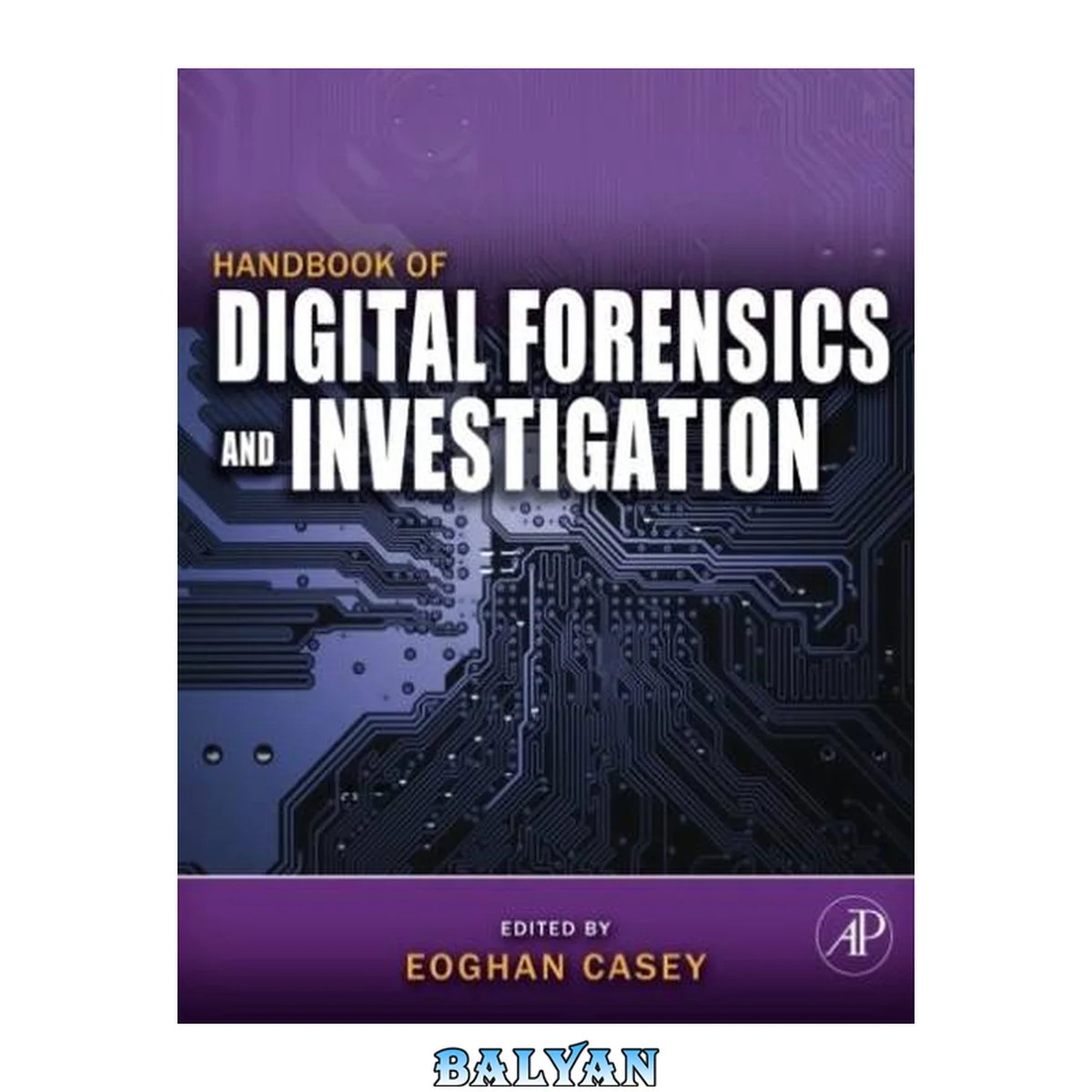
معرفی کتاب «Handbook of Digital Forensics and Investigation» نوشتهٔ by Eoghan Casey، منتشرشده توسط نشر Academic; Elsevier Academic Press در سال 2009. این کتاب در فرمت pdf، زبان انگلیسی ارائه شده است.
The Handbook of Digital Forensics and Investigation builds on the success of the Handbook of Computer Crime Investigation, bringing together renowned experts in all areas of digital forensics and investigation to provide the consummate resource for practitioners in the field. It is also designed as an accompanying text to Digital Evidence and Computer Crime, now in its third edition, providing advanced material from specialists in each area of Digital Forensics.
This unique collection details how to conduct digital investigations in both criminal and civil contexts, and how to locate and utilize digital evidence on computers, networks, and embedded systems. Specifically, the Investigative Methodology section of the Handbook provides expert guidance in the three main areas of practice: Forensic Analysis, Electronic Discovery and Intrusion Investigation. The Technology section is extended and updated to reflect the state of the art in each area of specialization. The main areas of focus in the Technology section are forensic analysis of Windows, Unix, Macintosh, and embedded systems (including cellular telephones and other mobile devices), and investigations involving networks (including enterprise environments and mobile telecommunications technology). The Handbook of Digital Forensics and Investigation is an essential technical reference and on-the-job guide that IT professionals, forensic practitioners, law enforcement, and attorneys will rely on when confronted with computer related crime and digital evidence of any kind.
*Provides methodologies proven in practice for conducting digital investigations of all kinds
*Demonstrates how to locate and interpret a wide variety of digital evidence, and how it can be useful in investigations
*Presents tools in the context of the investigative process, including EnCase, FTK, ProDiscover, foremost, XACT, Network Miner, Splunk, flow-tools, and many other specialized utilities and analysis platforms
*Case examples in every chapter give readers a practical understanding of the technical, logistical, and legal challenges that arise in real investigations Handbook of Digital Forensics and Investigation builds on the success of the Handbook of Computer Crime Investigation, bringing together renowned experts in all areas of digital forensics and investigation to provide the consummate resource for practitioners in the field. It is also designed as an accompanying text to Digital Evidence and Computer Crime. This unique collection details how to conduct digital investigations in both criminal and civil contexts, and how to locate and utilize digital evidence on computers, networks, and embedded systems. Specifically, the Investigative Methodology section of the Handbook provides expert guidance in the three main areas of practice: Forensic Analysis, Electronic Discovery, and Intrusion Investigation. The Technology section is extended and updated to reflect the state of the art in each area of specialization. The main areas of focus in the Technology section are forensic analysis of Windows, Unix, Macintosh, and embedded systems (including cellular telephones and other mobile devices), and investigations involving networks (including enterprise environments and mobile telecommunications technology). This handbook is an essential technical reference and on-the-job guide that IT professionals, forensic practitioners, law enforcement, and attorneys will rely on when confronted with computer related crime and digital evidence of any kind.•Provides methodologies proven in practice for conducting digital investigations of all kinds•Demonstrates how to locate and interpret a wide variety of digital evidence, and how it can be useful in investigations •Presents tools in the context of the investigative process, including EnCase, FTK, ProDiscover, foremost, XACT, Network Miner, Splunk, flow-tools, and many other specialized utilities and analysis platforms•Case examples in every chapter give readers a practical understanding of the technical, logistical, and legal challenges that arise in real investigations Handbook of Digital Forensics and Investigation builds on the success of the Handbook of Computer Crime Investigation , bringing together renowned experts in all areas of digital forensics and investigation to provide the consummate resource for practitioners in the field. It is also designed as an accompanying text to Digital Evidence and Computer Crime . This unique collection details how to conduct digital investigations in both criminal and civil contexts, and how to locate and utilize digital evidence on computers, networks, and embedded systems. Specifically, the Investigative Methodology section of the Handbook provides expert guidance in the three main areas of Forensic Analysis, Electronic Discovery, and Intrusion Investigation. The Technology section is extended and updated to reflect the state of the art in each area of specialization. The main areas of focus in the Technology section are forensic analysis of Windows, Unix, Macintosh, and embedded systems (including cellular telephones and other mobile devices), and investigations involving networks (including enterprise environments and mobile telecommunications technology). This handbook is an essential technical reference and on-the-job guide that IT professionals, forensic practitioners, law enforcement, and attorneys will rely on when confronted with computer related crime and digital evidence of any kind. *Provides methodologies proven in practice for conducting digital investigations of all kinds *Demonstrates how to locate and interpret a wide variety of digital evidence, and how it can be useful in investigations *Presents tools in the context of the investigative process, including EnCase, FTK, ProDiscover, foremost, XACT, Network Miner, Splunk, flow-tools, and many other specialized utilities and analysis platforms *Case examples in every chapter give readers a practical understanding of the technical, logistical, and legal challenges that arise in real investigations Chapter 1. Introduction Eoghan Casey Part 1: Investigative Methodology Chapter 2. Forensic Analysis Eoghan Casey and Curtis W. Rose Chapter 3. Electronic Discovery James Holley, Paul Luehr, Jessica Reust Smith and Joseph Schwerha Chapter 4. Intrusion Investigation Eoghan Casey, Christopher Daywalt and Andy Johnston Part 2: Technology Chapter 5. Windows Forensic Analysis Ryan Pittman and Dave Shaver Chapter 6. UNIX Forensic Analysis Cory Altheide and Eoghan Casey Chapter 7. Macintosh Forensic Analysis Anthony Kokocinski Chapter 8. Embedded Systems Analysis Ronald van der Knijff Chapter 9: Handbook Network Investigations Eoghan Casey, Christopher Daywalt, Andy Johnston, Terrance Maguire Chapter 10. Mobile Network Investigations Dario Forte and Andrea De Donno.