Gesiegelt - Versiegelt - Entsiegelt : Studien zum Siegel(n) als Kulturtechnik von der Antike bis zum frühen Mittelalter
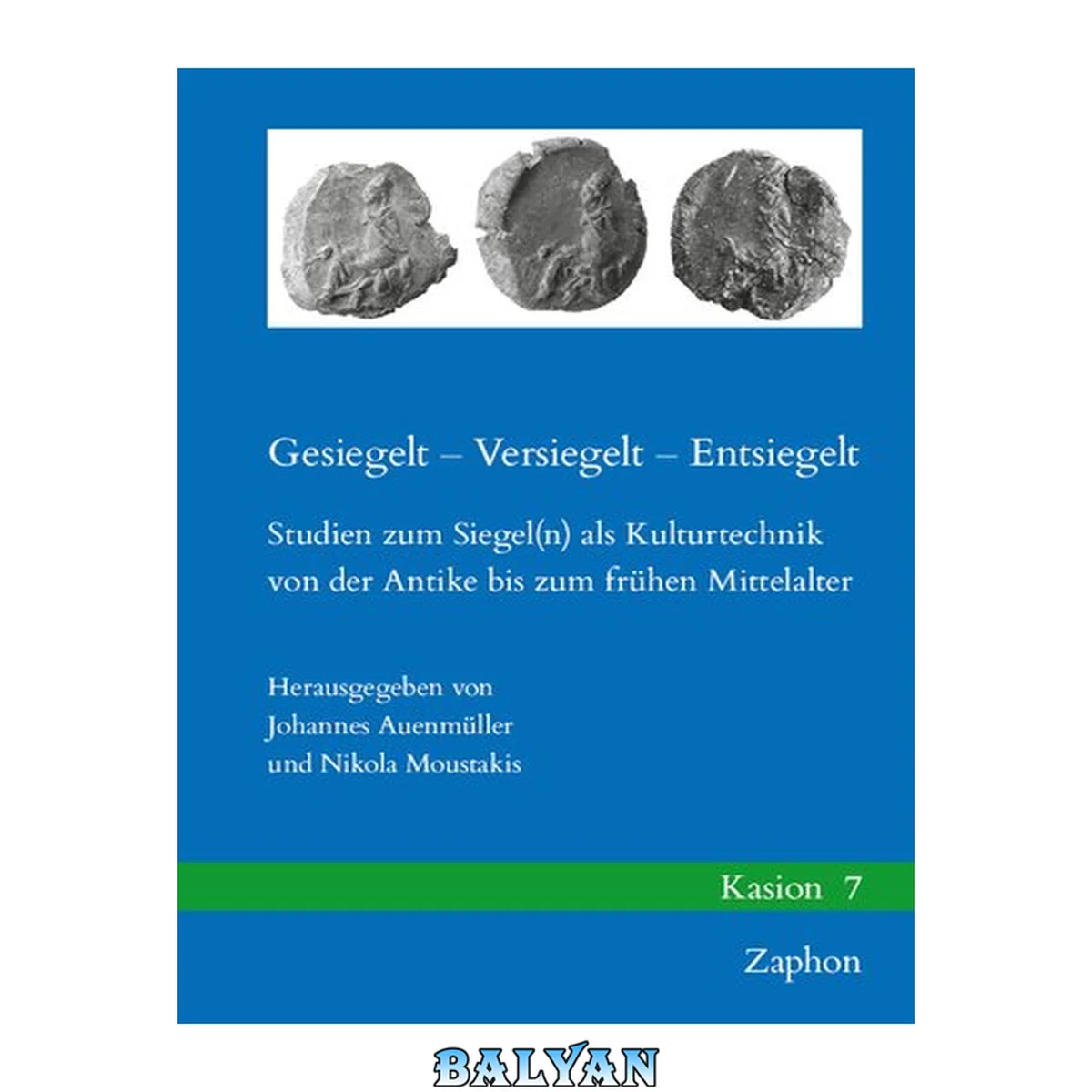
معرفی کتاب «Gesiegelt - Versiegelt - Entsiegelt : Studien zum Siegel(n) als Kulturtechnik von der Antike bis zum frühen Mittelalter» نوشتهٔ Johannes Auenmuller (editor), Nikola Moustakis (editor)، منتشرشده توسط نشر Metzler در سال 2022. این کتاب در فرمت pdf، زبان آلمانی ارائه شده است.
In all their material and symbolic manifestations, seals are not only central objects of archaeological and cultural studies research, they also constitute an essential topic in interdisciplinary discourse. Seals represent a category of objects that have been and are used in the most varied of times, spaces and cultures, and which, as 'cultural artefacts' conceived and made by humans, fulfill the roles and functions ascribed to them. Seals and seals are considered in the focus of cultural technology, so that the functions of sealing and the people who seal them come to the fore. In the interdisciplinary environment, new questions are raised and methods are applied that allow the evidence to speak in its social and temporal context. For example, ancient oriental epics, images of pharaonic Egypt and epigraphic documents of the Greek world are brought into the discourse. The interdisciplinary composition makes this versatile access as well as the chronological foray through almost four millennia - from the 3rd millennium B.C. to the end of the 1st millennium AD - possible. J. Auenmuller brings to life the images of pharaonic Egypt in which seals are represented as objects and the sealing as an action. He presents market scenes as well as locations where wine, beer, oil and honey are produced and thereby discusses both the iconographic reality of the images in temples and elite tombs and the pictorial discourse on the seal(s) in pharaonic culture. - The four-winged scarab is a widespread motif on official Iron Age seals in the Syrian-Palestinian region. R. Schmitt discusses the origin and mediation of this motif and states that parallel developments are most likely. - The considerable number of around 200,000 seal impressions that were applied to documents have been preserved from Hellenistic and Roman times. However, the research faces the challenge that almost all of the associated documents have been destroyed. The contributions by N. Moustakis and T. Schreiber make this discrepancy clear and present methods for reconstructing the functions and contexts of sealing. N. Moustakis uses epigraphic sources to approach the phenomenon of sealing in the Greek world. She does not focus on the seal artifact, but analyzes inventory lists, contracts and decrees of honor that document the use of seals. T. Schreiber focuses on the meaning and function of Hellenistic seals with portraits of rulers. Using seal impressions from the archives of Uruk/Orchoi and Seleucia on the Tigris, which bear the portrait of Seleucid rulers, as well as seal impressions with portraits of Ptolemaic rulers from the archives of Kallipolis, Edfu and Nea Paphos, he pursues the central question of who held these seals sealed. In another contribution, he examines the sigla from Doliche, today's Gaziantep, near the Turkish-Syrian border, which are closely linked to the cult of Iuppiter Dolichenus. - M. Grunbart also takes up the public function of these artefacts through his analysis of metal stamps from Byzantium (6th-12th centuries AD). On the one hand, he emphasizes the widespread use of identical stamps, which indicates duplication. So not only seal impressions would be serial objects, but also the stamps themselves. - The contribution by M. Odenweller finally presents a classification of the seal rings of the Merovingian period. Siegel sind in all ihren materiellen und symbolischen Manifestationen nicht nur zentrale Objekte archäologischer und kulturwissenschaftlicher Forschung, sie konstituieren auch ein essenzielles Thema im interdisziplinären Diskurs. Siegel repräsentieren eine Gattung von Objekten, die in den verschiedensten Zeiten, Räumen und Kulturen Verwendung fanden und finden, und die als vom Menschen erdachte und gemachte ?kulturelle Artefakte? die ihnen jeweils zugeschriebenen Rollen und Funktionen erfüllen. Siegel und Siegeln werden im Fokus der Kulturtechnik betrachtet, so dass Funktionen des Siegelns und die siegelnden Personen in den Vordergrund rücken. Im interdisziplinären Umfeld werden neue Fragestellungen aufgeworfen und Methoden angewendet, die die Evidenz in ihren sozialen und zeitlichen Kontexten zum Sprechen bringen. So werden beispielsweise altorientalische Epen, Bilder des pharaonischen Ägypten und epigraphische Dokumente der griechischen Staatenwelt in den Diskurs eingebracht. Die interdisziplinäre Zusammensetzung macht diesen vielseitigen Zugriff ebenso wie den chronologischen Streifzug durch fast vier Jahrtausende vom 3. Jahrtausend v. Chr. bis zum Ende des 1. Jahrtausends n. Chr. möglich Inhaltsverzeichnis Lohwasser: Geleitwort Auenmüller / Moustakis: Gesiegelt – Versiegelt – Entsiegelt. Siegel(n) und Kulturtechnik Neumann: Von göttlichen Steinen, gesegneten Werkstoffen und ärgerlichen Missgeschicken. Einige Bemerkungen zur Bedeutung von und zum Umgang mit Siegelsteinen im Alten Orient Auenmüller: Siegel und Siegeln in der Ikonographie des pharaonischen Ägypten. Soziale Kontexte und Akteure Schmitt: Der vierflügelige Skarabäus auf Siegeln und Siegelungen der Eisenzeit II B–C aus Juda und seinen Anrainern. Ein phönizisch vermitteltes Motiv? Moustakis: Inschriften als Zeugnisse griechischer Siegelpraxis. Inventarlisten, Staatsverträge und Ehrendekrete Schreiber: Im Namen des Königs?. Überlegungen zur Bedeutung und Funktion hellenistischer Siegel mit Herrscherporträts Schreiber: Das Archiv von Doliche und die ‚offiziellen‘ Siegel Grünbart: Reduplizierte Autorität. Das kaiserliche Stempelwesen und der kontrollierte Warenaustausch in Byzanz Odenweller: Siegelringe der Merowingerzeit. Klassifizierung und Ikonographie Verzeichnis der Autorinnen und Autoren
دانلود کتاب Gesiegelt - Versiegelt - Entsiegelt : Studien zum Siegel(n) als Kulturtechnik von der Antike bis zum frühen Mittelalter