آلمان، ۱۸۷۱-۱۹۴۵: تاریخ مختصر
Germany, 1871-1945 : A Concise History
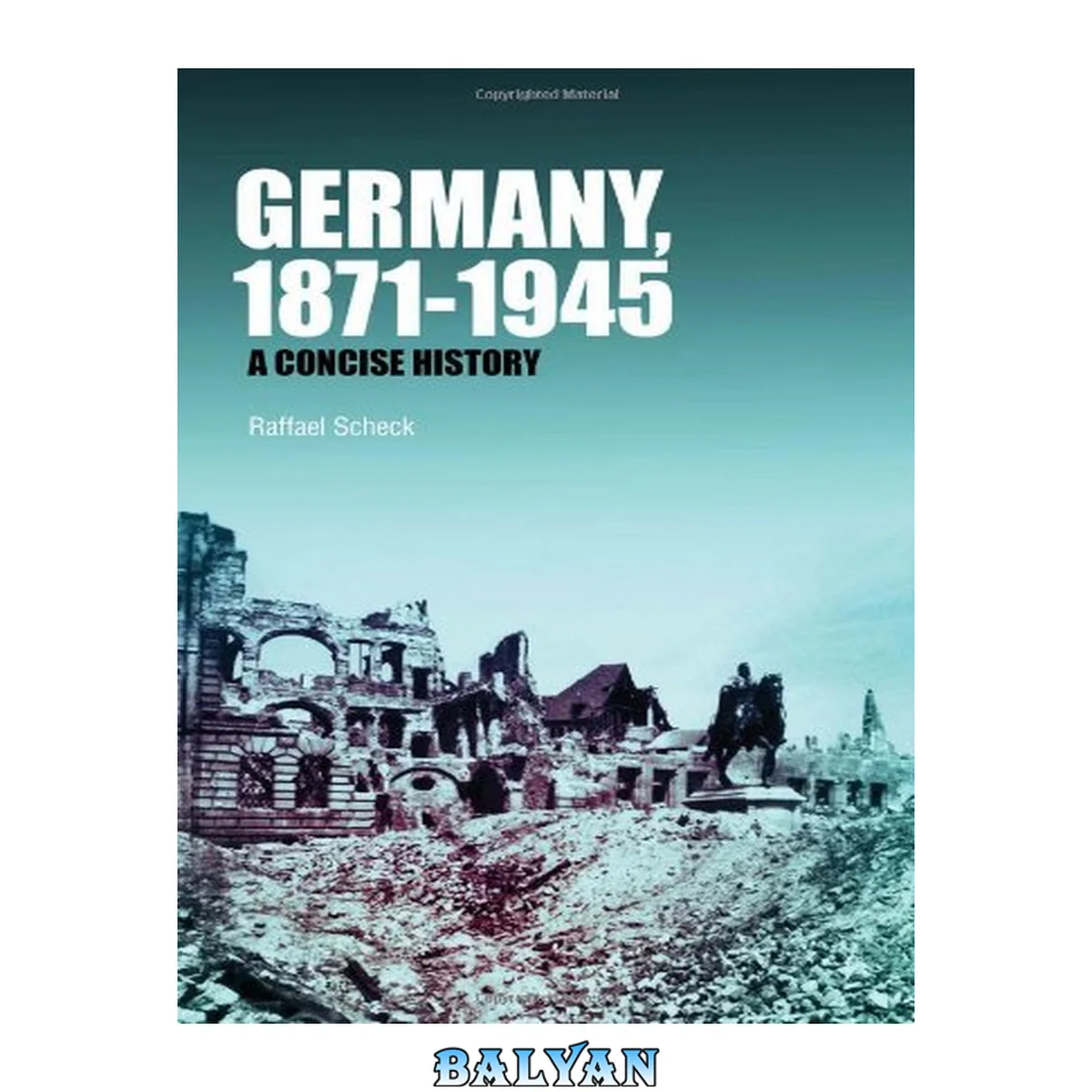
معرفی کتاب «آلمان، ۱۸۷۱-۱۹۴۵: تاریخ مختصر» (با عنوان لاتین Germany, 1871-1945 : A Concise History) نوشتهٔ Raffael Scheck, 1960-، منتشرشده توسط نشر Berg Editorial Offices; Berg Publishers در سال 2008. این کتاب در فرمت pdf، زبان انگلیسی ارائه شده است.
Germany, 1871-1945 presents an original, lucid, and thought-provoking history. Its aim is to inspire readers to weigh the historical evidence. At the end of the Second World War, the first unified German state collapsed, a disintegration with European and global ramifications. Ever since, historians have sought to explain what went wrong in German history. Many have focused on the violence which forged unification; others have highlighted the clash of authoritarian, anti-democratic, and anti-Semitic traditions with rapid industrialization and modernization. Germany, 1871-1945 presents a pragmatic interpretation of German history, from the unification to the end of the Nazi regime. This more open approach acknowledges the strong trend in German society towards modernization and democratization, particularly before 1914, while also highlighting the factors which propelled Germany toward World War I. The rise of the Nazis also demands a close analysis of the economic and political instability of the 1920s and early 1930s. Finally, a detailed assessment of the Third Reich explains how the regime's early successes fostered a loyalty and acceptance that remained hard to shake until disaster was obvious and unavoidable. "Germany, 1871-1945 presents a pragmatic interpretation of German history, from the unification to the end of the Nazi regime. This more open approach acknowledges the strong trend in German society towards modernization and democratization, particularly before 1914, while also highlighting the factors which propelled Germany toward World War I. The rise of the Nazis also demands a close analysis of the economic and political instability of the 1920s and early 1930s. Finally, a detailed assessment of the Third Reich explains how the regime's early successes fostered a loyalty and acceptance that remained hard to shake until disaster was obvious and unavoidable."--Page 4 de la couverture Contents......Page 8 List of Illustrations......Page 10 List of Maps......Page 12 Preface......Page 14 1. Introduction: A Plea for Understanding History in Its Openness......Page 16 2. German Unification......Page 24 3. Germany under Bismarck......Page 42 4. Wilhelmine Germany......Page 70 5. The First World War......Page 102 6. Germany's First Democracy......Page 126 7. Nazi Germany, 1933–9......Page 172 8. Germany in the Second World War......Page 200 9. Epilogue......Page 232 Notes......Page 240 Suggestions for Further Reading......Page 244 B......Page 254 E......Page 256 G......Page 257 I......Page 258 L......Page 259 O......Page 260 S......Page 261 V......Page 263 Z......Page 264 "Germany, 1871-1945 presents a pragmatic interpretation of German history, from the unification to the end of the Nazi regime. This more open approach acknowledges the strong trend in German society towards modernization and democratization, particularly before 1914, while also highlighting the factors which propelled Germany toward World War I. The rise of the Nazis also demands a close analysis of the economic and political instability of the 1920s and early 1930s. Finally, a detailed assessment of the Third Reich explains how the regime's early successes fostered a loyalty and acceptance that remained hard to shake until disaster was obvious and unavoidable."--Jacket. German Unification -- Germany Under Bismarck -- Wilhelmine Germany -- The First World War -- Germany's First Democracy -- Nazi Germany, 1933-9 -- Germany In The Second World War. Raffael Scheck. Includes Bibliographical References And Index.
دانلود کتاب آلمان، ۱۸۷۱-۱۹۴۵: تاریخ مختصر