Fragile Cargo : The World War II Race to Save the Treasures of China's Forbidden City
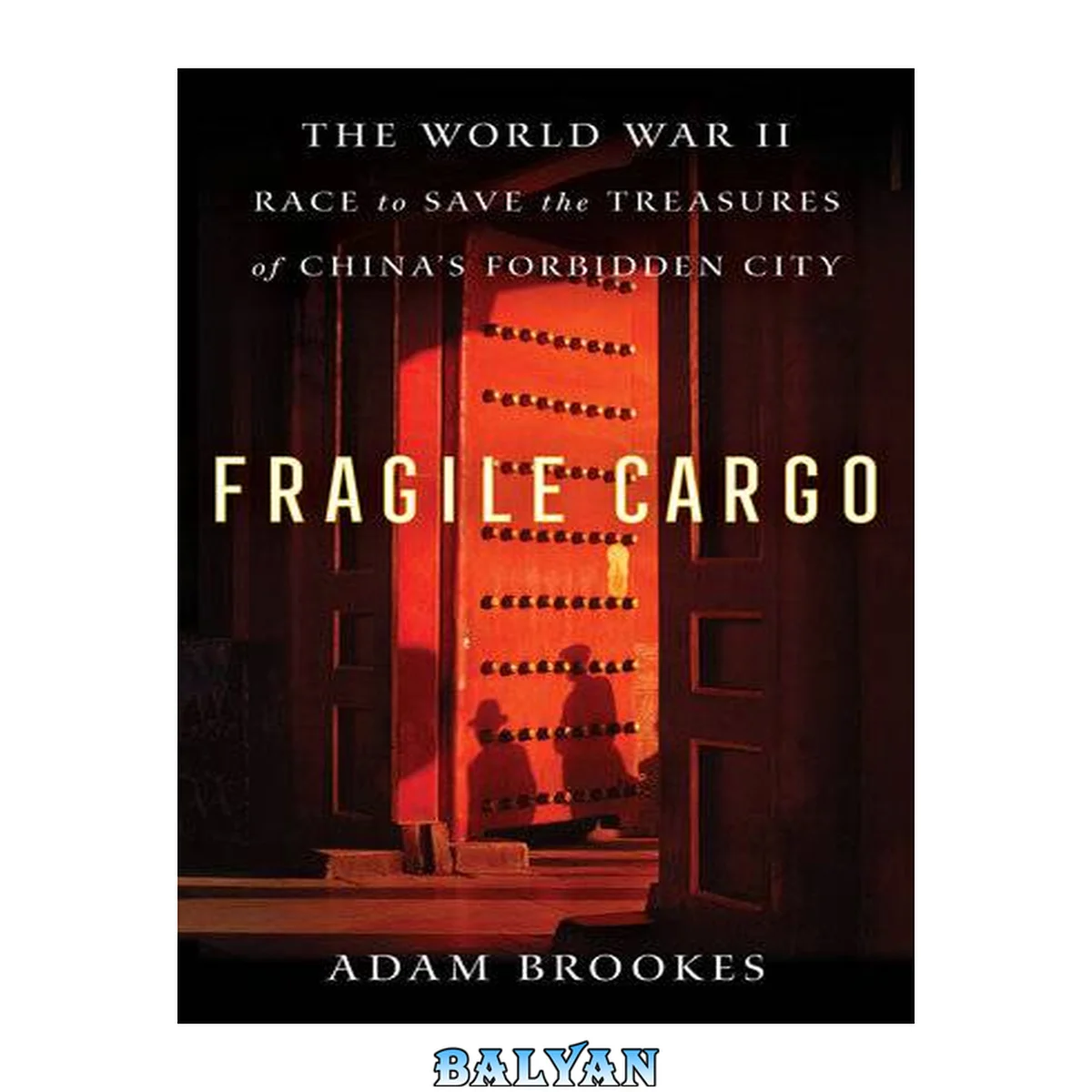
معرفی کتاب «Fragile Cargo : The World War II Race to Save the Treasures of China's Forbidden City» نوشتهٔ Bob Proctor و Adam Brookes، منتشرشده توسط نشر Atria Books در سال 2023. این کتاب در فرمت epub، زبان انگلیسی ارائه شده است.
On the eve of Japan's invasion of China in the early 1930s, a group of museum curators at the Forbidden City in Peking (now Beijing) gathered together & asked themselves: What would happen to the country's vast collection of imperial art when the inevitable all-out war between Japan & China begins?The question then prompted an odyssey that spanned 16 years — through the Sino-Japanese war & World War II. Some 20,000 cases full of imperial artworks were transported across China as war raged on. To avoid Japanese soldiers' attention, the curators carried the art on trucks, steamships, trains & even bamboo rafts.This part of China's modern history — little known outside Asia — is the subject of journalist Adam Brookes' recent book, Fragile Cargo: The World War II Race to Save the Treasures of China's Forbidden City. He spoke with NPR about how he first heard of those who rescued the Forbidden City's antiquities, & reflected on China's absence from Western understanding of the history of the Second World War.Adam Brookes: "... Nonetheless, if we want to develop any insight into the Chinese Communist Party — to understand the stories it tells itself about itself, & to grasp how it sees its place in history — we must have some sort of grounding in China's World War II experience. In his book China's Good War, Rana Mitter writes that World War II "provides for China, as it does for the other allied belligerent nations, an opportunity to portray the nation as both strong & victorious, as well as morally virtuous." War memory, he argues, affords the Party a means to embed a new nationalism in Chinese public life that can subsume revolution as the nation's central purpose.I think we use war memory for national & political purposes. In our literature and movies & museums, we sort of dream World War II into whatever we want it to be. And China does the same. — NPR The gripping true story of the bold and determined museum curators who saved the priceless treasures of China’s Forbidden City in the years leading up to World War II and beyond. Spring 1933: The silent courtyards and palaces of Peking’s Forbidden City, for centuries the home of Chinese emperors, are tense with fear and expectation. Japan’s aircrafts drone overhead, its troops and tanks are only hours away. All-out war between China and Japan is coming, and the curators of the Forbidden City are faced with an impossible question: how will they protect the vast imperial art collections in their charge? A difficult and monumental decision is made: to safeguard the treasures, they will need to be evacuated. The magnificent collections contain a million pieces of art—objects that carry China’s deepest and most ancient memories. Among them are irreplaceable artefacts: exquisite paintings on silk, vanishingly rare Ming porcelain, and the extraordinary Stone Drums of Qin, which are adorned with 2,500-year-old inscriptions of crucial cultural significance. For sixteen terrifying years, under the quiet leadership of museum director Ma Heng, the curators would go on to transport the imperial art collections thousands of miles across China—up rivers of white water, across mountain ranges, and through burning cities. In their search for safety the curators and their fragile, invaluable cargo journeyed through the maelstrom of violence, chaos, and starvation that was China’s Second World War. Told for the first time in English and playing out across a vast historical canvas, this is the exhilarating story of a small group of men and women who, when faced with war’s onslaught on civilization, chose to resist. Fragile Cargo reminds us of the enduring power of beauty in a world beset by conflict and violence. The “gripping and meticulously researched” (The Times, London) true story of the determined museum curators who saved the priceless treasures of China's Forbidden City in the years leading up to World War II and beyond.Spring 1933: The silent courtyards and palaces of Peking's Forbidden City, for centuries the home of Chinese emperors, are tense with fear and expectation. Japan's aircrafts drone overhead, its troops and tanks are only hours away. All-out war between China and Japan is coming, and the curators of the Forbidden City are faced with an impossible question: how will they protect the vast imperial art collections in their charge? A difficult and monumental decision is made: to safeguard the treasures, they will need to be evacuated. The magnificent collections contain a million pieces of art—objects that carry China's deepest and most ancient memories. Among them are irreplaceable artefacts: exquisite paintings on silk, rare Ming porcelain, and the extraordinary Stone Drums of Qin, which are adorned with 2,500-year-old inscriptions of cultural significance. For sixteen years, under the quiet leadership of museum director Ma Heng, the curators would go on to transport the imperial art collections thousands of miles across China—up rivers of white water, across mountain ranges, and through burning cities. In their search for safety the curators and their fragile, invaluable cargo journeyed through the maelstrom of violence, chaos, and starvation that was China's Second World War. Told for the first time in English and playing out across a vast historical canvas, this “compelling story of art, war, and adventure” (Simon Sebag Montefiore, author of The Romanovs: 1613-1918) follows the small group of men and women who, when faced with war's onslaught on civilization, chose to resist.
دانلود کتاب Fragile Cargo : The World War II Race to Save the Treasures of China's Forbidden City