Four Princes: Henry VIII, Francis I, Charles V, Suleiman the Magnificent and the Obsessions that Forged Modern Europe (2017)
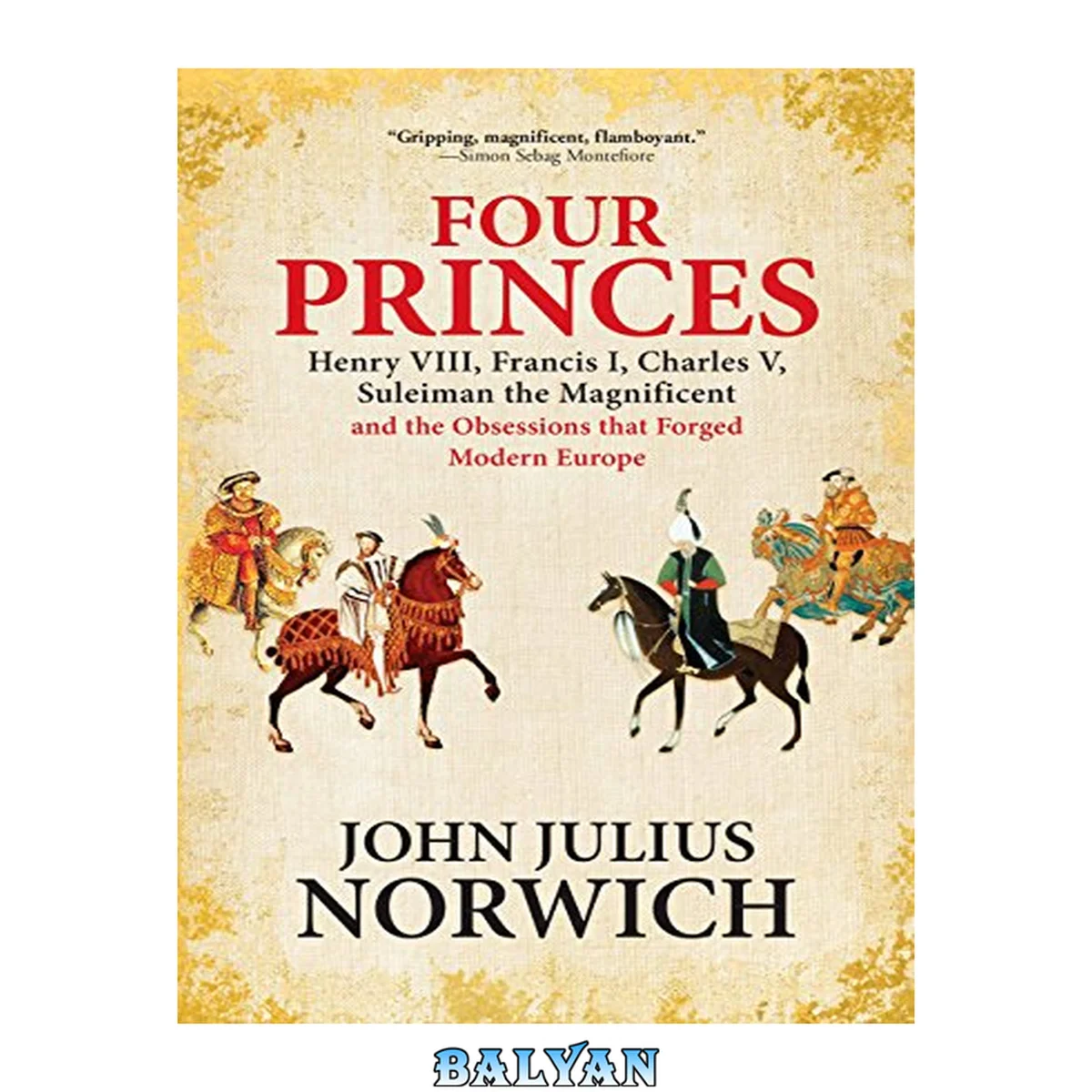
معرفی کتاب «Four Princes: Henry VIII, Francis I, Charles V, Suleiman the Magnificent and the Obsessions that Forged Modern Europe (2017)» نوشتهٔ Maurício Godinho Delgado و John Julius Norwich، منتشرشده توسط نشر Atlantic Monthly Press در سال 2017. این کتاب در فرمت epub، زبان انگلیسی ارائه شده است.
John Julius Norwich—“the very model of a popular historian” (Wall Street Journal)—is acclaimed for his distinctive ability to weave together a fascinating narrative through vivid detail, colorful anecdotes, and captivating characters. Here, he has crafted a bold tapestry of Europe and the Middle East in the early sixteenth century, when four legendary rulers towered over the era. Francis I of France was the personification of the Renaissance, and a highly influential patron of the arts and education. Henry VIII, who was not expected to inherit the throne but embraced the role with gusto, broke with the Roman Catholic Church and appointed himself head of the Church of England. Charles V was the most powerful industrious man of the time, and was unanimously elected Holy Roman Emperor. Suleiman the Magnificent—who stood apart as a Muslim—brought the Ottoman Empire to its apogee of political, military, and economic power. Against the vibrant background of the Renaissance, these four men collectively shaped the culture, religion, and politics of their respective domains. With remarkable erudition, John Julius Norwich delves into this entertaining and layered history, indelibly depicting four dynamic characters and how their incredible achievements—and obsessions with one another—changed European history. "John Julius Norwich--who the Wall Street Journal called "the very model of a popular historian"--has crafted a big, bold tapestry of the early sixteenth century, when Europe and the Middle East were overshadowed by a quartet of legendary rulers, all born within a ten-year period: Francis I of France, the personification of the Renaissance, who became a highly influential patron of the arts and education. Henry VIII, who was not expected to inherit the throne but embraced the role with gusto, broke with the Roman Catholic Church and appointed himself head of the Church of England. Charles V, the most powerful and industrious man at the time, was unanimously elected Holy Roman Emperor. Suleiman the Magnificent stood apart as a Muslim, and brought the Ottoman Empire to its apogee of political, military, and economic power. Against the vibrant background of the Renaissance, these four men laid the foundations for modern Europe and the Middle East. Their relations shifted dramatically, from hostile and competitive to friendly and supportive, while they collectively impacted the culture, religion, and politics of their respective domains. With remarkable expertise and flair, John Julius Norwich delves into this fascinating slice of world history, bringing the past to vivid life. His engaging, distinctive blend of erudition and brio indelibly portrays four dynamic characters, their incredible achievements, and the colorful surroundings in which they lived, while deftly examining the influence that each one had on the reigns of the others."--Provided by publisher. “Bad behavior makes for entertaining history” in this bold history of Europe, the Middle East, and the men who ruled them in the early sixteenth century (Kirkus Reviews). John Julius Norwich—“the very model of a popular historian”—is acclaimed for his distinctive ability to weave together a fascinating narrative through vivid detail, colorful anecdotes, and captivating characters. Here, he explores four leaders—Henry VIII, Francis I, Charles V, and Suleiman—who led their countries during the Renaissance (The Wall Street Journal). Francis I of France was the personification of the Renaissance, and a highly influential patron of the arts and education. Henry VIII, who was not expected to inherit the throne but embraced the role with gusto, broke with the Roman Catholic Church and appointed himself head of the Church of England. Charles V was the most powerful man of the time, and unanimously elected Holy Roman Emperor. And Suleiman the Magnificent—who stood apart as a Muslim—brought the Ottoman Empire to its apogee of political, military, and economic power. These men collectively shaped the culture, religion, and politics of their respective domains. With remarkable erudition, John Julius Norwich offers “an important history, masterfully written,” indelibly depicting four dynamic characters and how their incredible achievements—and obsessions with one another—changed Europe forever (The Washington Times). “Bad behavior makes for entertaining history” in this bold history of Europe, the Middle East, and the men who ruled them in the early sixteenth century ( Kirkus Reviews ). John Julius Norwich—“the very model of a popular historian”—is acclaimed for his distinctive ability to weave together a fascinating narrative through vivid detail, colorful anecdotes, and captivating characters. Here, he explores four leaders—Henry VIII, Francis I, Charles V, and Suleiman—who led their countries during the Renaissance ( The Wall Street Journal ). Francis I of France was the personification of the Renaissance, and a highly influential patron of the arts and education. Henry VIII, who was not expected to inherit the throne but embraced the role with gusto, broke with the Roman Catholic Church and appointed himself head of the Church of England. Charles V was the most powerful man of the time, and unanimously elected Holy Roman Emperor. And Suleiman the Magnificent—who stood apart as a Muslim—brought the Ottoman Empire to its apogee of political, military, and economic power. These men collectively shaped the culture, religion, and politics of their respective domains. With remarkable erudition, John Julius Norwich offers “an important history, masterfully written,” indelibly depicting four dynamic characters and how their incredible achievements—and obsessions with one another—changed Europe forever ( The Washington Times ). In Europe, 1491 to 1500 was an exciting time to be alive. The entire continent was overshadowed by four rulers, all born within a ten-year period: King Francis I of France, the most interesting of the quartet, bursting with energy and swagger, was a great patron of the arts and the personification of the Renaissance. King Henry VIII of England-who was not born to be king but embraced the role with gusto-broke with the Roman Catholic Church, and made himself head of the Church of England. Charles V, Holy Roman Emperor, the most powerful man in the civilized world, obsessed with the religious disputes of Europe, was leader of the Spanish and then Roman Empire. Suleiman the Magnificent, the richest of them all, stands apart as a Muslim, who brought the Ottoman Empire to its apogee of political, military, and economic power, as well as to the golden age of its artistic and architectural prowess. Never before had humankind seen such giants coexisting. Against the rich background of the Renaissance, they laid the foundation for modern Europe. Individually, each man could hardly have been more different. Their mutual relations shifted constantly: often they were actively hostile and occasionally they were friendly. There was a healthy respect between them; never did one make the mistake of underestimating another. And together, they dominated the world stage John Julius Norwichthe very model of a popular historian ( Wall Street Journal )is acclaimed for his distinctive ability to weave together a fascinating narrative through vivid detail, colorful anecdotes, and captivating characters. Here, he has crafted a bold tapestry of Europe and the Middle East in the early sixteenth century, when four legendary rulers towered over the era. Francis I of France was the personification of the Renaissance, and a highly influential patron of the arts and education. Henry VIII, who was not expected to inherit the throne but embraced the role with gusto, broke with the Roman Catholic Church and appointed himself head of the Church of England. Charles V was the most powerful industrious man of the time, and was unanimously elected Holy Roman Emperor. Suleiman the Magnificentwho stood apart as a Muslimbrought the Ottoman Empire to its apogee of political, military, and economic power. Against the vibrant background of the Renaissance, these four men collectively shaped the culture, religion, and politics of their respective domains. With remarkable erudition, John Julius Norwich delves into this entertaining and layered history, indelibly depicting four dynamic characters and how their incredible achievementsand obsessions with one anotherchanged European history. Contents: Preface Author’s Note Map 1. The Hollow of Their Hands 2. ‘The flower and vigour of youth’ 3. ‘All is lost, save honour’ 4. ‘Enough, my son!’ Illustrations 5. ‘Like a brother to the Sultan’ 6. ‘Noisome to our realm’ 7. ‘A reasonable regret’ 8. Fray Carlos and ‘the drum of conquest’ 9. Worth Celebrating Acknowledgements Illustration Credits Bibliography Index
دانلود کتاب Four Princes: Henry VIII, Francis I, Charles V, Suleiman the Magnificent and the Obsessions that Forged Modern Europe (2017)