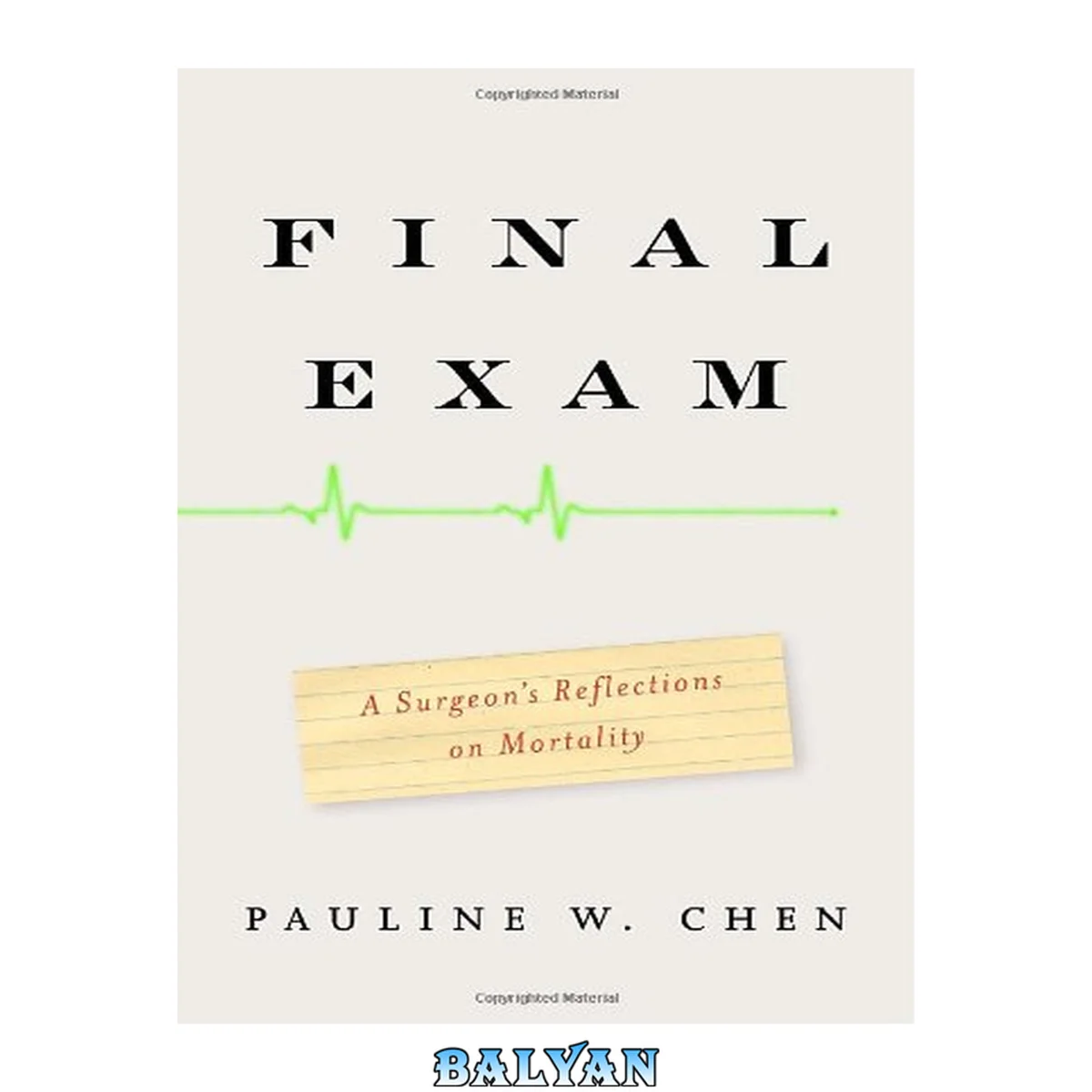
Final exam : a surgeon's reflections on mortality
معرفی کتاب «امتحان نهایی: تأملات یک جراح دربارهٔ مرگ و زندگی» (با عنوان لاتین Final exam : a surgeon's reflections on mortality) نوشتهٔ Pauline W. Chen، منتشرشده توسط نشر Alfred A. Knopf در سال 2007. این کتاب در فرمت epub، زبان انگلیسی ارائه شده است.
«امتحان نهایی: تأملات یک جراح دربارهٔ مرگ و زندگی» (Final Exam: A Surgeon's Reflections on Mortality) نوشتهٔ پائولین دبلیو. چن، روایتی صمیمانه و روشنگر از تجربهٔ زیستهٔ یک جراح پیوند عضو در مواجهه با مرگ و مردن است. این کتاب که به یکی از پرفروشترین کتابهای نیویورک تایمز تبدیل شد، پرده از تناقضی عمیق در حرفهٔ پزشکی برمیدارد: حرفهای که بر پایهٔ مراقبت از بیمار بنا شده، اما بهطرز نظاممندی فرایند مردن را از او انتزاع میکند.
دربارهٔ کتاب امتحان نهایی: تأملات یک جراح دربارهٔ مرگ و زندگی
پائولین چن، جراح پیوند کبد، در این اثر که حاصل تأملات بیستسالهٔ اوست، روایتگر سفری است که از سالهای دانشکدهٔ پزشکی و اولین کالبدشکافی آغاز میشود و تا مقام یک جراح مجرب در دانشگاه یوسیالای ادامه مییابد. کتاب در سه بخش «اصول»، «عمل» و «ارزیابی مجدد» سامان یافته و هر فصل به یکی از ایستگاههای این مسیر دشوار اختصاص دارد: از نخستین باری که چاقوی جراحی را روی بدن یک انسان زنده میگذارد تا لحظهای که برای نخستین بار مرگ یک بیمار را اعلام میکند، و حتی صحنهٔ دلخراش برداشت عضو از جسد یک زن آسیاییتبار که او را به یاد خودش میاندازد. نویسنده با صراحتی ستودنی از کشمکشهای درونی خود پرده برمیدارد: از ترسی که مانع از تماس با دوست در حال احتضارش میشد، تا خاطرهٔ تلخ مرگ جوانی که هیچگاه از ذهنش محو نشد. چن به تدریج درمییابد که نظام آموزش پزشکی، با تأکید بر فاصلهگیری عاطفی از بیمار، پزشکان را در مواجهه با مرگ «ناتوان» بار میآورد و این راز، به یکی از معماهای بنیادین کتاب بدل میشود. اوج تحول او هنگامی رقم میخورد که مشاهده میکند استادش با شکیبایی در کنار بیمار در حال مرگ میماند و به خانوادهاش اجازه میدهد که مرگی «باوقار و آرام» را تجربه کنند؛ لحظهای که چن را به این باور میرساند که «میتواند کاری بیش از معالجه انجام دهد». نثر کتاب، که ترکیبی از دقت بالینی و ظرافت ادبی است، با روایتهای شخصی و صمیمی، مخاطب را به عمق دنیایی میبرد که نهتنها برای عموم مردم، که گاه برای خود پزشکان نیز پنهان و ناشناخته است.
دربارهٔ نویسنده
پائولین دبلیو. چن (Pauline W. Chen) متولد ۱۹۶۴، جراح و نویسندهای تایوانی-آمریکایی است که ستون «پزشک و بیمار» را در نشریهٔ نیویورک تایمز مینویسد. او فارغالتحصیل دانشگاه هاروارد و دانشکدهٔ پزشکی فاینبرگ در دانشگاه نورتوسترن است و دورهٔ دستیاری خود را در دانشگاه ییل، مؤسسهٔ ملی سرطان و دانشگاه کالیفرنیا در لسآنجلس (یوسیالای) گذرانده و عضو هیئت علمی این دانشگاه بوده است. چن در سال ۱۹۹۹ به عنوان «پزشک برجستهٔ سال» در یوسیالای شناخته شد و در دوران دستیاری در ییل، جایزهٔ «انساندوستی جرج لانگستریت» را برای همدلی، مهربانی و مراقبت در عصر فناوریهای پیشرفته دریافت کرد. نخستین اثر منتشرشدهٔ او با عنوان «بهاندازهٔ کافی مرده؟ تناقض مرگ مغزی» در سال ۲۰۰۵ نامزد دریافت جایزهٔ ملی مجلات شد و کتاب حاضر در زمرهٔ ده کتاب برتر سال از نگاه منتقد نیویورک تایمز قرار گرفت.
چرا باید امتحان نهایی: تأملات یک جراح دربارهٔ مرگ و زندگی را بخوانید؟
درک تناقض ذاتی حرفهٔ پزشکی: این کتاب بهخوبی نشان میدهد که چگونه سیستمی که برای نجات حیات طراحی شده، اغلب از درک و پذیرش مرگ طفره میرود و این تناقض چه تأثیری بر بیماران و پزشکان میگذارد.
سفری به پشت صحنهٔ آموزش پزشکی: چن با روایت صادقانهٔ خود از سالهای دانشکده تا اتاق عمل، تصویری واقعی و بیپرده از آنچه در آموزش پزشکان میگذرد ارائه میدهد.
توانایی در پرسش از معنای زندگی: تأملات نویسنده دربارهٔ مرگ، در نهایت به تأملی عمیق دربارهٔ چگونگی زیستن بدل میشود و خواننده را به بازاندیشی در اولویتهای زندگی خود فرا میخواند.
همدلی با پزشکان و درک دشواریهای شغل آنان: روایتهای صمیمانهٔ چن از فشارها، ترسها و تصمیمگیریهای سخت پزشکان، درک جدیدی از حرفهای که اغلب از دید عموم پنهان است، به دست میدهد.
روایتی خواندنی از دیدگاه یک جراح زن و اقلیت: تجربهٔ زیستهٔ چن بهعنوان یک زن جراح و عضوی از جامعهٔ آسیایی-آمریکایی، به روایت او لایههای تازهای از معنا و پیچیدگی میبخشد.
فراخوانی برای تغییر در نظام سلامت: این کتاب که با استقبال گستردهٔ مخاطبان روبهرو شد، بهعنوان فراخوانی برای آموزش بهتر پزشکان در زمینهٔ مراقبتهای پایان زندگی و تقویت نقش گروههای تسکیندهنده مطرح است.
این کتاب برای چه کسانی مناسب است؟
این کتاب ارزشمند برای طیف وسیعی از مخاطبان جذاب و سودمند خواهد بود. دانشجویان پزشکی و دستیاران که با فشارها و چالشهای آموزش روبرویند، در این اثر آیینهای از تجربیات خود را خواهند یافت. همچنین، این کتاب برای هر کسی که به مسائل مربوط به پایان زندگی، اخلاق پزشکی، و روانشناسی مرگ و مردن علاقهمند است، منبعی غنی و روشنگر محسوب میشود. از سوی دیگر، افرادی که از یکی از عزیزان خود مراقبت میکنند یا با چالشهای بیماریهای صعبالعلاج دستوپنجه نرم میکنند، با خواندن این کتاب میتوانند درک عمیقتری از احساسات و نیازهای خود و پزشک معالج بیابند. در نهایت، این کتاب برای تمام خوانندگانی که به دنبال یک روایت انسانی، صمیمی و تأملبرانگیز دربارهٔ معنا و مفهوم زندگی و مرگ هستند، اثری فراموشنشدنی است.
سوالات متداول
آیا این کتاب صرفاً برای پزشکان و دانشجویان پزشکی نوشته شده است؟
خیر. اگرچه این کتاب روایتهای دقیق و تخصصی از محیط جراحی و آموزش پزشکی ارائه میدهد، اما زبان و محتوای آن بهگونهای است که برای هر خوانندهٔ غیرمتخصصی که به مسائل انسانی و فلسفی پیرامون زندگی و مرگ علاقهمند است، جذاب و قابلدرک خواهد بود.
تفاوت اصلی این کتاب با دیگر آثار مشابه در حوزهٔ پزشکی و مرگ چیست؟
برخلاف بسیاری از کتابهای پزشکی که بر جنبههای علمی یا فنی تمرکز دارند، «امتحان نهایی» اثری عمیقاً شخصی و انسانی است. نویسنده با شجاعت و صداقت، ترسها، تردیدها و تحولات عاطفی خود را بهتصویر میکشد و بهجای فاصلهگیری از بیماران، بر لزوم ایجاد پیوند عاطفی و پذیرش مرگ بهعنوان بخشی طبیعی از زندگی تأکید میکند.
آیا این کتاب به موضوع مراقبتهای تسکینی نیز پرداخته است؟
بله. یکی از نقاط قوت کتاب، اشاره به نقش و اهمیت مراقبتهای تسکینی (پالیاِتیو) در بهبود کیفیت زندگی بیماران در مراحل پایانی است. چن در روایتهای خود از مواردی میگوید که با کمک این گروهها توانسته به بیماران و خانوادههایشان در پذیرش و گذر از مرگ یاری رساند.
A brilliant young transplant surgeon brings moral intensity and narrative drama to the most powerful and vexing questions of medicine and the human condition. When Pauline Chen began medical school twenty years ago, she dreamed of saving lives. What she did not count on was how much death would be a part of her work. Almost immediately, Chen found herself wrestling with medicine’s most profound paradox, that a profession premised on caring for the ill also systematically depersonalizes dying. Final Exam follows Chen over the course of her education, training, and practice as she grapples at strikingly close range with the problem of mortality, and struggles to reconcile the lessons of her training with her innate knowledge of shared humanity, and to separate her ideas about healing from her fierce desire to cure. From her first dissection of a cadaver in gross anatomy to the moment she first puts a scalpel to a living person; from the first time she witnesses someone flatlining in the emergency room to the first time she pronounces a patient dead, Chen is struck by her own mortal fears: there was a dying friend she could not call; a young patient’s tortured death she could not forget; even the sense of shared kinship with a corpse she could not cast aside when asked to saw its pelvis in two. Gradually, as she confronts the ways in which her fears have incapacitated her, she begins to reject what she has been taught about suppressing her feelings for her patients, and she begins to carve out a new role for herself as a physician and as human being. Chen’s transfixing and beautiful rumination on how doctors negotiate the ineluctable fact of death becomes, in the end, a brilliant questioning of how we should live. Moving and provocative, motored equally by clinical expertise and extraordinary personal grace, this is a piercing and compassionate journey into the heart of a world that is hidden and yet touches all of our lives. A superb addition to the best medical literature of our time. A brilliant young transplant surgeon brings moral intensity and narrative drama to the most powerful and vexing questions of medicine and the human condition.When Pauline Chen began medical school twenty years ago, she dreamed of saving lives. What she did not count on was how much death would be a part of her work. Almost immediately, Chen found herself wrestling with medicine’s most profound paradox, that a profession premised on caring for the ill also systematically depersonalizes dying. __Final Exam__ follows Chen over the course of her education, training, and practice as she grapples at strikingly close range with the problem of mortality, and struggles to reconcile the lessons of her training with her innate knowledge of shared humanity, and to separate her ideas about healing from her fierce desire to cure.From her first dissection of a cadaver in gross anatomy to the moment she first puts a scalpel to a living person; from the first time she witnesses someone flatlining in the emergency room to the first time she pronounces a patient dead, Chen is struck by her own mortal fears: there was a dying friend she could not call; a young patient’s tortured death she could not forget; even the sense of shared kinship with a corpse she could not cast aside when asked to saw its pelvis in two. Gradually, as she confronts the ways in which her fears have incapacitated her, she begins to reject what she has been taught about suppressing her feelings for her patients, and she begins to carve out a new role for herself as a physician and as human being. Chen’s transfixing and beautiful rumination on how doctors negotiate the ineluctable fact of death becomes, in the end, a brilliant questioning of how we should live.Moving and provocative, motored equally by clinical expertise and extraordinary personal grace, this is a piercing and compassionate journey into the heart of a world that is hidden and yet touches all of our lives. A superb addition to the best medical literature of our time. A Brilliant Young Transplant Surgeon Brings Moral Intensity And Narrative Drama To The Most Powerful And Vexing Questions Of Medicine And The Human Condition. When Chen Began Medical School, She Dreamed Of Saving Lives--what She Did Not Count On Was How Much Death Would Be A Part Of Her Work. Almost Immediately, Chen Found Herself Wrestling With Medicine's Most Profound Paradox, That A Profession Premised On Caring For The Ill Also Systematically Depersonalizes Dying. Over The Course Of Her Education, Training, And Practice, She Grappled At Strikingly Close Range With The Problem Of Mortality, Struggling To Reconcile The Lessons Of Her Training With Her Innate Knowledge Of Shared Humanity, And To Separate Her Ideas About Healing From Her Fierce Desire To Cure. Her Rumination On How Doctors Negotiate The Ineluctable Fact Of Death Becomes, In The End, A Provocative Questioning Of How We Should Live.--from Publisher Description. 1. Principles -- Resurrectionist -- Into The Nexus -- See One, Do One -- 2. Practice -- The Informal Curriculum -- M And M -- The Visible Woman -- First, Do Not Harm -- Sorry To Inform You -- Through The Looking Glass. Pauline W. Chen. Includes Bibliographical References (p. [251-268]). A brilliant transplant surgeon brings compassion and narrative drama to the fearful reality that every doctor must face: the inevitability of mortality.“Uncommonly moving... A revealing and heartfelt book.'—Atul Gawande, #1 New York bestselling author of Being MortalWhen Pauline Chen began medical school, she dreamed of saving lives. What she could not predict was how much death would be a part of her work. Almost immediately, she found herself wrestling with medicine's most profound paradox—that a profession premised on caring for the ill also systematically depersonalizes dying. Final Exam follows Chen over the course of her education and practice as she struggles to reconcile the lessons of her training with her innate sense of empathy and humanity. A superb addition to the best medical literature of our time. Describes how physicians must deal with the realities of death, the risks and rewards of emotional involvement, and her own personal experiences throughout her education and career