ترس، خشم و شکست: تاریخچهای از جنگ دولت بوش علیه تروریسم از حملات سپتامبر ۲۰۰۱ تا شکست در بغداد
Fear, Anger and Failure: A Chronicle of the Bush Administration's War Against Terror from the Attacts in September 2001 to Defeat in Baghdad
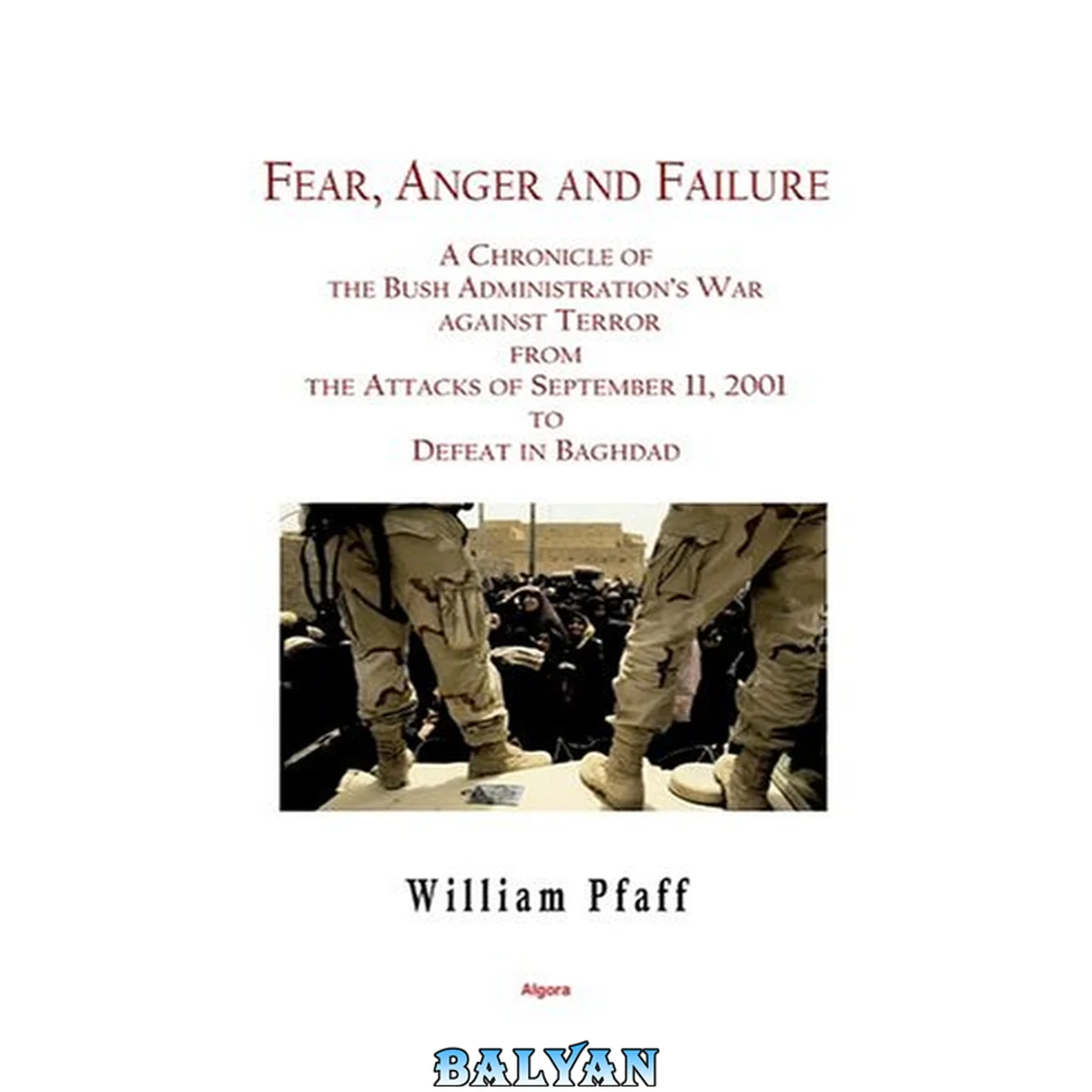
معرفی کتاب «ترس، خشم و شکست: تاریخچهای از جنگ دولت بوش علیه تروریسم از حملات سپتامبر ۲۰۰۱ تا شکست در بغداد» (با عنوان لاتین Fear, Anger and Failure: A Chronicle of the Bush Administration's War Against Terror from the Attacts in September 2001 to Defeat in Baghdad) نوشتهٔ By William Pfaff، منتشرشده توسط نشر Algora Publishing در سال 2004. این کتاب در فرمت pdf، زبان انگلیسی ارائه شده است.
FEAR, ANGER AND FAILURE is a critical account of the war on terror and the events and forces influencing it or provoked by it, composed of newspaper columns dating from the afternoon of September 11, 2001, and ending in late December, 2003. These articles discuss American policy and personalities but also the dramatic change the Bush administration's conduct has produced in Washington s relations with its European allies. The Israeli-Palestinian struggle, crucial to American interests in the Middle East, was necessarily a part of these dynamics. The articles cover the lead up to the war and the political and economic directions the U.S. has taken since then, and discusses the geopolitical implications for Europe and the rest of the world.The defeat in Baghdad was implicitly acknowledged by President George W. Bush when he announced on November 14, 2003 that the process by which American Occupation authorities in Iraq would hand power over to Iraqi authorities would be accelerated, with a target date of June 2004. What has happened since then vindicates this interpretation.The dream promoted by Mr. Bush and his advisers was that a dramatic democratic transformation of Iraq could be accomplished, provoking quasi-revolutionary political change elsewhere in the Arab Moslem world, accelerating modernizing forces in Islamic society as a whole. Even before the capture of Saddam Hussein failed to improve the situation, this policy was proven to be what its critics had always said it was, a na??ve, sentimental, a-historical and utopian illusion.Pfaff's columns provide insights into the shifting international dynamics and the reasons why Europeans - and many Americans - distrust what appears to be a newly aggressive American imperialism. He also discusses NATO and other institutions that we have relied upon to help craft a peaceful and cooperative future.After September 11, 2001, it was easy to forget the economic uncertainties of the preceding summer, the obvious flaws in the presidential election of 2000, and other brewing problems. But the weaknesses are still with us, and a crack-down on liberties may not be the best answer. September To December 2001 : From The Attacks On New York And Washington To Victory Over The Taliban In Afghanistan -- December 2001 To March 2002, From Ambiguous Victory In Afghanistan To The Campaign To Attack Iraq -- From April To August 2002, The Decision To Transform The Middle East Through War -- From October 2002 To March 2003, The U.s. Discards Its Allies And Defies The Un -- March To July 2003, From War To Hollow Victory -- July To November 2003, From Victory To Defeat. William Pfaff. Includes Index. "William Pfaff is Walter Lippmann's authentic heir. Like Lippmann, he places the rush of events in historical and cultural perspective and writes about them with lucidity and grace." - Arthur M. Schlesinger, Jr. "America's best foreign affairs columnist." - Ronald Steel, Lippmann's biographer. William Pfaff's "Reflections" on politics and contemporary history have appeared in The New Yorker since 1971. His column for the Paris-based International Herald Tribune is syndicated by the Los Angeles Times Contents: September to December 2001 : from the attacks on New York and Washington to victory over the Taliban in Afghanistan December 2001 to March 2002, from ambiguous victory in Afghanistan to the campaign to attack Iraq From April to August 2002, the decision to transform the Middle East through war From October 2002 to March 2003, the U.S. discards its allies and defies the UN March to July 2003, from war to hollow victory July to November 2003, from victory to defeat. Table of Contents......Page 13 Introduction......Page 15 PART ONE......Page 21 PART TWO......Page 57 PART THREE......Page 85 PART FOUR......Page 127 PART FIVE......Page 181 PART SIX......Page 223 Conclusion......Page 261 Appendix......Page 265 Renewing The Transatlantic Partnership,......Page 271 Index of Names......Page 277 For half a century Pfaff has analyzed world events for The International Herald Tribune, the New Yorker and the rest of us. This collection of his best recent pieces covers September 11 and the divergent political and economic directions the US and Europe
دانلود کتاب ترس، خشم و شکست: تاریخچهای از جنگ دولت بوش علیه تروریسم از حملات سپتامبر ۲۰۰۱ تا شکست در بغداد