Fassbinder's Germany: History, Identity, Subject (Amsterdam University Press - Film Culture in Transition)
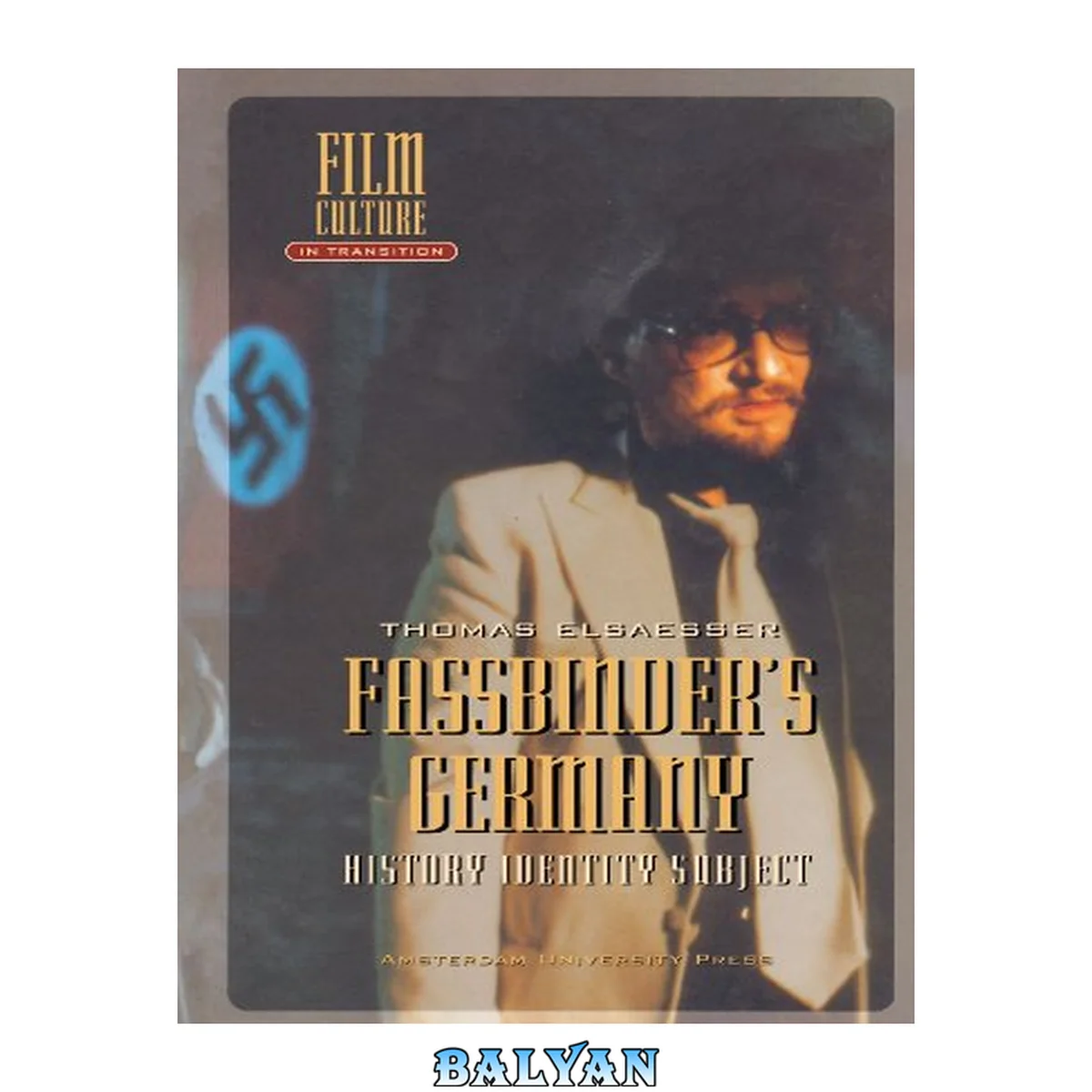
معرفی کتاب «Fassbinder's Germany: History, Identity, Subject (Amsterdam University Press - Film Culture in Transition)» نوشتهٔ by Thomas Elsaesser، منتشرشده توسط نشر Amsterdam University Press در سال 1996. این کتاب در فرمت pdf، زبان انگلیسی ارائه شده است.
Abstract: Rainer Werner Fassbinder is one of the most prominent and important authors of post-war European cinema. Thomas Elsaesser is the first to write a thoroughly analytical study of his work. He stresses the importance of a closer understanding of Fassbinder's career through a re-reading of his films as textual entities. Approaching the work from different thematic and analytical perspectives, Elsaesser offers both an overview and a number of detailed readings of crucial films, while also providing a European context for Fassbinder's own coming to terms with fascism Table of Contents......Page 6 Introduction: A Work Upstaged by Life?......Page 8 1. Fassbinder Representing Germany......Page 14 2. From Vicious Circles to Double Binds Impossible Demands in the Field of Vision......Page 46 3. Murder, Merger, Suicide The Politics of despair......Page 74 4. The BRD Trilogy, or: History, The Love Story? THE MARRIAGE OF MARIA BRAUN, LOLA and VERONIKA VOSS......Page 98 5. Fassbinder, Reflections of Fascism and the European Cinema......Page 130 6. ...wie einst? LILI MARLEEN......Page 150 7. Frankfurt, Germans and Jews The City, Garbage and Death......Page 176 8. Beyond ’Schuld‘ and ’Schulden’ IN A YEAR OF THIRTEEN MOONS......Page 198 9. Franz Biberkopf’s/ex-changes BERLIN ALEXANDERPLATZ......Page 218 10. Historicising the Subject A Body of Work......Page 238 Appendix One: A Commented Filmography The House That Rainer Built......Page 262 Appendix Two: Fassbinder's Germany 1945–1982 A Chronology......Page 300 Appendix Three: Bibliography......Page 320 Notes......Page 342 Index......Page 390 Introduction: A Work Upstaged By Life? -- 1. Fassbinder Representing Germany -- 2. From Vicious Circles To Double Binds: Impossible Demands In The Field Of Vision -- 3. Murder, Merger, Suicide: The Politics Of Despair -- 4. The Brd Trilogy, Or: History, The Love Story? The Marriage Of Maria Braun, Lola And Veronika Voss -- 5. Fassbinder, Reflections Of Fascism And The European Cinema -- 6. ...wie Einst? / Lili Marleen -- 7. Frankfurt, Germans And Jews: The City, Garbage And Death -- 8. Beyond 'schuld' And 'schulden': In A Year Of Thirteen Moons -- 9. Franz Biberkopf's/ex-changes: Berlin Alexanderplatz -- 10. Historicising The Subject: A Body Of Work -- Appendix 1. A Commented Filmography: The House That Rainer Built -- Appendix 2. Fassbinder's Germany 1945-1982: A Chronology. By Thomas Elsaesser. Includes Bibliographical References (p. 319-339) And Index. Ch. 7 (p. 175-195), "Frankfurt, Germans and Jews: 'The City, Garbage and Death'", discusses Fassbinder's controversial play, written in 1975. Its first performance in Frankfurt in 1985 caused a scandal - it was perceived by many as an antisemitic work. Contends that the play was misread - it is not antisemitic, although it depicts antisemitism. The hero, called "The Rich Jew", is a cliché, a composite figure which German antisemitism has for centuries projected onto the Jews. It is the "Other" who embodies the fears of postwar West Germans, and serves as the object of their hatred toward their former victims. The existence of such a figure allowed the Germans to view Germany as a nation of victims and to ignore any other type of victim. (From the Bibliography of the Vidal Sassoon International Center for the Study of Antisemitism)
دانلود کتاب Fassbinder's Germany: History, Identity, Subject (Amsterdam University Press - Film Culture in Transition)