مدرنیتههای فاشیستی: ایتالیا، ۱۹۲۲-۱۹۴۵ (مطالعاتی در تاریخ جامعه و فرهنگ، ۴۲)
Fascist Modernities: Italy, 1922-1945 (Studies on the History of Society and Culture, 42) (Paperback)
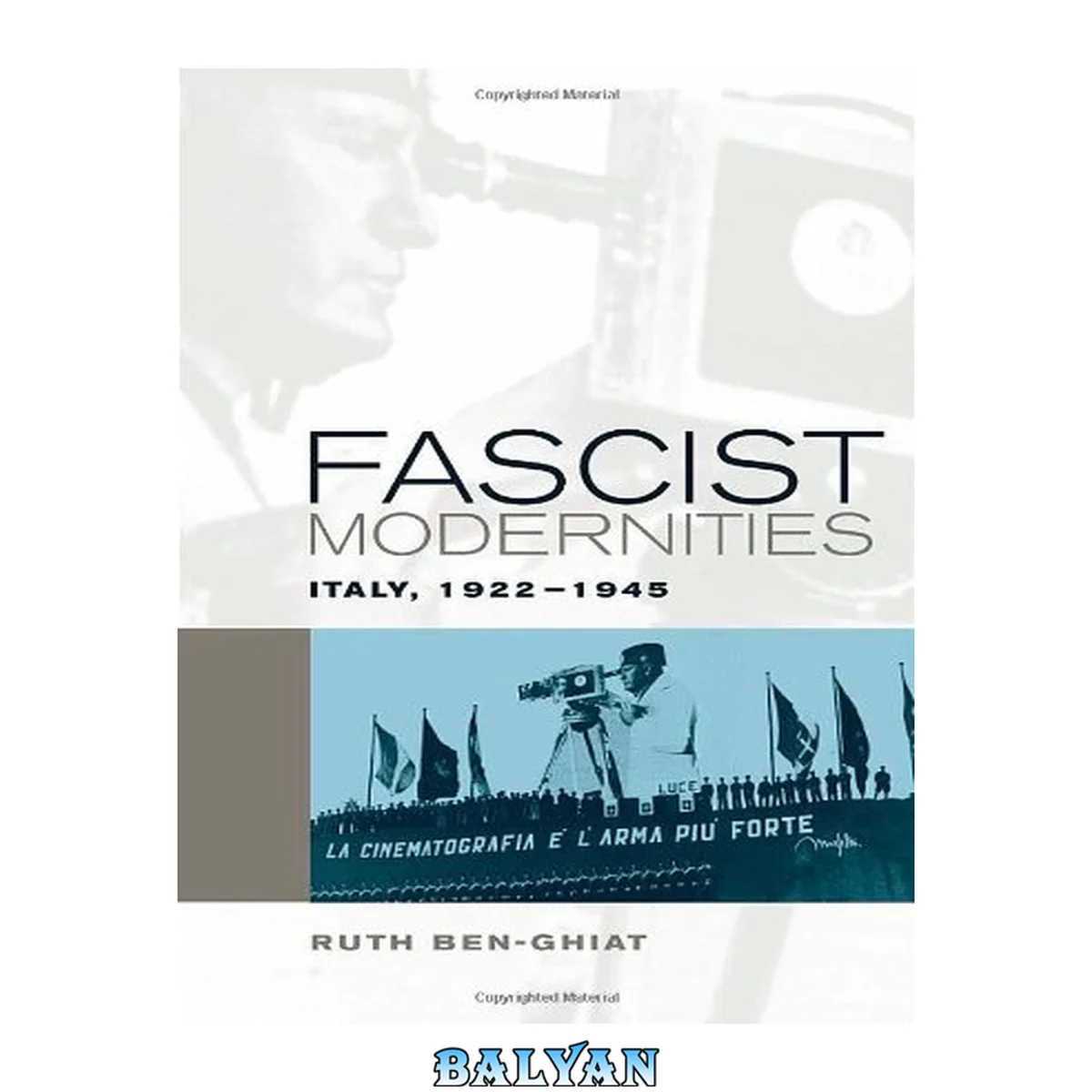
معرفی کتاب «مدرنیتههای فاشیستی: ایتالیا، ۱۹۲۲-۱۹۴۵ (مطالعاتی در تاریخ جامعه و فرهنگ، ۴۲)» (با عنوان لاتین Fascist Modernities: Italy, 1922-1945 (Studies on the History of Society and Culture, 42) (Paperback)) نوشتهٔ Ruth Ben-Ghiat; NetLibrary, Inc، منتشرشده توسط نشر Berkeley : University Of California Press در سال 2001. این کتاب در فرمت pdf، زبان انگلیسی ارائه شده است.
Ruth Ben-Ghiat's Fascist Modernities: Italy 1922-1945 is among the very best analyses of Fascist culture in any language. Based on a truly amazing amount of research, this volume traces the first stirrings of a generation of Italian writers and film directors who would pass from Fascism through the Resistance to militancy in the Communist, Socialist, Action, and Christian Democratic parties and then beyond into the new Italy of the 'economic miracle.'—Alexander De Grand, author of Bottai e la cultura fascista
A superb and original work of scholarship, Fascist Modernities give us a startling new picture of the Italian fascist period and its cultural politics, as well as remarkable new analyses of Italian fascist anti-Semitism and of the relation between Italy's colonial aspirations and conquests and its modernizing schemes. Most impressive of all, Ben-Ghiat single-handedly changes our understanding of the place of realism in Italian literary history and in twentieth-century cinema.—Barbara Spackman, author of Fascist Virilities: Rhetoric, Ideology and Social Fantasy in Italy
Ruth Ben-Ghiat's book is an important contribution to the history of fascist culture, showing the complex ways in which fascism used intellectuals and intellectuals used fascism.—Alexander Stille, author of Benevolence and Betrayal: Five Italian-Jewish Families Under Fascism
New York Review of Books
More than a history of Fascist culture,a richly documented and thorough chronicle of the relationship between the regime and culture.
Preliminaries......Page 1 Contents......Page 5 List of Illustrations......Page 7 Acknowledgments......Page 9 Introduction......Page 11 1 Toward a Fascist Culture......Page 27 2 Narrating the Nation......Page 56 3 Envisioning Modernity......Page 80 4 Class Dismissed......Page 103 5 Conquest and Collaboration......Page 133 6 The Wars of Fascism......Page 181 Epilogue......Page 212 Notes......Page 223 Bibliography......Page 287 Index......Page 315 "Ruth Ben-Ghiat's innovative cultural history of Mussolini's dictatorship is a provocative discussion of the meanings of modernity in interwar Italy. This work argues that fascism appealed to many Italian intellectuals as a new model of modernity that would resolve the contemporary European crisis as well as long-standing problems of the national past."--BOOK JACKET. This cultural history of Mussolini's dictatorship discusses the meanings of modernity in interwar Italy. The work argues that fascism appealed to many Italian intellectuals as a new model of modernity that would resolve the European and national crises Six months before taking power, Mussolini asked readers of his new review Gerarchia, Does fascism aim at restoring the State, or subverting it?