ارزیابی برنامههای آموزشی: چهار سطح (ویرایش سوم)
Evaluating Training Programs: The Four Levels (3rd Edition)
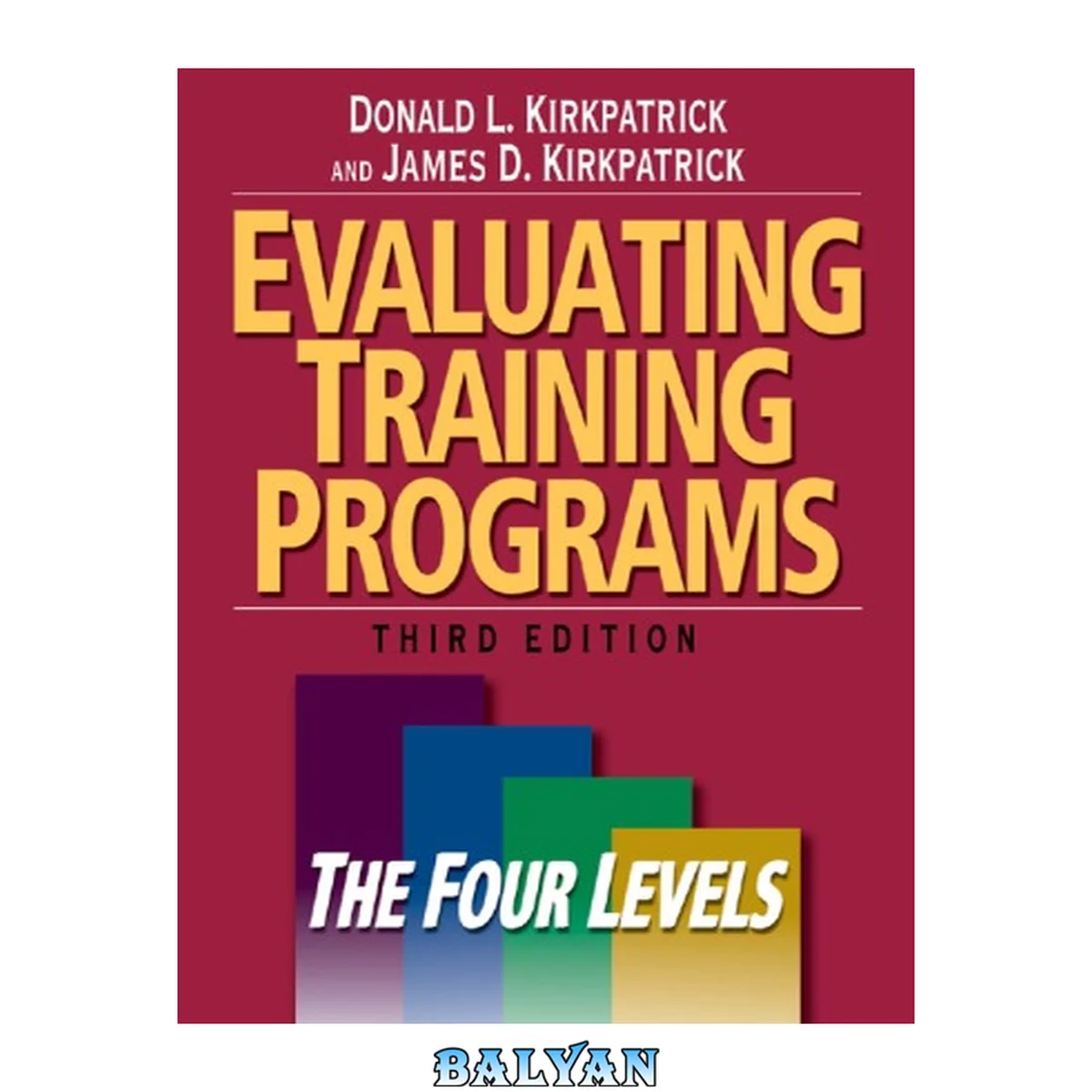
معرفی کتاب «ارزیابی برنامههای آموزشی: چهار سطح (ویرایش سوم)» (با عنوان لاتین Evaluating Training Programs: The Four Levels (3rd Edition)) نوشتهٔ Lynch، Jennifer و Donald L Kirkpatrick Ph.D.، منتشرشده توسط نشر Berrett-Koehler Publishers در سال 2006. این کتاب در فرمت pdf، زبان انگلیسی ارائه شده است.
The ''Kirkpatrick Model'' for evaluating training programs is the most widely used approach in the corporate, government, and academic worlds. First developed in 1959, it focuses on four key areas: reaction, learning, behavior, and results. Evaluating Training Programs provides a comprehensive guide to KirkpatrickвЂTMs four-level model, along with detailed case studies that show how the approach is used successfully in a wide range of programs and institutions. The third edition revises and updates existing material and includes new strategies for managing change effectively. The Kirkpatrick Model For Evaluating Training Programs Is The Most Widely Used Approach In The Corporate, Government, And Academic Worlds. First Developed In 1959, It Focuses On Four Key Areas: Reaction, Learning, Behavior, And Results. This Book Provides A Comprehensive Guide To Kirkpatrick's Four-level Model, Along With Detailed Case Studies That Show How The Approach Is Used Successfully In A Wide Range Of Programs And Institutions. The Third Edition Revises And Updates Existing Material And Includes New Strategies For Managing Change Effectively. Foreword / Merrill C. Anderson -- Foreword To The Third Edition / Diederick Stoel -- Preface -- Part 1. Concepts, Principles, Guidelines, And Techniques. Chap. 1. Evaluating : Part Of A Ten-step Process -- Chap. 2. Reasons For Evaluating -- Chap. 3. The Four Levels : An Overview -- Chap. 4. Evaluating Reaction -- Chap. 5. Evaluating Learning -- Chap. 6. Evaluating Behavior -- Chap. 7. Evaluating Results -- Chap. 8. Implementing The Four Levels -- Chap. 9. Managing Change -- Chap. 10. Using Balanced Scorecards To Transfer Learning To Behavior -- Chap. 11. So How Is E-learning Different? -- Part 2. Case Studies Of Implementation. Chap. 12. Developing An Effective Level 1 Reaction Form : Duke Energy Corporation. Chap. 13. Evaluating A Training Program For Nonexempt Employees : First Union National Bank -- Chap. 14. Evaluating A Training Program On Developing Supervisory Skills : Management Institute, University Of Wisconsin -- Chap. 15. Evaluating A Leadership Training Program : Gap Inc. -- Chap. 16. Evaluating A Leadership Development Program : U.s. Geological Survey -- Chap. 17. Evaluating A Leadership Development Program : Caterpillar, Inc. -- Chap. 18. Evaluating Desktop Application Courses : Pollak Learning Alliance (australia) -- Chap. 19. Evaluating An Orientation Program For New Managers : Canada Revenue Agency, Pacific Region -- Chap. 20. Evaluating Training For An Outage Management System : Pacificcorp. Chap. 21. Evaluating A Coaching And Counseling Course : Grupo Iberdrola (spain) -- Chap. 22. Evaluating A Performance Learning Model : Defense Acquisition University -- Chap. 23. Evaluating An Information Technology Skills -- Chap. 24. Evaluating A Performance Improvement Program : Toyota Motor Sales, U.s.a., Inc. -- Chap. 25. Evaluating A Career Development Initiative : Innovative Computer, Inc. -- Chap. 26. Evaluating The Four Levels By Using A New Assessment Process : Army And Air Force Exchange Service (aafes) -- Chap. 27. Evaluating A Training Program At All Four Levels : Cisco Systems, Inc. -- Chap. Index -- Chap. The Authors. Donald L. Kirkpatrick, James D. Kirkpatrick. Includes Bibliographical References And Index. Contents......Page 6 Foreword......Page 10 Foreword to the Third Edition......Page 12 Preface......Page 16 Part One: Concepts, Principles, Guidelines, and Techniques......Page 20 1. Evaluating: Part of a Ten-Step Process......Page 22 2. Reasons for Evaluating......Page 35 3. The Four Levels: An Overview......Page 40 4. Evaluating Reaction......Page 46 5. Evaluating Learning......Page 61 6. Evaluating Behavior......Page 71 7. Evaluating Results......Page 82 8. Implementing the Four Levels......Page 90 9. Managing Change......Page 94 10. Using Balanced Scorecards to Transfer Learning to Behavior......Page 101 11. So How Is E-Learning Different?......Page 114 Part Two: Case Studies of Implementation......Page 134 12. Developing an Effective Level 1 Reaction Form: Duke Energy Corporation......Page 136 13. Evaluating a Training Program for Nonexempt Employees: First Union National Bank......Page 143 14. Evaluating a Training Program on Developing Supervisory Skills: Management Institute, University of Wisconsin......Page 150 15. Evaluating a Leadership Training Program: Gap Inc.......Page 163 16. Evaluating a Leadership Development Program: U.S. Geological Survey......Page 187 17. Evaluating a Leadership Development Program: Caterpillar, Inc.......Page 205 18. Evaluating Desktop Application Courses: Pollak Learning Alliance (Australia)......Page 219 19. Evaluating an Orientation Program for New Managers: Canada Revenue Agency, Pacific Region......Page 225 20. Evaluating Training for an Outage Management System: PacifiCorp......Page 240 21. Evaluating a Coaching and Counseling Course: Grupo Iberdrola (Spain)......Page 258 22. Evaluating a Performance Learning Model: Defense Acquisition University......Page 281 23. Evaluating an Information Technology Skills Training Program: The Regence Group......Page 295 24. Evaluating a Performance Improvement Program: Toyota Motor Sales, U.S.A., Inc.......Page 306 25. Evaluating a Career Development Initiative: Innovative Computer, Inc.......Page 340 26. Evaluating the Four Levels by Using a New Assessment Process: Army and Air Force Exchange Service (AAFES)......Page 362 27. Evaluating a Training Program at All Four Levels: Cisco Systems, Inc.......Page 370 B......Page 380 C......Page 381 E......Page 383 G......Page 384 L......Page 385 O......Page 387 R......Page 388 S......Page 389 T......Page 390 W......Page 391 The Authors......Page 392 An updated edition of the bestselling classicDonald Kirkpatrick is a true legend in the training field: he is a past president of ASTD, a member of Training magazine's'HRD Hall of Fame,'and the recipient of the 2003'Lifetime Achievement Award in Workplace Learning and Performance'from ASTDIn 1959 Donald Kirkpatrick developed a four-level model for evaluating training programs. Since then, the'Kirkpatrick Model'has become the most widely used approach to training evaluation in the corporate, government, and academic worlds.Evaluating Training Programs provided the first comprehensive guide to Kirkpatrick's Four Level Model, along with detailed case studies of how the model is being used successfully in a wide range of programs and institutions. This new edition includes revisions and updates of the existing material plus new case studies that show the four-level model in action.Going beyond just using simple reaction questionnaires to rate training programs, Kirkpatrick's model focuses on four areas for a more comprehensive approach to evaluation: Evaluating Reaction, Evaluating Learning, Evaluating Behavior, and Evaluating Results.Evaluating Training Programs is a how-to book, designed for practitiners in the training field who plan, implement, and evaluate training programs. The author supplements principles and guidelines with numerous sample survey forms for each step of the process. For those who have planned and conducted many programs, as well as those who are new to the training and development field, this book is a handy reference guide that provides a practical and proven model for increasing training effectiveness through evaluation.In the third edition of this classic bestseller, Kirkpatrick offers new forms and procedures for evaluating at all levels and several additional chapters about using balanced scorecards and'Managing Change Effectively.'He also includes twelve new case studies from organizations that have been evaluated using one or more of the four levels--Caterpillar, Defense Acquisition University, Microsoft, IBM, Toyota, Nextel, The Regence Group, Denison University, and Pollack Learning Alliance. An updated edition of the bestselling classic Donald Kirkpatrick is a true legend in the training he is a past president of ASTD, a member of Training magazine's "HRD Hall of Fame," and the recipient of the 2003 "Lifetime Achievement Award in Workplace Learning and Performance" from ASTD In 1959 Donald Kirkpatrick developed a four-level model for evaluating training programs. Since then, the "Kirkpatrick Model" has become the most widely used approach to training evaluation in the corporate, government, and academic worlds. Evaluating Training Programs provided the first comprehensive guide to Kirkpatrick's Four Level Model, along with detailed case studies of how the model is being used successfully in a wide range of programs and institutions. This new edition includes revisions and updates of the existing material plus new case studies that show the four-level model in action. Going beyond just using simple reaction questionnaires to rate training programs, Kirkpatrick's model focuses on four areas for a more comprehensive approach to Evaluating Reaction, Evaluating Learning, Evaluating Behavior, and Evaluating Results. Evaluating Training Programs is a how-to book, designed for practitiners in the training field who plan, implement, and evaluate training programs. The author supplements principles and guidelines with numerous sample survey forms for each step of the process. For those who have planned and conducted many programs, as well as those who are new to the training and development field, this book is a handy reference guide that provides a practical and proven model for increasing training effectiveness through evaluation. In the third edition of this classic bestseller, Kirkpatrick offers new forms and procedures for evaluating at all levels and several additional chapters about using balanced scorecards and "Managing Change Effectively." He also includes twelve new case studies from organizations that have been evaluated using one or more of the four levels--Caterpillar, Defense Acquisition University, Microsoft, IBM, Toyota, Nextel, The Regence Group, Denison University, and Pollack Learning Alliance. Contents 6 Foreword 10 Foreword to the Third Edition 12 Preface 16 Part One: Concepts, Principles, Guidelines, and Techniques 20 1. Evaluating: Part of a Ten-Step Process 22 2. Reasons for Evaluating 35 3. The Four Levels: An Overview 40 4. Evaluating Reaction 46 5. Evaluating Learning 61 6. Evaluating Behavior 71 7. Evaluating Results 82 8. Implementing the Four Levels 90 9. Managing Change 94 10. Using Balanced Scorecards to Transfer Learning to Behavior 101 11. So How Is E-Learning Different? 114 Part Two: Case Studies of Implementation 134 12. Developing an Effective Level 1 Reaction Form: Duke Energy Corporation 136 13. Evaluating a Training Program for Nonexempt Employees: First Union National Bank 143 14. Evaluating a Training Program on Developing Supervisory Skills: Management Institute, University of Wisconsin 150 15. Evaluating a Leadership Training Program: Gap Inc. 163 16. Evaluating a Leadership Development Program: U.S. Geological Survey 187 17. Evaluating a Leadership Development Program: Caterpillar, Inc. 205 18. Evaluating Desktop Application Courses: Pollak Learning Alliance (Australia) 219 19. Evaluating an Orientation Program for New Managers: Canada Revenue Agency, Pacific Region 225 20. Evaluating Training for an Outage Management System: PacifiCorp 240 21. Evaluating a Coaching and Counseling Course: Grupo Iberdrola (Spain) 258 22. Evaluating a Performance Learning Model: Defense Acquisition University 281 23. Evaluating an Information Technology Skills Training Program: The Regence Group 295 24. Evaluating a Performance Improvement Program: Toyota Motor Sales, U.S.A., Inc. 306 25. Evaluating a Career Development Initiative: Innovative Computer, Inc. 340 26. Evaluating the Four Levels by Using a New Assessment Process: Army and Air Force Exchange Service (AAFES) 362 27. Evaluating a Training Program at All Four Levels: Cisco Systems, Inc. 370 Index 380 A 380 B 380 C 381 D 383 E 383 F 384 G 384 H 385 I 385 J 385 K 385 L 385 M 387 N 387 O 387 P 388 Q 388 R 388 S 389 T 390 U 391 V 391 W 391 The Authors 392 Evaluating Training Programs is a "how-to" book, designed for practitioners in the training field who plan, implement, and evaluate training programs. The author supplements principles and guidelines with numerous sample survey forms for each step of the process. For those who have planned and conducted many programs, as well as those who are new to the training and development field, this book is a handy reference guide that provides a practical and proven model for increasing training effectiveness through evaluation. Evaluating Training Programs provides a comprehensive guide to Donald Kirkpatrich's classic Four Level Model-the most widely used approach to training evaluation in the corporate, government, and academic worlds. This updated edition includes new case studies of how the model is being used successfully in a wide range of programs and organizations. It also includes new chapters on using e-Learning and the Balanced Scorecard to increase the chances of learning being translated into behavior.
دانلود کتاب ارزیابی برنامههای آموزشی: چهار سطح (ویرایش سوم)